The Month-Four Exodus: Backfilling Engineers Who Leave After an Acquisition

Half-built limestone arch held up by a temporary wooden support frame with orange straps in a stone courtyard, a stand-in for a contract bridge team holding integration work while the permanent team settles

By Kris Drouet, Engineering Executive, in partnership with KORE1 When acquired engineers leave after retention cliffs pass, backfill bounded work with contract engineers while the permanent org settles, and keep architecture, customer-facing ownership, and audit-facing work with employees. KORE1-placed software engineers bill $91 to $120 an hour, median $105, and the median KORE1 contract assignment … Read more


Contractor Access Under SOC 2: Provisioning Contract Engineers Without Day-One Risk

Quiet office lobby with glass double doors, a gray bench, and an orange lanyard with a blank badge holder on a light-oak reception desk

By Kris Drouet, Engineering Executive, in partnership with KORE1 Under SOC 2, give a contract engineer day-one access only to what the first ticket needs: a scoped repository, a non-production environment, and named credentials with MFA. Production data, merge rights to protected branches, and break-glass wait for a second reviewer and a written approval, then … Read more

Contract Engineering Teams in Regulated Codebases: An Operating Model for VPs

Empty glass-walled conference room with a long oak table, gray chairs, and a single plain orange folder in the center

By Kris Drouet, Engineering Executive, in partnership with KORE1 A mixed team in a regulated codebase works when contractors get the same written answers employees get, covering who owns each decision, who holds which access, who carries the pager, what done means, and how knowledge stays. KORE1’s engagement data puts the median contract assignment at … Read more

Who Owns the Model? Splitting AI Ownership Across Engineering, Data, and Product

Empty meeting room with a wall of blank sticky notes divided into four quadrants by crossing strips of burnt orange tape, above a light oak table with three gray chairs

By Kris Drouet, Engineering Executive, in partnership with KORE1 AI ownership works when each decision about a model gets one named owner, with product defining a correct answer, data owning what the model learns from, and engineering owning what ships and what rolls back. That split is the core of an AI operating model. Hand … Read more

Your First Skip-Level Meeting: How to Run One Without Undermining Your Managers

Small round office table with two coffee mugs and two gray chairs pulled close, a burnt orange chair set back and empty beside the wall

By Kris Drouet, Engineering Executive, in partnership with KORE1 A skip-level meeting is a one-on-one or small-group conversation between a leader and their managers’ reports, without the manager present, and it works only when the leader listens for patterns and routes every decision back to its owner. Run it as a listening session, never a … Read more

Microsoft Maia 300: What Big Tech’s Custom AI Chips Mean for Chip Design Hiring

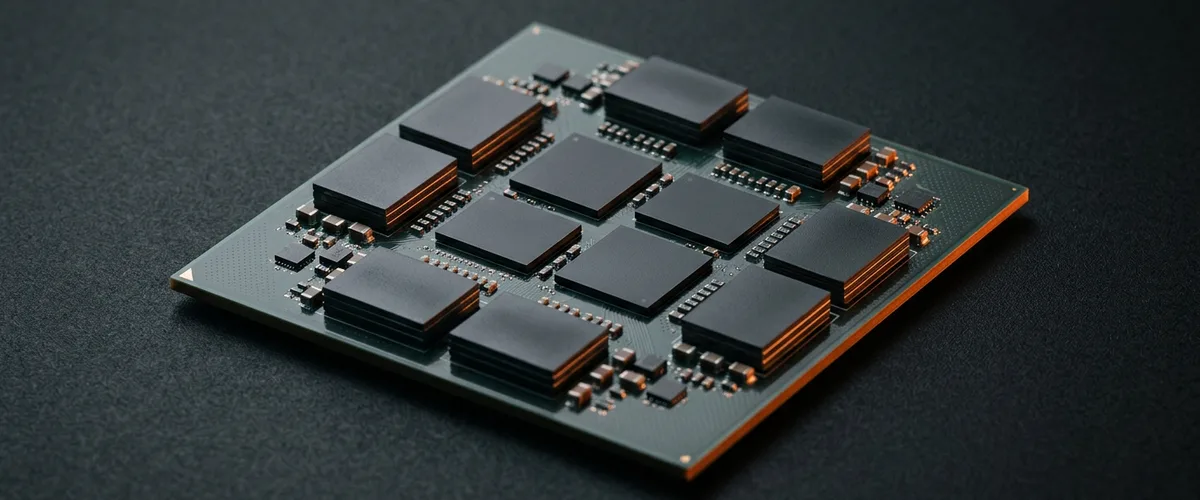
Advanced AI accelerator chip package with dark compute chiplets and memory stacks on a substrate under warm orange rim light

By Mike Carter, Managing Director, KORE1 Microsoft Maia 300 is Microsoft’s third in-house AI inference chip, due in production in 2027, and it pits Microsoft against Google, Amazon, Meta, and OpenAI for the same small pool of custom-silicon engineers. Microsoft unveiled it on October 12, 2026. The design is done. The fight for the people … Read more

Scope Creep and Roadmap Whiplash: What Changing Priorities Mid-Sprint Actually Costs

Railway track splitting at a switch into two curves heading opposite directions, with a burnt orange switch lever beside the rails at golden hour

By Kris Drouet, Engineering Executive, in partnership with KORE1 Scope creep is work added or swapped in after a project is committed, and a mid-sprint priority change costs far more than the new work, because the team pays to stop, replan, reload context, and repair what it abandoned. On my worksheet, a six-engineer team taking … Read more