Last updated: August 6, 2026
Design Engineer Staffing
KORE1 places design engineers who can take a product from sketch through DFM to a launch-ready CAD release. Twenty years of placements, and the network shows in who picks up the phone.
Creo
NX
GD&T
DFM / DFA
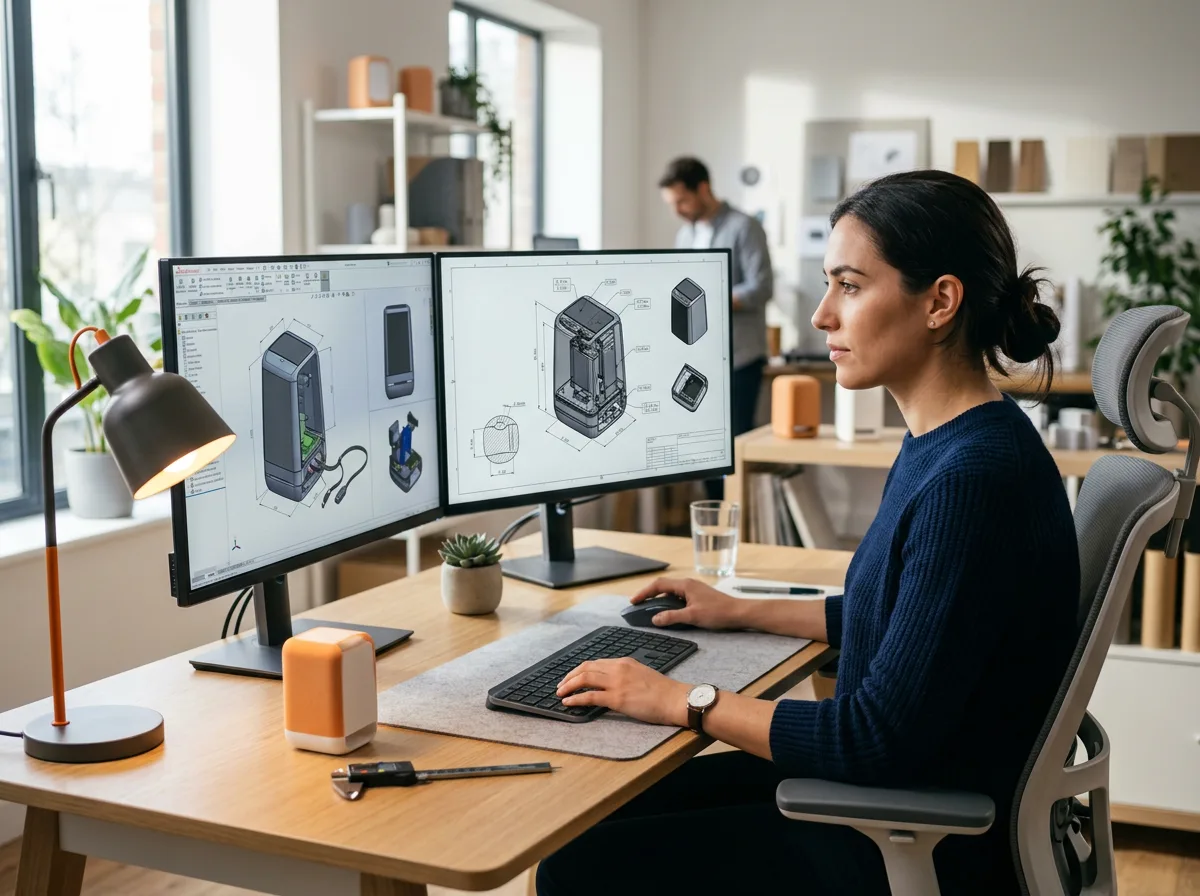
KORE1 places design engineers in 10 to 21 days on average, drawing from a national network of CAD designers, product design engineers, and DFM specialists built across more than 500 engineering searches over the past two decades.
Design engineers are a strange profile to recruit for. The title bleeds across mechanical engineering, industrial design, and product development depending on who’s hiring. One client means a heads-down SolidWorks user who lives in part files and assemblies all day. The next means a hybrid designer who has to talk through aesthetics, ergonomics, and manufacturing tolerances in the same meeting and then ship the drawings. Same job posting, very different people. Our template for mechanical design engineer postings shows how to tell them apart in the first paragraph.
That ambiguity is where most searches go wrong. You post a “design engineer” req on a job board and the funnel fills up with a mix of pure CAD operators, industrial designers without engineering depth, and recent grads who haven’t done a real DFM review yet. Sorting that pile is its own job. We’ve been doing it for 20 years, which is why our shortlists tend to look very different from what the in-house team was seeing before they called us.
KORE1 is part of the broader engineering staffing agency practice, with parallel teams in mechanical engineering staffing and adjacent disciplines like electrical and embedded. If the design role is really a mechanical role, how we screen mechanical engineers walks through the questions we ask. That matters when a product team needs a design engineer plus the mechanical and firmware support around them, because the same recruiter network covers all of it. One intake call, not three agencies who don’t talk.
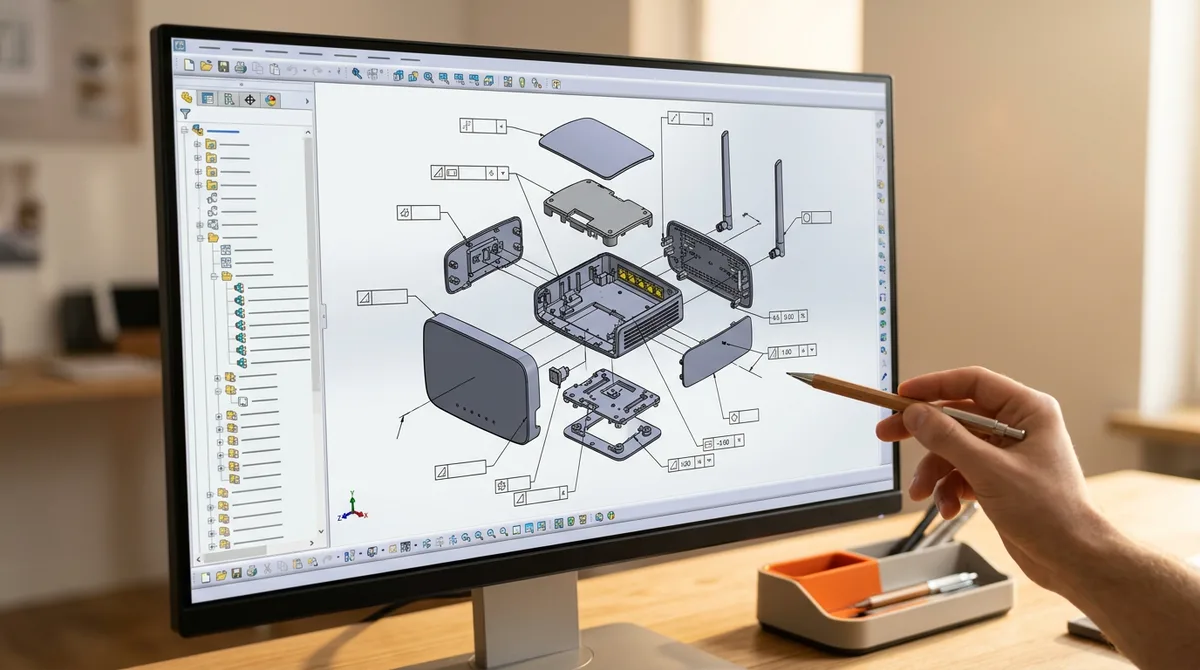
Design Engineering Roles We Place
We cover the full design engineering spectrum, from pure CAD execution roles to senior product design owners running multi-program portfolios.
- Product Design Engineers taking concepts from sketch through CAD, prototyping, and DFM into a release-ready package
- Mechanical Design Engineers living in SolidWorks, Creo, NX, or CATIA, with strong tolerance stack-up, GD&T, and DFM fluency
- CAD Designers and Drafters for production drawing work, BOM management, and ECN/ECO release cycles on tight cadences
- Industrial Design–Engineering Hybrids who can move between aesthetic, ergonomic, and engineering decisions without losing either side
- Plastic Part and Injection Mold Designers with real production experience on draft, gating, parting lines, and second operations
- Sheet Metal Design Engineers versed in bend allowances, hardware insertion, and weldments for industrial and enclosure work
- Senior and Principal Design Engineers who own technical direction across multiple programs and mentor mid-level staff
- Design Engineering Managers running studios or in-house teams of 3 to 20 designers and engineers
Need a direct hire to anchor your product design function long-term, or a contract designer to push a launch through? Same search process either way. We qualify against your actual CAD platform, manufacturing realities, and design review cadence. Not just a job title match.

How KORE1 Finds Design Engineers Others Miss
The strongest design engineers don’t apply. They’re shipping. They get pinged by recruiters constantly and they can tell within a minute whether the person on the other end has ever opened a CAD file or just Googled “design engineer” before writing the InMail.
Our recruiters can hold the actual conversation. They can talk through why you’d parametrize a feature differently in Creo versus SolidWorks, what a tolerance stack-up review really looks like, why the gating on an injection-molded part matters as much as the geometry, and what a candidate means when they say they “owned” a release. That fluency is how we get callbacks from passive candidates who haven’t refreshed a resume in five years because they’re heads-down on a launch.
Twenty years of work inside product design communities, professional bodies like the American Society of Mechanical Engineers and the Industrial Designers Society of America, university programs, and OEM and contract manufacturer networks gives us a real Rolodex. When we reach out, it isn’t a cold list. It’s a warm call to someone who knows we don’t waste their time. That changes the response rate by a lot.
We’ll also give you a straight read on the market at kickoff. If your role needs a designer with both medical device experience and consumer aesthetic chops at a mid-market salary, we’ll say so before we burn three weeks presenting candidates you can’t close. The KORE1 engineering staffing team has been at this long enough to know when a search is straightforward and when the hiring criteria need a second pass. Same goes for cross-discipline programs that bridge into mechanical engineering work.
Years Placing Engineers
Engineering Placements
Day Average Fill Time
12-Month Retention Rate
Design Engineering Across Hard-to-Hire Industries
Industry context shapes what “good” looks like for a design engineer. A candidate strong on consumer electronics enclosures thinks about cosmetic surfaces and snap fits. One strong on medical thinks about cleaning protocols and 510(k) traceability. We source to match your actual category, not just your job title.
Consumer Electronics & Hardware
Cosmetic plastics, snap-fit assemblies, internal layout for PCBA and battery integration, drop and impact constraints, and high-volume DFM for offshore tooling.
Medical Devices & MedTech
Class II and Class III mechanical design, 510(k) traceability, ISO 13485 design-controlled CAD, cleanable surface design, and disposable-versus-reusable trade-offs.
Industrial & Capital Equipment
Sheet metal weldments, large-frame structural design, machined enclosures, low-volume custom builds, and serviceability for field maintenance.
Automotive & Mobility
PPAP-aware part design, GD&T-driven release packages, supplier interface drawings, weight and cost optimization, and interior or under-hood packaging constraints.
What Makes KORE1 Different on Design Engineering Searches
Recruiters Who Speak CAD
We ask about tolerance stack-up logic, parametric strategy in Creo or SolidWorks, and how a candidate handled a DFM call that pulled cost out of a part. Resume-keyword screening filters get tossed. You meet people who can actually do the job.
Every Engagement Model
Contract, contract-to-hire, direct hire, or project teams. A six-month CAD push to finish a launch or a permanent design lead, we structure the engagement around your timeline, not a default bill rate model.
A Real Design Network
Two decades of relationships inside product design communities, university programs, and OEM and contract manufacturer networks. Most candidates know us. That matters when you need someone who is not actively looking.
Common Questions
What does a design engineer actually do, and how is it different from a mechanical engineer?
A design engineer owns the CAD model and the manufacturing-ready design package for a physical product. Mechanical engineers do the analysis behind it. The two roles overlap, especially in smaller companies where one person wears both hats, but at scale they split. Design engineers spend their day in SolidWorks, Creo, NX, or CATIA building parts and assemblies, running tolerance stack-ups, releasing drawings, and walking parts through DFM with manufacturing. Mechanical engineers do the FEA, the thermal sims, and the calculations that justify the geometry. If you need both, hire both. Most product companies under 200 people end up combining them in a single design-engineering req and then complaining the funnel is mixed. That mix is the symptom, not the cause.
How long does it take to fill a design engineer role?
Most of our design engineering searches close in 10 to 21 days from kickoff. Senior roles with rare combinations, like medical Class II plus consumer aesthetic experience, or sheet metal plus automotive PPAP background, take a bit longer because the underlying candidate pool is genuinely smaller. We give a realistic forecast at the start of the search, not a number meant to win the business and then slip three weeks later. The speed comes from active candidate relationships, not job board posting. We are not running cold searches.
Which CAD platforms can you screen candidates on?
We screen for hands-on production experience across SolidWorks, Creo (Pro/E), Siemens NX, CATIA, AutoCAD, Inventor, and Fusion 360, plus the major PDM/PLM platforms layered on top (Windchill, Teamcenter, Enovia, SOLIDWORKS PDM, Vault). If your team runs a custom configurator, a proprietary BOM tool, or a tight ECN process, tell us at kickoff. We factor it into screening rather than letting it surface in a second interview. According to the BLS 2025 Occupational Outlook Handbook, demand for engineers fluent in design-and-release CAD environments has outpaced supply for several years, especially at the senior level. Going wide on platforms in your req can help open the funnel; we’ll advise on whether to do it or not.
Do you place contract design engineers, direct hire, or both?
Both. Contract design engineers are common for product launch pushes, surge work between hires, or filling a CAD release window without standing up a permanent seat. Direct hire is the path when you’re building the long-term design function. Contract-to-hire is the most popular middle path right now. A 3 to 6 month engagement with a built-in conversion option lets you run a real working trial before you make a permanent offer, which tends to pay for itself when the alternative is replacing a bad hire 8 months in.
Can you find design engineers with very specific manufacturing experience?
Yes, and this is where specialist sourcing earns its fee. Injection-molded plastics, sheet metal weldments, machined housings, die casting, casting plus secondary machining, and high-precision assemblies all reward narrow screening. A candidate who has shipped injection-molded consumer parts at scale thinks about draft, gating, and tooling cost very differently than someone who has only done machined or 3D-printed prototypes. We verify production exposure during screening, not just self-reported credentials, and we ask for portfolio examples that show real production parts, not concept renders.
How do you screen for design quality versus pure CAD speed?
Through portfolio walkthroughs and process questions, not by trusting the resume. We ask candidates to walk us through a real product they designed end to end: what the brief was, the trade-offs they navigated, where DFM forced a change, how the release package was structured, and what failure modes surfaced after launch. Pure CAD speed is easy to test. Design judgment is harder, and it’s where most of the bad hires happen. The goal is to surface that judgment before your hiring team spends interview cycles on someone who can move geometry around but can’t make a defensible design call under pressure.
Ready to Hire a Design Engineer?
Start with a quick intake. We’ll ask about your product, your CAD platform, your release process, and what’s made the last few searches harder than expected. No pitch deck. A real conversation about whether the role is fillable as written and what the shortlist actually needs to look like.
