Last updated: September 4, 2026
Engineering Staffing Agency
An engineering staffing agency helps companies hire qualified engineers across multiple disciplines—mechanical, electrical, civil, manufacturing, systems, and embedded engineering—through contract, contract-to-hire, or direct hire models. KORE1 provides discipline-aligned engineering staffing that reduces hiring risk, shortens time-to-hire, and delivers engineers who perform in real-world environments.

What Is an Engineering Staffing Agency?
An engineering staffing agency connects employers with qualified engineers—mechanical, electrical, civil, manufacturing, systems, and embedded—and aligns each hire to the discipline, environment, and outcome the role actually requires.
An engineering staffing agency connects employers with qualified engineers to support projects, product development, operations, and long-term growth. These agencies specialize in sourcing and evaluating engineering talent, managing the hiring process, and aligning engineers to specific technical and operational requirements. For hires that straddle hardware and software, our technical recruiting services cover the full technical spectrum, and our engineering recruiters bring the discipline-specific screen behind every search. For a live example of how global engineering restructuring reshapes a US hiring market, see the 2026 BMW job cuts.
Unlike general staffing firms, an engineering staffing agency understands:
- Engineering disciplines and standards
- Project-based and regulated environments
- The difference between engineering roles and IT or operational tech roles

Watch: Engineering Staffing Agency—What Actually Matters
A short walkthrough of how a discipline-aligned engineering staffing agency reduces hiring risk, shortens time-to-hire, and delivers engineers who perform in real-world environments.

Engineering Disciplines We Staff
KORE1 supports traditional and modern engineering disciplines, with a focus on roles that design, build, and improve systems—not general IT operations.
Core engineering disciplines include:
- Mechanical Engineering
- Design Engineering (CAD-driven product design, DFM/DFA, plastics and sheet metal release work in SolidWorks, Creo, NX, and CATIA)
- HVAC Engineering Staffing (data center cooling, healthcare ventilation, cleanroom and process loads, BMS controls)
- MEP Engineering Staffing (combined mechanical, electrical, and plumbing for data centers, healthcare, mission critical, and multifamily projects)
- Electrical Engineering
- Electrical engineering search
- RF Engineering
- Embedded Software & Firmware Recruiting (bare metal, RTOS, embedded Linux, board bring-up, and safety-certified firmware under ISO 26262, IEC 62304, and DO-178C)
- Embedded Systems Recruiting (hardware and firmware together, board bring-up ownership, and the hardware-software boundary most programs leave unstaffed)
- Firmware Recruiters (search-led firmware hiring, sourced from the hardware industries that employ these engineers and priced against that pool)
- Power Systems Engineering Staffing (utilities, ISOs, IPPs, renewables, EPC firms)
- Civil Engineering (transportation, water, geotechnical, land development, CEI)
- Structural Engineering (PE-licensed, seismic, wind, retrofit, mass timber)
- Construction & Skilled Trades Staffing
- Project Engineering (cross-discipline project engineers owning RFIs, submittals, change orders, and field coordination on capital projects)
- Industrial Engineering
- Manufacturing Engineering (NPI, tooling and fixturing, CAM, automation, and quality engineering for OEMs and contract manufacturers; see also manufacturing staffing for plant-floor and skilled trades talent, our manufacturing staffing agency practice for vetting controls, quality, and plant leadership search partners, and manufacturing IT for MES and OT roles)
- Quality & Process Engineering (discrete manufacturing, batch pharma, continuous chemical, and semiconductor process environments)
- Reliability Engineering Staffing (CMRP-certified reliability engineers, predictive maintenance technicians, RCM/FMEA/RCFA programs, CMMS and APM rollouts across rotating equipment, chemicals, semiconductors, and pharma)
- Chemical Engineering (pharma, petrochemical, food & beverage, specialty chemicals)
- Systems Engineering
- Controls, Automation, & Robotics
- Robotics Engineering Staffing (industrial arms, AMRs, surgical robotics, humanoids, ROS 2 software, motion planning, perception, mechatronics, and AI for robotics)
- Embedded Systems Engineering, Embedded Software Engineering & Firmware Engineering
- Biomedical Engineering
- Medical Device Staffing
- Life Sciences Staffing Agency (umbrella across biotech, pharma, medical devices, diagnostics, and clinical research)
- Pharmaceutical Staffing (contract QC, QA, lab and plant roles for drug makers)
- Scientific Staffing (lab, QC and research roles across pharma, chemical, food, testing and clinical employers)
- Biotech Staffing Agency (national three-hub coverage: Boston, San Diego, Research Triangle)
- SoCal Biotech & Life Sciences Staffing (Sorrento Valley, Torrey Pines, LA cell and gene therapy)
- Biotech Recruiters (specialist recruiter-led search by therapeutic area and modality)
- Semiconductor Staffing
- ASIC Design Engineer Staffing (RTL, verification, physical design, DFT)
- Aerospace Engineering (including Rolls-Royce Indianapolis)
- Automotive Engineering
Engineering-led technical roles:
- Software Engineering (product, platform, systems-driven)
- Engineering-embedded cloud or network roles tied to system design or automation
Core IT infrastructure, cloud operations, and network administration roles are handled through our IT staffing practice.
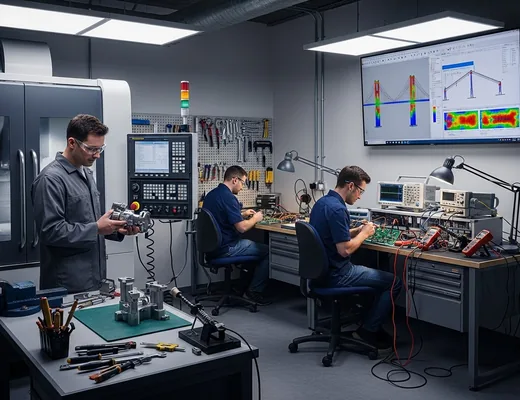
Engineering Coverage Snapshot
| Discipline | Contract | Contract-to-Hire | Direct Hire |
|---|---|---|---|
| Mechanical Engineering | ✔ | ✔ | ✔ |
| Design Engineering | ✔ | ✔ | ✔ |
| Electrical Engineering | ✔ | ✔ | ✔ |
| Power Systems Engineering | ✔ | ✔ | ✔ |
| Industrial Engineering | ✔ | ✔ | ✔ |
| Manufacturing Engineering | ✔ | ✔ | ✔ |
| Process Engineering | ✔ | ✔ | ✔ |
| Construction & Skilled Trades | ✔ | ✔ | ✔ |
| Controls & Automation | ✔ | ✔ | ✔ |
| Robotics Engineering | ✔ | ✔ | ✔ |
| Embedded Systems Engineering | ✔ | ✔ | ✔ |
| Aerospace Engineering | ✔ | ✔ | ✔ |
| Automotive Engineering | ✔ | ✔ | ✔ |
| Civil Engineering | ✔ | ✔ | ✔ |
| Structural Engineering | ✔ | ✔ | ✔ |
| Software Engineering (Engineering-Led) | ✔ | ✔ | ✔ |
Engineering Staffing vs IT Staffing—What’s the Difference?
Engineering staffing and IT staffing are often grouped together, but they serve different hiring needs.
There is overlap in areas like embedded systems or platform engineering, but the distinction is whether the role exists to engineer systems or operate IT environments.

Engineering Staffing Models We Offer
KORE1 supports multiple hiring models so companies can scale engineering teams without unnecessary risk.
| Model | Best For | Key Advantage |
|---|---|---|
| Contract | Projects, peak workloads | Speed and flexibility |
| Contract-to-Hire | Skill and culture validation | Reduced hiring risk |
| Direct Hire | Long-term growth | Retention and continuity |
For startup engineering teams that need executive leadership without a full-time hire, KORE1 also places fractional VP of Engineering leaders—covering the management layer most 15–40 engineer organizations are missing. When the role needs to be full-time, our VP of Engineering staffing practice runs the permanent executive search. One rung below the VP seat, our director of engineering staffing desk fills the manager-of-managers layer, the directors who run three to six teams through their engineering managers. In regulated companies that fractional coverage works differently, and we set out how the fractional VP seat splits in a regulated company before anyone signs a statement of work. When the empty seat is the CTO chair itself, interim CTO staffing puts a full-time leader in it with contract engineers backfilling underneath.
When a VPE seat is filled but engineering velocity is still stalling, the problem is usually upstream of the team. KORE1’s engineering leadership piece walks through the Clarity Stack — the three-layer diagnostic for stalled engineering organizations that VPs and CTOs use to find the broken layer before they spend another quarter trying to hire around it. When the broken layer turns out to be the org itself rather than any one person, our engineering org design and operating model advisory staffs a senior engineering leader to redraw the structure, decision rights, and operating cadence, then hires against the shape that comes out of it. When the org is clearly slow but nobody can agree which layer is broken, our engineering velocity diagnostic puts a senior engineering leader inside the delivery process for two weeks and hands leadership a written verdict on whether the fix is a process change or a hire. A companion piece argues that operational discipline is not bureaucracy and shows leaders how to defend that fix to the executive team. When the broken layer turns out to be a newly promoted manager rather than the org around them, engineering leadership transition coaching covers the two-clock window that decides whether they find footing or wash out. Before the promotion happens, our new engineering manager coaching and IC-to-leader advisory writes the mandate, the decision rights and the handover ledger while the transition can still be designed rather than rescued. And before any of that, when the open question is whether to build a capability in-house or license it, the build vs buy decision tool runs that call on five numbers. Once that decision has a real budget line and a room full of people who disagree attached to it, our build vs buy technology advisory staffs a senior advisor to run those same five numbers for real and hand back a written recommendation.
And when a migration, replatform, or rebuild calls for more than one senior contractor, we deploy pre-matched contract engineering teams—a named architect, tech lead, and senior engineers who’ve shipped together on prior engagements, so coordination cost isn’t the bottleneck on day one. The paperwork side of those engagements, from each engineer’s assignment to the client agreement, is covered under contract engineering IP protection.
How Our Engineering Staffing Process Works
Our process is designed to reflect how engineering teams actually operate.
Role & Discipline Alignment
We clarify the engineering discipline, environment, and success criteria.
Targeted Engineering Recruiting
Candidates are sourced based on hands-on engineering experience—not just keywords.
Technical & Situational Evaluation
Screening focuses on real-world engineering scenarios and problem-solving ability.
Placement & Ongoing Support
We stay engaged to ensure performance alignment and retention.
This approach helps employers avoid mis-hires that look good on paper but fail in practice.
When Companies Use an Engineering Staffing Agency
Companies typically engage an engineering staffing agency when they need to:
- Scale engineering teams quickly for projects or product launches
- Access hard-to-find engineering skill sets
- Reduce hiring risk in specialized or regulated environments
- Supplement internal teams without long-term overhead
- Convert proven contract engineers into full-time hires

Why Employers Choose KORE1 for Engineering Staffing
- Engineering-first role classification
- Discipline-aligned recruiting and screening
- Clear separation between engineering and IT operations
- Flexible hiring models matched to business needs
- Employer-focused communication and accountability
We prioritize engineering outcomes, not volume placements.
Request Engineering Talent →Ready to Build Your Engineering Team?
Whether you need one specialized engineer or a full project team, KORE1 delivers discipline-aligned talent on your timeline. We serve companies across Orange County, Anaheim, Los Angeles (where our LA engineering staffing team covers the aerospace and manufacturing corridor), San Diego (where our San Diego engineering staffing team covers the defense, aerospace, and medical device hubs), San Francisco (where our San Francisco engineering staffing team covers the life sciences, structural, and cleantech corridors), Phoenix (where our Phoenix engineering staffing team covers the semiconductor and aerospace corridor), Salt Lake City (where our Salt Lake City engineering staffing team covers the aerospace, medical device, and semiconductor corridor along the Wasatch Front), Denver (where our Denver engineering staffing team covers the aerospace, defense, and renewable energy corridor along the Front Range), Dallas (where our Dallas engineering staffing team covers the aerospace, defense, and semiconductor corridor, plus the Toyota-anchored corporate base in Plano), Austin (where our Austin engineering staffing team covers the semiconductor, EV, and aerospace corridor), El Paso, Tulsa, Seattle (where our Seattle engineering staffing team covers the aerospace and advanced manufacturing corridor), Portland Staffing Agency San Francisco Staffing Agency Chicago (where our Chicago engineering staffing team covers the manufacturing, aerospace, and energy corridor), Atlanta (where our Atlanta engineering staffing team covers the aerospace, automotive, and advanced-manufacturing corridor), Raleigh, Columbus, Cleveland, Rochester, NY, New York (where our New York engineering staffing team covers the structural, MEP, civil, and infrastructure corridor across the five boroughs and Long Island), Boston (where our Boston engineering staffing team covers the biotech, robotics, and defense corridor from Kendall Square to Route 128), Washington, DC (where our DC engineering staffing team covers the aerospace, defense, and cleared systems corridor across Northern Virginia and the Maryland suburbs), and beyond. Let’s talk about your engineering staffing needs.
Request Engineering TalentRelated KORE1 Resources
- Technical Due Diligence for M&A: Engineering Assessment Staffing covers the engineering side of a transaction, the four-seat assessment bench a buyer needs inside a two to six week diligence window, how each red flag finding maps to a specific engineering seat, and the remediation and retention hiring that runs from day one to day one hundred after close.
- Mortgage Tech & Fintech Engineering Staffing covers the software engineering side of lending, mapping the six layers a loan moves through from point of sale to servicing and which engineer each one actually requires, including the Encompass SDK retirement driving demand through December 2026.
- Encompass & LOS Integration Consultant Staffing goes a level deeper on the migration seat itself, covering the six things that change when an integration leaves the SDK and the hire signal attached to each one.
- Encompass Integration Engineer Staffing covers the build seat beside it, the engineer who writes the Developer Connect services, the webhook consumers and the loan data mapping once the migration is scoped.
- Engineering Velocity Assessment: Free Diagnostic is a three-test diagnostic a VP or CTO can run in about a week to find out whether a stalled team is short on people or short on clarity, covering definition of done, where priorities actually live, and whether architecture decisions ever get written down.
- Build vs Buy Technology Advisory staffs a senior technical advisor to run a two to four week build vs buy evaluation, real three-year cost modeling, stakeholder interviews, and a written decision memo, the staffed version of the free build vs buy decision tool above.
- State of Engineering Velocity & AI-in-Production Benchmark Report (2026) consolidates nine industry datasets on software delivery, including a 59% year-over-year rise in feature-branch throughput against a 7% fall in main-branch throughput for the median team, and maps each gap to the engineering role that closes it.
- Director of Engineering Staffing covers the manager-of-managers tier sitting between engineering managers and the VP, including how span of control separates the three seats and why promoting a strong engineering manager into the director role fails more often than anyone puts in writing.
- Fractional & Interim VP of Engineering Staffing covers both part-time engineering leadership models, one to two days a week on a fractional retainer or four to five days of interim cover while a permanent search runs, typically in seat inside two to four weeks.
- How to Hire a Head of Engineering: 2026 Guide breaks down the three versions of the role, 2026 pay bands from $180K to $450K-plus, and how to source, interview, and close the hire.
- Engineering Staffing in Houston, TX — Mechanical, electrical, process, and controls engineers for greater Houston’s energy, petrochemical, aerospace, and advanced-manufacturing employers.
- Engineering Staffing in San Jose, CA covers semiconductor, mechanical, electrical, and manufacturing engineers for Silicon Valley’s chip, hardware, aerospace, EV, and advanced-manufacturing employers.
- Engineering Staffing in San Francisco, CA covers civil, structural, mechanical, electrical, and life sciences engineers for the Bay Area’s biotech, AEC, cleantech, and medical device employers; most searches fill in 10 to 21 days.
- Engineering Staffing in Atlanta, GA — Mechanical, electrical, manufacturing, aerospace, and controls engineers across metro Atlanta’s aerospace, automotive, and advanced-manufacturing corridor; most searches fill in 10 to 21 days with 92% 12-month retention.
- Engineering Staffing in Raleigh, NC covers semiconductor, process, controls, civil, and electrical engineers for the Research Triangle’s chip, biomanufacturing, and infrastructure employers, with most searches filling in three to six weeks and 92% 12-month retention.
- Engineering Staffing in Tampa, FL covers aerospace, defense, civil, process, and controls engineers for Tampa Bay’s defense, infrastructure, and heavy-process employers, with most searches filling in three to six weeks and 92% 12-month retention.
- Engineering Staffing Pittsburgh, PA covers robotics, mechanical, electrical, manufacturing, materials, and energy engineers for metro Pittsburgh’s autonomy, advanced-manufacturing, steel, and nuclear-energy employers, with most searches filling in three to six weeks and 92% 12-month retention.
- Engineering Staffing Detroit, MI covers automotive, mechanical, electrical, manufacturing, and defense engineers for metro Detroit’s OEM, tier-1 supplier, and defense ground-vehicle employers, with most searches filling in three to six weeks and 92% 12-month retention.
- Engineering Staffing Indianapolis, IN covers motorsports, aerospace, mechanical, manufacturing, and life-sciences engineers for metro Indianapolis racing, jet-engine, and pharma employers, with most searches filling in three to six weeks and 92% 12-month retention.
- Engineering Staffing Columbus, OH covers semiconductor, mechanical, electrical, controls, manufacturing, and process engineers for central Ohio’s fab, EV, and applied-science employers, with most searches filling in three to six weeks and 92% 12-month retention.
- Engineering Staffing Baltimore, MD covers mechanical, electrical, RF, controls, civil, and process engineers for Greater Baltimore’s defense electronics, port and heavy civil, life sciences, and process manufacturing employers, with most searches filling in three to six weeks and 92% 12-month retention.
- Engineering Staffing Las Vegas, NV covers mechanical, electrical, controls, manufacturing, and process engineers for the Las Vegas valley’s gaming device manufacturers, resort building systems, data center, and Henderson industrial employers, with most searches filling in three to six weeks and 92% 12-month retention.
- Engineering Staffing in Minneapolis, MN covers medical device, mechanical, electrical, process, and manufacturing engineers for the Twin Cities’ Medical Alley, industrial, aerospace, and food-process employers, with most searches filling in three to six weeks and 92% 12-month retention.
- Engineering Staffing Cincinnati, OH covers aerospace, mechanical, chemical, process, and manufacturing engineers for Cincinnati’s jet-engine, consumer-products, and advanced-manufacturing employers, with most searches filling in three to six weeks and 92% 12-month retention.
- Engineering Staffing Charlotte, NC covers power, mechanical, motorsports, aerospace, and manufacturing engineers for Charlotte’s energy, NASCAR, and advanced-manufacturing employers, with most searches filling in three to six weeks and 92% 12-month retention.
- Engineering Staffing Orlando, FL covers simulation, defense, power, mechanical, and civil engineers for Orlando’s Team Orlando cluster, gas-turbine, and Medical City employers, with most searches filling in three to six weeks and 92% 12-month retention.
- Engineering Staffing Miami, FL covers mechanical, electrical, structural, manufacturing, and controls engineers for Miami-Dade’s building envelope, aviation MRO, cruise and marine, and industrial employers, with most searches filling in three to six weeks and 92% 12-month retention.
- Engineering Staffing Sacramento, CA covers mechanical, electrical, structural, manufacturing, and controls engineers for Sacramento’s state infrastructure, flood control, aerospace propulsion, and food manufacturing employers, with most searches filling in three to six weeks and 92% 12-month retention.
- Engineering Staffing Jacksonville, FL covers mechanical, electrical, manufacturing, and quality engineers for Jacksonville’s aviation depot, medical device, ship repair, and utility employers, with most searches filling in three to six weeks and 92% 12-month retention.
- Engineering Staffing Richmond, VA covers electrical, mechanical, manufacturing, and quality engineers for Richmond’s utility, data center power, fiber and chemical, and pharmaceutical employers, with most searches filling in three to six weeks and 92% 12-month retention.
- Engineering Staffing Cleveland, OH covers industrial, mechanical, electrical, and materials engineers for Cleveland’s steel, fluid power, welding, coatings, and aerospace employers, with most searches filling in three to six weeks and 92% 12-month retention.
- Engineering Staffing San Antonio, TX covers mechanical, electrical, manufacturing, and aerospace engineers for San Antonio’s truck plants, aircraft maintenance hangars, utilities, and research labs, with most searches filling in three to six weeks and 92% 12-month retention.
- Engineering Staffing St. Louis, MO covers mechanical, electrical, manufacturing, and quality engineers, plus the technicians who work beside them, for St. Louis’s military aircraft and auto plants, utilities, and Metro East refineries, with most searches filling in three to six weeks and 92% 12-month retention.
- Engineering Staffing Milwaukee, WI covers mechanical, electrical, manufacturing, quality, and controls engineers for Milwaukee’s automation and drives makers, heavy equipment plants, utilities, and medical imaging campuses, with most searches filling in three to six weeks and 92% 12-month retention.
- Engineering Staffing Oklahoma City, OK covers mechanical, electrical, aerospace, and petroleum engineers, plus the technicians beside them, for the Tinker air depot and its contractors, oil and gas operators, and the utility, with most searches filling in three to six weeks and 92% 12-month retention.
- Engineering Staffing in Nashville, TN covers automotive, manufacturing, controls, civil, structural, and biomedical engineers for the auto, EV battery, healthcare, and construction employers across Middle Tennessee, with most searches filling in three to six weeks and 92% 12-month retention.
- Engineering Staffing in Portland, OR covers semiconductor, mechanical, electrical, civil, and manufacturing engineers for the Silicon Forest, athletic product, and clean-energy employers, with most searches filling in three to six weeks and 92% 12-month retention.
- Engineering Staffing in Huntsville, AL — Aerospace, mechanical, electrical, controls, and RF engineers, including cleared talent, across the Rocket City missile defense, space, and advanced-manufacturing sectors; most searches fill in 10 to 21 days with 92% 12-month retention.
- Engineering Staffing in Phoenix, AZ — Semiconductor, mechanical, electrical, and manufacturing engineers for the Silicon Desert’s chip, aerospace, energy, and EV employers across the Valley of the Sun.
- Engineering Staffing in Philadelphia, PA — Life-sciences, chemical, civil, mechanical, and manufacturing engineers across the Navy Yard, the Route 202 pharma corridor, and the Delaware Valley; most searches fill in 13 to 26 days with 92% 12-month retention.
- Materials Engineering Staffing — Metallurgy, polymers, composites, and characterization specialists.
- Power Systems Engineering Staffing — Grid, substation, P&C, and renewable integration engineers for utilities, ISOs, IPPs, and EPC firms, including our dedicated renewable energy staffing practice for solar, wind, and storage.
- Oil & Gas Staffing covers upstream, midstream, and downstream engineers across drilling, process, pipeline integrity, rotating equipment, controls, and turnaround for operators, EPCs, refiners, and midstream companies.
- How to Hire an Electrical Engineer — Five EE sub-disciplines and 2026 salary bands for engineering managers.
- Electrical Engineer Salary Guide 2026 — BLS $111,910 median (May 2024), seven-source benchmark comparison, and KORE1 placed-base across 57 closes by industry vertical, PLC stack, clearance, and metro.
- How to Hire Firmware Engineers in 2026 — Embedded talent across automotive, medical device, IoT, and aerospace.
- How to Hire IoT Engineers in 2026 — Connected-device hiring with firmware, cloud, and security depth.
- Telecom Staffing — RF, fiber, OSP, NOC, and network engineering for carriers, ISPs, MVNOs, and tower operators.
- Temporary Engineering Staffing covers degreed engineers and technical specialists on a defined W-2 window, typically four to nine months, ending on a program milestone rather than converting to a permanent seat.
Engineering Staffing FAQs
What types of engineers do staffing agencies place?
Engineering staffing agencies place engineers across mechanical, electrical, civil, manufacturing, systems, automation, embedded, and select software engineering disciplines Where a plant needs the industrial side of that specifically, our automation engineer staffing desk covers PLC, HMI and SCADA work.. For mechanical roles specifically, our mechanical engineering search desk covers how those searches get scoped and screened.
Is engineering staffing different from IT staffing?
Yes. Engineering staffing focuses on roles that design and build systems, while IT staffing supports infrastructure, operations, and enterprise technology environments.
How long does it take to hire an engineer through a staffing agency?
Timelines vary by discipline and availability, but engineering staffing agencies typically reduce time-to-hire compared to direct recruiting. KORE1’s average time-to-hire is 17 days, with first candidates presented within 3–5 business days.
Is contract or direct hire better for engineering roles?
It depends on project duration, risk tolerance, and long-term needs. Contract-to-hire is often used to validate engineering fit before permanent placement.
Are engineering staffing agencies worth it?
For specialized or time-sensitive engineering needs, staffing agencies reduce hiring risk, improve speed, and provide access to vetted talent. KORE1’s 92% 12-month retention rate reflects the quality of our discipline-aligned approach.
Budgeting a specific discipline before the requisition goes out is easier with a benchmark in hand. The automation engineer salary guide is the most recent of ours, covering industrial automation and controls pay by level, state and engagement model.
Boeing’s 2026 engineering displacement created one of the largest available pools of aerospace manufacturing talent — see Boeing Engineering Layoffs 2026: Reshoring Opportunity for a breakdown of which profiles cross directly into engineering staffing openings.
Hire Engineers Who Perform
Stop sorting through unqualified resumes. KORE1’s engineering-first recruiting process delivers candidates who are vetted for real-world engineering capability—not just keyword matches.
Read full video transcript
Engineering staffing agency. What actually matters? A lot of hiring problems in engineering start the same way. The role sounds clear. The resume looks relevant. The team moves fast. Then the match falls apart. Not because the person isn't smart. Because the hiring process never got precise enough. Engineering hiring is not just about filling a seat. It's about finding someone who can perform in the real environment. That may be product development, manufacturing, validation, controls, embedded systems, civil infrastructure or cross functional systems work. When the role is technical and the timeline matters, a loose hiring process gets expensive fast. So what is an engineering staffing agency? At the right level, it is a hiring partner that connects employers with qualified engineers for projects, operations, product development, and long-term growth. But the real value is not the introduction. It's the alignment. A true engineering staffing agency understands the discipline, the environment, and the difference between a resume and a fit. That includes technical requirements. It also includes how the work actually gets done. This is where many companies get frustrated with general recruiting models. Engineering roles are not interchangeable. Mechanical is not electrical. Electrical is not systems. Systems is not embedded. Manufacturing is not quality. And engineering is not the same as general IT operations. If the search starts with broad titles, the team usually feels the gap during interviews or worse after someone starts. At Core 1, the scope matters. Engineering disciplines we support include mechanical, electrical, civil and structural, manufacturing and industrial, quality and process, systems engineering, controls, automation and robotics, embedded and firmware engineering, and biomedical engineering. There are also engineeringled technical roles that can include software engineering tied to products and cloud or network roles connected to system design. That distinction matters. One of the biggest points of confusion is engineering staffing versus IT staffing. They solve different hiring problems. Engineering staffing is focused on design, development, and validation. It supports physical, digital, or hybrid environments. IT staffing is different. It is more often centered on infrastructure operations, enterprise networks, and maintenance. There can be overlap, but the key question is simple. Is this role here to engineer a system or operate an IT environment? The process matters just as much as the discipline. Our process reflects how engineering teams actually work. First, role and discipline alignment. We clarify the engineering function and what success really looks like. Then targeted engineering recruiting. That means sourcing people based on hands-on experience, not just keywords. Then technical and situational evaluation. We want to understand how someone solves problems in real conditions. And then placement with ongoing support because getting someone hired is only part of the job. Alignment and retention matter. This approach helps reduce one of the most common hiring mistakes. Candidates who look good on paper but don't hold up in practice. An engineering staffing agency is most useful when you need to scale quickly or reach hard to find skill sets. A few common questions come up here. How is engineering staffing different from general staffing? Specialization. When does contract make more sense? Usually when speed, project timing, or flexibility matter most. When should a company bring in a partner? When the role is specialized, the timeline is tight, or the team needs market reach. The takeaway is simple. Engineering hiring works better when the search reflects the discipline and the outcome you need. That reduces risk and shortens time to hire. If you're building an engineering team and need a disciplined approach, Core 1 can
