
Electrical Engineering Staffing
KORE1 places electrical engineers who actually know what they’re doing. Power systems, embedded firmware, circuit design, controls. We’ve spent two decades building the kind of engineering network that lets us fill roles most agencies can’t touch.
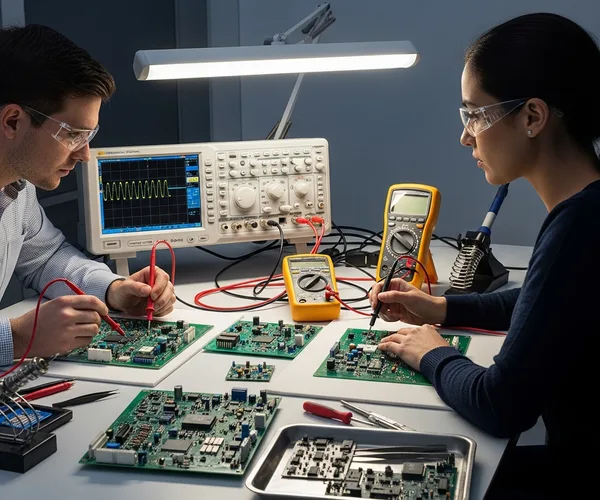
Good electrical engineers are absurdly hard to find right now. Not “sort of difficult.” The kind of hard where you post a role for a power electronics engineer and get 40 applicants who’ve never actually designed a gate driver circuit. Or you need someone comfortable with both analog and digital and you realize that combination barely exists anymore because the field has split into increasingly narrow specializations over the past decade.
That’s where a staffing partner with real engineering staffing depth makes the difference. KORE1 has been placing electrical engineers since before half the job boards you’re using existed. Our recruiters understand the difference between someone who lists “PCB layout” on a resume and someone who has actually routed a 12-layer board with controlled impedance traces and EMI constraints. Those are very much not the same person, and you’ll figure that out about three weeks into the engagement when timelines start slipping.
We’re part of the broader KORE1 engineering staffing agency practice. That means if you’re building a cross-functional team and need mechanical, biomedical, and electrical talent all at once, you get one point of contact instead of juggling three separate firms. Our mechanical engineering staffing and biomedical engineering staffing teams run parallel operations with overlapping sourcing networks.

Electrical Engineering Roles We Place
We staff across the full spread of electrical engineering work. The niche stuff too, not just the easy fills.
- Power Systems Engineers who design generation, transmission, and distribution infrastructure for utilities and renewable energy companies
- Circuit and PCB Design Engineers with real experience in multi-layer board layout, signal integrity, and DFM for production
- Controls and Automation Engineers building PLC programs, SCADA systems, and industrial automation from concept through commissioning
- Embedded Systems Engineers who write firmware in C/C++ for microcontrollers and FPGAs, often working in real-time operating systems where a missed interrupt can brick the whole product
- Power Electronics Engineers designing converters, inverters, motor drives, and battery management systems
- RF and Microwave Engineers working on antenna design, wireless systems, radar, and high-frequency signal chains
- Test and Validation Engineers who build test fixtures, write automated test sequences, and know their way around oscilloscopes and spectrum analyzers
- Systems Engineers handling requirements flow-down, interface control documents, and cross-discipline integration
Whether you need a direct hire to lead your hardware team or a contract engineer for a six-month product development push, same process. We qualify candidates against your actual technical requirements, not a keyword list.

How KORE1 Finds Electrical Engineers Others Miss
The best EEs aren’t applying to jobs. They’re heads-down on a project, maybe mildly annoyed at their current employer but not annoyed enough to start a job search from scratch. And they’re ignoring every recruiter who sends them a generic “exciting opportunity” message on LinkedIn.
We get responses because we’ve earned them. Twenty years of placing engineers means we’ve built relationships inside the communities where these people actually spend time. Professional societies. University alumni networks. Industry conferences. When we reach out about a power systems role in Southern California or an embedded firmware position in the Midwest, we’re not cold-calling. We’re reconnecting with someone who already knows our name and trusts that we won’t waste their morning.
Our technical recruiters can hold a real conversation about interrupt latency, motor control algorithms, or SPICE simulation accuracy. They’re not just matching buzzwords. That’s what lets us tell you within 48 hours whether your requirements are realistic for the market or whether you’ll need to adjust scope, comp, or location flexibility before we start presenting candidates who will actually accept.
Most of our electrical engineering placements close in 10 to 21 days. That timeline holds because we maintain active candidate relationships and don’t start every search from zero. Need to see the full scope of our engineering staffing capabilities? That page covers every discipline we place across the engineering vertical.
Years Placing Engineers
Engineering Placements
Day Average Fill Time
Electrical Engineering Talent Across Sectors
Industry background shapes how effective an electrical engineer will be in your environment. We source candidates whose experience maps to your specific domain, not just the title.
Energy and Utilities
Power generation, grid modernization, renewable integration, substation design. Engineers who understand NEC, NESC, and utility-scale commissioning.
Semiconductor and Electronics
IC design, mixed-signal layout, test engineering, and production support. Candidates with fab experience and working knowledge of EDA tools.
Aerospace and Defense
Avionics, radar systems, mil-spec compliance, and power conversion for harsh environments. Many of our candidates hold or can obtain security clearances.
Manufacturing and Automation
Factory automation, robotics, motor drives, and process control. Engineers who’ve been on a production floor and understand what happens when theory meets reality.
What Makes KORE1 Different
Technical Screening That Actually Works
Our recruiters ask about SPICE models, not soft skills. They’ll probe a candidate’s PCB routing philosophy and find out whether they’ve ever dealt with signal integrity problems on a real board. You only see candidates who can do the job.
Every Engagement Model
Contract, contract-to-hire, direct placement, or project-based teams. We build around what your project needs, not around what generates the easiest margin for us.
National Reach, Local Knowledge
We place electrical engineers across the country. Defense clusters in DC and San Diego. Semiconductor hubs in Austin and Phoenix. Energy corridors in Houston and Denver. We know what competitive comp looks like in each market.
Common Questions About Electrical Engineering Staffing
What does an electrical engineering staffing agency actually do?
An electrical engineering staffing agency finds, screens, and presents qualified EE candidates to companies with open roles. We handle the sourcing through our existing network and targeted outreach, run technical qualification calls, coordinate interviews, and manage the offer negotiation. The part most people underestimate is the screening. Anyone can find resumes. The value is knowing which candidates will succeed in your specific environment and which ones look great on paper but would struggle with your toolchain, your pace, or the particular constraints of your industry. Our broader engineering staffing agency practice covers mechanical, biomedical, and other disciplines if you need cross-functional hires.
How long does it typically take to hire an electrical engineer through KORE1?
Most of our electrical engineering placements close in 10 to 21 days. Highly specialized roles take longer. If you need an RF engineer with satellite communications experience and a TS/SCI clearance, that’s a smaller candidate pool and the timeline stretches. We’ll give you an honest estimate at kickoff rather than promising a timeline we can’t hit. The fill speed comes from maintaining active relationships with candidates who we’ve already vetted, not from cutting corners on the screening process or sending you a stack of marginally qualified resumes and hoping one sticks.
Can you find electrical engineers with specific tool or platform experience?
Yes, and we screen for it properly. Altium, OrCAD, Cadence Allegro, MATLAB, Simulink, LabVIEW, Xilinx Vivado, various PLC platforms. Whatever your stack requires. We don’t just check whether the tool name appears on a resume. We ask candidates how they’ve actually used the tool on a real project, what they built with it, and where they ran into limitations that forced them to find workarounds or switch approaches entirely. If your team relies on a proprietary internal platform, tell us up front and we’ll factor the learning curve into our screening criteria.
What’s the difference between contract and direct hire for electrical engineers?
Contract placements are project-based or time-limited. The engineer works at your site but stays on KORE1’s payroll. You pay a bill rate. Direct hire means the engineer joins your company permanently from day one, and you pay a one-time placement fee. Contract-to-hire splits the difference, a trial period on contract before converting to full-time. Many of our clients start with contract and convert because it lets them see the engineer in their actual working environment before committing to a permanent hire, and in a field where replacing someone takes months and costs a small fortune, that trial period pays for itself pretty quickly.
Do you place entry-level electrical engineers or only senior candidates?
Both. We place new graduates into junior design and test roles, and we recruit principal engineers and technical leads for senior positions. The sourcing approach differs significantly between levels. Early-career searches lean on university relationships and our intern-to-hire pipeline. Senior searches rely almost entirely on direct outreach to passive candidates who aren’t browsing job boards, won’t respond to a generic posting, and will only take a call from a recruiter they’ve worked with before or who comes recommended by someone in their professional circle.
How is electrical engineering staffing different from general technical staffing?
General staffing agencies treat EE roles like any other technical position. They match keywords and hope for the best. An electrical engineering staffing specialist understands why a candidate with strong digital design skills might be wrong for an analog role, or why five years of residential wiring experience doesn’t prepare someone for utility-scale power systems work. Our mechanical engineering staffing and biomedical engineering teams operate the same way within their disciplines. Specialization is what keeps you from wasting interview cycles on candidates who don’t belong in the room.
Ready to Build Your Electrical Engineering Team?
Start with a quick intake call. We’ll ask about the role, your team’s technical environment, and what hasn’t worked in past searches so we can avoid repeating it. No pitch deck. No pressure. Just a conversation to figure out whether KORE1 is the right fit for your search.