
Last updated: August 31, 2026
Embedded Systems Engineer Staffing
Firmware engineers, PLC programmers, and embedded Linux specialists placed in semiconductor, IoT, and industrial controls environments. KORE1 screens for the hardware-software depth that general tech recruiters can’t evaluate.
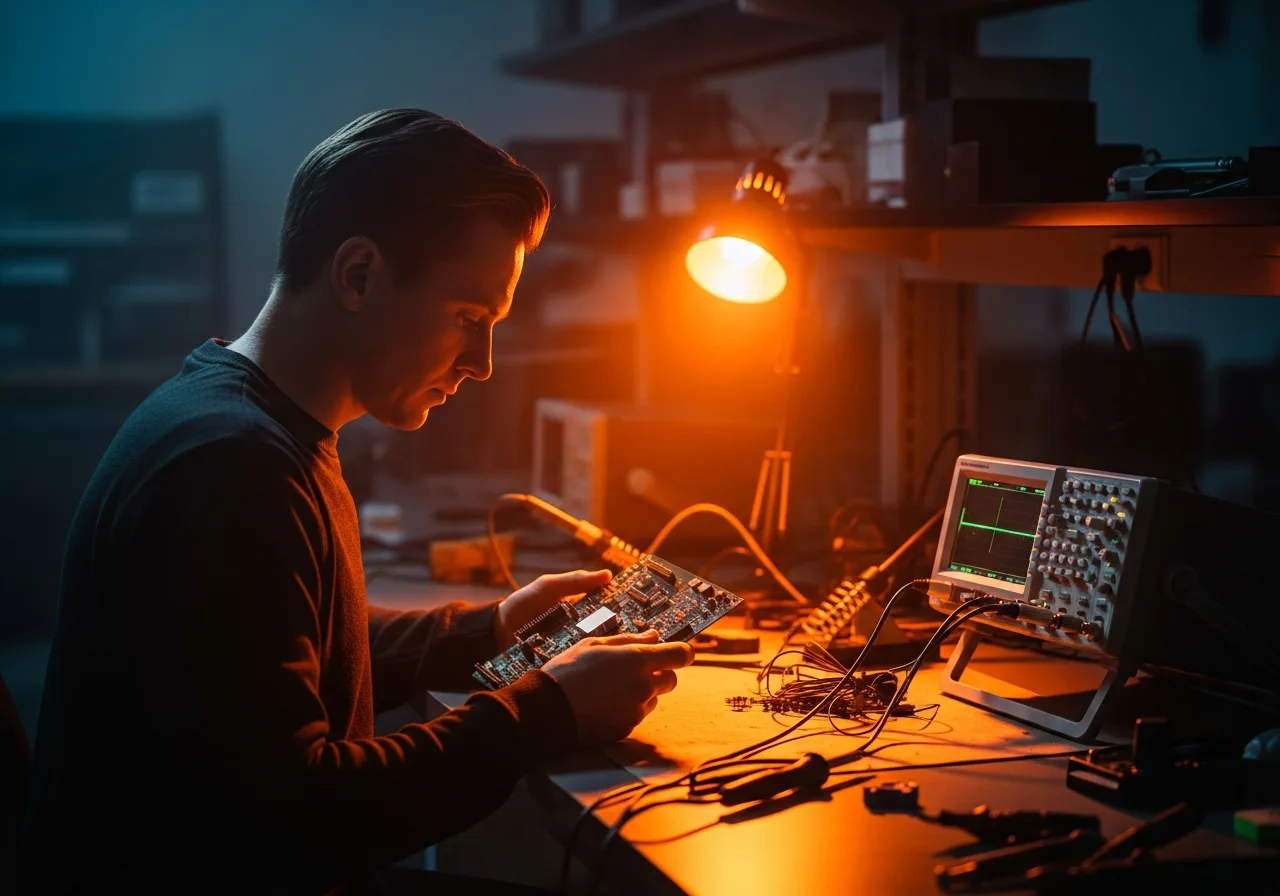
Embedded systems engineer staffing fills firmware engineers, PLC programmers, FPGA developers, and embedded Linux specialists for semiconductor, IoT, and industrial controls environments. KORE1 has placed embedded engineers across 30+ U.S. metros for over 20 years, with a 92% 12-month retention rate.
You don’t hire an embedded systems engineer because your job description matches a keyword. You hire one because a product is stuck in bring-up, a PLC program is misdiagnosing faults, an RTOS is dropping timing on a safety-critical loop, or a senior firmware engineer resigned two weeks before a hardware rev ships. The person you need has almost certainly never applied to a job board for this role.
That’s the challenge. Embedded talent is experienced, employed, and not looking. Most aren’t on LinkedIn. The engineers who know Allen-Bradley Studio 5000 cold, who can debug a Yocto build layer without documentation, who’ve written bare-metal drivers for ARM Cortex-M in anger, they respond to a warm introduction from someone who already knows their name. KORE1 sources from within our engineering staffing network, and we’ve been building that network for two decades. Generic job boards won’t get you there. We can.

Embedded Systems Roles We Place
The title on the job spec is often a starting point. The real requirement is usually narrower, and harder. Much harder.
- Firmware Engineers, bare-metal C/C++, RTOS (FreeRTOS, VxWorks, Zephyr, ThreadX), HAL development, bootloaders, interrupt handling, memory-mapped I/O
- Embedded Linux Engineers, Yocto/Buildroot layer maintenance, kernel configuration, BSP development, device driver authorship, board bring-up
- PLC Programmers, Allen-Bradley Studio 5000/RSLogix 5000, Siemens TIA Portal/STEP 7, ladder logic, function block, structured text, drives integration
- FPGA / Digital Logic Engineers, VHDL, Verilog, SystemVerilog, Intel/Altera Quartus, AMD/Xilinx Vivado, IP core development, timing closure
- Controls Engineers, closed-loop control (PID, cascade, feedforward), motion control, HMI programming, SCADA integration, safety PLC (Safety Integrity Level)
- IoT / Edge Engineers, wireless protocol stacks (BLE, Zigbee, LoRaWAN, LTE-M), MQTT/AMQP, OTA update architectures, secure boot, HSM integration
- Hardware/Software Co-design Engineers, schematic review, signal integrity consultation, bring-up support, hardware debugging (JTAG, SWD, logic analysis)
- DSP / Signal Processing Engineers, filter design, FFT implementation, audio/RF pipeline, fixed-point arithmetic, Texas Instruments and Analog Devices DSP toolchains
Need a direct hire firmware lead for a product shipping in Q3? Done. Need a contract PLC programmer while your controls team is deployed at another plant? We’ve staffed that exact engagement. See our direct hire, contract, and project staffing options.
How KORE1 Screens Embedded Engineers
Embedded resumes lie more than most. A “firmware engineer” who spent 90% of their time writing Python test scripts is not the same person as one who owns the bootloader and drives integration for a 5,000-unit production run. The gap is real.
Our recruiters are trained to push on specifics: What RTOS did you use? What was the tick rate? Did you write your own scheduler, or configure an existing one? If the answer is “we used FreeRTOS and I set up a few tasks,” that’s a different candidate than “I tracked down a priority inversion causing intermittent deadlocks in the watchdog task and rewrote the mutex handling.” Both list “FreeRTOS experience.” They are not interchangeable.
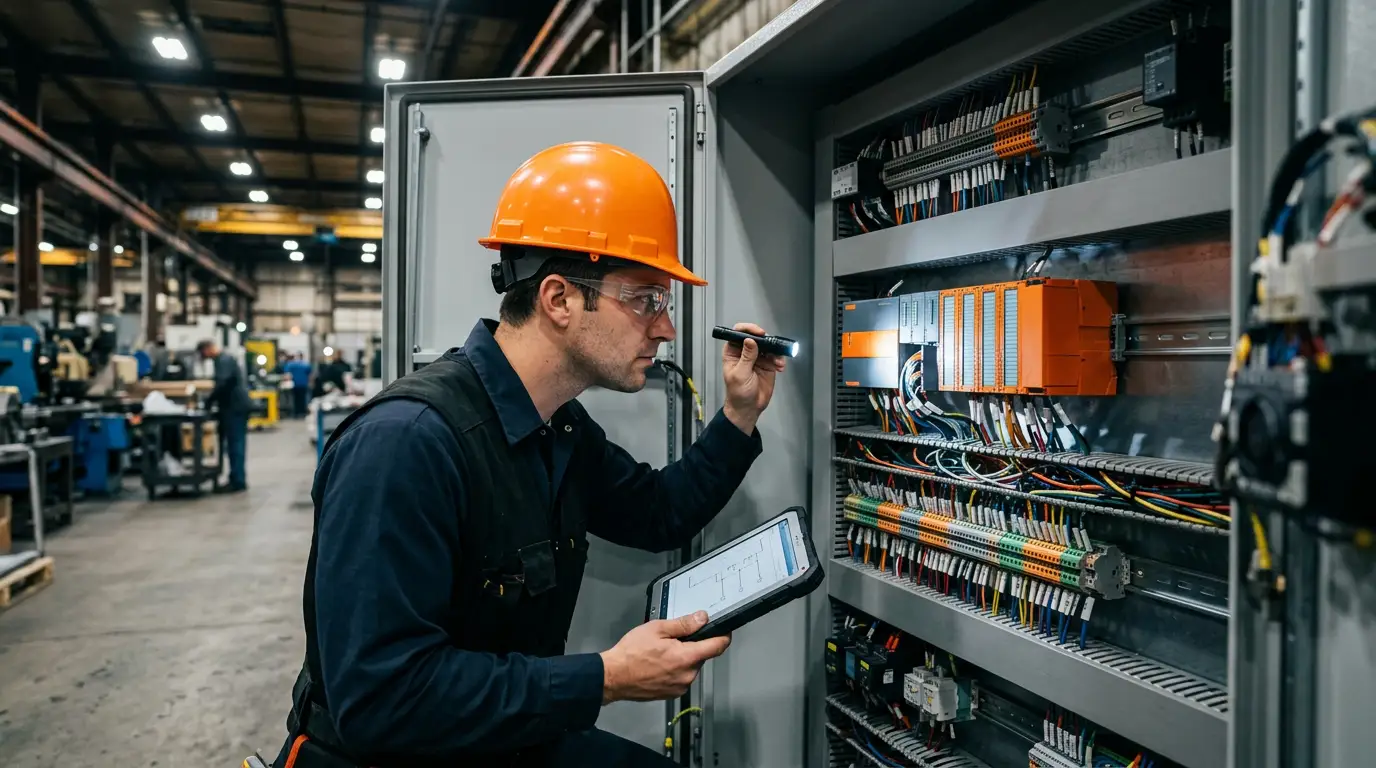
PLC and controls roles carry their own scarcity problem. Engineers with hands-on Allen-Bradley Studio 5000 and Siemens TIA Portal experience, not theoretical exposure, not watched a training video, are genuinely rare. The pipeline is thin. The industry hollowed it out because everyone who learned ladder logic on-the-job is now in their 50s, and the colleges teaching controls often skip practical PLC work entirely. We know where the working engineers are. We’ve placed them. We know who’s open to a move.
Onsite requirements in controls and embedded manufacturing are real. Most industrial embedded roles require candidates within 25 to 30 miles of the facility. Geography isn’t negotiable. We filter for commutability before we present. You won’t see candidates who’d need to relocate unless you’ve said relocation is in scope.
Years in Engineering Staffing
12-Month Retention Rate
U.S. Metros Served
Avg Recruiter Tenure (Yrs)
Three Ways We Staff Embedded Engineers
The hiring shape changes project to project. The screening criteria doesn’t.
Direct Hire
Permanent placement on your payroll from day one. Right for firmware leads, controls engineers anchoring a manufacturing line, and embedded architects with long product cycles. See direct hire.
Contract
Engineer stays on KORE1 payroll, you pay a bill rate. Best for bring-up sprints, PLC rework projects, or coverage while your permanent search runs. See contract staffing.
Project Staffing
Defined scope, defined deliverable. Useful for firmware audits, RTOS migrations, PLC upgrade programs, or scoped hardware/software co-design engagements. See project staffing.
Industries We Place Embedded Engineers In
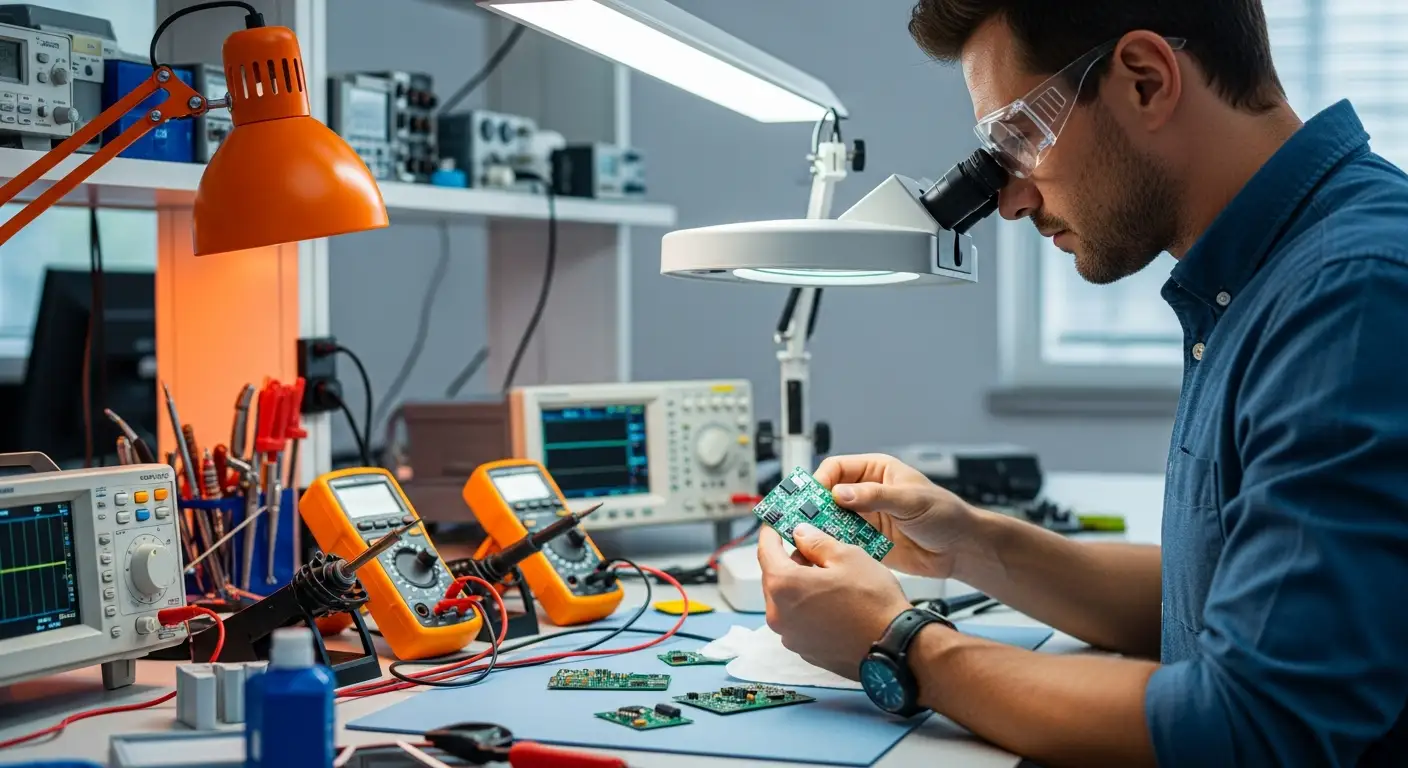
Embedded engineering context changes what “qualified” means. Dramatically. A firmware engineer who thrives in IoT consumer products may have no idea what FDA design controls look like. We match to industry context, not just title.
Semiconductor and electronics, IC validation engineers, embedded test engineers, silicon bring-up specialists. High overlap with our semiconductor staffing bench. Qualcomm, Broadcom, Texas Instruments, and analog/mixed-signal environments each have distinct embedded requirements.
Industrial automation and factory controls, PLC programming, SCADA, motion control, servo integration. Allen-Bradley and Siemens experience is the real gate. Not either/or. Both. The engineer who’s only seen one platform won’t be comfortable in the other without a learning curve your timeline can’t absorb.
Automotive and EV, AUTOSAR stacks, CAN/LIN/FlexRay bus work, functional safety (ISO 26262, ASIL-D), motor control firmware. The electrification transition has created a specific demand wave for embedded engineers who understand both the power electronics and the software stack controlling them.
Medical device, IEC 62304 software lifecycle compliance, risk management (ISO 14971), safety-critical RTOS work, Class II and III device firmware. Tight overlap with our biomedical engineering staffing practice. The regulatory framework changes what “senior” means in this space.
Aerospace and defense, DO-178C avionics software, certifiable RTOS configurations (VxWorks 653, LynxOS-178), ITAR-aware sourcing, clearance compatibility where required. Dovetails with our aerospace engineering staffing work.
Consumer IoT and smart infrastructure, BLE and Wi-Fi stack integration, OTA update pipelines, power optimization for battery-constrained devices, edge AI inference. Growing market, thin specialized talent pool. Tight overlap with electrical engineering staffing for hardware-side hiring.
Related KORE1 Resources
- Embedded Software Recruiters, How our recruiters reach firmware talent that leaves no public code trail.
- Recruiting Across the Hardware and Firmware Seam, Which layer boundary is unowned, and who can actually cross it.
- How to Hire Firmware Engineers in 2026, Bare-metal C, RTOS, and embedded-Linux hiring.
- How to Hire IoT Engineers in 2026, Connected-device hiring with firmware depth.
- Embedded Software Engineer Staffing, For the software layer above the driver, meaning embedded Linux and Yocto, RTOS application work, connectivity stacks, and OTA.
- Embedded Systems Engineer Salary Guide 2026, What the role pays by employer tier, and why base and total compensation tell different stories.
Sources & References
- IEEE: Institute of Electrical and Electronics Engineers, Standards and research for embedded and electronic systems.
Common Questions
What does an embedded systems engineer do?
Embedded systems engineers write the firmware, control logic, and low-level software that make physical hardware function. That includes bare-metal C code on microcontrollers, RTOS task scheduling, hardware abstraction layers, bootloader development, and the communication protocol stacks that let devices talk to each other or to the cloud. Unlike application software engineers, they work in constrained environments where RAM is measured in kilobytes and a missed interrupt deadline can cause a safety fault. The role sits at the intersection of software and hardware, which is why it’s hard to replace with a general software recruiter who’s only placed web engineers.
How much does an embedded systems engineer earn in 2026?
Mid-level embedded engineers in the U.S. typically earn $110K to $145K base salary, with senior embedded engineers at $150K to $195K depending on domain. The BLS 2024 OOH puts electrical and electronics engineers at a $113,740 median, but embedded specialists in semiconductor and automotive run well above that. PLC and controls engineers in industrial automation follow a similar band, though comp varies more by geography. Engineers in Southern California, Austin, and the Pacific Northwest command a 10 to 20 percent premium over national median.
How fast can KORE1 fill an embedded systems engineering role?
Most embedded searches close in 17 to 35 days from kickoff to signed offer. It depends heavily on how specific the requirement is. A firmware engineer with FreeRTOS and Ethernet experience in a major metro? Closer to 17 days. A PLC programmer who knows Allen-Bradley Studio 5000, Siemens TIA Portal, and drives integration in a mid-sized market? That one takes longer, not because we don’t know where they are, but because there are fewer of them and most are employed. We give you an honest forecast at kickoff, not a number picked to win the search.
What’s the difference between an embedded engineer and a controls engineer?
The line is blurrier than the titles suggest, but here’s the cleanest split: embedded engineers typically own the software inside microcontrollers and processors, firmware, RTOS, protocol stacks. Controls engineers own the logic governing how machines behave, PLC programs, HMI interfaces, motion control parameters, sensor integration. In practice, plenty of engineers do both. The key for hiring is knowing which side your open role actually lives on, because the candidates who excel at one aren’t always great at the other.
Why is Allen-Bradley and Siemens PLC experience so hard to find?
Two platforms dominate industrial automation in the U.S. and globally, but engineers who’ve worked hands-on with both are genuinely uncommon. Most industrial facilities standardize on one. An engineer who’s spent a career in Rockwell Automation environments may have never touched TIA Portal. Add that PLC skills are mostly learned on-the-job, not in university programs. And the experienced population is aging fast. Finding candidates with both platforms and specific industry context (food and bev, automotive, semiconductor) takes a recruiter who’s already mapped that talent pool. We’ve been building that map for 20 years.
Do embedded systems engineers need to work on-site?
For most embedded and controls roles, yes. Hardware debugging, PLC commissioning, machine bring-up, and sensor calibration can’t be done from a laptop in another state. The 25 to 30 mile radius filter isn’t arbitrary, it’s the commute range where engineers stay put once placed, which directly affects the 92% retention rate we’ve built over 20 years. If your role is genuinely remote-capable (pure firmware development against a software-emulated target, for example), we’ll discuss what that does to the candidate pool. But if the role needs someone on the production floor, we’ll tell you upfront and find someone who actually lives close.
Ready to Staff Your Embedded Engineering Team?
KORE1 recruits firmware engineers, PLC programmers, and embedded systems specialists across semiconductor, IoT, and industrial controls environments. Tell us what you need and we’ll give you a realistic timeline.
Common Questions
What is the difference between an embedded engineer and a controls engineer?
Embedded engineers typically own the software inside microcontrollers, firmware, RTOS, and protocol stacks. Controls engineers own the logic governing how machines behave, PLC programs, HMI interfaces, motion control, and sensor integration.
Evaluating agencies first? Our side-by-side ranking of embedded systems recruiters scores seven of them.
