
Last updated: August 24, 2026
Firmware Engineer Staffing
KORE1 finds firmware engineers who can write bare-metal C, navigate RTOS timing constraints, and debug hardware you can’t pause with a breakpoint. We’ve been placing embedded talent for over 20 years, and the network shows.
ARM Cortex
RTOS
JTAG
CAN / I2C / SPI
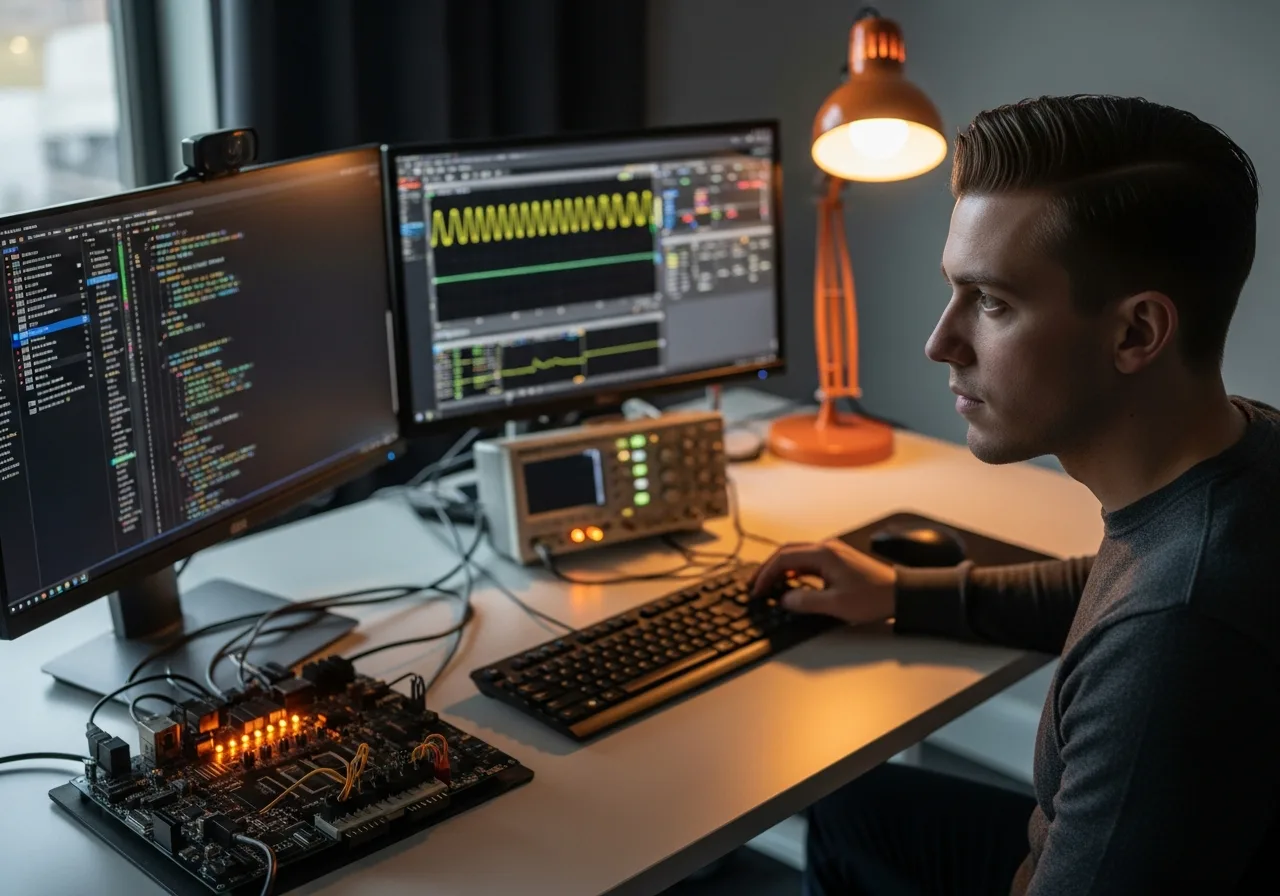
KORE1 places firmware engineers in 10 to 21 days on average, drawing from a network built over 20 years of embedded and hardware-adjacent software placements across automotive, medical device, IoT, and defense programs.
Firmware engineers are one of the hardest technology profiles to recruit. Not because they’re rare in some abstract sense. Because finding someone who can write real-time interrupt service routines in C while understanding the hardware signal that’s triggering them, someone who knows why your boot sequence is hanging at the UART init because of a pull-up resistor mismatch, requires sourcing from a completely different pool than the one your general-purpose tech recruiter is working from.
Most software hiring pipelines weren’t built for this. You post on a job board, get 80 applications, and realize pretty quickly that 75 of them have written “embedded C” for a smart home hobby project or they did a semester of microcontrollers in college. The three who have actual production firmware experience, shipped real devices, written drivers for custom silicon, and survived a bring-up on hardware that wasn’t working yet, those candidates aren’t looking. They’re heads-down on a project. We know how to reach them.
KORE1 is part of the broader engineering staffing agency practice that covers mechanical, biomedical, electrical, and embedded disciplines under one roof. Our firmware recruiters have spent years learning the difference between someone who mentions FreeRTOS on a resume and someone who has actually tuned task priorities and stack sizes on a resource-constrained device shipping in automotive or medical environments.
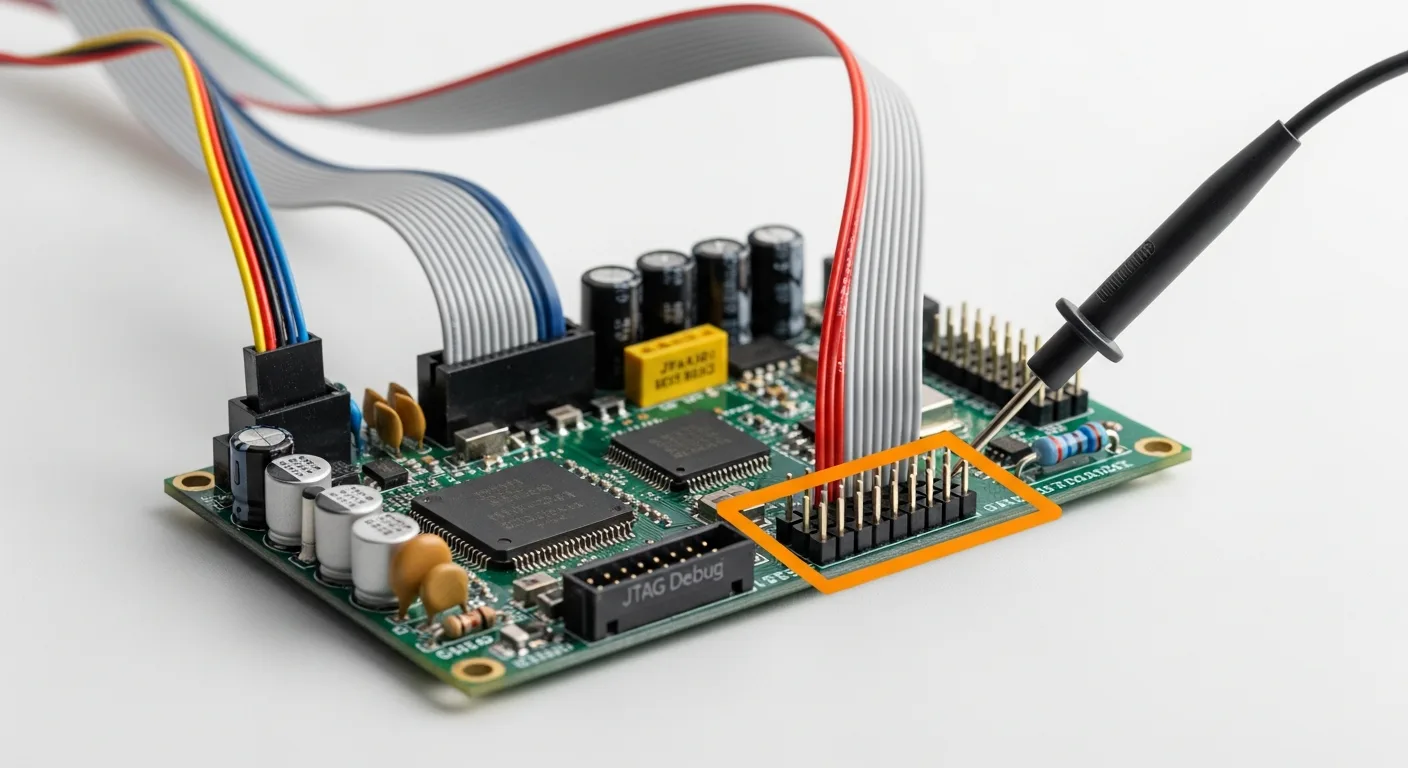
Firmware Engineering Roles We Place
We cover the full range of firmware and embedded software work, from bare-metal all the way up to embedded Linux. Where the C++ itself is the specialization rather than the silicon, start at C++ developer staffing.
- Bare-Metal Firmware Engineers who work without an OS, manipulating hardware registers directly and squeezing every cycle out of constrained microcontrollers
- RTOS Developers with real production experience on FreeRTOS, Zephyr, ThreadX, VxWorks, or QNX, not just coursework or personal projects
- Device Driver Engineers building kernel-level drivers for custom peripherals, display controllers, sensor interfaces, and communication ICs
- Bootloader and BSP Developers who’ve written or ported board support packages and understand the bring-up sequence from reset vector to application handoff
- Wireless Firmware Engineers working with BLE, Wi-Fi, Zigbee, LTE-M, NB-IoT, and proprietary 900MHz stacks in power-constrained IoT products
- Safety-Critical Firmware Engineers with hands-on experience in ISO 26262, IEC 62304, or DO-178C compliance processes and certified toolchains
- Embedded Linux Engineers working on Yocto/OpenEmbedded builds, kernel customization, and device tree management for higher-end embedded targets
- Firmware Test and Validation Engineers who build hardware-in-the-loop test rigs, write automated test scripts, and know their way around logic analyzers and protocol analyzers
Whether you need a direct hire to own your firmware platform long-term or a contract engineer for a six-month product sprint, the sourcing and screening process is the same. We qualify candidates against your actual hardware environment and firmware requirements, not a keyword match.

How KORE1 Finds Firmware Engineers Others Miss
The firmware engineers you actually want are not on job boards. They’re troubleshooting a timing bug at 11pm or reviewing a hardware rev that changes their entire interrupt architecture. When they do hear from a recruiter, they can tell in about 30 seconds whether that person understands firmware work or just Googled the job title before sending a message.
Our recruiters can hold a real conversation. They know why choosing VxWorks over FreeRTOS is an actual architectural decision with implications for determinism and licensing. They can discuss the trade-offs between a hardware timer interrupt and a software timer tick in an RTOS. They know what MISRA C compliance means in practice and which candidates have lived through a DO-178C audit versus just claiming familiarity.
That technical credibility is how we get responses from passive candidates who haven’t updated their resume in three years because they’ve been too busy shipping product. We’ve spent 20 years cultivating relationships inside embedded systems communities, professional IEEE chapters, and aerospace and defense contractor networks. When we reach out, it’s not cold outreach. It’s a warm call to someone who has worked with us or knows a colleague who has.
We’ll give you a realistic read on the market at kickoff. If your firmware stack requires DO-178C Level A DAL experience and your compensation is mid-market, we’ll tell you that before we spend three weeks presenting candidates you can’t close. The KORE1 engineering staffing practice has been doing this long enough to know when a search is straightforward and when the hiring criteria need a second look. Also see our electrical engineering staffing team for cross-discipline hardware builds, or our electrical recruiters if the requisition itself still needs scoping.
Years Placing Engineers
Engineering Placements
Day Average Fill Time
12-Month Retention Rate
Firmware Engineering Across Demanding Sectors
Industry context shapes everything in firmware. A candidate who has shipped automotive ECU firmware thinks about timing and failure modes differently than one who has shipped consumer IoT. We source to match your domain, not just your job title.
Automotive & ADAS
AUTOSAR Classic/Adaptive, ISO 26262 functional safety, CAN/LIN/FlexRay/CAN-FD, ECU firmware, motor control, and over-the-air update stacks.
Medical Devices & MedTech
IEC 62304 lifecycle compliance, SaMD classification, FDA-registered device firmware, safety-critical validation, and traceability-aware development processes.
Consumer Electronics & IoT
BLE, Wi-Fi, LTE-M, NB-IoT, Zigbee, aggressive power optimization, OTA update management, and cloud connectivity stacks on constrained hardware.
Aerospace & Defense
DO-178C, RTOS for avionics, FPGA firmware, DSP programming, MIL-SPEC hardware interfaces, and candidates who hold or can obtain security clearances.
What Makes KORE1 Different for Firmware Searches
Recruiters Who Understand the Work
We ask about interrupt latency budgets and stack overflow handling, not “are you comfortable with C?” Our technical screening filters out the resume keyword matches before they reach your calendar. You only talk to people who can do the job.
Every Engagement Model
Contract, contract-to-hire, direct hire, or project-based teams. Short firmware push for a product launch or a permanent platform owner, we structure the engagement around your timeline, not a standard bill rate model.
Embedded-Specific Network
Twenty years of relationships inside embedded systems communities, IEEE chapters, and defense contractor networks. We’re not starting from zero on every search. The candidates we call know us, and that matters when you need someone who isn’t actively looking.
Related KORE1 Resources
- How to Hire Firmware Engineers in 2026, Salary, JD tips, and sourcing for embedded talent.
- How to Hire IoT Engineers in 2026, Firmware/embedded plus cloud-connected IoT profiles.
- Embedded Software Engineer Staffing, The layer above the driver, meaning embedded Linux and Yocto, RTOS application work, connectivity stacks, and OTA.
- Embedded Software Recruiters, How our recruiters reach firmware talent that leaves no public code trail.
Sources & References
- IEEE: Institute of Electrical and Electronics Engineers, Standards and research for embedded systems and firmware engineering.
- The Linux Foundation, Open-source firmware ecosystems including Yocto, Zephyr, and embedded Linux.
Common Questions
What does a firmware engineer staffing agency do differently than a general tech recruiter?
A firmware staffing agency screens for the hardware context that general tech recruiters skip entirely. We verify whether candidates have shipped production firmware on real hardware, not just completed embedded coursework or side projects. That means asking about BSP bring-up, JTAG debugging on non-functional hardware, interrupt architecture decisions, and real-time performance constraints. General tech recruiters match keywords. We match capability. The search results are completely different, and so is the interview experience for your hiring team.
How hard is it to find qualified firmware engineers in 2026?
Harder than almost any other engineering discipline to source well. The talent pool is genuinely small because firmware engineering requires fluency in both low-level software and hardware systems. According to the Bureau of Labor Statistics 2025 Occupational Outlook Handbook, embedded and hardware-adjacent software roles have consistently outpaced supply for the past five years. Demand from automotive electrification, medical IoT, and defense modernization programs has accelerated that gap further. Most experienced firmware engineers have 3 to 5 competing offers when they do enter the market, which is rare. Your process needs to move fast and the technical credibility of your outreach needs to be real.
What firmware tools and environments do you screen candidates on?
We screen for actual project experience with your stack, not just name recognition. Common areas: ARM Cortex-M/R/A architecture, STM32/NXP/TI/Microchip/Nordic microcontroller families, RTOS platforms (FreeRTOS, Zephyr, ThreadX, VxWorks, QNX), toolchains (Keil MDK, IAR Embedded Workbench, GCC cross-compilers), debug interfaces (JTAG, SWD, UART console), bus protocols (CAN, I2C, SPI, UART, USB, Ethernet), and static analysis tools (PC-lint, Polyspace, Parasoft). If you run a custom BSP or use a proprietary RTOS variant, tell us at kickoff and we’ll factor that into the qualification criteria from the start.
How long does a firmware engineering search typically take?
10 to 21 days for most searches. Searches requiring rare combinations, DO-178C Level B or higher with specific RTOS experience, for instance, or TS/SCI clearance plus automotive safety certification, take longer because the candidate pool is genuinely smaller. We’ll tell you the realistic timeline at kickoff and flag the constraint clearly. The fill speed comes from maintaining active candidate relationships and not running the search cold. We’re not pulling from the same job board pool everyone else is using.
Can KORE1 find firmware engineers for safety-critical applications like medical devices or automotive systems?
Yes, and this is one of the areas where specialist recruiting makes the biggest difference. Candidates with IEC 62304 or ISO 26262 experience who have actually worked through a certification audit, not just read the standard, represent a small subset of the overall firmware pool. We know who they are. Same for DO-178C in aerospace. These searches require sourcing directly from companies in those verticals rather than relying on self-reported credentials on a resume. We verify compliance experience specifically during screening, including tool qualification, traceability documentation, and code review processes used in the candidate’s prior role.
Do you place firmware engineers on contract or only direct hire?
Contract placements work well for product development sprints, hardware bring-up support, or when you want to evaluate an engineer’s fit before committing to a permanent role. Direct hire is for building the long-term firmware platform team. Contract-to-hire splits the difference, a 3 to 6 month contract with a conversion option. Given how hard firmware engineers are to replace, many of our clients use contract-to-hire specifically to run a real working trial before the permanent offer. That trial period pays for itself quickly when the alternative is replacing someone 8 months in.
Ready to Hire a Firmware Engineer?
Start with a quick intake call. We’ll ask about your hardware platform, firmware stack, and what’s made past searches difficult. No pitch deck. A real conversation about whether the search is doable and what finding the right candidate actually requires in your specific environment.
If you are shortlisting agencies, see how firmware recruiting firms compare on placement quality.
