
Last updated: May 15, 2026
GRC Analyst Staffing — SOC 2, ISO 27001, HIPAA, PCI, and NIST Programs Staffed in 17 Days
Pre-vetted governance, risk, and compliance analysts on contract, contract-to-hire, or direct-hire terms. Audit-ready hires across 30+ U.S. metros, placed in an average of 17 days.
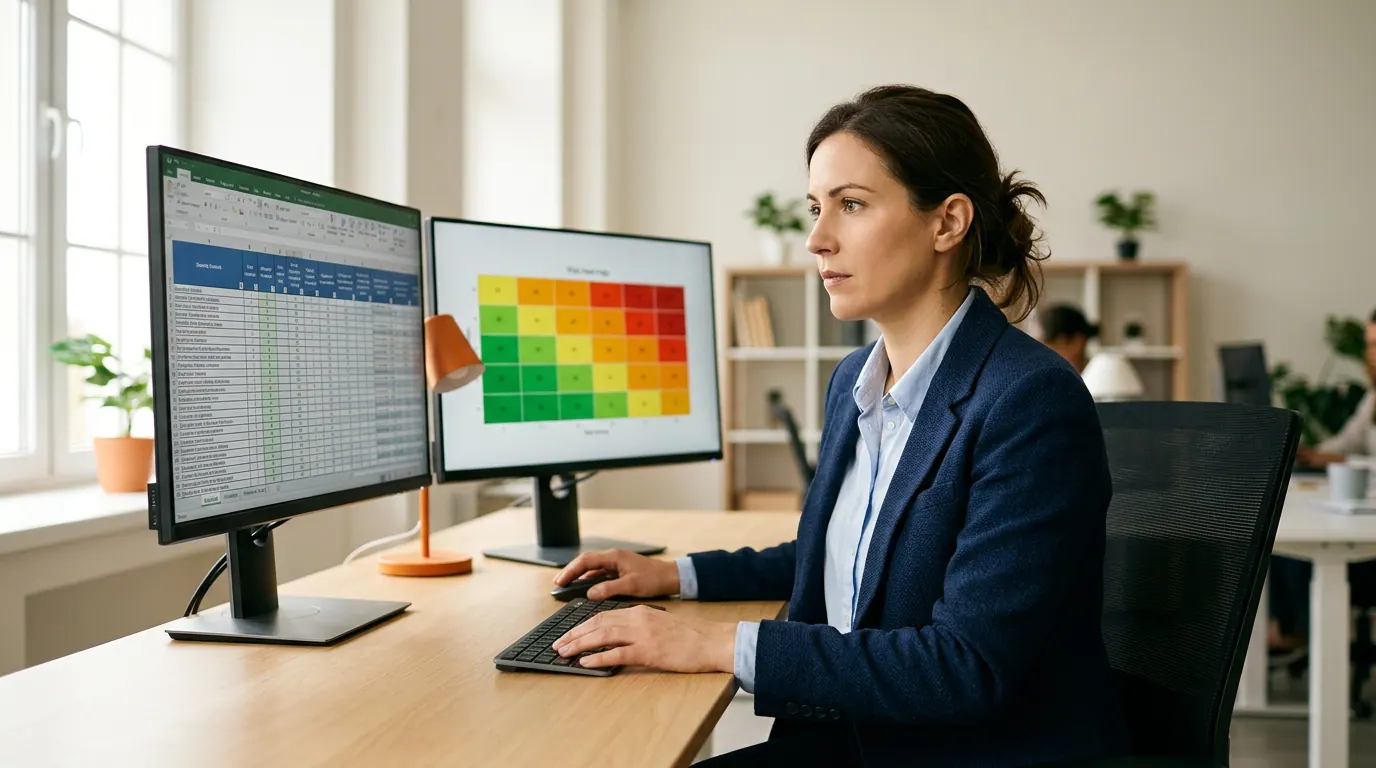
KORE1 places GRC analysts on contract, contract-to-hire, and direct-hire terms across SOC 2, ISO 27001, HIPAA, PCI-DSS, NIST CSF, and FedRAMP programs. Average time-to-hire is 17 days across 30+ U.S. metros.
The auditor sent the readiness checklist Tuesday. Field work starts in seven weeks. Your one GRC analyst just gave notice and the policy library hasn’t been touched in eighteen months. You can post the role, screen forty resumes, and hope the calendar holds. Or you can call us.
We’re a specialized cybersecurity staffing agency that’s been placing security and compliance analysts since 2005. Our recruiters know the difference between an analyst who can write a policy and one who can sit across from a Big-4 auditor and defend the evidence. That gap is where audits slip.
KORE1 places GRC talent across healthcare, fintech, SaaS, manufacturing, defense contractors, and public-sector consulting firms. The placements stick. 92% of our security and compliance hires are still with the same employer at the 12-month mark.

Every GRC role, mapped to the framework you actually operate under
Titles don’t tell you much. A “compliance analyst” at one company writes policies and runs awareness training. At another they own the entire SOC 2 control population and present quarterly to the audit committee. We ask the right questions before we source.
Most of what we place is framework-anchored. SOC 2 Type II readiness and continuous monitoring. ISO 27001 and 27002 implementation. HIPAA security rule analyst work for healthcare and digital-health clients. PCI-DSS Level 1 for fintech and e-commerce. NIST CSF 2.0 and NIST 800-53 alignment for federal-adjacent work. FedRAMP authorization support and CMMC Level 2 readiness for defense contractors.
Beyond pure framework analysts, we regularly place IT compliance analysts, risk analysts running enterprise and operational risk programs, third-party and vendor risk analysts handling TPRM lifecycle, internal IT auditors doing SOX ITGC work, and privacy analysts on GDPR, CCPA, and HIPAA. Senior-level searches — GRC Manager, Senior Risk Analyst, Compliance Lead — close more slowly but land more carefully. We’ll tell you what to expect on timeline before you commit.

Match the engagement to the audit calendar in front of you
Three models. Each one built for a different situation.
Contract is the right call when the work has a defined end. A SOC 2 readiness sprint, an ISO 27001 stage-1 prep, a HITRUST refresh, or a 90-day evidence-collection push before field work. You get a qualified GRC analyst without the salary commitment. See how contract staffing works for security and compliance roles. When the sprint needs more than one analyst, we staff a whole security bench for the audit window on the same terms.
Contract-to-hire makes sense when headcount isn’t approved yet but the auditor is already on the calendar. Or when you want to see someone perform inside your control environment before you commit. Sixty or 90 days, a conversion price upfront, no surprises. Learn more about contract-to-hire staffing.
Direct hire is for the analyst who’s staying. GRC Manager, Senior Compliance Analyst, Risk Lead, Internal Audit Manager. We run the full search, make the placement, and stand behind it with a replacement guarantee. More on direct-hire staffing if you want to see what that guarantee looks like in practice.
Not sure which fits? Describe the audit timeline and the headcount situation. We’ll tell you which model we’d pick.
Four places GRC analysts earn their seat
Most KORE1 GRC placements land in one of these four contexts. Each has its own pace, its own deliverables, and a different definition of done.
Pre-Audit Readiness
SOC 2, ISO 27001, HITRUST, or PCI-DSS gap assessment and remediation, with control owners identified and evidence sources mapped before field work begins.
Continuous Compliance
Year-round control monitoring, evidence collection, and quarterly committee reporting. The analyst the auditor calls when something looks off in the population.
M&A & Due Diligence
Pre-close security and privacy due diligence, post-close program harmonization, and integration of acquired entities into the parent’s GRC stack.
Vendor & Third-Party Risk
TPRM lifecycle, vendor questionnaires, SOC 2 reviews of critical suppliers, and the ongoing scorecard work that procurement keeps asking security to own.
Also placing privacy analysts, security awareness leads, internal IT auditors, and CMMC-focused readiness consultants. Need a security engineer instead? See our full cybersecurity staffing practice or our DevSecOps engineer staffing page.

How we screen GRC analysts
Five steps. Usually inside a week. No ceremony, just relevance.
- 01Intake call. Thirty minutes. We map frameworks in scope, the audit firm, the maturity of the existing program, and the one thing that usually sinks these searches — whether the analyst is writing policy from scratch or maintaining a mature control population.
- 02Sourcing. Active bench first. Warm referrals from prior placements second. Targeted outreach to passive candidates third. We don’t start with job boards, and we don’t spray resumes at a GRC opening.
- 03Technical screen. A security-specialist recruiter talks to every candidate. We test framework fluency (real SOC 2 trust services criteria, not the marketing version), evidence-collection workflow, GRC platform experience (Drata, Vanta, OneTrust, ServiceNow GRC, AuditBoard, LogicGate, Archer), and whether they can defend a control to an auditor without flinching.
- 04Reference calls. Two references, both direct managers where possible. We make the calls ourselves. Anything that doesn’t add up, we flag before you see the resume.
- 05Submittal. Two to four qualified candidates with written assessments. You see why each one fits the framework, the maturity stage, and the audit firm — not just their job history.
Common Questions
How much does GRC analyst staffing cost?
Contract GRC analysts bill at a loaded hourly rate based on level and framework experience. Direct-hire placements run a fee of 20% to 25% of first-year base salary, quoted before the search begins.
Mid-level GRC analysts with two to four years of SOC 2 or ISO experience are billing around $65 to $95 an hour contract in most U.S. markets, or $95K to $130K direct hire. Senior compliance analysts, GRC managers, and analysts with FedRAMP or CMMC experience run higher. According to the Bureau of Labor Statistics Occupational Outlook Handbook, the median annual wage for information security analysts (the BLS bucket that includes most GRC roles) was $124,910 in 2024, with the top 25% earning above $159K. Direct-hire placements carry a replacement guarantee. We quote the flat percentage before we start, not after. For how to scope the role, set the budget, and run the interview loop, read our guide on how to hire a GRC analyst.
How long does it take to fill a GRC analyst position?
Our average time-to-fill for GRC analyst roles is 17 days. SOC 2 and ISO 27001 readiness contract searches close faster. Senior GRC Manager, FedRAMP-experienced, and CISA or CRISC-required direct-hire searches trend toward 3 to 4 weeks.
The biggest variable isn’t sourcing. It’s the certification gate. Searches that require CISA, CRISC, ISO Lead Auditor, or active TS clearance pull from a smaller bench by definition. Searches that drift past three weeks usually lose a top candidate to a competing offer somewhere in the loop. Block 30-minute screens in the first 48 hours, keep the decision team to two people, and the calendar holds. We’ll tell you what’s realistic before we start.
What’s the difference between a GRC analyst and a SOC analyst?
A GRC analyst owns governance, risk, and compliance work — policies, frameworks, audit evidence, and risk registers. A SOC analyst owns security operations — monitoring alerts, triaging incidents, and running playbooks inside a SIEM. Different skill sets, different career tracks.
Companies confuse these all the time. A GRC analyst rarely has hands-on Splunk or CrowdStrike experience and shouldn’t be expected to chase alerts at 2am. A SOC analyst usually can’t write a SOC 2 control narrative that holds up in field work. There’s some overlap at the senior level where both roles need to understand frameworks and incident response, but at the analyst level they’re separate searches. Tell us which one you actually need and we’ll source the right bench.
Should I hire a contract GRC analyst or a direct-hire one?
Hire contract when you have an audit deadline and a defined scope. Hire direct when the analyst will own a continuous compliance program, present to the audit committee, and build institutional knowledge across multiple audit cycles.
Contract-to-hire splits the difference. You get a working trial of 60 or 90 days inside your control environment, then convert at a fixed fee if performance holds up. That model works especially well for SOC 2 readiness, where the first audit cycle is the real interview. The McKinsey risk practice research shows compliance functions increasingly built on a hybrid of full-time program owners and specialist contractors for surge audit work.
What certifications do your GRC analyst candidates hold?
GRC analyst candidates we place commonly hold CISA, CRISC, CISSP, ISO 27001 Lead Auditor, or ISO 27001 Lead Implementer credentials. For privacy-focused roles, we also see CIPP/US and CIPP/E. CCSP and AWS Security Specialty show up on cloud-heavy compliance searches.
Certification requirements vary by role. Pure SOC 2 readiness analysts don’t always need a credential — what matters more is whether they’ve owned the control population through a Type II audit cycle. Internal IT auditors usually need CISA. Risk analysts moving toward management often pursue CRISC. FedRAMP and CMMC searches lean on candidates with prior federal experience over any specific certification. We’ll tell you what the realistic candidate pool looks like for your framework and seniority before you commit to a search plan.
Can your GRC analysts work remotely?
Yes. Most GRC analyst work runs remotely or hybrid. Evidence collection, control testing, and policy work translate well to remote delivery. Onsite or hybrid is more common for audit-committee-facing roles, defense contractors with cleared environments, and healthcare clients with strict HIPAA workforce policies.
Hybrid usually means two to three days onsite during audit windows, fully remote between cycles. Fully onsite is rare outside of cleared federal work or hospital systems with on-premise HIPAA training requirements. We confirm remote, hybrid, or onsite expectations during the intake call and only submit candidates who’ll sign off on the actual arrangement. That’s a meaningful part of why our 12-month retention runs at 92% across security and compliance placements.
