
Last updated: August 27, 2026

Hospitality IT Staffing
Technology talent that knows Opera from Mews and Toast from Micros. KORE1 places engineers, analysts, and support specialists into hotels, restaurant groups, casinos, and travel platforms where every minute of downtime shows up on a guest’s face.
Last updated: July 29, 2026
Hospitality IT staffing is the recruiting practice that places technology professionals into hotels, restaurants, casinos, and travel platforms who already know the property systems, point-of-sale stacks, and revenue tools the industry runs on.
Why Hospitality IT Is Its Own Discipline
A backend engineer can write beautiful code. Drop them into a 400-key resort the night before a property management system cutover, and they’ll spend the first three hours figuring out why housekeeping statuses aren’t syncing to the front desk and the next three apologizing to a GM who has 80 arrivals showing up at 3pm. Hospitality runs on a stack most engineers have never seen. Opera Cloud. Mews. Cloudbeds. Stayntouch. Toast. Oracle MICROS Simphony. Sabre. IDeaS. Revinate. The names rotate by segment, but the lesson is constant. People who haven’t lived in this stack take months to be productive in it.
That gap is what makes hospitality IT staffing different from general tech recruiting. A property runs 24/7. A POS terminal that goes dark during a Friday dinner rush isn’t a sprint ticket. It’s lost covers and a server who can’t close their bank. A booking engine that drops a single character on a credit card tokenization call doesn’t trigger a Slack message. It triggers a chargeback and, if the issue compounds, a PCI Security Standards Council scope expansion. We see the same vertical-IT pattern in our healthcare IT staffing work, where domain literacy beats generic technical chops every time. Our candidates have already been the on-call engineer for those nights. We don’t introduce them to hospitality. We find the ones who’ve been here.
Property Systems Aren’t Generic Software
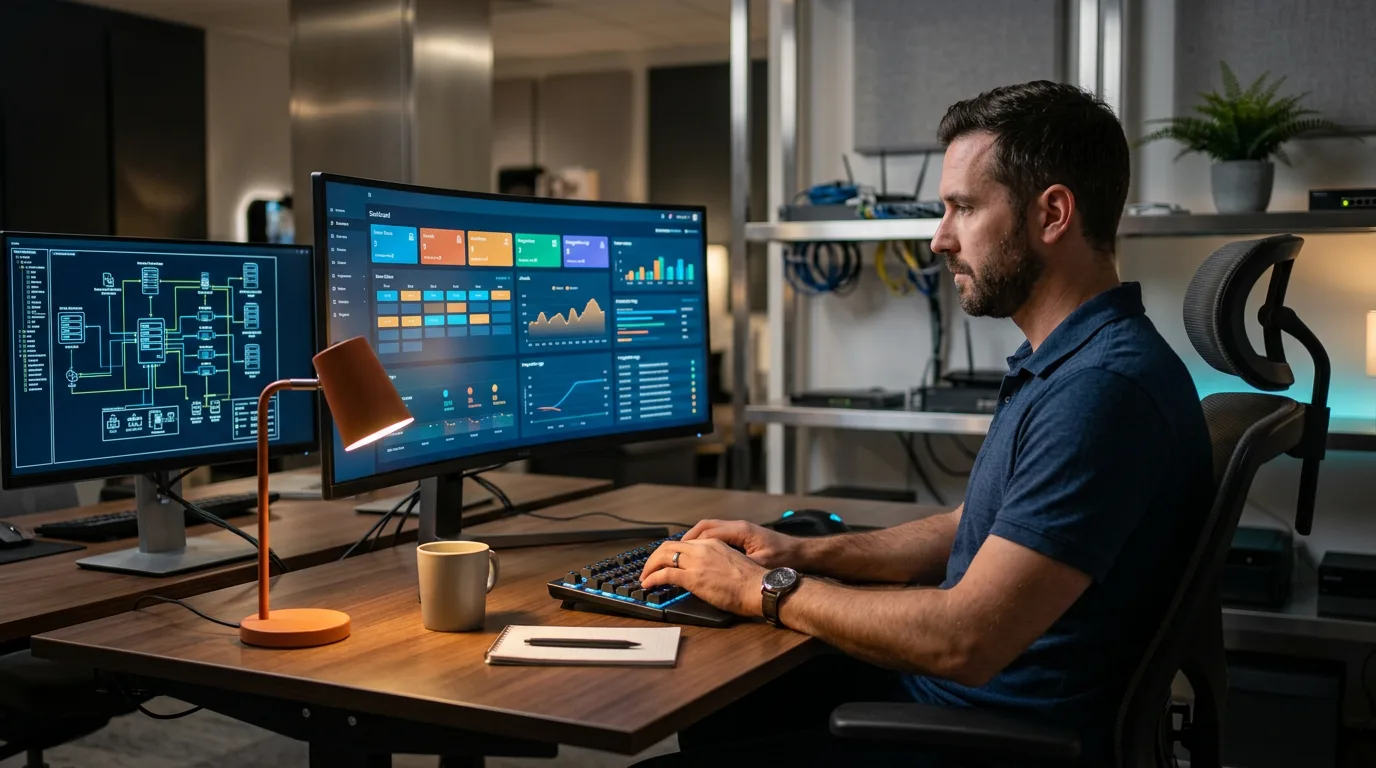
Every brand has a stack the engineer either knows or doesn’t. Marriott’s CI/TY plus FSPMS. Hilton’s OnQ. Hyatt’s Reserve. Independent and lifestyle properties on Mews, Cloudbeds, Stayntouch, or Apaleo. Casino properties layered on Aristocrat, IGT, or LMS gaming systems on top of their PMS. The integration surface looks different at every property, and the engineers who can navigate it tend to have come up through hospitality, not parachuted in from a SaaS startup that decided to “go vertical.”
We staff the ones who’ve actually rebuilt the integration between a PMS, a CRS, a CRM, a channel manager, and a kiosk vendor without taking the property offline. Front-of-house IT support, mid-office systems analysts, and the rare software engineer who can write against Oracle Hospitality APIs without having to schedule a call with Oracle support every time a field changes. The AHLA’s 2025 State of the Industry projects U.S. hotel guest spending to reach $777.25 billion in 2025, and almost every dollar of it touches a PMS, a POS, or a payment integration that was built, tuned, and patched by an engineer. The BLS projects computer and information technology employment to grow much faster than the average for all occupations through 2034, and hospitality is absorbing more of that demand every cycle.
Most agencies we compete against can’t tell you what a CI/TY interface does. We can. So can our candidates. That’s the gap.
Multi-Property Rollouts and the Holiday Cliff
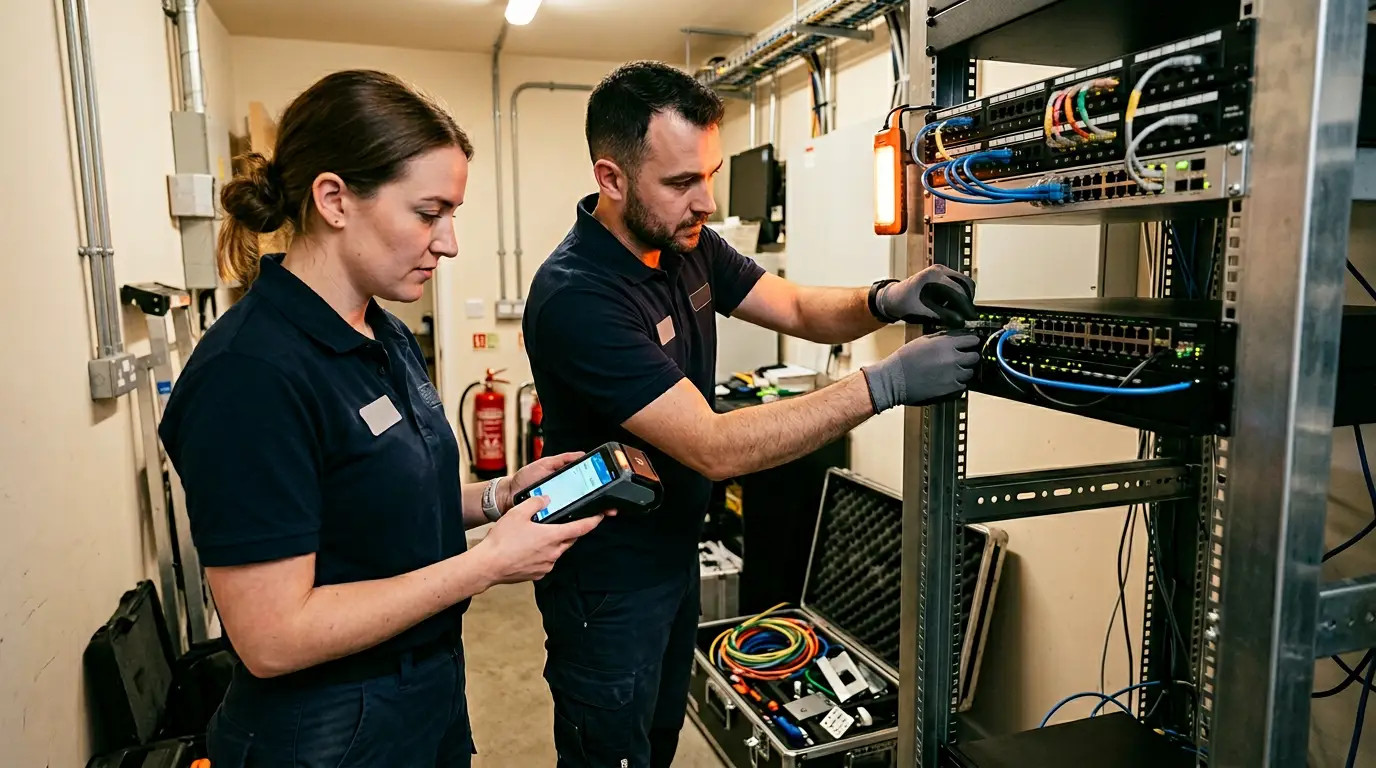
Hospitality hiring isn’t flat. It’s a wave. A regional restaurant group decides in February that every location is moving to a new POS by Memorial Day weekend. A hotel ownership group acquires three properties and needs the PMS, CRS, and back-office stack converted before the next brand audit. A cruise line is flipping its onboard guest-experience platform between dry docks. None of these timelines bend. The engineers either show up ready, or the project slips into peak season and the property explains the failure to corporate.
That’s the work we built our hospitality IT desk to handle. Surge teams of network technicians, POS rollout specialists, and integration engineers who can deploy across 40 properties in 90 days. Single-property deep hires for resorts and casinos that need a senior engineer permanently embedded. Bench-style coverage for IT support teams that scale up before holiday and contract back in February. We pull from our DevOps engineering bench when a rollout needs CI/CD discipline across multiple sites, and from our cloud engineering bench when the PMS or POS conversion is a lift-and-shift to AWS or Azure. Our contract and project staffing models flex with the industry’s calendar instead of pretending it doesn’t exist.
And when the rollout is done, the engineers leave clean. We don’t drag a project on so the timesheet keeps growing past the deliverable, because that’s how a staffing relationship turns into a vendor the GM stops returning calls from, and we’d rather work with a property again next quarter than squeeze one more month out of this one. The whole point is that the property comes out the other side with a stack their permanent team can actually run.
Hospitality IT Hiring by the Numbers
Hospitality Tech Roles We Fill
Four role families. Each one carries its own vendor literacy, audit exposure, and on-call reality.
PMS & Property Engineers
Opera, Mews, Cloudbeds, Stayntouch, Apaleo. Integration developers, systems analysts, and on-property IT leads who own the stack guests touch.
POS & Restaurant Tech
Toast, Oracle MICROS Simphony, Lightspeed, Squirrel. Rollout specialists, kitchen-display engineers, and payments integrators for restaurant groups and F&B teams.
Revenue, CRS & Data
IDeaS, Duetto, Sabre, Amadeus, Travelport. Revenue management analysts, channel managers, and data engineers who feed the rate decision.
Network & PCI Security
Distributed-property networking, PCI-DSS scope work, casino regulatory tech, and the cybersecurity roles that keep guest data and payment flows out of the news.

Beyond the Hotel: Travel, Booking, and Loyalty Tech
Hospitality IT bleeds into travel tech. Booking engines, global distribution systems, loyalty platforms, customer data platforms, OTA connections, mobile apps that have to handle Apple Wallet keys and a check-in flow that can’t fail at 11pm in a different time zone. KORE1 staffs this layer too. Sabre and Amadeus integration engineers. Revinate and Cendyn CRM developers. Mobile engineers who’ve shipped a guest app that survived a brand relaunch.
Casino properties get an extra layer. Gaming systems, slot floor data feeds, AML and Title 31 compliance reporting, integrations between the property hotel stack and the casino management system. The AGA’s State of the States 2025 report put 2024 U.S. commercial gaming revenue at a record $72.04 billion, the fourth straight record year, and every dollar moves through a tech stack that needs people who understand both the regulatory weight and the integration nuance. We’ve placed those people. Most generalist agencies haven’t.
Common Questions
What does a hospitality IT specialist actually do?
A hospitality IT specialist runs the technology a property depends on every shift, from the property management system and POS to the network, payments, and guest-facing apps. The role splits into three rough buckets. On-property IT support keeps the front desk, housekeeping, and F&B systems alive. Mid-office and corporate systems engineers own integrations between PMS, CRS, CRM, channel managers, and accounting. Developers build against vendor APIs, customize loyalty and guest-experience flows, and ship the kind of integration work that no off-the-shelf vendor sells.
Why hire a hospitality-specialized IT staffing agency instead of a generalist?
Two reasons. Speed and risk. A generalist agency will send candidates who can talk through cloud architecture and CI/CD pipelines, then watch them stall in week three because they’ve never touched a PMS, never sat in a property opening, and don’t know that a credit card token leaving PCI DSS scope is a serious event. A specialized desk shortens the ramp, lowers the audit risk, and gets the property back to selling rooms instead of explaining outages. The premium on a specialized hire is small. The premium on a bad one is enormous.
What does hospitality IT pay in 2026?
Wide range. On-property IT support sits in the $55K to $80K band depending on market and property class. Mid-level systems analysts and PMS administrators run $85K to $115K. Senior integration engineers, revenue-systems leads, and corporate IT directors push $130K to $200K. Casino regulatory tech and senior security roles can clear $200K when the regulatory exposure is high. Contract rates trend $65 to $130 an hour for the same talent depending on engagement length and scope. Every property and brand pays differently. We benchmark by market when we open the search.
How quickly can KORE1 fill a hospitality IT role?
17 days is our cross-vertical average. Hospitality lands on either side of that depending on specialization. A contract POS rollout technician with brand experience often closes inside two weeks. A senior PMS architect with multi-brand integration history and a casino regulatory background can run six to ten weeks because that talent pool is small and already employed. We’d rather quote a real timeline than promise a 5-day fill we can’t deliver. That’s also why our 12-month retention sits at 92%.
Can KORE1 support multi-property rollouts and seasonal scale-ups?
Yes, this is core work for our hospitality desk. Surge teams for POS or PMS conversions across multiple properties on a fixed timeline. Bench coverage that scales IT support up for the holiday and convention season and back down in the off-months. Single deep hires for permanent property leadership. We staff each model differently. Surge work is usually contract or project-based; permanent leadership is direct-hire. The thing we don’t do is force one engagement type onto a problem it doesn’t fit.
Do you cover restaurant groups and casinos as well as hotels?
All three. Restaurant groups get POS rollout specialists, payments engineers, kitchen-display experts, and back-office accounting integrators who know how a tip-pool calculation needs to look in the GL before restaurant payroll picks it up next Tuesday morning. Casino properties get gaming-systems engineers, regulatory reporting analysts, network and surveillance IT, and the security depth that AGA-regulated environments require. Cruise lines, vacation rental platforms, and travel tech employers come through the same desk. The common thread is operational tech that can’t go down. The vertical specifics shift, and our recruiters carry that context into every conversation with the candidate.
Stop Burning Cycles. Start Staffing.
Tell us the property, the stack, and the timeline. We’ll show you candidates who’ve already shipped on it.
Talk to a Recruiter →