Last updated: July 29, 2026
Industrial Engineering Staffing
Process, manufacturing, and continuous-improvement engineers placed where the math meets the floor. KORE1 sources industrial engineers who’ve actually shipped takt-time gains, not ones who can only spell Lean.
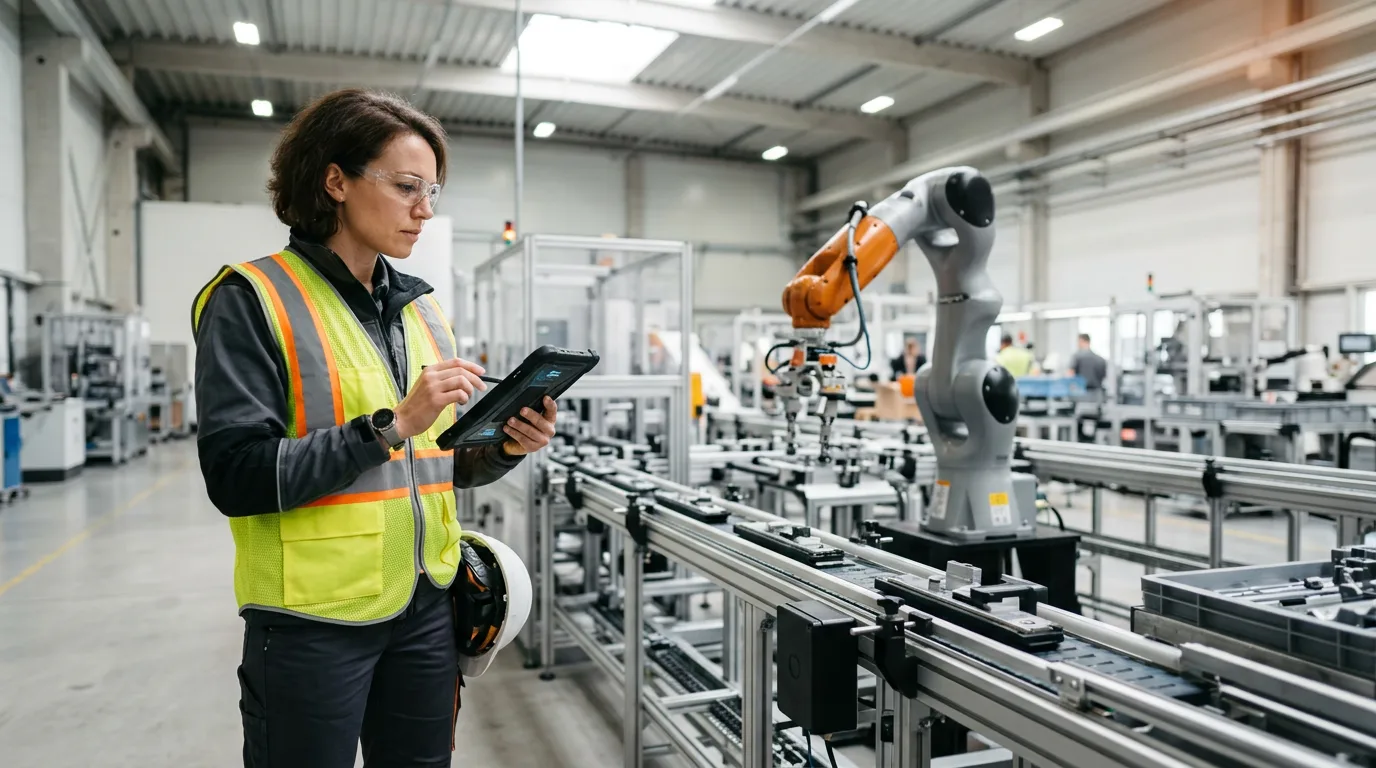
Industrial engineering staffing places the engineers who optimize how work actually gets done. KORE1 has spent 20 years recruiting industrial, process, and continuous-improvement engineers across 30+ U.S. metros, with a 92% 12-month retention rate.
You don’t hire an industrial engineer for a job spec. You hire one because cycle time is creeping, scrap is climbing, the new SKU launch is two months behind, or your CFO just asked why labor as a percent of cost of goods sold ticked up again. The right IE earns back their salary in a quarter. The wrong one rewrites the work instructions and goes quiet for a year.
That’s why generic engineering recruiters miss on this discipline. Industrial engineering sits between operations, finance, and the design team. The candidate who looks great on paper because they’ve published lean Six Sigma case studies might never have stood next to a CNC operator and watched what actually happens during a setup. KORE1 places engineers from the broader engineering staffing bench, but our IE recruiters specifically screen for shop-floor literacy first. Resume second.
Industrial Engineering Roles We Place
The job titles vary by industry. The skill stack overlaps more than the org chart suggests.
- Industrial Engineers — time studies, line balancing, layout design, ergonomic redesign, work measurement
- Process Engineers — root cause analysis, SPC, capability studies, PPAP, validation protocols
- Manufacturing Engineers — fixture and tooling design, GD&T, cell layout, takt-time optimization
- Continuous Improvement Engineers — kaizen events, A3 problem solving, value stream mapping, gemba walks
- Lean Six Sigma Engineers — Green Belt through Master Black Belt, DMAIC and DMADV project leadership
- Operations / Production Engineers — capacity planning, OEE improvement, changeover reduction
- Supply Chain & Logistics Engineers — warehouse slotting, network design, S&OP analytics, inventory optimization
- Quality & Reliability Engineers — FMEA, control plans, ISO 9001 / AS9100 / IATF 16949 audits
- Ergonomics & Human Factors Engineers — RULA / REBA assessments, workstation redesign, repetitive-strain mitigation
Looking for a permanent hire to lead a CI program? Done. Need a contract Black Belt to run a 90-day kaizen blitz before Q3? We’ve staffed that exact engagement. The hiring shape changes. The screening doesn’t. Read more about direct hire, contract, and project staffing.

How KORE1 Screens Industrial Engineers
Anyone can list “Lean Six Sigma” on a resume. The question is what they did with it.
Our recruiters are trained to push past credentials. ASQ Black Belt? Great. Walk us through the last DMAIC project, the actual cost savings, and how Finance agreed to count it. Six Sigma certified through a community college weekend course with no project under the belt? That gets flagged before you ever see the resume. We catch the difference because our IE bench has real engineering background, not a script of buzzwords.
For shop-floor roles we ask candidates to describe a recent gemba walk in concrete terms. What waste did they actually see? Which of the eight wastes was it? What did they propose, and did the ops manager agree? You’d be surprised how many “continuous improvement engineers” can’t answer that without retreating into theory. We don’t put those candidates in front of you.
Every candidate also gets screened for the soft thing nobody puts on a job spec, which is whether they can stand on a production floor for three hours and have a useful conversation with a 25-year machinist who’s seen a dozen consultants come through with PowerPoints and leave nothing behind. If the candidate sounds like one of those consultants, we cut them.
Years in Engineering Staffing
12-Month Retention
U.S. Metros Served
Avg Recruiter Tenure
Three Ways We Place Industrial Engineers
Not every search wants the same shape. Here’s how the engagement options actually break down.
Direct Hire
Permanent placement. Engineer joins your payroll on day one. Best for senior CI leaders, plant-level IE managers, and roles tied to long horizons. See direct hire.
Contract
Engineer stays on KORE1 payroll, you pay a bill rate. Right call when you need a Black Belt for a 6-month rollout or coverage during a hiring freeze. See contract staffing.
Project Staffing
Defined scope, defined deliverable. Useful for line-balance studies, plant launches, ERP cutover support, or scoped kaizen programs. See project staffing.

Industries We Know Cold
Industry context changes everything for an IE. A continuous improvement engineer in food & beverage runs a different toolset than one in aerospace. We staff to the context, not the buzzwords.
Aerospace & defense — AS9100D environments, configuration management, build-to-print and build-to-spec rigor. Heavy overlap with our aerospace engineering staffing and mechanical engineering staffing benches.
Medical device — Class II and III, FDA design controls, validation discipline, and cleanroom literacy. Shared sourcing with our biomedical engineering staffing practice.
Automotive & EV — IATF 16949, PPAP, APQP. The compounding annual changeover pace makes IE the highest-leverage engineering hire on a cellular line.
Food & beverage and CPG — SQF and HACCP cadence, sanitation cycles, line speed math, and case-pack engineering. Different rules, same toolkit.
3PL, distribution & e-commerce — slotting, pick-path engineering, warehouse layout, and labor standards. Where IE crosses into the world we cover via light industrial staffing for floor talent.
Semiconductor & electronics — yield analysis, fab process control, statistical engineering. Tight overlap with our electrical engineering staffing, and power systems engineering staffing sourcing.
Common Questions
What does an industrial engineer actually do?
Industrial engineers design and improve the systems people, machines, and information move through, with the goal of doing the same work in less time, less space, or less cost. The day-to-day is time studies, layout work, line balancing, root cause analysis, and quantifying the trade-offs leadership has to make. Some IEs spend 80% of their time on a shop floor with a clipboard. Others sit in front of a Tableau dashboard tied to MES data. The job is the same. The vantage point isn’t.
How much do industrial engineers cost in 2026?
Most U.S. industrial engineers we place fall between $85K and $145K base, with senior CI leads and Black Belts in heavy industry pushing $160K to $185K. The BLS 2024 OOH lists a median of $101,140 for industrial engineers, and our placement data tracks slightly above that, since we recruit heavily for medical device and aerospace where the comp band is structurally higher. Comp varies a lot by metro and certification stack. A Master Black Belt in Detroit auto and a brand-new IE in rural food & bev are not the same line item.
How fast can KORE1 fill an industrial engineering role?
Most of our IE searches close in 14 to 28 days from kickoff to signed offer. A few specifics make it faster or slower. PE-licensed roles, niche regulated environments like medical device combination products, and clearance-required defense work all extend the timeline. Standard CI engineer or process engineer roles in a major metro almost always move under three weeks. We give you a real forecast at the kickoff call, not a number we picked to win the engagement.
What’s the difference between an industrial engineer and a manufacturing engineer?
Big overlap. The split, where it exists, is that manufacturing engineers focus on how a specific part gets made (tooling, fixturing, process flow for one product line) while industrial engineers focus on the broader system the line lives inside (capacity, layout, labor, throughput across products). Some companies use the titles interchangeably. Others split them sharply. We screen for the actual work in the JD, not whichever title HR happened to pick when they opened the req.
Do industrial engineers need a PE license?
For most roles, no. The PE is uncommon in industrial engineering compared to civil, mechanical, or electrical disciplines. Where you see it required is usually consulting work, certain government and defense roles, or expert-witness situations involving ergonomics or facility design. If your req says “PE preferred,” tell us whether it’s a real screen-out or a wish-list line, because the candidate pool changes meaningfully depending on the answer.
What industries hire the most industrial engineers right now?
Aerospace and medical device lead the volume on our desk in 2026, with strong continuing demand from automotive and EV battery plants, contract manufacturers, and 3PL operators. Semiconductor demand is back after a soft 2024. Food & beverage stays steady, especially around automation retrofits. CPG companies are quietly adding CI talent to defend margin. The IISE workforce data and BLS projections both put industrial engineering above-average for growth through 2032, and what we see in active reqs lines up with that.
Ready to Hire an Industrial Engineer Who Actually Moves the Number?
Twenty minutes is enough for a useful intake call. We’ll ask about the line, the loss, and what’s been tried already. No deck, no pitch, no charge to talk.
