Last updated: July 20, 2026
iOS Developer Staffing That Ships Apps, Not Tickets
Hire vetted senior iOS engineers for Swift, SwiftUI, UIKit, and cross-platform mobile work. Contract, contract-to-hire, and direct hire placements with App Store-ready candidates across the US.
Hiring iOS Is Harder Than It Used To Be
There was a stretch, maybe 2016 through 2020, when an iOS job was an iOS job. Objective-C legacy, some Swift, UIKit, Core Data. Most decent candidates could fill most decent roles.
That’s not the shape anymore. SwiftUI has reordered the stack and brought a decade of declarative UI practice into the standard toolchain, along with Combine, async/await, SwiftData, the Composable Architecture, Live Activities, Widgets, App Intents, and a StoreKit 2 rewrite that nobody who last touched in-app purchases in 2019 remembers how to navigate. A senior engineer who left UIKit for React Native three years ago, even a strong one, is not the person who ships a polished Liquid Glass refresh on iOS 26 next quarter without relearning half the framework surface in the process. Different muscle. Same title on the resume.
Most agencies still screen to a generic “iOS developer” spec, send the first ten resumes, and hope the technical interview sorts it out on the client side. We don’t. Our IT staffing practice splits iOS searches into a native Swift bench and a cross-platform bench, vetted by separate engineers, with different rubrics for each and a different panel chair. According to the 2024 Stack Overflow Developer Survey, Swift sits mid-pack by popularity. Our iOS Developer Salary Guide breaks down the 2026 numbers by level, metro, and contract rate. Once the band is set, our iOS developer job description template covers what the posting has to say about the app itself. The supply is real. The matching is the job.
iOS Roles We Fill
Six searches we run on repeat. Titles change by team. The work doesn’t.
Senior iOS Engineers
Swift 6, UIKit where it still earns its keep, mixed-scene apps with a Combine or async/await backbone running through the networking and persistence layers. Engineers who’ve shipped through three OS cycles and know which Apple APIs to trust on day one, which to wait a point release on, and which to route around entirely until the dust settles. Senior native iOS comp typically runs $150K to $185K base in 2026.
SwiftUI Specialists
Declarative UI fluency, state management via Observable or TCA, custom layouts, matchedGeometry transitions, plus the patience to route around SwiftUI’s current edges without losing the shape of the codebase. We place these heaviest into consumer apps, fintech apps, and brand apps where the visual bar is high and the review cycle with design is weekly rather than quarterly.
iOS Architects & Leads
The hire who picks the module boundary, the DI approach, the persistence layer, and then defends each of those choices in code review without burning out the rest of the team. Usually 10+ years on the platform, often with one major rewrite on their resume that they’ll reference, unprompted, in every architecture conversation thereafter. Lead comp runs $190K to $240K depending on market and scope.
Cross-Platform Mobile Engineers
React Native with TypeScript, or Flutter with Dart. Engineers who know when to drop into a native module for performance or platform reach, and when to stay in JavaScript or Dart because the gain isn’t worth the bridge tax. We staff these into startups chasing speed and into enterprise teams that need one codebase across iOS and Android with a realistic escape hatch when a specific screen needs to go native. For teams that need both iOS and Android covered, see our mobile developer staffing practice, which runs all three benches under one roof.
Mobile DevOps & Release Engineers
Fastlane, TestFlight, App Store Connect API, code signing, provisioning that doesn’t break on Friday afternoon. Often pairs with our DevOps staffing placements. The engineer who makes release day boring. Honest description: underrated hire.
Apple Platform Generalists
iPadOS, macOS via Catalyst or AppKit, watchOS complications, tvOS, visionOS where budget allows. Engineers comfortable across the family, useful on teams building a consumer brand or a HealthKit-adjacent product. Thinner supply. Longer searches. Worth the wait.
The iOS Talent Market, In Numbers
Sources: BLS OOH 2025, Stack Overflow Developer Survey 2024, Apple developer stats, KORE1 placement data.

[swift] How We Screen Native iOS
Every senior native Swift candidate clears a panel of working iOS engineers before a resume reaches a client. No exceptions.
The screen has three parts, and they take about an hour together. First, a short architecture conversation. Pick an app you shipped, walk us through the module boundaries, the state management choice, and one decision you’d reverse today if you were starting the codebase fresh with the same constraints. The answer tells us whether the seniority is real or a function of tenure. Second, a live Swift exercise. Not tricks. A small SwiftUI view with a state bug, an actor with a data race, or a networking layer that deadlocks under a reasonable condition that a senior engineer should spot within a few minutes of reading the code. We’re looking for instinct, not memorization. Third, an App Store story. A shipped app, a real rejection from review, and what you changed to land it. Candidates who’ve never faced a reviewer have usually never shipped.
What we don’t do. We don’t run unpaid take-homes. We don’t screen on leetcode. We don’t eliminate candidates for not remembering every SwiftUI modifier. The bar is shipped work and the ability to talk about it honestly. That filter alone removes more than half of inbound applications. The same screen runs on the Android side, which is why our mobile recruiting practice treats the two platforms as separate searches.
[cross] Native or Cross-Platform, An Honest Take
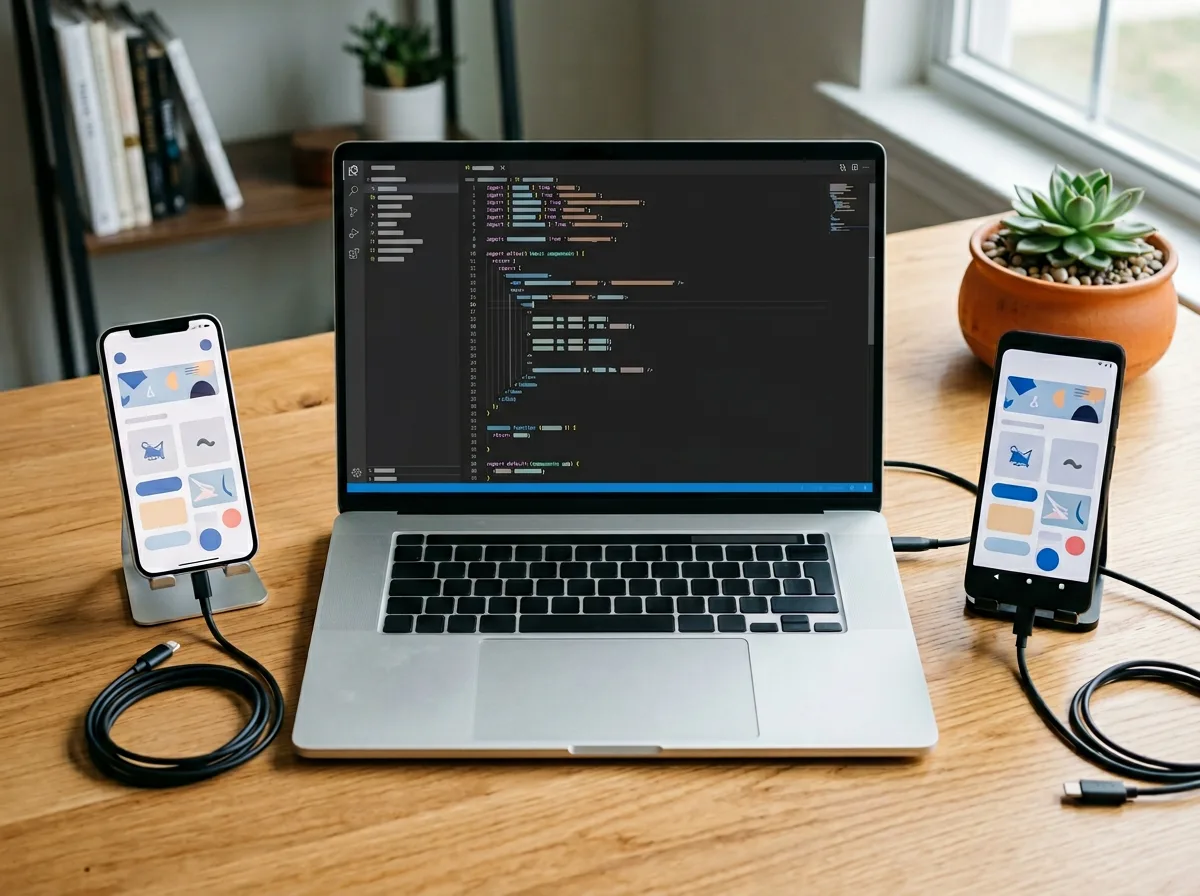
Most agencies recommend cross-platform because it sounds cheaper on the pitch deck. We don’t default there. The right answer depends on the app.
Native Swift wins when the product leans on Apple-only surfaces. HealthKit, ARKit, Apple Pay, Live Activities, CarPlay, Vision Pro, tight StoreKit flows, serious Core Data or SwiftData work that a bridge layer will struggle to model cleanly over time. Teams that ship in this territory and tried React Native first almost always migrate back, usually after the second or third native bridge turns into a six-week project that nobody scoped at the start of the quarter. The math is rarely worth it. Hiring for that surface area got marginally easier in 2026, because Apple’s quiet restructuring put platform engineers back on the market in the largest numbers since the Project Titan unwind.
React Native earns its slot for content-forward apps, internal tools, and products where iOS and Android need to stay in lockstep feature-for-feature with the same release cadence and the same design system running across both sides. Flutter fits when the team has strong Dart experience or a consistent design system that wants pixel parity across platforms, especially if the product is heavy on custom rendering or animation that benefits from Flutter’s compositor approach. In both cases, we look for engineers who can drop into Swift or Kotlin when the framework runs out. A cross-platform engineer who can’t write a native module is a bug waiting to land.
Short version. Apple-heavy product, go native. Feature-parity product with reasonable UI demands, cross-platform is viable. We staff both, and we’ll tell you honestly which we think fits before the search starts.
How We Engage
Three models. Each fits a different shape of iOS work. Our 2026 guide walks through how to hire an iOS developer step by step.
| Model | Best For | Typical Duration |
|---|---|---|
| Direct Hire | Permanent iOS platform team, senior SwiftUI leads, iOS architects, mobile engineering managers | Permanent |
| Contract | SwiftUI migrations, watchOS or visionOS sprints, feature pushes before launch, bandwidth spikes | 3 to 12 months |
| Contract-to-Hire | Testing fit before commit, common for senior iOS engineers moving from consultancy to product | 3 to 6 months, then convert |
| Project-Based | Fixed-scope iOS rebuild or new app build with a KORE1 team and named lead | Scoped per engagement |

Why KORE1 for iOS Staffing
We’ve placed engineering talent for 20+ years. iOS isn’t a brochure line. It’s a specialty inside our IT bench that we vet with working iOS engineers, not generalist recruiters reading a job description.
Every senior iOS candidate we submit has been through a panel screen. Native Swift engineers get an architecture talk and a live exercise that a working iOS engineer on our side designed and scored. Cross-platform engineers get a native-module question and a performance scenario that tests whether they actually understand the bridge layer rather than treating it as magic. Take-homes are optional and never unpaid. Candidates hear what to expect upfront, which is part of why senior iOS people return our calls in a market where most agencies get ignored after the second unsolicited LinkedIn message in a week.
We staff iOS nationally, with desks in Orange County, Los Angeles, San Francisco, and San Diego, plus remote placements coast to coast. iOS work overlaps heavily with our fintech, healthcare IT, and software engineering staffing practices, and overlaps with Java and Python hires on backend-heavy mobile teams. For benchmarking comp before an offer goes out, teams use our salary benchmark tool to calibrate against the current market.
Ready to start an iOS search? Reach out to our team and we’ll walk through what the talent market looks like for your stack and your budget.
Common Questions About iOS Staffing
How much does it cost to hire an iOS developer through a staffing agency in 2026?
Mid-level native iOS engineers with 3 to 5 years of Swift experience land in the $130K to $160K base range. Senior native iOS engineers run $150K to $185K, with SwiftUI specialists at the top of that band because the vetted bench is thinner than teams assume going in. iOS architect and lead roles run $190K to $240K depending on the metro, with bay area placements often a clean tick above that when the role includes any managerial scope over a mobile team. Contract rates for senior iOS engineers fall between $95 and $150 an hour. Anchoring a 2026 offer to 2023 numbers is the fastest way to lose a candidate in the final round.
Should we hire a native iOS developer or use React Native or Flutter instead?
Depends on the app. If the product leans on HealthKit, ARKit, Apple Pay, StoreKit, Live Activities, or any serious Apple-platform surface that a bridge layer will struggle to model well, go native. Teams that force cross-platform for those use cases almost always migrate back within a year or two, usually after the fourth or fifth native bridge becomes its own maintenance burden. If the app is content-forward, internal, or needs to ship feature-for-feature on iOS and Android with a small team on a tight release cadence, React Native or Flutter is viable. We staff both benches and will say on the first call which we think fits.
Do iOS developers still need to know Objective-C in 2026?
For most greenfield work, no. Swift has been the expected default since 2019 or so. The exception is legacy codebases. Any app with a long lineage, especially in fintech, media, or enterprise, still has Objective-C surfaces you can’t avoid. For those teams, a senior engineer who can read and extend Objective-C while writing new Swift is a real shortlist filter. For new apps, it’s a nice-to-have and nothing more.
How long does a typical iOS developer search take?
Our average time-to-submit on iOS contract searches is 24 days. Direct hire searches for senior native roles run 5 to 8 weeks end to end, from kickoff through signed offer, with most of the variance showing up in the interview cycle rather than the sourcing window itself. SwiftUI specialist searches run a bit longer, typically 6 to 9 weeks, because the vetted bench is thinner and the panelists we trust to screen for it are booked further out. The searches that close fastest have two interview rounds, a JD that picks one track instead of listing both, and a comp band calibrated to 2026 data rather than an old approval that nobody has looked at in eighteen months. The ones that stall usually have five rounds and a range that was fair in 2023.
What skills should a senior iOS developer have?
Three things above the line. One: shipped apps in the App Store, ideally with a review rejection or two they can talk through. Two: real opinions on SwiftUI versus UIKit, on state management, on persistence. Senior engineers have opinions. If a candidate hedges on every question, the seniority is on the resume only. Three: async/await fluency. Not “I’ve used it.” A clean actor mental model, a story about a data race they fixed, a take on when to still reach for Combine. That’s the current bar.
Are contract iOS developers more expensive than direct hire?
Per hour, yes. The all-in rate covers the engineer’s market rate plus our margin and the absence of benefits, taxes, and tooling on the client side. For finite work, the math usually still favors contract because there’s no severance, no bench time, and no recruiting overhead on the back end. For the permanent iOS team you’re building for the next three years, direct hire wins. Rough cut: if the work ends within 12 months, contract. If it doesn’t, direct hire.
Can iOS developers work remotely for our team?
Almost always. iOS work is remote-friendly by default. Simulator-driven development, async PR reviews, TestFlight distribution, and App Store Connect all port cleanly to distributed teams. Our placements split roughly 70/30 remote versus hybrid, with direct-hire iOS leads slightly more likely to be hybrid in a major metro. If the role needs someone physical to a device lab or a regulated environment, we shape the search accordingly on the first call.
Build Your iOS Team With KORE1
SwiftUI specialists, iOS architects, cross-platform engineers, release-engineering hires. Two vetted tracks, one panel, contract or direct hire.
Start Your iOS Search →