
Last updated: June 26, 2026
RF engineer staffing for wireless, radar, and high-frequency systems.
Specialist recruiters placing RF design, antenna, microwave, and test engineers at carriers, tower operators, aerospace primes, and defense programs. About three weeks, on average.
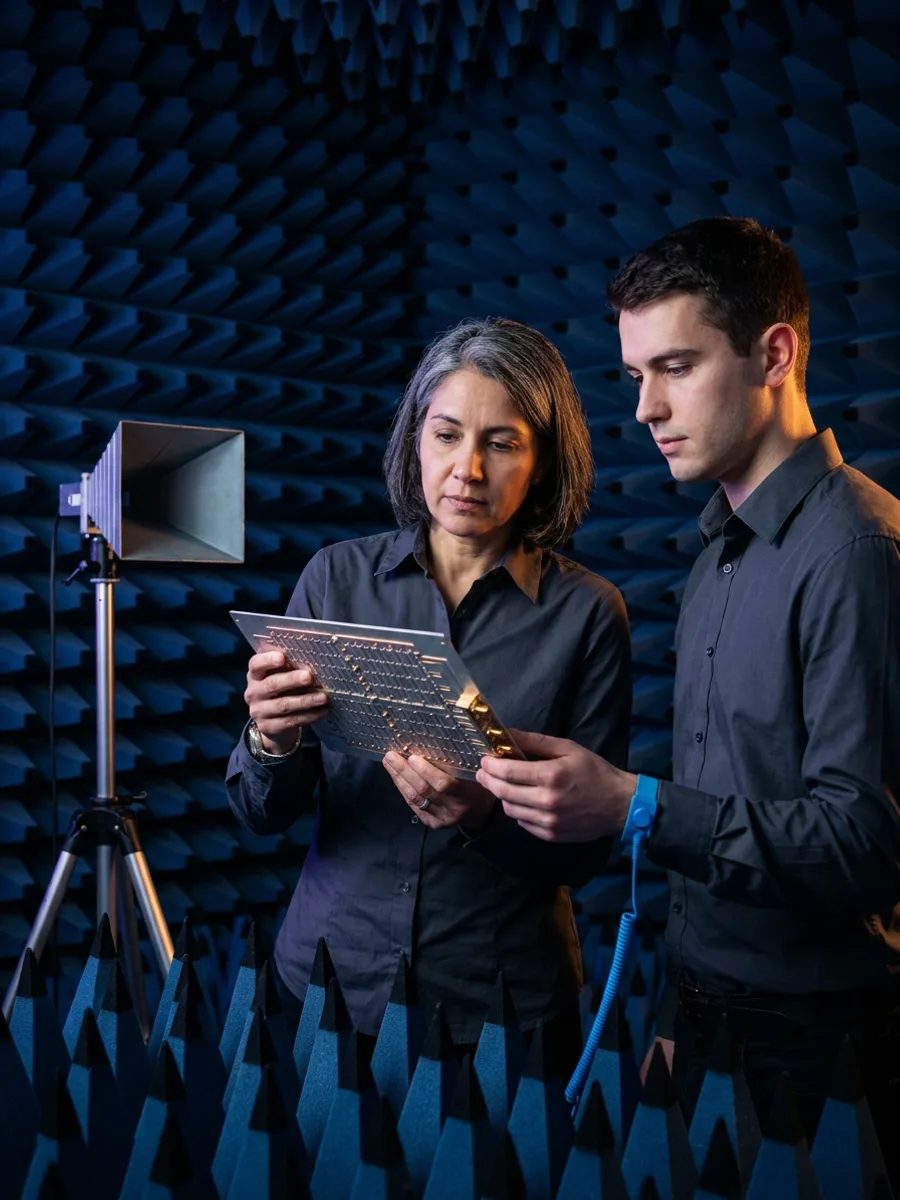
RF engineer staffing connects companies with radio-frequency engineers who design, test, and optimize wireless, radar, antenna, and microwave systems. KORE1 staffs RF design, systems, test, and field roles for telecom, aerospace, and defense, contract or direct, with most searches closing in about three weeks.
RF talent was thin before the last buildout cycle. It got thinner. C-band rollouts, CBRS, private 5G, low-earth-orbit satellite constellations, and a defense electronics push all started hiring against the same small bench at once. There aren’t many engineers who can model a link budget, lay out a matching network, and still climb a tower to fix the down-tilt themselves.
The problem isn’t volume. It’s depth. Post an RF engineer role and you’ll get plenty of resumes that list “RF” next to fifteen other things. Far fewer can tell you why their first prototype failed EMC, or what they changed on the second spin. We screen for the second kind.
KORE1 runs a national engineering desk, and RF sits where two of our strongest practices overlap. It’s part of our broader engineering staffing work, and it shares a recruiter bench with our telecom staffing team. So whether you’re hiring a carrier RF optimization engineer or a phased-array designer with a clearance, the search starts with someone who already knows the difference.

Carrier RF, from the link budget to the down-tilt.
Wireless RF is half math, half weather. A C-band macro site in Phoenix behaves nothing like a small cell threaded through a downtown canyon, and the engineer who’s good at one isn’t automatically good at the other. Our recruiters know which is which.
We staff the full carrier RF stack. RF design and planning engineers running propagation and capacity models. Optimization engineers buried in drive-test data and KPI dashboards. DAS and small-cell engineers solving in-building coverage. Antenna and front-end engineers tuning match networks and filters. Field RF engineers who actually go up the tower. The carriers and integrators we work with screen on in-market experience, the right FCC licensing, and tools like iBwave and Atoll, so we screen on those, not on keywords.
A lot of this work is contract. Buildouts end. Optimization never really does.
- C-Band / CBRS
- Small Cell & DAS
- RF Planning
- Drive Testing
- Antenna Tuning
- Link Budget

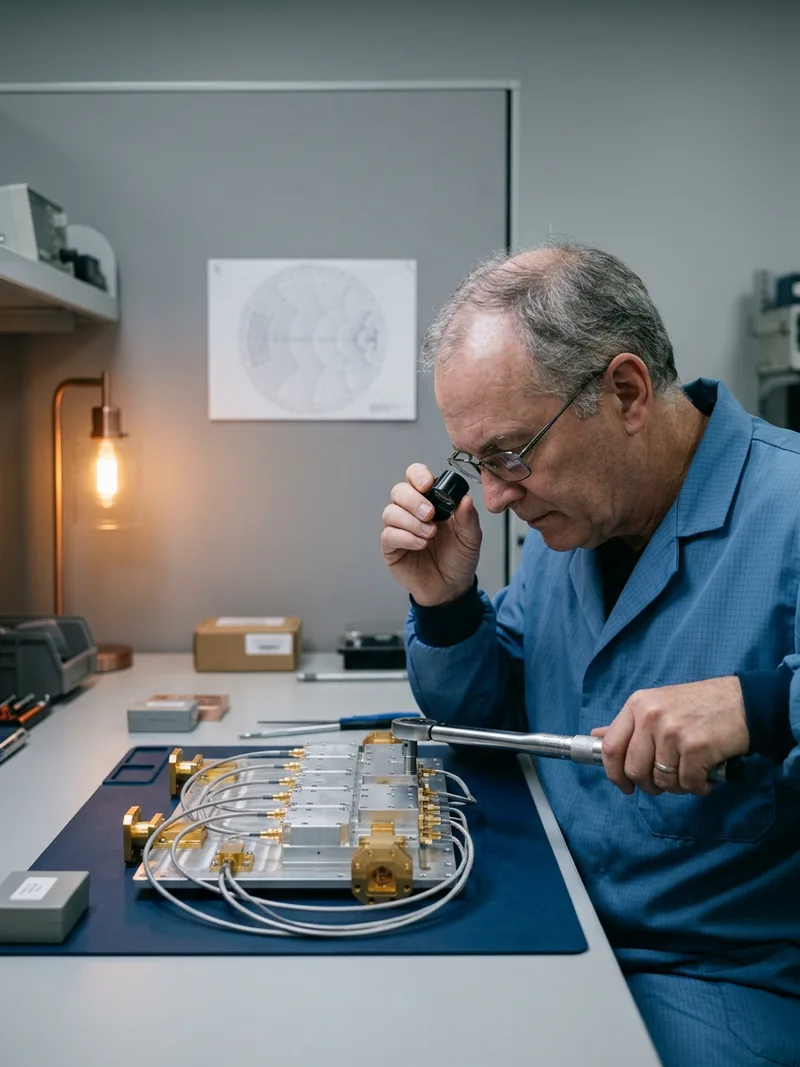
Radar, SATCOM, and the high-frequency end of the spectrum.
The defense and aerospace side of RF is a different animal. Here it’s phased arrays, T/R modules, mmWave, electronic warfare, and satellite payloads, and the screening floor often includes a clearance you can’t talk your way past. We’ve spent years building a bench of engineers who can walk through a radar’s noise figure and hold a TS/SCI.
We place RF and microwave engineers across radar and EW systems, antenna and array design, RF and analog IC work, and satellite ground and payload systems. Many of these candidates already hold active clearances, and the ones who don’t are usually clearable. This practice runs alongside our aerospace engineering staffing and electrical engineering staffing teams, so a program that needs RF, systems, and hardware engineers at once gets one point of contact. For the market backdrop, groups like IEEE track the standards and demand signals our recruiters watch.
These searches run longer than carrier work. Clearances and niche specializations do that. We’ll tell you at kickoff whether your timeline is realistic.
- Radar & EW
- Phased Arrays
- mmWave
- SATCOM
- MMIC / RFIC
- Clearance-Ready
20+
Years placing engineers
Since before half the job boards existed
10–21
Days average fill
Standard RF and engineering searches
92%
12-month retention
Placements still in seat after a year
15+
Years recruiter tenure
Average seniority on our engineering desk
RF roles we fill.
RF Design Engineer
Matching networks, filters, LNAs and PAs, link budgets, and board-level RF layout from schematic through bring-up.
RF Systems Engineer
Spectrum planning, link and noise budgets, and waveform work across radar, SATCOM, and wireless systems.
Antenna Engineer
Phased arrays, patch and horn design, pattern measurement, and anechoic-chamber characterization.
RF Test & Field Engineer
VNA and spectrum-analyzer bench work, EMC and compliance, drive testing, and tower-top optimization.
Also running active searches for network engineers on the carrier edge, telecom IT and 5G core talent, electrical engineers on the hardware side, and aerospace engineers across defense programs. Our electrical engineering recruiters cover the decades below RF.
Common Questions
What does an RF engineer staffing agency actually do?
An RF engineer staffing agency sources, screens, and places radio-frequency engineers, from carrier RF and antenna designers to radar and SATCOM specialists, at companies that can’t find them on job boards. The screening is the hard part. Anyone can pull resumes that say “RF.” Our recruiters can tell whether a candidate has actually closed a link budget or just sat near someone who did, which is most of why our placements hold at 92% after a year.
How long does it take to hire an RF engineer through KORE1?
Carrier and commercial RF roles usually close in two to three weeks. Cleared defense and niche microwave roles run longer, sometimes six weeks or more, because the pool is smaller and clearance checks take time. We give you an honest range at kickoff instead of a number we can’t hit.
Can you find RF engineers with security clearances?
Yes. A good share of our aerospace and defense RF bench holds active Secret or TS/SCI clearances, and many of the rest are clearable. Tell us the level and the program up front and we’ll build verification time into the search so it doesn’t surprise anyone at the offer stage.
Do you staff contract, contract-to-hire, and direct hire RF roles?
All three, and the mix follows the work. Carrier buildout and optimization lean contract because the projects have end dates. Defense and product-design roles skew direct hire. We also build hybrid teams, a direct-hire RF lead with a contract bench around them, when a program ramps fast and has to staff down later.
What’s the difference between a carrier RF engineer and a defense RF engineer?
Same physics, different world. Carrier RF lives in propagation models, drive tests, and antenna down-tilt across live cellular networks. Defense RF lives in radar, electronic warfare, phased arrays, and SATCOM, usually behind a clearance and a stack of documentation. A few engineers cross over. Most don’t, and we screen for the lane a candidate actually belongs in before we send them.
How is RF staffing different from general engineering staffing?
Honestly, it comes down to vocabulary. A generalist recruiter matches “RF” as a keyword and hopes. An RF specialist knows a strong digital designer can be wrong for an analog front-end role, or that ten years of consumer wireless doesn’t prepare someone for a radar T/R module. Our engineering staffing practice works the same way across every discipline. Specialization is what keeps you from burning interview cycles on the wrong people.
For the broader market, the BLS Occupational Outlook for electrical and electronics engineers and the FCC spectrum proceedings track the demand signals our recruiters use to calibrate client pipelines.
Tell us what you’re building. We’ll find the RF talent.
Carrier rollout, antenna design, radar, SATCOM, or a cleared program you can’t say much about on the phone. Scope it with us and we’ll route the search to a recruiter who speaks RF and start reaching out this week.
