
Last updated: June 9, 2026
Robotics Engineering Staffing
KORE1 places robotics engineers who can actually ship hardware. Motion planning, perception, controls, mechatronics, AI integration. Two decades of engineering recruiting now pointed at the fastest-growing engineering discipline in the country.
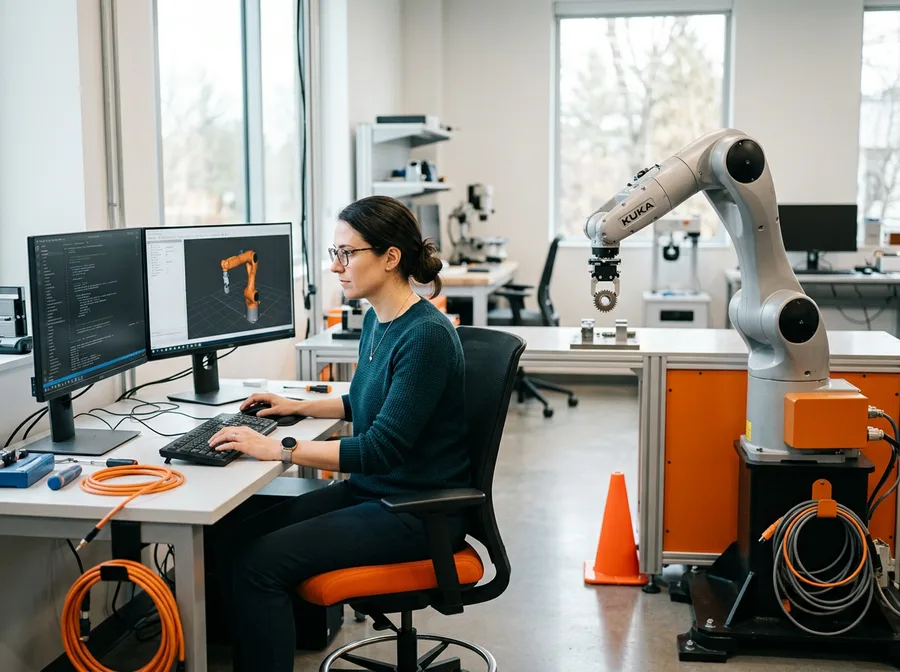
Robotics engineering staffing is the specialized recruiting practice that finds engineers who design, build, program, and test autonomous and semi-autonomous systems. KORE1 places robotics talent across industrial, mobile, medical, and AI-driven robotics in 10 to 21 days for most searches.
The field is changing under your feet right now. Five years ago, robotics meant industrial arms on a factory floor and not much else. Today it means AMRs running warehouse fulfillment, surgical robots holding 50-micron tolerances, humanoids walking around demo floors, and AI-trained manipulation policies that didn’t exist as a job category in 2022. The talent market hasn’t caught up.
That’s the problem most companies hit when they try to hire. You post a “robotics engineer” role and you get applicants from across the discipline. ROS developers. Computer vision engineers. Mechanical designers who built one Stewart platform in grad school. They’re not interchangeable, and figuring out which background actually maps to your stack burns weeks. A specialized engineering staffing agency shortcuts that whole filtering process because we’ve already done it.
We’re part of the broader KORE1 engineering staffing practice. So if you’re building a cross-functional robotics team and need mechanical, electrical, and AI talent at the same time, you get one point of contact. Our mechanical engineering staffing and AI/ML engineer staffing teams run parallel operations with overlapping sourcing networks, which matters quite a bit in robotics because the hardest hires sit right at the intersection of those disciplines.
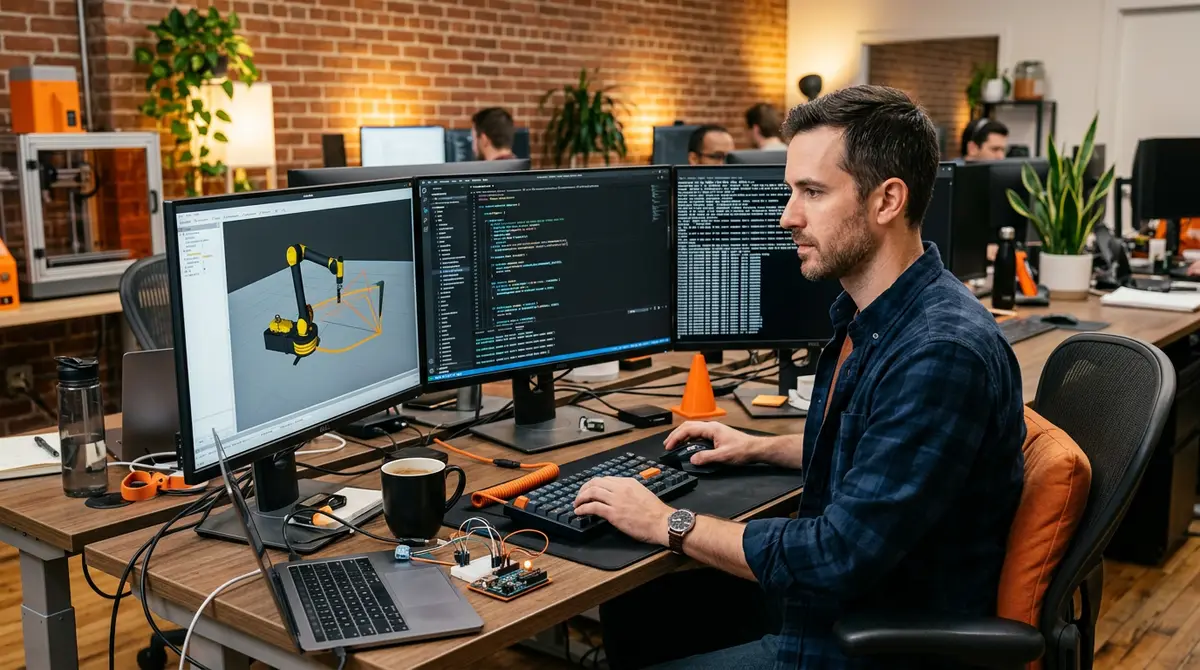
Robotics Engineering Roles We Place
We staff the full robotics stack. From the metal up to the policy layer.
- Robotics Software Engineers writing in C++ and Python, deep on ROS 2, real-time control loops, and the kind of memory discipline you need when your code is steering a 200-kilogram payload
- Motion Planning & Controls Engineers building trajectory optimization, MPC, and feedback control systems for arms, legs, and mobile bases
- Perception & Computer Vision Engineers working with stereo cameras, LiDAR, point cloud processing, SLAM, and sensor fusion pipelines
- Mechatronics & Mechanical Engineers designing actuators, joints, end-effectors, and the structural systems that make a robot survive a year of duty cycles
- Electrical & Embedded Engineers building motor control boards, power systems, and firmware that runs on FPGAs or microcontrollers under hard real-time constraints
- AI & Machine Learning Engineers for Robotics training manipulation policies, building reinforcement learning pipelines, and integrating foundation models into perception stacks
- Simulation Engineers who can stand up Gazebo, Isaac Sim, or MuJoCo environments and generate the training data you can’t collect in the real world fast enough
- Test & Validation Engineers running hardware-in-the-loop benches, regression suites, and the long-running endurance tests that catch what unit tests miss
- Field Robotics & Integration Engineers who deploy robots into real environments and survive the first three weeks of customer reality
Need a direct hire to lead your robotics team long-term? Done. Looking for a contract engineer for a six-month autonomy push? Also done. We structure the engagement around the role, not around what makes our margin easiest.
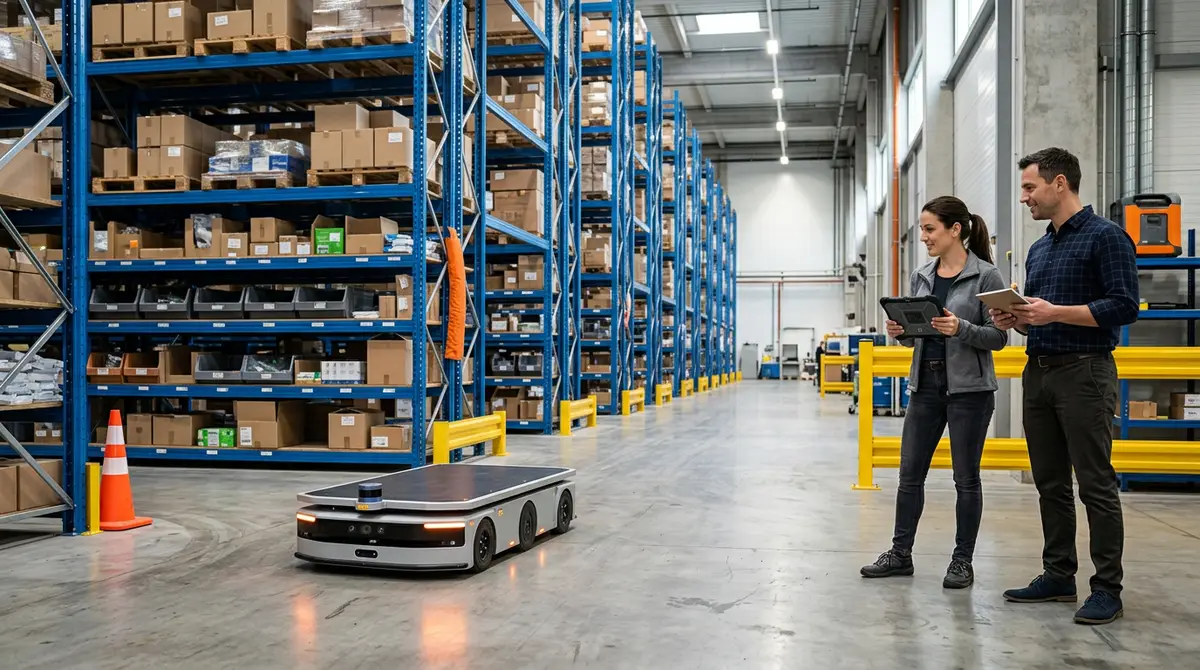
How KORE1 Finds Robotics Engineers Others Can’t
The strongest robotics engineers aren’t job-searching. They’re shipping code, debugging field deployments, or running experiments on a test rig at 11 p.m. They ignore generic LinkedIn outreach because they get 30 of them a week.
We get responses because we’ve earned them. Twenty years of engineering recruiting means our network goes deeper than a Boolean search. We know the people who left Boston Dynamics for a quieter startup. We know the perception engineers who shipped at Cruise before the wind-down. We know the senior controls leads in Pittsburgh who’ll quietly take a coffee chat from us but won’t reply to anyone else.
Our recruiters can talk through PID tuning, sensor noise filtering, or why your RL pipeline keeps mode-collapsing. They’re not keyword-matching. That’s how we screen out the candidates who list “ROS experience” because they ran a tutorial once. According to the Bureau of Labor Statistics, mechanical engineering employment is projected to grow 11 percent through 2033, and robotics is pulling more than its share of that growth — the talent pool is widening, but the senior end of it is not.
Most robotics placements close in 10 to 21 days. That timeline holds because we maintain active candidate relationships and don’t restart sourcing from zero on every search. Need the full scope of disciplines we cover? Our engineering staffing agency page is the index.
Years Placing Engineers
Engineering Placements
Day Average Fill Time
12-Month Retention
Robotics Talent Across Verticals
Industry context shapes everything about a robotics hire. A perception engineer from autonomous trucks won’t slot cleanly into surgical robotics, and vice versa. We source against your specific domain, not the job title.
Industrial & Manufacturing Robotics
Six-axis arms, cobots, pick-and-place, weld cells. Engineers who understand cycle time, fixturing, and what it means to deploy on a production line that can’t go down.
Autonomous Mobile Robots & AMRs
Warehouse fulfillment, last-mile delivery, agricultural platforms. Candidates with real SLAM, fleet orchestration, and obstacle avoidance experience in unstructured environments.
Medical & Surgical Robotics
Sub-millimeter precision, FDA design controls, ISO 13485 environments. Engineers who’ve worked under regulatory burden and can document every design decision.
Humanoids & AI Robotics
Foundation model integration, manipulation learning, bipedal control. The bleeding edge where mechanical, controls, and AI engineering all collapse into one job.
What Makes KORE1 Different
Recruiters Who Speak Robotics
Our team can hold a real conversation about ROS 2 transitions, real-time scheduling, or why your trajectory optimizer keeps oscillating. They screen on substance. You don’t waste interview cycles on candidates who looked qualified for ten minutes.
Every Engagement Model
Contract, contract-to-hire, direct placement, or project-based teams. Robotics projects rarely fit a single staffing shape. We build around the work, not around what’s tidy.
Cross-Discipline Sourcing Built In
Robotics roles live at the seam between mechanical, electrical, embedded, and AI. Our mechanical and AI/ML staffing practices share the same network, which is how we find candidates who span two of those without compromising on either.
Common Questions About Robotics Engineering Staffing
What does a robotics engineering staffing agency actually do?
A robotics engineering staffing agency sources, screens, and presents qualified robotics candidates for open roles at client companies. KORE1 handles the sourcing through our active network and targeted outreach, runs technical qualification calls, coordinates interviews, and manages the offer process. The part most companies underestimate is the screening. Anyone can pull resumes off a job board. The work is knowing which “robotics engineer” resume corresponds to someone who actually shipped autonomous behavior in production versus someone who took two courses and ran a turtlebot tutorial. Our broader engineering staffing agency page covers the adjacent disciplines if you’re also hiring mechanical or AI talent.
How long does it take to place a robotics engineer through KORE1?
10 to 21 days for most searches. Specialized roles run longer. If you need a perception engineer with multi-sensor calibration experience and a humanoid background, the candidate pool is small and the timeline stretches. We give an honest forecast at kickoff rather than pitching a number to win the engagement. The fill speed comes from already-active relationships with vetted candidates, not from cutting corners on screening or flooding you with marginal resumes.
Can you find robotics engineers with specific framework or platform experience?
Yes, and we screen for it directly. ROS 1 and ROS 2, Isaac Sim, Gazebo, MuJoCo, MoveIt, Drake, Open3D, OpenCV, PCL, PyTorch, TensorRT, NVIDIA Jetson, KUKA KRL, Fanuc TP, ABB RobotStudio. Whatever your stack runs on. We ask candidates how they actually used the framework on a real project and where they hit limitations that forced workarounds. If you depend on an internal simulator or a proprietary control stack, tell us up front so we build the learning curve into our screening rather than discovering it during week three.
What’s the difference between contract and direct hire for robotics roles?
Contract placements are time-limited, typically 3 to 12 months, with the engineer on KORE1’s payroll. You pay a bill rate that covers compensation and our margin. Direct hire means the engineer joins your company permanently from day one and you pay a one-time placement fee. Contract-to-hire is a hybrid that starts as contract with a built-in conversion option. Robotics teams often start with contract for a defined autonomy push or hardware launch, then convert the engineers who proved out in the actual stack rather than committing on the interview alone.
Do you place entry-level robotics engineers or only senior candidates?
Both, but the sourcing playbook is different. Early-career searches lean on university programs, FIRST and FRC alumni networks, and the labs producing strong masters and PhD graduates. Senior searches are almost entirely direct outreach to passive candidates who aren’t browsing job boards and won’t respond to a generic posting. Junior robotics talent has gotten dramatically deeper in the last five years, partly because the field is newly cool. Senior talent has not, which is where most of our value lands.
How is robotics engineering staffing different from general engineering staffing?
General agencies treat robotics like any other technical role. Keyword match and hope. A specialized recruiter knows why a strong perception engineer might be wrong for a controls-heavy role, why somebody coming out of academic robotics often struggles in production environments, and why “5 years of ROS” tells you basically nothing without knowing which subsystems they actually owned. Our mechanical engineering staffing and AI/ML engineer staffing teams operate the same way inside their disciplines. Specialization is what keeps your interview pipeline from filling up with the wrong candidates.
Where does robotics engineering hiring trend through 2026 and beyond?
Demand is accelerating. Industrial automation is back in capital-spending mode, warehouse robotics has gone mainstream, and the humanoid wave has every major auto manufacturer and a dozen startups competing for the same 200 senior engineers. The Deloitte 2026 Manufacturing Outlook calls automation talent the single hardest gap to close in the sector. Comp bands have moved up materially at the senior end. Expect more competitive offers and shorter candidate decision windows than the broader engineering market.
Ready to Build Your Robotics Team?
Start with a 20-minute intake call. We’ll ask about the role, the autonomy stack, the deployment environment, and what hasn’t worked in past searches. No pitch deck, no pressure. Just a conversation to figure out whether KORE1 is the right fit for the search.
