
Last updated: August 4, 2026
Supply Chain IT Staffing for the Systems That Move Freight
KORE1 staffs the engineers and analysts who run WMS rollouts, TMS integrations, EDI pipelines, and demand planning across logistics, 3PL, manufacturing, and retail operations. 17-day average IT fill.

Supply chain IT staffing places the engineers and analysts who run WMS, TMS, EDI, and planning systems across logistics, 3PL, manufacturing, and retail operations. KORE1 fills these roles in 17 days on average.
Supply chain technology hiring goes sideways for a reason most agencies miss. The stack is not one stack. Warehouse systems, transportation systems, and planning systems are three separate disciplines with three separate talent pools, and a strong Manhattan WMS engineer is not a strong Blue Yonder planner. Send a generalist into a go-live and you get a stalled cutover, a hiring manager three rounds deep, and a peak season that arrives before the seat is filled. If you need the planners, buyers, and operations leaders themselves rather than the systems team, that is our supply chain staffing practice.
We have spent 20 years placing the technologists who keep operations running, and supply chain IT sits squarely inside that. The roles that touch a warehouse floor, a carrier integration, or a planning run carry their own deadlines and their own failure modes. A bad EDI mapping does not throw an error in a sprint demo. It bounces an 856 advance ship notice, holds a trailer at the dock, and shows up as a chargeback. Inside our broader IT staffing practice, this is a specialized bench, not a checkbox. That bench includes the person who owns trading partner compliance, and you can hire an EDI analyst through the same intake.
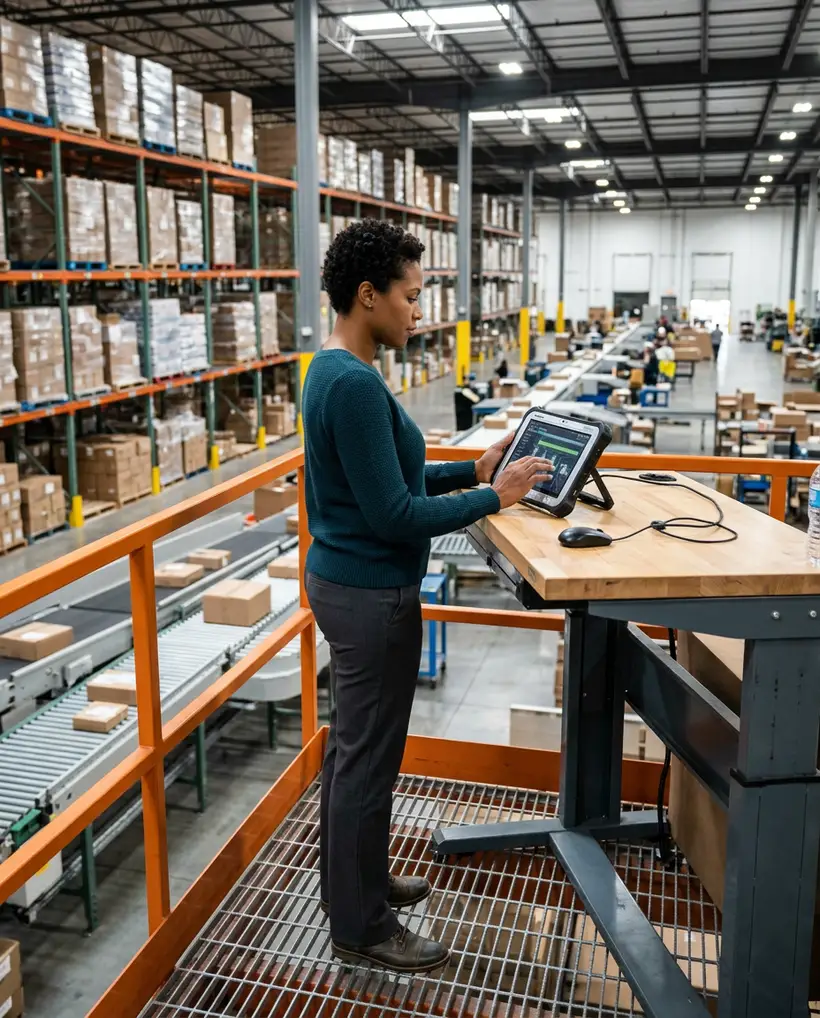
The Warehouse Is Where Supply Chain IT Gets Real
Everything upstream is a forecast until it hits the dock. Receiving. Putaway. Slotting. Wave planning. The systems that run a distribution center have to survive peak volume and a physical inventory count, and a shaky WMS go-live can cost a retailer a quarter. The people who configure those systems are rarely on the open market, because the good ones are already mid-rollout somewhere. When the seam that needs owning sits specifically between NetSuite and the warehouse, our WMS integration consultant staffing desk covers that seat.
Roles we place against the fulfillment stack:
- WMS Engineers and Administrators across Manhattan Active WM, Blue Yonder WMS, SAP EWM, Oracle WMS Cloud, Korber, and Infor
- WCS and WES Integration Engineers wiring conveyors, sortation, AutoStore, and goods-to-person robotics into the warehouse host
- Order Management Developers for distributed order management, allocation logic, and store-fulfillment routing
- Labor and Slotting Analysts tuning engineered standards, pick paths, and wave strategy
- Integration Engineers stitching WMS to ERP, parcel, and yard management through APIs and middleware
- Automation Controls Specialists at the PLC and material-handling layer where IT meets the floor
Most warehouse searches stall on the same gap. Candidates who know the software but have never stood on a mezzanine during a peak shift, or floor veterans who cannot read a stack trace. We screen both sides. It saves rounds.

Transportation Tech Is an Integration Problem in Disguise
A transportation team lives and dies on connections. Carrier APIs. Rate engines. EDI trading partners. Real-time visibility feeds. The TMS itself is the easy part. The hard part is the hundred handshakes around it, each one a place where a 214 status message can quietly stop flowing and nobody notices until a customer calls. This is where most logistics IT volume actually sits.
We staff across the real transportation and integration map:
- TMS Engineers for Blue Yonder TMS, Oracle Transportation Management, SAP TM, and MercuryGate
- EDI and B2B Integration Developers fluent in ANSI X12 and EDIFACT, working in Cleo, IBM Sterling, SPS Commerce, and e2open
- Visibility and Control Tower Engineers for project44, FourKites, and home-grown tracking platforms
- Carrier and Parcel Integration Specialists connecting LTL, FTL, parcel, and last-mile rating and tendering
- Middleware and iPaaS Developers on MuleSoft, Boomi, and Azure integration services
- Freight Audit and Settlement Analysts who can trace a charge from tender to invoice to GL
Need a direct hire integration architect to own the carrier ecosystem, a contract team to push a TMS migration through cutover, or a few EDI developers for an onboarding wave before peak? Same intake. Same screening. Different paperwork.
Three Lanes Inside One Supply Chain IT Team
Supply chain IT is not one discipline. It is three lanes that have to move in sync. We staff each one with specialists who grew up inside it, not generalists learning on your timeline. When the opening is for an operator rather than a systems person, meaning a transportation manager, a DC supervisor, or a dispatcher, that sits with our logistics staffing team instead.
Warehouse & Fulfillment Tech
WMS engineers, WCS and automation integrators, order management developers, labor and slotting analysts. The systems closest to the floor.
Transportation & Network Tech
TMS engineers, EDI and B2B developers, visibility and control tower builders, carrier and parcel integration specialists.
Planning & Supply Chain Data
Demand and supply planners, S&OP analysts, data engineers, and control tower analytics talent across Snowflake and Power BI.

Planning Is Where the Whole Chain Either Holds or Breaks
The planning layer is quiet right up until it isn’t. Demand forecasting. Inventory optimization. S&OP. Network design. A model that drifts two points on forecast accuracy can leave a CPG company long on the wrong SKUs and short on the ones that move, and that gap walks straight onto the balance sheet.
Platforms we staff against include Blue Yonder demand and fulfillment, Kinaxis RapidResponse, o9, SAP IBP, and Anaplan, plus the data engineering underneath them. That last part matters more every year. A control tower is only as good as the pipelines feeding it, which is why supply chain analytics work sits right next to our broader data engineering practice. Snowflake and Databricks models, Power BI control towers, near-real-time inventory feeds. Get the plumbing wrong and the dashboard lies with confidence.
Here is the honest part. We do not pretend every supply chain role is exotic. A clean ERP supply chain configuration in SAP or Oracle is bread and butter, and we fill those fast. The specialists are where the timeline risk lives, so that is where we put our screening weight. We would rather tell you a senior Kinaxis architect is a six-week search than promise two and miss.

How We Hire Supply Chain IT Talent
- Intake with the people who own the outcome. Not just HR. The IT lead, the operations or distribution director, and whoever owns the go-live date. We ask about the platform, the integration map, and the peak calendar, then we tell you which piece is most likely to slip.
- Platform-specific screening. Every candidate answers real scenario questions for the system we are hiring against. How would you cut over a WMS without losing inventory accuracy? Walk me through a stuck 856. No shortlist clears this filter on a buzzword.
- Technical panel tuned to your stack. Manhattan, Blue Yonder, Oracle OTM, Cleo, Kinaxis, whichever platform the role sits on, the panel is calibrated for it. We brief the candidate so the hour is spent on depth, not introductions.
- Reference checks that go operational. We call former go-live leads and operations managers, not just a line manager. Did this person hold up at cutover. Did the integration survive peak. Those calls surface it.
- Offer, onboarding, and go-live support. We stay engaged through start date and the first major cutover or peak the hire works. Most agencies disappear at placement. We do not.
Common Questions
What does a supply chain IT staffing agency actually do?
A supply chain IT staffing agency sources, screens, and presents technologists qualified to run warehouse, transportation, and planning systems for logistics, 3PL, manufacturing, and retail operations. The screening is the real work. Anyone can pull resumes with Manhattan or Blue Yonder in the skills line. The hard part is filtering for people who have actually shipped a WMS go-live, traced a broken EDI transaction, or held a TMS together through peak. We run that filter before you see a shortlist. When a search reaches into cloud, security, or data, our broader IT staffing services bench covers the adjacent roles.
Which supply chain IT roles are hardest to fill right now?
WMS engineers with live go-live experience, senior planning architects on Kinaxis or Blue Yonder, and EDI integration developers are the three tightest searches heading into 2026. Under each one is a long tail. A Manhattan Active WM engineer is not interchangeable with a legacy WMOS engineer, and the pool for each is small. Automation and controls talent at the WCS layer is also scarce because it sits between IT and the physical floor, and few candidates are fluent on both sides. Start those searches early.
How is supply chain IT different from regular ERP or software staffing?
Supply chain IT carries operational deadlines that general software roles do not. A missed sprint is a delay. A missed WMS cutover or a broken carrier integration is a trailer stuck at a dock and a customer chargeback. The platforms are also specialized, from Manhattan and Blue Yonder to Oracle OTM and Kinaxis, and each has its own small talent pool. We keep recruiters specialized by lane, so a warehouse search is run by someone who knows fulfillment, not a generalist matching keywords. For pure application work, our software engineer staffing team handles roles that do not touch the supply chain stack.
How long does it take to fill a supply chain IT role?
Most of our supply chain IT placements close in 14 to 24 days. Niche searches run longer. A senior Kinaxis or o9 planning architect can take six to ten weeks because the pool is small and half the candidates are mid-implementation and under non-solicit. A WMS lead with recent go-live scars is similar during peak hiring season. We give an honest timeline on day one instead of promising a number the market will not support. Most of the speed comes from pre-screened passive candidates, not a job board blast.
Can KORE1 staff contract teams for a WMS or TMS implementation?
Yes. Implementations are one of the most common reasons clients call. We build contract and project teams for WMS rollouts, TMS migrations, EDI onboarding waves, and peak readiness, then scale them down at go-live. A typical engagement blends a few senior architects who own the design with mid-level engineers who carry the build, sized to the cutover date rather than a generic headcount. When a contractor proves out, conversion to direct hire is straightforward.
What industries does KORE1 place supply chain IT talent into?
Third-party logistics providers, manufacturers, distributors, retailers and e-commerce operations, CPG companies, and freight and carrier organizations. The common thread is operations that depend on warehouse, transportation, or planning systems running without drama. Company size ranges from a single distribution center modernizing its WMS to enterprise networks running dozens of nodes. The screening rigor does not change with size, and we have placed supply chain and broader IT talent across more than 30 U.S. metros over the past 20 years. Logistics roles are projected to grow faster than the average occupation, according to the U.S. Bureau of Labor Statistics, which keeps these talent pools competitive.
Ready to Staff Your Supply Chain IT Team?
Start with a short intake. Tell us the platform, the integration map, and the go-live date. We come back with a plan and a realistic timeline. No pitch deck. No template shortlist.
