
Last updated: August 27, 2026
Adobe Layoffs 2026: Creative Software Engineering Map
Adobe has not filed a 2026 mass-layoff notice, but rolling PIPs and selective re-orgs across Creative Cloud, Substance 3D, Frame.io, and Document Cloud are pushing 200 to 400 creative software engineers into the open market per quarter. Most resumes split into six skill profiles. Figma, Canva, Runway, Black Forest Labs, Autodesk, and a quieter group of Photoshop-stack startups are absorbing the senior bench inside 60 days.
A creative tooling startup in Seattle sent us a job spec last month for a Photoshop-grade brush engine engineer. Not a typo. They wanted somebody who could write the C++ pixel pipeline that makes a brush feel responsive at 4K and 240Hz, then port that engine to WebGL2 for the browser SKU. We had two real candidates inside a week. One was a 14-year Adobe Photoshop ICE veteran who had been quietly pushed out of San Jose in late Q1. The other was a five-year Substance 3D engineer from Bordeaux who took a remote-friendly contract because Adobe France would not relocate him to Lehi. The startup paid below market on base, above market on equity, and closed the senior ICE in 19 days. The Substance engineer took the second seat. Both exits fit the pattern traced in our read on the attrition that never reaches a WARN filing.
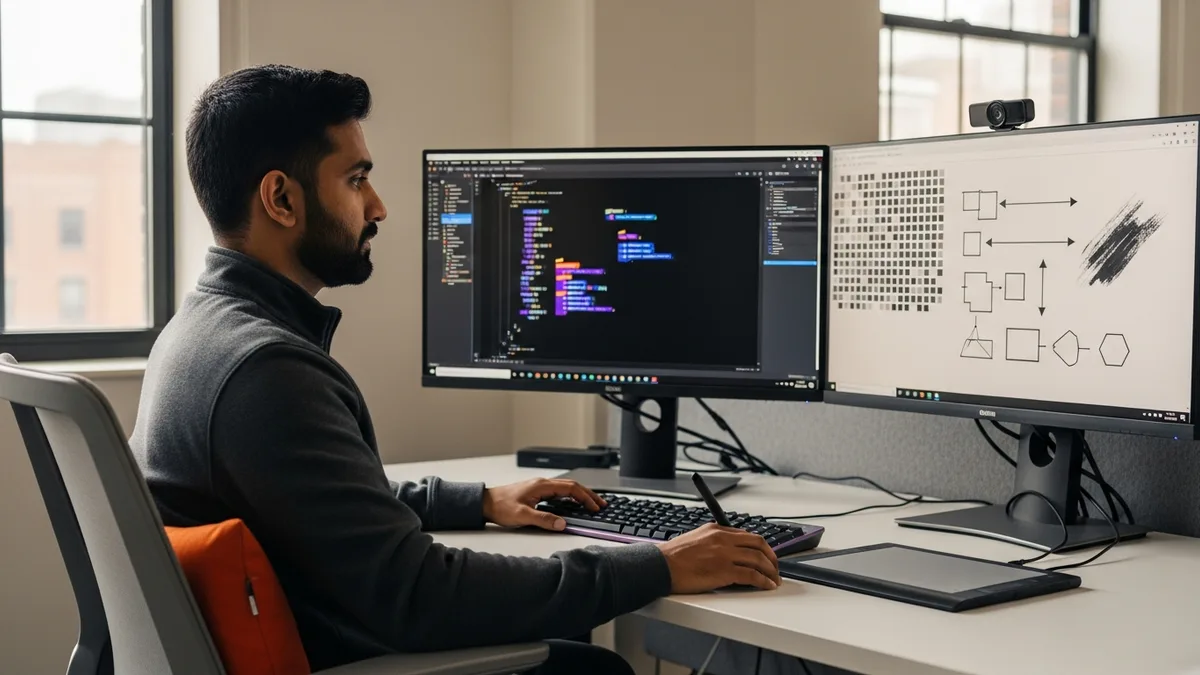
That story is the whole article in one paragraph. The companies that know what they are looking at can hire Adobe creative-software talent right now at terms that would have been laughable in 2022. The companies that do not know how to read a brush-engine resume are still posting generic “senior software engineer, C++ preferred” reqs and getting nothing back. There is a map to this market and most hiring managers do not have it.
Mike Carter at KORE1. I cover digital and creative engineering placements out of our Southern California base. Before recruiting I spent most of my career on the buyer side of Adobe Creative Cloud, sitting in seat-license meetings, renewing Marketo, watching Frame.io rewrite video review for entire post-production orgs. KORE1 takes a fee when a hiring manager places a candidate we sourced through the digital and creative staffing desk or the broader software engineer staffing practice. The financial bias is real and worth saying out loud. I will still tell you when a candidate is wrong for your stack, because the alternative is a bad placement and a refund clause.
This piece is the engineer-map companion to our broader 2026 tech layoffs roundup and the company-picture take we already published on Adobe (the Creative Cloud and Document Cuts piece walks through Cal-WARN status, CEO transition, and the Marketo-Workfront attrition pattern). If you want the corporate read, start there. This is the resume-reading guide.
The Six Engineer Profiles Coming Out of Adobe
Not every Adobe engineer on LinkedIn right now is interchangeable. The skill distance between a Photoshop ICE engineer and a Marketo platform engineer is bigger than the distance between either of them and somebody at a wholly different company. Inside Adobe, the discipline lines are deep. Outside, they translate to six discrete buyer markets.
1. Photoshop / Illustrator / Lightroom craft engineers. The C++ image-processing core, GPU compute, color science, brush engines, layer compositing, RAW decode. This is the senior IC bench that has been mostly protected inside Adobe and is the hardest of the six profiles to replace. When somebody from this group does come loose, they get hired in under 30 days. Figma, Canva, Black Forest Labs, Topaz Labs, Procreate’s parent Savage, and a stable of smaller drawing and photo startups are the typical landing zones. Average comp band 2026: $185K to $260K base for senior ICs, $310K to $440K total for staff and principal levels at the AI-image companies.
2. Premiere Pro / After Effects / Frame.io video engineers. H.264 and H.265 codec work, NLE timeline engineering, GPU-accelerated effects, multi-track audio sync, cloud collaboration on the Frame.io side. This bench is moving the fastest. Runway, Pika, Captions, ElevenLabs, Descript, and the broader generative-video tier are absorbing the senior video pipeline engineers as quickly as they come available, because the gen-AI video roadmap is bottlenecked on people who understand both the timeline and the codec. Comp band: $190K to $275K base, equity heavy at the early-stage end.
3. Substance 3D / Aero / immersive engineers. Procedural texturing, 3D scene graph, USD, real-time rendering, AR pipeline. Substance has been one of the more disrupted units inside Adobe since the integration plateau. The bench lands at Unity, Epic Games (Unreal), Autodesk, NVIDIA Omniverse, and the smaller wave of AR creator-tool startups. The senior Substance engineers from the Bordeaux office are particularly mobile because France has cleaner separation rules than the US PIP track. Comp band: $175K to $250K base, with a meaningful tail of remote-friendly contract roles in the 0 to 0 per hour range.
4. Firefly / Sensei / generative AI research engineers. Diffusion models, training pipelines, RLHF, safety filtering, prompt-grounded generation. This is the bench Adobe is least willing to let go and the one OpenAI, Stability, Midjourney, Black Forest Labs, and the foundation-model labs are most aggressive about poaching. When somebody from this group does leave, the offer race is fierce and the close happens inside two weeks. Comp band: $260K to $390K base, total comp often crossing $700K with the AI-lab equity component.

5. Acrobat / Document Cloud / e-signature engineers. PDF engine work, document AI, signature workflow, enterprise integration. Quieter market. The bench lands at DocuSign, Dropbox Sign, PandaDoc, Box, Notion, and a long tail of contract-management startups. Less competitive on the comp side because the buyers are smaller and the urgency is lower, but the candidate quality on this bench is high. Comp band: $165K to $230K base.
6. Marketo / Workfront / Magento / Digital Experience engineers. Marketing automation backend, work-management orchestration, ecommerce platform. This is the bench that has been hit hardest by the silent-attrition pattern and the one with the weakest receiving market inside the Adobe-adjacent landscape. Most of the moves we have seen land at Salesforce, HubSpot, Klaviyo, Iterable, Asana, monday.com, and Shopify Plus. Some of the more senior platform engineers from Magento have ended up at BigCommerce and Commercetools. Comp band: $155K to $215K base.
Where They Are Actually Landing
The receiving companies for the senior Adobe bench, mapped to the six profiles. This is what we have seen on the desk over the last nine months. Not a public dataset. Treat it as directional.
| Adobe Profile | Top Receivers | Typical Time-to-Close |
|---|---|---|
| Photoshop / Illustrator / Lightroom | Figma, Canva, Black Forest Labs, Topaz, Procreate (Savage) | 19 to 32 days |
| Premiere / After Effects / Frame.io | Runway, Pika, Captions, Descript, ElevenLabs, DaVinci team | 14 to 28 days |
| Substance 3D / Aero / immersive | Unity, Epic Games, Autodesk, NVIDIA Omniverse, Maxon | 25 to 45 days |
| Firefly / Sensei / gen-AI research | OpenAI, Stability, Midjourney, Black Forest Labs, Inflection, xAI | 9 to 16 days |
| Acrobat / Document Cloud | DocuSign, Dropbox Sign, Box, Notion, PandaDoc | 35 to 60 days |
| Marketo / Workfront / Magento | Salesforce, HubSpot, Klaviyo, Asana, Shopify Plus, Commercetools | 40 to 75 days |
Two patterns worth flagging. The Firefly bench moves so fast that if you are a non-AI-native buyer waiting for the right resume to come across, you are reading the resume after the offer is signed somewhere else. The DX bench (Marketo, Workfront, Magento) moves the slowest because the receiving Salesforce and HubSpot reqs are themselves backed up behind their own restructurings. If you are hiring out of that group, you have time. You can interview properly. You do not need to skip steps.
How to Read These Resumes
The single biggest mistake we see receiving teams make is reading an Adobe creative-software resume the way they would read a generic full-stack engineer resume. The skill signal is not in the bullet points. It is in the products shipped and the parts of those products the candidate touched.
For a Photoshop or Illustrator engineer, look for these signals: shipped a public feature in a recent dot release (the Adobe release notes name engineering owners more often than people realize), contributed to the Generative Fill or Generative Expand pipeline (every senior craft engineer touched at least one), authored a brush or filter primitive, worked on the color management or HDR pipeline, owned the Apple Silicon port for any module. If the resume just says “C++, image processing, performance optimization,” that engineer is mid level. The seniors will name a specific module.
For a video engineer, look for: ProRes ingest, H.265 hardware decode integration, the After Effects ray-traced renderer (rare and valuable), the Premiere Productions collaboration system, the Frame.io C2C (camera-to-cloud) pipeline, motion graphics templating. Skip resumes that just list “video software” or “media engineering.”
For a Substance engineer, look for: USD work, the Substance 3D Designer node graph, real-time PBR shader pipelines, Painter brushwork, Sampler photo-to-material, Stager scene-graph work. Game-engine integration experience (Unity or Unreal native plugins) is the highest-value modifier.
For a Firefly or Sensei engineer, look for: any named publication or arXiv paper, contributions to a public model card, the structure of their interview prep talk on diffusion or transformer internals, evidence they have shipped a model into a real product pipeline rather than just a paper. Adobe Firefly engineers who shipped Generate Image, Generate Video, Generate Audio, or the Sensei content fragment work are the senior bench. Adobe Research engineers who never shipped are an interesting interview but a slower close.
For Acrobat or Document Cloud, look for: PDF/A and PDF/UA accessibility expertise, signature-workflow integration with DocuSign or government systems, the Acrobat Web rewrite, OCR and content extraction at scale.
For the DX bench, look for: the parts of the platform that are most translatable. A Marketo engineer who worked on email deliverability and the API gateway is more valuable to Salesforce than a Marketo engineer who only worked on the legacy UI. A Magento engineer with cloud-native PHP and the Commerce Cloud architecture is more valuable to BigCommerce than a Magento engineer who never left the monolith.
Geographic Concentration
Six metros carry most of the Adobe creative-engineering bench. The buyer market in each looks different.
San Jose and San Francisco hold the majority of the Photoshop, Lightroom, Frame.io, Premiere, and Firefly seniors. The receiving Figma, Canva (US ops), Runway, OpenAI, and Black Forest Labs reqs are in the same metros. Re-employment timing is fast because the candidates do not need to relocate.
Lehi, Utah is the Document Cloud and Acrobat hub. The receiving DocuSign, Dropbox Sign, and Domo reqs are mostly in Utah and Salt Lake City. The cluster is small but tight. Re-employment timing is medium.
Seattle holds the Acrobat AI Assistant and parts of the Firefly research bench. The receiving Microsoft, Amazon AI, and a quieter cluster of small Pacific Northwest creative tooling startups absorb most of this group.
Bordeaux, France is the Substance 3D hub. Mobility is high because French employment separation is cleaner than US PIP, and the senior Substance engineers travel well to Unity (Copenhagen and Montreal), Epic Games (Cary, NC remote-friendly), Autodesk (Montreal and London), and Maxon (Berlin).
Noida and Bangalore hold the largest absolute Adobe headcount outside the US. The Indian Adobe bench has been hit hardest by the silent-attrition pattern (covered in detail in our tech layoffs roundup). Receiving sites: Salesforce India, Microsoft India, Google India, Snowflake India, and a growing wave of Indian-headquartered AI startups.
Compensation Bands for These Profiles in 2026
What you should expect to pay if you want to close a senior creative-software engineer from the Adobe bench in 2026. Bands reflect US, total cash plus equity-grant first-year value. Sourced from KORE1 placement data, Levels.fyi cross-referenced 2026 entries, the Stack Overflow 2025 Developer Survey compensation crosswalk, and BLS occupational data for senior software engineers in the relevant metros.
| Profile | Mid-level Total | Senior Total | Staff / Principal Total |
|---|---|---|---|
| Photoshop / Lightroom craft | $210K to $260K | $285K to $370K | $410K to $560K |
| Premiere / Frame.io / video | $215K to $270K | $295K to $385K | $420K to $600K |
| Substance 3D / immersive | $195K to $245K | $265K to $345K | $380K to $510K |
| Firefly / gen-AI research | $295K to $375K | $420K to $565K | $640K to $900K+ |
| Acrobat / Document Cloud | $185K to $230K | $245K to $315K | $345K to $470K |
| Marketo / Workfront / DX | $170K to $215K | $230K to $295K | $320K to $430K |
One note on the Firefly band. The staff and principal numbers carry an asterisk because the AI-lab equity packages at OpenAI, Anthropic, and the foundation-model adjacent startups are doing their own thing. We have seen first-year total comp on these closes cross $1.4M when the company is private and the equity strike is favorable. Treat the table as a floor for that profile, not a ceiling.
What This Means If You Are Hiring
The 30-day talent window framing we have been using on the broader layoff coverage applies here with one wrinkle. For four of the six profiles, the window is real and the close needs to happen inside the first month after the candidate hits the market. For Acrobat and the DX bench, you have time. Use it.
If you are a hiring manager at one of the receiving companies, the right move is to fast-track interviews with anyone who matches the resume signals above. If you are a hiring manager at a buyer that is not on the obvious receiving list (a mid-sized creative SaaS company in Austin, say, or a robotics firm that needs Substance 3D talent for simulation), the right move is to source aggressively right now. The Adobe bench is not going to be available at these terms in 18 months.
Our placement record on creative-software engineering across 30+ US metros is built on 15+ years of average recruiter tenure on the desk. Average time-to-hire across our 2026 IT and engineering placements is 17 days. Twelve-month retention is 92 percent. If you want to talk through a specific req or pressure-test a job spec before you post it, the desk is open.

Common Questions From Hiring Managers
Has Adobe officially announced engineering layoffs in 2026?
No. Adobe has not filed a Cal-WARN notice or a public 8-K restructuring charge in 2026. The headcount movement is rolling PIP-driven attrition concentrated in Digital Experience, Substance 3D, and parts of the gen-AI research bench, with select reductions in the Indian offices.
Most of the senior craft engineering inside Photoshop, Illustrator, Lightroom, and the core Creative Cloud apps has been protected. The bench in motion is real but the company has been careful about how it shapes the public picture. The Shantanu Narayen CEO transition in March 2026 is the most visible signal.
How do I tell a real Adobe craft engineer from a generic full-stack resume?
Look for shipped features named in Adobe release notes, ownership of a specific module (brush engine, codec, color pipeline, scene graph), and Apple Silicon or GPU port work. Generic “C++, image processing” without a named feature is mid level at best.
The Adobe release notes are public and the engineering credit lists are surprisingly granular. Spending fifteen minutes cross-referencing a candidate’s claimed contribution against the actual release notes is one of the highest-ROI screening steps you can take on a creative-software resume.
Which receiving companies pay the most for ex-Adobe Firefly engineers?
OpenAI, Anthropic, Stability, Black Forest Labs, and xAI top the band, with first-year total comp routinely crossing $700K and occasionally $1.4M at staff and principal levels. The senior Firefly bench typically closes inside two weeks.
If you are not on that list and you want to compete for this profile, the lever is autonomy and equity volume rather than base. The bigger AI labs are paying base aggressively, so a smaller buyer needs to differentiate on what the engineer actually gets to build.
Is the Substance 3D bench worth pursuing if I am not in the gaming or VFX industry?
Yes. Robotics simulation, e-commerce 3D product visualization, AR retail, architectural visualization, and digital twin platforms all need real-time PBR rendering engineers. Substance 3D engineers translate cleanly to any of these markets and the comp expectation is lower than the gaming receivers.
The candidates themselves are often surprised to find the non-gaming buyer landscape. A few have closed at companies they did not know were building 3D engines (industrial digital-twin platforms in the Midwest, retail AR teams inside Walmart Global Tech, and the simulation side of automotive AI in Michigan).
How long should I expect a senior Adobe engineer’s offer process to take?
For Firefly research, 9 to 16 days. For Premiere or Frame.io video, 14 to 28 days. For Photoshop or Illustrator craft, 19 to 32 days. For Substance, 25 to 45 days. For Acrobat or DX, 35 to 75 days.
These are observed close timelines from the desk over the last nine months. The faster numbers reflect competitive offer races. If you are an interviewing buyer and you are not moving at the pace appropriate to the profile, the candidate is signing somewhere else before you finish your panel.
What is the most common buyer mistake when hiring from the Adobe bench?
Posting a generic senior software engineer req with no signal that the team understands creative-tooling work. The right Adobe craft engineers will not apply to a job spec that reads like it could be for any backend role. Specify the product, the discipline, and the stack.
One small fix is rewriting the job title. “Senior software engineer, image processing pipelines” gets twenty times the qualified-Adobe-bench applications that “Senior software engineer, full stack” does. That is not a marketing claim. That is the actual delta we have measured across roughly thirty roles in this segment in 2026.
Does KORE1 work with both buyers and candidates from the Adobe bench?
Yes. We source actively for buyer-side reqs across the six profiles and we represent candidates from the Adobe bench at no cost to the candidate. The placement fee is paid by the hiring company, structured against a refund clause if the placement does not stick.
If you are a displaced Adobe engineer reading this, the right next step is the contact form and a note about which discipline you sit in. We will route to the right desk inside 24 hours.
