
Last updated: July 12, 2026
AI Infrastructure Staffing: Building Teams for the AI Compute Boom
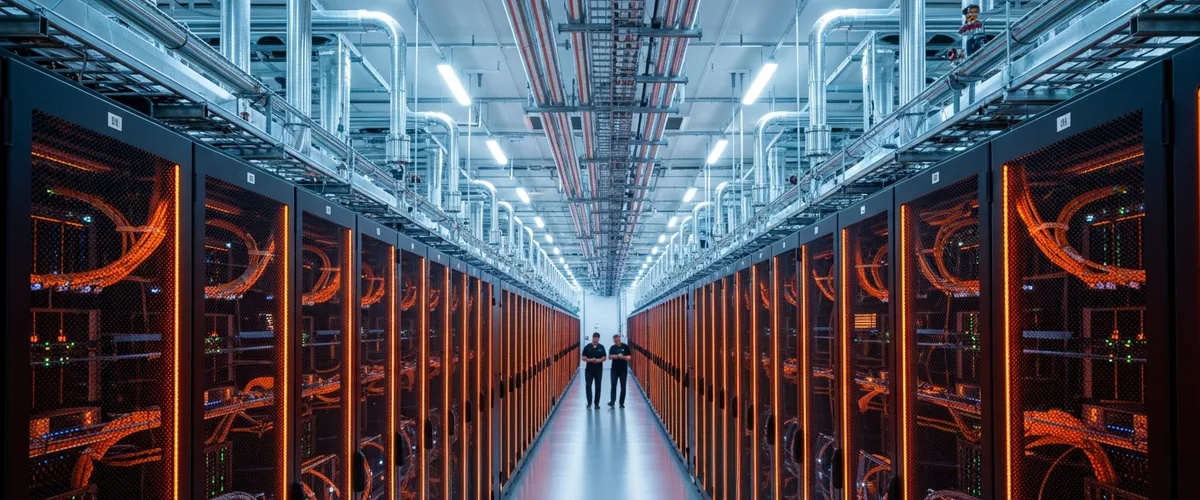
AI infrastructure staffing is the process of recruiting and placing the engineers, technicians, and operations specialists who design, build, and run the physical and software systems behind AI workloads. That covers everything from the electricians wiring a 40-megawatt data center campus to the platform engineers configuring NVIDIA DGX clusters to the MLOps people keeping inference pipelines alive at 3 a.m. on a Saturday. The talent pool for all three layers is thinner than most hiring managers expect, and it is getting thinner.
Gartner pegged worldwide AI spending at $2.52 trillion for 2026, a 44% jump from the year before. AI-optimized server purchases alone are projected up 49%. McKinsey’s broader forecast puts the total data center buildout at nearly $7 trillion by 2030. Those numbers make the headlines. What does not make the headlines is that every billion dollars of that infrastructure spend needs people to rack it, cable it, cool it, configure it, and keep it running. The spending approvals are moving faster than the hiring pipelines behind them.
Robert Ardell. I work the infrastructure side of KORE1’s IT staffing practice, which means my phone rings when someone is standing up an AI compute environment and cannot find the people to staff it. Full disclosure, we charge a fee when you hire through us. Some of what follows will point you toward that conversation. Most of it won’t. I will tell you which is which.
Three Talent Layers Most Companies Staff Wrong
The biggest mistake I see is companies treating AI infrastructure staffing as one hiring problem. It is three.
Layer 1: Physical infrastructure. Electricians, mechanical engineers, HVAC technicians, fiber splicers, facilities managers. These are the people who build and maintain the actual building and its power and cooling systems. A single hyperscale AI data center site can employ 4,000 to 5,000 construction workers at peak buildout, based on figures reported across recent industry construction analyses. Once operational, you still need 200 to 800 facilities and operations staff depending on the campus size. The constraint here is not budget. It is bodies. Deloitte found that data centers and power utilities are now competing for the same core workforce, with more than a third of new postings targeting identical skill sets. An electrician who can pull permits for a 20-megawatt switchgear installation has five offers before you finish writing your job description.
We placed a team of six facilities engineers for a colo operator in Phoenix last year. The client had budgeted 30 days for the search. It took 67. Not because the comp was wrong. The comp was fine. The problem was that every qualified candidate was already committed to a buildout in Reno or Dallas, and the ones who were available wanted relocation packages the client had not budgeted for. We ended up sourcing two of the six from the power utility sector, people who had never worked in a data center but understood high-voltage distribution at the scale the client needed. Worked out. But that is not a playbook most internal recruiting teams know how to run. A fixed start date makes that kind of squeeze worse, which is why the payment clause in the Broadcom Anthropic chip deal matters to anyone staffing a build right now.
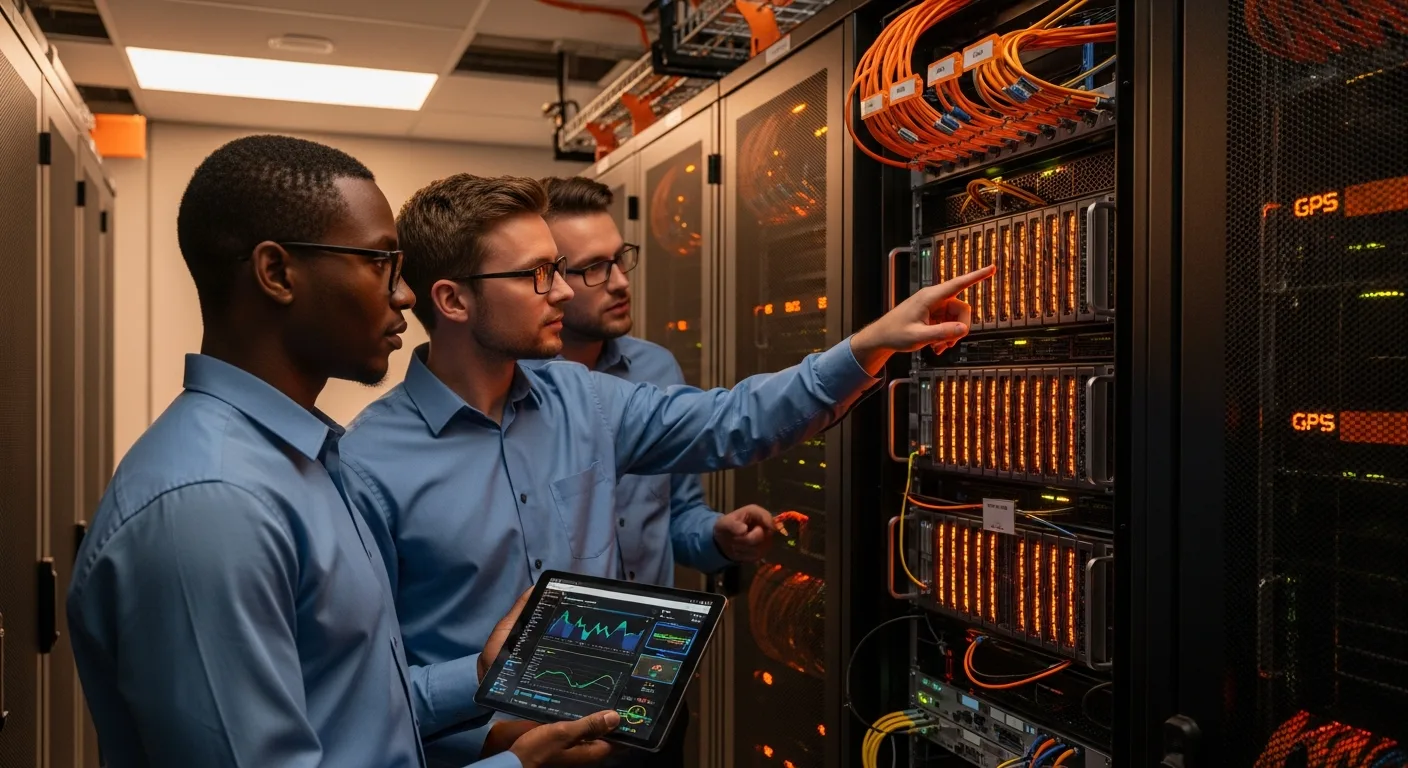
Layer 2: Systems and platform engineering. These are the people who sit between the physical facility and the AI workloads. Network architects designing the spine-leaf fabrics that move data between GPU nodes at 400 Gbps. Kubernetes platform engineers configuring orchestration for GPU-aware scheduling. Storage engineers building the parallel file systems that feed training jobs without bottlenecking. Linux systems administrators keeping the OS images patched and the drivers current across hundreds of nodes that cannot tolerate downtime.
This layer is where the salary pressure is most intense. The Bureau of Labor Statistics projects 12% growth for computer network architects through 2034, with about 11,200 openings annually. That projection does not fully capture the AI infrastructure surge, which only started bending the demand curve in late 2024. In practice, a senior platform engineer who understands both Kubernetes and NVIDIA’s GPU operator ecosystem is pulling $185,000 to $250,000 base, and that is before equity at the hyperscalers. At NVIDIA itself, DGX Cloud infrastructure roles post at $184,000 to $356,500 base depending on level. The candidate who can do this work and is actually willing to leave their current role? We had a search last quarter where the qualified pipeline was 12 people in a metro area of 4 million.
Layer 3: AI and ML operations. MLOps engineers, inference optimization specialists, model serving architects, data pipeline engineers who understand the specific demands of training and serving large models. These people configure the software layer that actually runs the AI. They tune batch sizes, manage model versioning, set up A/B serving infrastructure, monitor GPU utilization rates, and figure out why a training run that was using 94% of cluster capacity yesterday dropped to 61% overnight.
Not the same hire as a machine learning engineer. An ML engineer builds models. An MLOps engineer keeps them running in production. The title confusion costs companies 30 to 45 days on a search when they write a JD that mixes both jobs and attracts the wrong half of the applicant pool. I have seen it happen four times since January.

What AI Infrastructure Roles Actually Pay
Salary data for AI infrastructure is messy because the category did not exist as a distinct labor market until about 2023. Here is what we are seeing across our placements and what the aggregators report, with the caveats noted.
| Role | Experience | Base Salary Range | Notes |
|---|---|---|---|
| Data Center Technician | 1-3 years | $55,000-$80,000 | Shift differentials add 10-15% for nights |
| Data Center Facilities Engineer | 5-8 years | $110,000-$155,000 | Higher in Phoenix, Dallas, Northern Virginia |
| GPU Cluster / Platform Engineer | 5-10 years | $185,000-$260,000 | Kubernetes + NVIDIA ecosystem adds 15-20% premium |
| Network Architect (AI/HPC) | 8-15 years | $175,000-$245,000 | InfiniBand experience commands top of range |
| MLOps / Inference Engineer | 3-7 years | $155,000-$220,000 | Model serving + Triton experience is the differentiator |
| AI Infrastructure Manager | 10+ years | $210,000-$300,000 | Base only. Total comp at hyperscalers exceeds $400K with equity |
A few notes on this table. The ranges reflect US markets as of Q1 2026. ZipRecruiter’s aggregate puts the average AI infrastructure engineer at $127,066, but that number includes junior roles and non-AI-specific infrastructure positions that happen to mention AI in the posting. Glassdoor sits higher at roughly $144,000 for the broader AI engineer category. Neither number reflects the senior platform and operations roles that are actually hardest to fill. The variance between sources tells you something. This market is moving too fast for the aggregators to keep up.
The real comp pressure is not in base salary. It is in the hiring model. A contract GPU cluster engineer through a staffing firm bills $130 to $180 per hour depending on the engagement length and the specific stack. A direct hire at the same level costs less per year in raw salary but comes with a 90-day ramp, benefits overhead, and the risk that they leave in 14 months for a 25% bump at the hyperscaler down the road. That trade-off is the conversation I have with every client during intake.
The Skills That Actually Matter (Not the Ones on the JD)
Most AI infrastructure job descriptions I review are wishlists. Fourteen bullet points of required skills, eight preferred qualifications, and a paragraph about culture that nobody reads. The problem is that the wishlist describes a person who does not exist.
Here is what actually differentiates a good AI infrastructure hire from a resume that looks right but stalls the project.
- GPU-aware systems thinking. Not “familiar with GPUs.” Specifically: can they explain why an 8xH100 DGX node with NVLink performs differently than 8 discrete H100s on PCIe, and what that means for their job scheduling decisions? If the answer is blank stare, they are a generalist sysadmin who added “GPU” to their LinkedIn. We screened 40 candidates for one search last November and exactly seven could answer that question without coaching.
- Networking at AI scale is a different animal entirely. Traditional network engineers design for east-west traffic in a web application. AI training clusters need all-reduce collective operations across hundreds of GPUs with microsecond-level latency sensitivity. The candidate who has deployed InfiniBand or RoCE v2 fabrics in a real HPC or AI environment is worth 30% more than the one who has only worked with traditional Ethernet, and there are maybe a few thousand of them in the US who are not already locked into a hyperscaler.
- Power and cooling literacy. Sounds like a facilities problem. It is until your 40kW-per-rack liquid cooling loop springs a leak at 2 a.m. and the person on call does not understand the thermal management system well enough to isolate the affected circuit without taking down the entire row. At a client site in Ashburn last year, exactly that happened. The on-call tech shut down 96 GPUs instead of 8 because he did not know which cooling manifold mapped to which rack pair. Nine hours of lost training time on a job that was costing $47,000 per day in compute. The fix was a $145,000 senior facilities hire who had worked in liquid-cooled HPC environments before. That hire paid for itself in the first incident it prevented.
- Automation and infrastructure-as-code is table stakes, but the specific tooling matters. Terraform for provisioning, Ansible for configuration management, and Kubernetes with the NVIDIA GPU Operator for workload orchestration. A candidate who has only worked with Docker Compose on a single node is not the same as one who has managed a multi-tenant GPU cluster with namespace isolation, priority queuing, and fractional GPU allocation via MIG. The interview question that catches this gap is deceptively simple: “Walk me through how you would onboard a new team that needs 16 A100s for a two-week training run without disrupting the three teams already using the cluster.” The generalist freezes. The real infrastructure engineer starts drawing a resource allocation diagram.

Staffing Models for AI Infrastructure Teams
Which hiring model works depends on which layer you are staffing and how fast you need to move.
Contract staffing for the buildout phase. When you are standing up a new data center or GPU cluster from scratch, the first 6 to 12 months are pure construction and commissioning. Electricians, cabling teams, rack-and-stack technicians, commissioning engineers. These roles have a defined end date. Contract staffing is the right model here, and pretending otherwise wastes budget on direct hires who will be redundant once the facility is operational. We staff buildout teams as project engagements with clear milestones and off-ramp dates. The client does not carry benefits overhead for roles that are inherently temporary.
Permanent hires for steady-state operations. Once the facility is running, you need a standing operations team. Direct hire makes sense for the core: shift leads, senior platform engineers, the facilities manager, and the MLOps lead who owns the inference pipeline. These people need to know your environment deeply, and the ramp time for a contractor to reach that depth is expensive if you are paying hourly rates. Budget 45 to 90 days for senior direct hire searches in AI infrastructure. If your internal team cannot fill them in that window, that is when a staffing partner earns the fee.
Contract-to-hire for the uncertain middle. You think you need a permanent Kubernetes platform engineer, but the workload might shift to a managed service in 12 months. Or you are not sure if the candidate’s HPC background translates to your specific GPU environment. Contract-to-hire gives you 3 to 6 months to evaluate before committing. In AI infrastructure specifically, the conversion rate on our C2H placements is about 72%, which is higher than our overall average. The ones who do not convert are usually the cases where the client decided to move the workload to a managed service or restructured the team around a different technology stack entirely, not situations where the candidate failed to perform.
Where the Talent Actually Is
The qualified candidate pool for AI infrastructure is concentrated in a handful of places, and most of them are not where your data center is being built.
Northern Virginia, the Bay Area, and Seattle are the three deepest markets for AI infrastructure talent in the US, which is unsurprising given that AWS, Microsoft Azure, Google Cloud, and Meta all have major operations in those metros. But the buildout is happening in Phoenix, Dallas, central Ohio, the Carolinas, and rural Oregon. IEEE Spectrum reported that AI data centers face an acute skilled worker shortage precisely because the new facilities are being built where the power is cheap and the land is available, not where the engineers live.
That geographic mismatch is the single biggest staffing constraint our clients face. Three options, none of them cheap.
Relocation packages. Budget $15,000 to $40,000 per engineer depending on the market and the family situation. Effective but slow. Most candidates need 60 to 90 days to actually make the move, which means selling a house in a city where housing inventory is tight and convincing a spouse that Maricopa County is a reasonable place to raise kids, and about 20% back out during that window when a counteroffer from their current employer shows up with a retention bonus attached.
Remote operations with on-site rotation. Some roles genuinely need to be on-site. A data center technician cannot remotely swap a failed NVMe drive. But platform engineers, MLOps specialists, and network architects can work remotely 80% of the time with periodic on-site sprints. We have seen clients structure this as one week on-site per month with the company covering travel. It works, but only if the on-site team is strong enough to handle break-fix without the remote engineers.
Cross-industry sourcing. The Deloitte workforce study found that data centers and power utilities are fishing from the same labor pool. Flip that finding around and it becomes a sourcing strategy. Power plant control room operators understand mission-critical environments, 24/7 shift rotations, and high-voltage systems. Semiconductor fab engineers understand cleanroom discipline and the thermal constraints of high-density compute. Oil and gas SCADA engineers understand remote monitoring at scale. These adjacent-industry hires require 3 to 6 months of ramp-up, but they bring operational discipline that pure IT backgrounds often lack. Two of our most successful AI data center placements in the last year came from the nuclear power industry.
The 55% Problem
The Uptime Institute’s 2024 staffing survey found that 55% of data center operators now run programs to hire people new to the industry, meaning recent graduates and career changers, as they scramble to fill roles they cannot source from experienced talent alone. That reliance on unproven hires is the tell. Demand is outrunning the pool of people who have actually done the work.
That gap between planned expansion and workforce readiness is where the real problem sits. You cannot train a senior GPU cluster engineer in a 12-week bootcamp. The people who can configure a 1,024-GPU training cluster with proper fault tolerance, checkpoint management, and network topology optimization have 8 to 15 years of cumulative experience across HPC, distributed systems, and Linux administration. There is no shortcut to that. No certification replaces it.
What you can do is staff the layers strategically. Use experienced hires for the top of the stack, where mistakes cost $47,000 per day in lost compute. Use training programs and junior hires for the operational layer, where experienced shift leads can mentor and the failure modes are recoverable. And use specialized AI staffing partners when the search exceeds what your internal recruiting team can source in a market this tight.

What Hiring Managers Get Wrong
Four patterns. I see all of them every month.
Writing one JD for three jobs. A “Senior AI Infrastructure Engineer” posting that lists Kubernetes, HVAC monitoring, PyTorch model optimization, and fiber optic cable management as required skills is describing three different people. Split the req or accept that you are going to reject 95% of applicants for missing skills that no single person has.
Benchmarking comp against 2024 data. AI infrastructure salaries moved 20 to 30% between Q1 2025 and Q1 2026 at the senior level. Any salary survey older than 12 months is going to undershoot the market. I had a client in March who budgeted $160,000 for a senior platform engineer based on a 2024 Radford survey. The first three candidates they wanted all had competing offers above $200,000. We recalibrated at week three instead of week eight, which saved the search. For current benchmarks, the KORE1 AI Engineer Salary Guide reflects what we are seeing in live placements.
Ignoring the shift work reality. AI training clusters run 24/7. Inference endpoints do not sleep. A team that clocks out at five and goes home is not an infrastructure team. You have a maintenance window team. The data center staffing conversation always includes shift coverage, and the clients who address it during planning rather than after their first 3 a.m. incident save months of scrambling.
Waiting too long to engage a staffing partner. Not a sales pitch. A math observation. If your internal recruiter fills AI infrastructure roles in 60 to 90 days, great, do that. Most cannot, because this talent pool does not respond to LinkedIn InMails the same way a React developer does. If the search is not producing qualified candidates by week four, that is the signal. Not week twelve.
Things People Ask About AI Infrastructure Staffing
So what roles do you actually need to run an AI data center?
Two different questions hiding inside one. Buildout needs electricians, mechanical engineers, project managers, cabling contractors, and commissioning engineers. Operations needs data center technicians for hands-on work, platform engineers for the compute layer, network engineers for the fabric, and MLOps specialists for the AI workloads themselves. A midsized facility with 5,000 to 10,000 GPUs typically runs with 40 to 80 full-time operations staff once construction is complete. The ratio gets more efficient at hyperscale, where automation handles a lot of the routine monitoring and the platform engineering team is doing more with custom tooling than manual intervention, but even then you are looking at a minimum of 25 to 30 people per shift rotation who need to know the physical plant inside and out.
Realistically, how fast can you fill these positions?
30 to 45 days for data center technicians and junior facilities roles. Those candidates exist in volume and respond to job boards. 45 to 75 days for mid-level platform and network engineers. 60 to 120 days for senior GPU infrastructure specialists, AI operations leads, and anyone who needs both deep HPC experience and production Kubernetes skills. The long searches are not long because we are bad at recruiting. They are long because 200 companies are chasing the same 5,000 people.
Is it worth paying the staffing agency markup for AI infrastructure roles?
Wrong framing, slightly. The markup is not the cost. The cost is the empty seat. A GPU cluster sitting at 40% utilization because you do not have the platform engineer to onboard three research teams is burning $15,000 to $30,000 per week in wasted compute, depending on your hardware and cloud costs. If a staffing fee gets that seat filled 30 days faster, the math is not complicated. For junior roles where candidates are plentiful, hire direct. For senior specialists where the pipeline is thin, the fee pays for access to a network your internal team does not have.
Can you hire people from other industries for these roles?
For layers 1 and 2, yes, often with good results. Power plant operators, semiconductor fab engineers, telecom infrastructure specialists, and oil and gas SCADA engineers all bring transferable skills. For layer 3, the MLOps and AI operations layer, cross-industry hiring is harder. The tooling is too specific. You need someone who has actually debugged a NCCL all-reduce timeout on a 256-GPU cluster, and that experience only comes from AI or HPC environments.
What certifications matter for AI infrastructure hiring?
$0 correlation between certifications and job performance in our placement data. Three exceptions. The Certified Kubernetes Administrator tells you someone has actually touched a real cluster. NVIDIA’s DLI certs mean they have sat through the GPU computing fundamentals, which is a starting point. Uptime Institute’s Accredited Tier Designer matters for facilities roles because it maps to how real data centers get rated and financed. The rest of the alphabet soup on a resume tells you someone is good at taking exams, which is not the same thing as keeping a training cluster alive when three nodes drop out of a NCCL ring at 4 a.m. Screen for what candidates have built, not what exams they have passed.
When You Need Us and When You Don’t
You probably do not need a staffing partner for data center technician roles in major metros. Post the job, screen for hands-on experience, check the shift tolerance, make an offer. The candidate pool is large enough that a competent internal recruiter who knows how to screen for shift tolerance and hands-on rack work can fill it in 30 to 45 days without paying an agency markup on a role that does not require one. If you are running that search yourself, the shift-honest job ad and screening order we use will save you a cycle.
You probably do need help for senior platform engineering, GPU cluster architecture, and AI operations roles, especially if your facility is outside the top five talent markets. The candidate pool is small. The candidates are passive. The comp benchmarking requires real-time market data, not last year’s survey. And the screening requires someone who can tell the difference between a resume that says “Kubernetes” and a person who has actually managed GPU-aware scheduling at scale.
That is the line. Below it, save the fee. Above it, talk to our team and we will tell you honestly whether we can move faster than your internal search. If you need an executive to set the AI roadmap before you staff the team, see our fractional Head of AI services guide.
If you want to understand the broader cloud infrastructure staffing landscape or need to benchmark salaries for specific roles, those are good starting points. I have been doing infrastructure recruiting long enough to remember when “urgent” meant a 60-day fill, and this market has compressed that to a point where candidates with real GPU cluster or HPC operations backgrounds are fielding three competing offers before your internal team has finished writing the job description and routing it through two rounds of approvals. They are gone.
