
Last updated: August 6, 2026
Automotive Engineering Staffing
ADAS, EV/battery, powertrain, chassis, and embedded engineers placed for OEMs and Tier 1/2 suppliers. KORE1 moves faster than the industry is changing. Because it has to.

Automotive engineering staffing places ADAS, EV, powertrain, chassis, and embedded engineers for OEMs and Tier 1/2 suppliers. KORE1 has recruited automotive engineers across 30+ U.S. metros for 20 years, with a 92% 12-month retention rate.
The automotive industry is mid-transformation, and it’s not slowing down. Every OEM is rebuilding its powertrain team. Every Tier 1 supplier is scrambling to figure out what a software-defined vehicle does to their product roadmap. EV battery programs that didn’t exist three years ago now have headcounts in the hundreds. ADAS teams that used to sit inside R&D are standing up full product lines. The engineering talent market didn’t keep pace with any of that. Related reading: Tesla layoffs 2026 and where the displaced auto and AI bench is landing. Also worth reading: BMW layoffs 2026 and what the German auto retrenchment means for US engineering hiring.
Every hiring manager we talk to already knows the gap. What trips them up is locating the specific engineer they need, the one who’s done BMS integration, not just integrated someone else’s BMS; who’s run a thermal runaway validation protocol under time pressure, not just read a paper about one, mid-program somewhere, not looking, and not picking up an InMail from a recruiter who can’t pronounce APQP. You don’t surface those engineers by posting a job. You surface them by having been in their network long enough that they pick up the phone.
That’s what KORE1 does. Our engineering staffing practice has an automotive bench built on 20 years of placed engineers, retained relationships, and recruiters who can tell an AUTOSAR architect from an AUTOSAR tester without asking. We don’t cross-train generalists and call them automotive recruiters. We recruit automotive engineers the same way automotive engineers are built, through specific, repeated, high-stakes work.
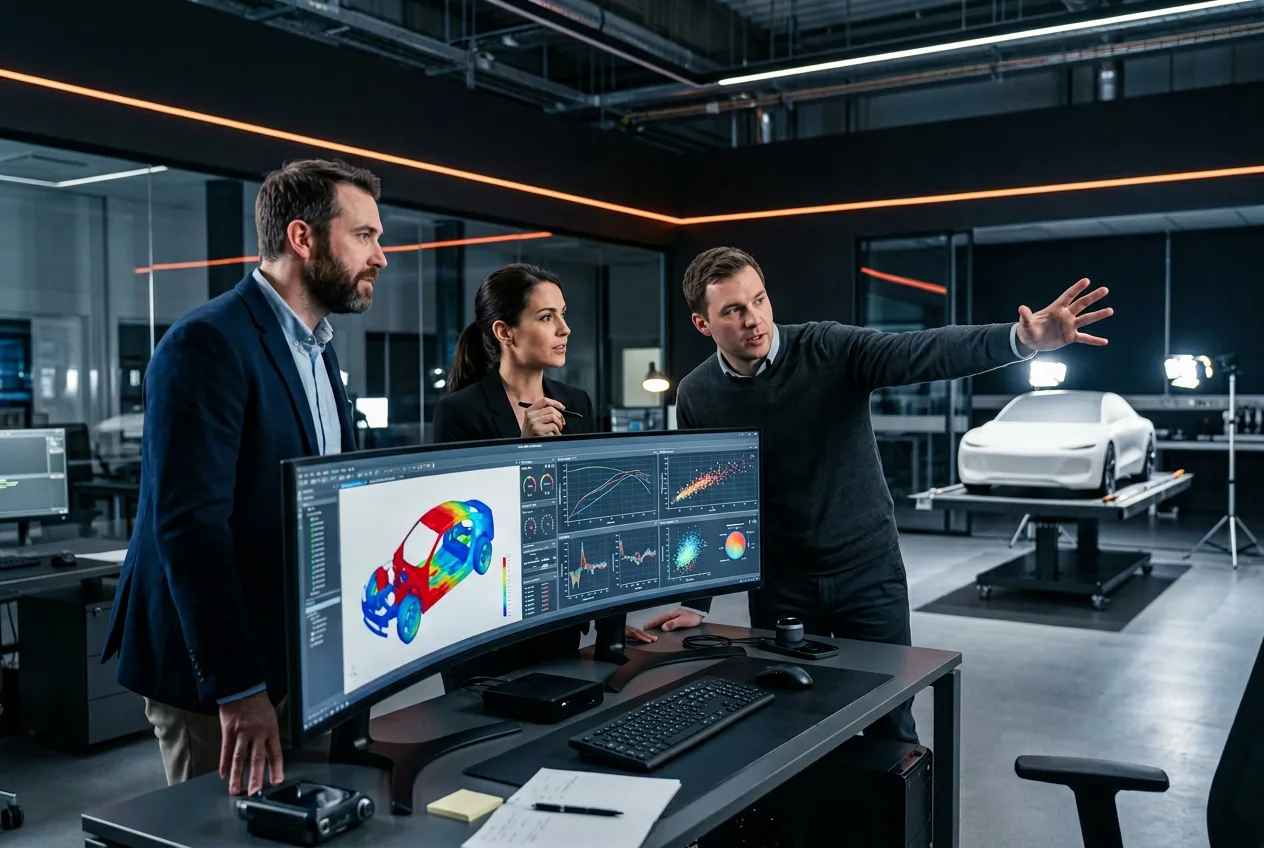
Automotive Engineering Roles We Place
The titles vary by company and org structure. The discipline gaps are consistent across the industry right now.
- ADAS Engineers, sensor fusion, computer vision, object detection, L2/L3 system validation, ISO 26262 functional safety
- EV/Battery Systems Engineers, BMS architecture, cell chemistry interface, thermal management, HV safety, battery pack integration
- Powertrain Engineers, combustion, hybrid, and full-electric drivetrain calibration, NVH, transmission and e-axle development
- Embedded Software Engineers, AUTOSAR, MISRA C/C++, real-time OS, CAN/LIN/Ethernet protocol stacks, ECU integration
- Chassis & NVH Engineers, suspension tuning, steering dynamics, ride and handling, structural acoustic validation
- Vehicle Dynamics Engineers, handling simulation, full-vehicle model validation, Matlab/Simulink, CarMaker, ADAMS
- Systems Engineers (SE/MBSE), requirements decomposition, MBSE tools (Cameo, Rhapsody), V-model, SysML, design FMEA
- Electrical/E/E Architects, vehicle network topology, domain/zonal architecture, HV and LV harness design, PDU integration
- Thermal/Fluids Engineers, CFD, battery and cabin thermal, HVAC system design, cooling loop validation
- Manufacturing & Process Engineers, IATF 16949, PPAP, APQP, stamping, welding, assembly process design for EV platforms
- Quality & Reliability Engineers, warranty analysis, DFMEA, PFMEA, control plans, field issue resolution
- Program / Vehicle Line Engineers, cross-functional program execution from concept to SOP, gateway management, cost/timing accountability
Hiring a direct-to-payroll team lead for a new EV platform? Backfilling a battery systems engineer during a contract freeze? Staffing a short-cycle PPAP push before a critical gateway? We’ve handled all three shapes. See direct hire, contract, and project staffing for how we structure each.

How KORE1 Screens Automotive Engineers
The automotive engineering resume pool has a real dilution problem right now. The EV boom pulled in engineers from adjacent disciplines, aerospace, consumer electronics, industrial automation, who reframed their experience in automotive terms. Some of them are genuinely excellent. Some of them have never sat in a vehicle program review and don’t know what one costs when it goes wrong.
Our recruiters screen for program reality, not credential proximity. When a candidate says they’ve done BMS architecture, we ask what chemistry they were working with, how they handled thermal runaway scenarios at the cell level, and whether they owned requirements down to the ECU or were integrating someone else’s stack. When they list “ADAS experience,” we ask whether they’ve taken a safety case through ISO 26262 sign-off or just done lane-keeping unit tests on a bench. The difference matters because the hire downstream has a program budget attached to it.
For candidates out of adjacent industries, we’re not automatically dismissive. Take an aerospace composites engineer who’s spent five years on fuselage structural analysis and wants to move into EV body-in-white. That’s a plausible transition. What we test is whether they can talk concretely about the delta between building one part to aerospace tolerances and designing a stamped assembly that has to hit cost targets at 200,000 units a year with a Tier 2 supplier who’s never touched IATF 16949. Some can. We find out before you meet them.
We also screen on the culture side of automotive, which gets underweighted in most engineering searches. The pace of an OEM program, the cascading milestone dates, the cross-functional chaos of a vehicle launch, the supplier management grind where you’re arguing over a $0.07 per-part delta with a Tier 1 procurement team who’s been in this room ten times before, is genuinely different from what most engineers coming out of tech companies or EV startups have experienced, and that mismatch shows up in the first 90 days if you haven’t screened for it. We make sure we have that conversation before you do.
Years in Engineering Staffing
12-Month Retention Rate
Days Average Time-to-Hire
U.S. Metros Served
Three Ways We Place Automotive Engineers
Not every automotive engineering search needs the same shape. Here’s how the engagement models actually break down.
Direct Hire
Engineer joins your payroll on day one. Right call for senior systems engineers, EV program leads, and ADAS safety architects tied to multi-year vehicle programs. See direct hire.
Contract
Engineer stays on KORE1 payroll, you pay a bill rate. Works well for surge headcount during a launch window, a PPAP push, or a battery validation program with a hard end date. See contract staffing.
Project Staffing
Defined scope, defined deliverable. Useful for APQP phase support, FMEA workshops, a focused simulation study, or program gateway prep. See project staffing.
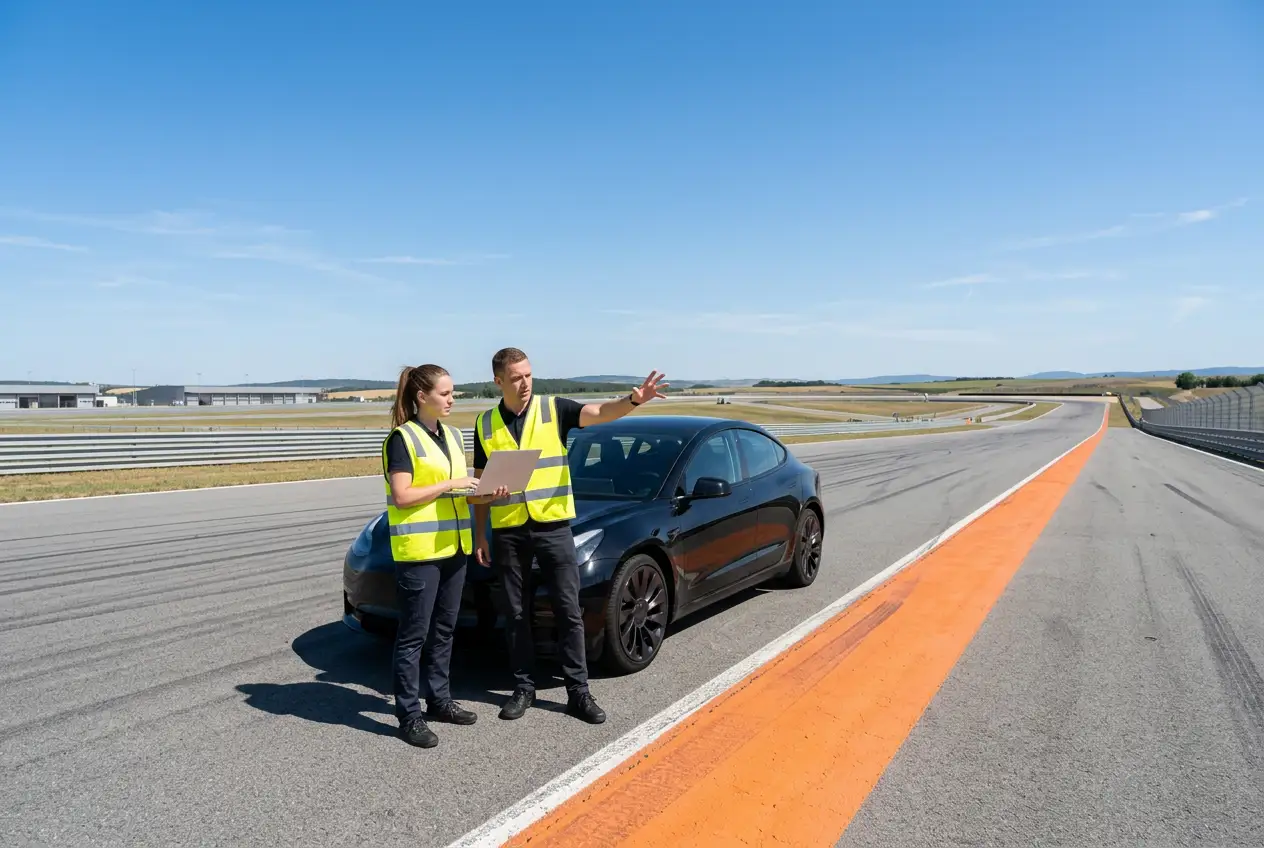
Why EV and ADAS Searches Are Different
The IEA’s 2024 Global EV Outlook put EV sales at 17% of all new car sales globally last year. That share is still climbing, and the engineering bodies inside OEMs and suppliers haven’t scaled at the same rate. The talent exists. It’s concentrated, it moves between programs, and it does not respond to cold outreach the same way a software engineer at a startup would.
EV battery engineers, for example, are often mid-program on a two- or three-year development cycle where their attention is locked on cell validation schedules, HV safety reviews, and whatever thermal issue surfaced in last week’s abuse testing, which is exactly when they’re not thinking about a career move. The right window to engage them is narrow. You catch them when a program transitions to post-launch sustaining mode, or when they can see the end of a development cycle and haven’t been given a clear next program. Our recruiters stay in contact with that bench across multiple conversations over 18 months, not just when you open a req.
ADAS is a different constraint. The functional safety requirement, especially for L2+ and L3 systems under ISO 26262, means you can’t just hire a smart software engineer and figure out the safety case afterward. The candidate who’s led a HARA, owned a SEooC safety manual, or signed off an ASIL decomposition is a small, specific population. And our recruiters have been in that pool long enough to have real relationships, not just LinkedIn searches.
We also work across the supply chain, from OEM R&D centers and vehicle programs to Tier 1 system integrators and Tier 2 component specialists. That gives us reach that pure OEM-focused firms don’t have, and it means we can tell when a candidate’s Tier 1 background genuinely translates to your OEM environment versus when the org scale difference will be a problem. That distinction has saved clients from two costly mis-hires in recent memory. Ask us about it on the intake call.
For the mechanical engineering side of automotive, suspension, chassis, body structures, closures. Our mechanical engineering staffing practice runs parallel to this one. We also cover electrical engineering staffing for E/E architecture, HV harness, and wiring systems roles. Same bench depth. Separate specialization.
Common Questions
What types of automotive engineers does KORE1 staff?
KORE1 places ADAS, EV/battery, powertrain, embedded software, chassis, vehicle dynamics, E/E architecture, thermal, manufacturing, systems, quality, and program management engineers for OEMs and Tier 1/2 suppliers. We staff roles from mid-level individual contributors through principal engineers and technical leads across contract, direct hire, and project engagements. If the role title exists on an automotive org chart, we’ve probably placed someone in it.
How much do automotive engineers cost in 2026?
Most automotive engineers we place fall between $95K and $155K base, with senior EV systems engineers, ADAS safety architects, and principal E/E architects regularly clearing $170K to $210K in programs tied to platform launches at major OEMs. The BLS 2024 OOH puts median automotive engineer pay at $102,520, but that median includes a wide range of roles and geographies. Embedded software engineers with AUTOSAR experience and battery systems engineers with ISO 26262 credentials command 20–35% premiums over the BLS midpoint in active markets like Detroit, Nashville, and the Bay Area. Contract bill rates for ADAS and EV specializations typically run 1.45× to 1.65× the equivalent direct hire base.
How long does it take to hire an automotive engineer?
Our average across automotive engineering placements is 17 days from kickoff to signed offer. That number moves depending on specificity. A general manufacturing engineer in a major automotive metro can close in under two weeks. A principal battery systems engineer who needs ISO 26262 ASIL D experience and is willing to relocate to a new facility takes four to six weeks, sometimes longer. We give you a realistic forecast at the start of the search, not a number we picked to win the work. Searches we lose time on are usually held up by internal approval chains, not candidate availability.
What’s the difference between hiring for an OEM versus a Tier 1 supplier?
The pace and accountability structure are different in ways that matter for fit. OEM engineers typically work across a broader vehicle program, manage more cross-functional coordination, and operate inside a slower, gate-driven process. Tier 1 engineers are usually closer to the hardware, move faster, and carry more direct accountability for component cost and timing. Someone who thrives at a startup EV company often hits a wall inside a traditional OEM structure. Someone who built their career in Tier 1 supplier environments sometimes struggles with the ambiguity of an OEM advanced engineering team. We screen for fit on both dimensions before a candidate ever meets your hiring manager.
Do automotive engineers need specific certifications for EV or ADAS roles?
No universal certification requirement exists, but functional safety work under ISO 26262, especially at ASIL C and D, effectively requires candidates who’ve lived inside a compliant development process, not just trained on it. For battery roles, hands-on experience with HV systems, cell testing, and thermal abuse validation carries more weight than any cert. SAE International certifications in functional safety and automotive cybersecurity (SAE J3061 Practitioner) are useful signals, but we weight them below demonstrated program experience when screening. If your job description has a cert requirement that’s narrowing your pool unnecessarily, tell us on the intake call, we’ll tell you honestly whether it’s filtering out good candidates.
Can KORE1 staff automotive engineers for EV startup programs, not just traditional OEMs?
We have. KORE1 has placed engineers at EV-native companies alongside traditional OEM and Tier 1 programs. The screening criteria we apply differ, EV startups typically need engineers who can work with less defined requirements, build process from scratch, and make hardware decisions at a pace that traditional OEM tools and approval chains don’t accommodate. We ask about that tolerance early and only present candidates who match the environment, not just the technical spec. We’ve also had the opposite conversation: placing startup engineers into traditional programs who needed structure after years of moving fast. That transition works sometimes and fails badly other times. We’ve seen both.
Common Questions
What is the difference between hiring for an OEM versus a Tier 1 supplier?
OEM engineers work across broader vehicle programs with more cross-functional coordination in a gate-driven process, while Tier 1 engineers work closer to hardware with faster pace and more direct cost and timing accountability. We screen candidates for fit on both dimensions before they meet your hiring manager.
Can KORE1 staff automotive engineers for EV startup programs?
KORE1 has placed engineers at EV-native companies alongside traditional OEM and Tier 1 programs. EV startups need engineers who can work with less defined requirements and build process from scratch, which is a different profile from traditional automotive. We assess that fit early and only present candidates who match the environment.
Ready to Hire Automotive Engineers Who’ve Done the Real Work?
Twenty minutes is enough to tell you whether we can help and what the search will actually look like. No slides, no pitch, no charge to talk.
Hiring for software, ADAS, infotainment, telematics, or plant IT instead of pure engineering? See our automotive IT staffing practice.
