Last updated: May 22, 2026
Automotive IT Staffing for OEMs, Tier 1 Suppliers, and Mobility Startups
Embedded software, ADAS, infotainment, telematics, MES, and connected-vehicle cloud engineers vetted at the stack level, not the resume level, so your SOP date and your software release date stop fighting each other.
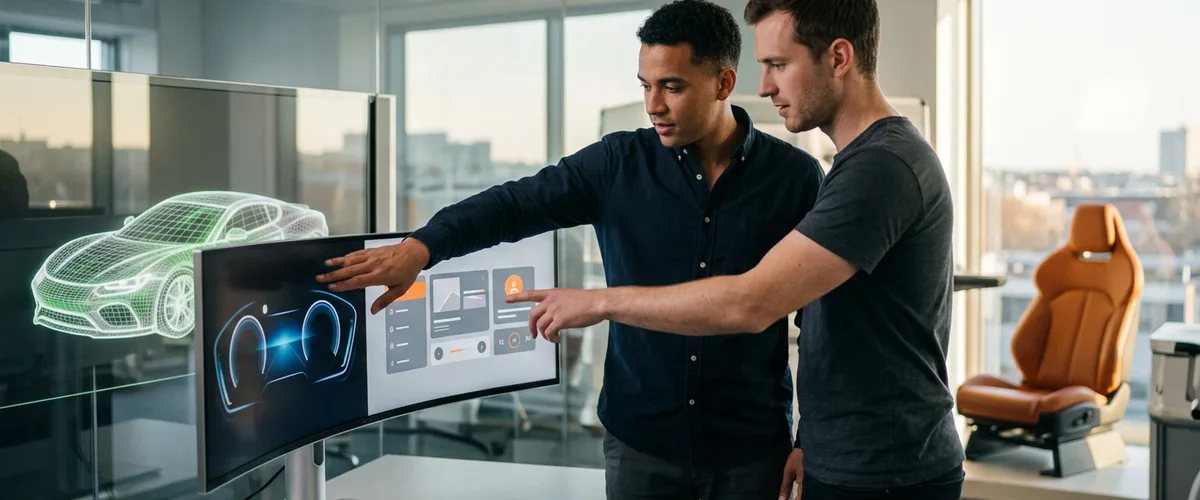
Automotive IT staffing places embedded software engineers, ADAS and sensor-fusion developers, infotainment and HMI engineers, telematics cloud engineers, and plant IT specialists into OEMs, Tier 1 suppliers, and mobility startups. KORE1 fills these roles in 17 days on average and holds a 92% 12-month retention rate.
The vehicle is now a rolling software product. A 2026 program ships with 100 million lines of code, an over-the-air update channel, a backend ingest pipeline that has to survive a 200,000-VIN telematics burst, and an ISO 26262 audit trail that has to survive a regulator. Most product engineering leaders are funded for one of those, sometimes two. None are funded for all four.
Hiring a partner that treats “automotive IT” as one bucket is how a software-defined vehicle program slips a quarter and a telematics rollout ships without UN R155 cybersecurity sign-off. We see it on Series B startups burning a runway month on a recruiter who can’t tell the difference between AUTOSAR Classic and Adaptive, and on Tier 1 suppliers paying retained-search money for a Bosch alum who only ever shipped on Linux.
KORE1 vets engineers at the stack level. Not “C++ plus cars.” We mean an AUTOSAR Adaptive developer who has shipped a service-oriented architecture migration on QNX, or a Snowflake engineer who has wired a connected-vehicle ingest pipeline against an AWS IoT FleetWise endpoint without dropping a single trip event. The right hire shows up fast. A Tier 1 supplier staffing the right ASPICE-fluent embedded lead hits a clean Level 3 assessment in six weeks. The wrong one burns two months, an audit slip, and a quiet rescoping nobody wants on the OEM review deck. That is the gap a serious IT staffing partner is supposed to close.
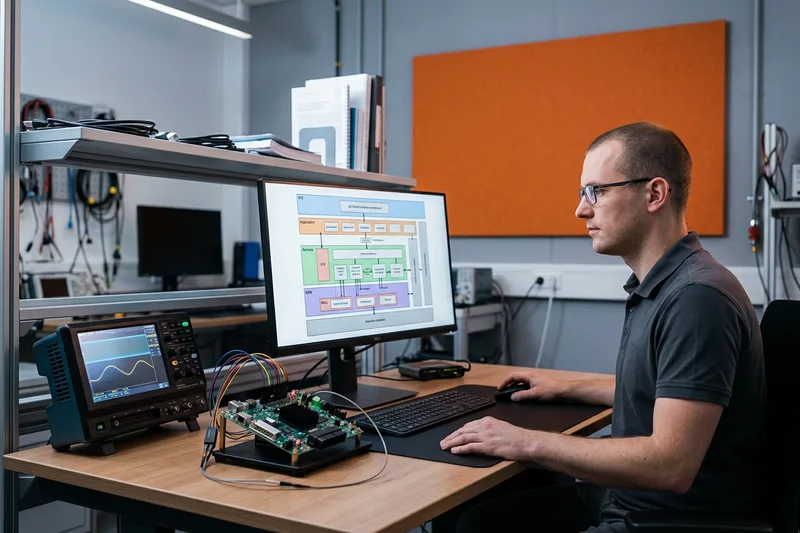
Stack-deep embedded and software-defined vehicle engineers
Most OEMs have committed to one or two compute architectures. A zonal E/E topology with a high-performance compute domain controller running QNX, Linux Automotive Grade, or Android Automotive on top of NXP S32 or NVIDIA DRIVE silicon. AUTOSAR Classic for the legacy ECUs that have to stay on the bus through 2030. AUTOSAR Adaptive for anything reaching out to a cloud service. Each one carries its own toolchain, its own debug culture, and its own personality on a Friday integration day. Depth matters. Breadth too.
We staff engineers who can answer specific questions on a screen share. Walk me through a Vector CANoe regression suite that covers a Classic-to-Adaptive boundary on the same ECU. Tell me how you would migrate a legacy CAN-FD stack onto Automotive Ethernet without breaking the gateway latency budget. What ASIL-D safety case have you actually owned end-to-end, not just rubber-stamped from a Tier 2.
- AUTOSAR Classic and Adaptive developers, Vector toolchain specialists, and BSW configurators for ECU programs
- Embedded C and C++ engineers for QNX, Linux Automotive Grade, and Android Automotive infotainment domains
- Functional safety engineers fluent in ISO 26262 ASIL-B through ASIL-D and SOTIF (ISO 21448) for ADAS programs
- ASPICE assessors and process engineers for Tier 1 suppliers chasing Level 3 capability against an OEM purchasing gate
- Diagnostics and UDS specialists for telematics, fleet, and aftersales programs running on DoIP and CAN
Our bench spans the full automotive software arc, from MCAL and BSW configurators inside a controller, to middleware engineers wiring DDS or SOME/IP between zones, to backend developers building the OTA campaign service that pushes a calibration to 80,000 vehicles overnight without bricking one.
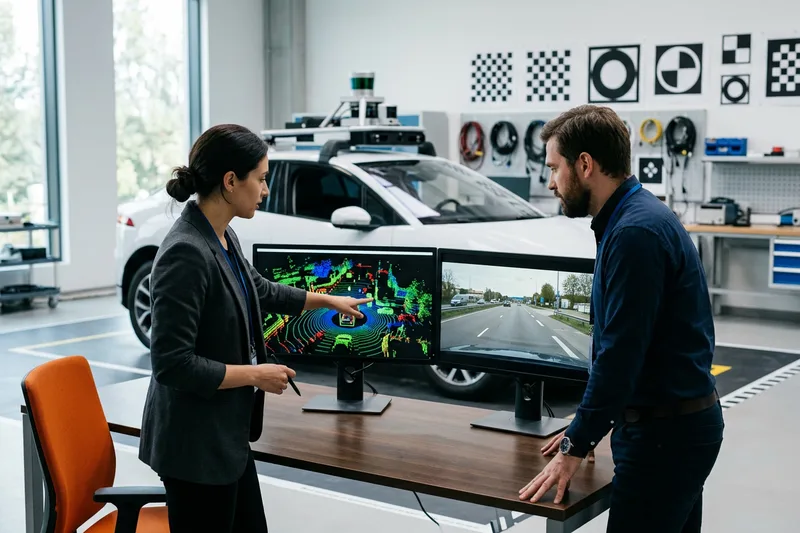
ADAS, infotainment, telematics, and the cloud behind the car
ADAS programs ship first now. Most visible regulatory pressure. Tighter Euro NCAP scoring. NHTSA AEB rulemaking that just dropped a 2029 deadline on every model line sold in the U.S. Infotainment programs sit one quarter behind because the HMI cuts close to brand. The connected-vehicle backend is the quiet one. It eats Snowflake credits every single quarter and never makes the boardroom slide.
Most OEMs and Tier 1 suppliers run all three in parallel because model-year freezes are locked years out and an SOP date will not wait for a tech roadmap. We staff to that reality. A single automotive IT engagement might pull an Open Robinos perception engineer, an Android Automotive HMI developer, and an AWS IoT FleetWise cloud engineer for the connected-vehicle desk, all from our bench inside the same month. The pattern looks identical to insurance IT staffing for carriers running concurrent Guidewire and Duck Creek work, and to manufacturing IT staffing for plants juggling MES and IIoT.
Scope bleed happens. Infotainment touches the backend when an OTA campaign needs a delta-update channel the cloud team has not built yet. ADAS touches plant IT when a new perception calibration has to roll into every end-of-line tester on three continents. When roles come from one partner with a unified vetting process, the handoff is a Slack message. When they come from three agencies with three rate cards and three different safety-culture interpretations, the handoff turns into a change request, a week of slippage, and a stakeholder meeting nobody wants to chair. Pair our automotive IT bench with cybersecurity staffing for UN R155 and R156 compliance programs and the handoff problem disappears.
Automotive IT hiring, in context

Plant IT, vehicle cybersecurity, and the audit trail that has to hold up
The line never moves alone. A modern assembly plant ships data to the cloud the second a torque wrench releases. An OEM running Siemens Opcenter, Rockwell FactoryTalk, or a homegrown MES leans on plant IT engineers who can talk to a controls engineer in the morning and a Snowflake architect in the afternoon. The candidate who fits is rare. We have placed enough of them to know what the resume actually looks like, and it almost never says “automotive” as the headline.
Regulators caught up. UN R155 and UN R156 made cybersecurity management systems and software update management systems mandatory for every new type approval, and the WP.29 timelines are now hitting model lines, not just press releases. We place automotive cybersecurity engineers who have actually owned a CSMS audit, run TARA workshops against a real bill of materials, and shipped a SOC pipeline that flags an in-vehicle anomaly inside a defensible MTTD window. The ISO 26262 functional safety standard sets the floor for safety-critical software, and ISO/SAE 21434 sets the cybersecurity equivalent. Generic IT recruiters do not read either.
For the data side, we also place connected-vehicle data engineers who understand drive-cycle modeling and battery-state estimation, not just Spark, and ML engineers who have shipped a perception or driver-monitoring model that survived a re-flash. The National Highway Traffic Safety Administration publishes the U.S. side of the regulatory map you have to ship against. Supplier finance and operations teams running Oracle NetSuite are a different search, handled by our NetSuite desk for Michigan suppliers. Suppliers on SAP, Oracle, Dynamics 365 or Epicor, especially the ones reconciling EDI release cums with their customers, go to automotive ERP staffing in Detroit.
How we engage with OEMs, suppliers, and mobility startups
Three models, one bench. Pick by where the constraint actually sits this quarter, whether that is PM bandwidth, headcount budget, or a scoped deliverable.
Contract Staffing
Automotive IT contractors for SOP surges, ECU bring-up sprints, ADAS validation campaigns, OTA backend builds, and plant-launch firefights on a fixed window.
Contract staffing →Direct Hire
Full-time placements for software architects, ADAS leads, infotainment principals, and connected-vehicle platform owners at OEMs, suppliers, and scaling mobility startups.
Direct hire →Project Teams
Scoped teams that own a delivery outcome, not a timesheet. AUTOSAR Adaptive migration, OTA campaign build, MES rollout, CSMS audit prep, telematics ingest cutover.
Project staffing →Common Questions
What does an automotive IT staffing agency actually do?
An automotive IT staffing agency sources, vets, and places software and IT talent into OEMs, Tier 1 and Tier 2 suppliers, mobility startups, and contract manufacturers. The short version is that we pre-screen for named-stack fluency on AUTOSAR Classic and Adaptive, QNX, Linux Automotive Grade, Android Automotive, Vector CANoe and CANalyzer, AWS IoT FleetWise, and the safety processes the auditor cares about, not just C++ on a resume. We also handle the less visible stuff. Contract-to-hire math, ITAR and EAR background checks for defense-adjacent programs, ASPICE and ISO 26262 fluency screening, and onboarding for distributed embedded and cloud teams.
How long does an automotive software or ADAS engineer search usually take?
Most KORE1 automotive IT searches close in 17 days for contract roles and four to ten weeks for direct hire. Three of our last five AUTOSAR Adaptive engineer searches closed inside 19 days. The slower ones stretched because the client would not flex on a relo to Detroit for a role the market now prices as fully remote with quarterly travel. Compression is available if you relax geography or seniority tier, not both at once.
How is automotive IT staffing different from automotive engineering staffing?
Automotive IT staffing focuses on software, cloud, data, and digital roles that touch the vehicle, the plant, or the connected-vehicle backend. Automotive engineering staffing covers the mechanical, electrical, controls, NVH, and manufacturing engineering disciplines that design and build the vehicle itself. The two pipelines overlap on functional safety, ASPICE, and ECU bring-up, and KORE1 staffs both sides under one roof. If your open role is closer to AUTOSAR than to CATIA, you want this page. If the role centers on body, chassis, NVH, or powertrain hardware, see automotive engineering staffing.
Do you staff remote, hybrid, and onsite automotive IT roles?
All three. Most connected-vehicle cloud, data platform, and OTA backend contract roles run fully remote in 2026. Onsite demand still clusters around Detroit and the Auburn Hills supplier corridor, the Greater Toronto Tier 1 belt, Silicon Valley for mobility startups and silicon partners, Austin for the new EV plants, and Stuttgart, Munich, and Gothenburg for the European programs that hire stateside contractors on a project basis. Hybrid is the middle ground a Tier 1 supplier defaults to when the head of embedded and the head of cloud disagree on what an integration week is supposed to look like.
How much does an automotive software engineer cost through a staffing agency?
Contract bill rates for senior embedded, ADAS, and infotainment engineers run roughly $105 to $185 per hour in 2026, depending on geography, ASIL exposure, tool license carry, and whether the role requires a TS or ITAR-clean background. Direct hire placements carry a standard percentage fee against first-year compensation. We quote both against a signed SOW, not a generic rate card, because automotive IT roles vary too much to price off a spreadsheet, and the safety-critical tail of the market commands a real premium.
Do you work with OEMs and Tier 1 suppliers, or only with mobility startups?
All of the above. OEMs and global Tier 1 suppliers make up the majority of our automotive IT placements, especially on AUTOSAR, functional safety, and ASPICE engagements. Mobility startups and EV scale-ups now account for a real share, particularly on cloud, data, and over-the-air programs where the bench rotates fast. We have staffed engineers into a top-five OEM and into a Series C autonomy company in the same month. The vetting bar is the same either way. The difference is mostly equity discussions, NDA scope, and the speed of the interview loop.
Have an automotive software, ADAS, infotainment, or telematics role open?
Tell us the program, the SOP or release window, and the stack. We will come back with a shortlist inside a week.
