
Last updated: May 17, 2026
Biotech Recruiters Who Speak Therapeutic Area, Not Just Job Description
Specialist life sciences recruiting for biotech, pharma, diagnostics, and cell and gene therapy. Scientists, manufacturing, QA, regulatory, and clinical talent across the U.S. Contract, contract-to-hire, and direct hire.

KORE1’s biotech recruiters place scientists, manufacturing, QA, regulatory, and clinical talent for biotech, pharma, diagnostics, and cell and gene therapy companies. Most searches close in 14 to 24 days with a 92 percent twelve-month retention rate.
Hiring leaders in biotech ask for a recruiter, not a staffing platform. The reason is simple. A platform sends you fifty applicants who match a keyword. A recruiter sends you four who actually scaled a process past 50 liters, or three who wrote the 510(k) section your QA director keeps asking about. The difference is whether the person on the phone with your candidate can hold a conversation about CMC or just read the bullet points back to them. On the small-molecule and CDMO side of the same market, that screen belongs to our pharma quality and manufacturing search team.
Most biotech recruiters are not biotech recruiters. They are general technical recruiters running a biotech req because someone in the back office assigned it. They cannot screen out the candidate whose viral vector experience is one rotation in graduate school. They cannot tell you why your offer keeps losing to a competitor across town. They cannot calibrate comp on a senior validation engineer in a CDMO market they have never recruited inside. For contract QC and GMP quality seats instead of a search, pharma contract staffing is the better route. Permanent quality leaders are priced in our quality management salary guide. When a biotech should hire that leader at all is covered in our director of quality timing guide. Once the answer is yes, heads of quality and site leaders go through our leadership search for drug manufacturers.
KORE1 is built differently. Our biotech recruiters come from inside the industry. Bench experience, CRO operations, QA inspection prep, regulatory submission cycles. They run searches by therapeutic area and modality, not by zip code and posting age. If your team also needs biomedical engineers, life sciences IT for clinical data systems, or pharmaceutical IT for GxP and 21 CFR Part 11 work, one team handles the picture instead of three handoffs. Outside biotech, microbiologists and QC technicians for food and chemical plants sit with our scientific staffing team.
For searches anchored in Southern California, our SoCal biotech staffing practice runs deeper on local relationships. For national multi-hub coverage across Boston, San Diego, and Research Triangle Park, our biotech staffing agency page covers the cluster playbook. This page covers what makes the recruiter actually capable.

A Specialist Recruiter Catches What a Generalist Misses
A generalist sees “process development scientist” and pulls keyword matches. A specialist asks whether the role is upstream or downstream, mammalian or microbial, perfusion or fed-batch, and whether your senior associate is expected to own a unit operation or contribute to a campaign. That conversation happens on the first call, not the fifth. Clinical operations work the same way, which is why CRA and trial manager searches run on their own desk.
The same logic runs through every biotech discipline. QA candidates who have led an FDA inspection are not interchangeable with QA candidates who have only read the warning letters. Regulatory candidates with INDs filed are not the same as regulatory candidates who have only supported a filing. Specialist recruiters know which line of the resume to test and which line to skip past.
According to a 2024 U.S. Bureau of Labor Statistics outlook, life sciences technical roles are projected to grow 7 percent through 2032, faster than the average occupation. That growth concentrates inside narrow specializations, which is why generalist sourcing keeps falling short.
What our biotech recruiters bring to the call
- Industry backgrounds in process development, QA, regulatory, or CRO operations
- Therapeutic-area depth in cell and gene therapy, biologics, small molecule, and diagnostics
- Inspection-readiness fluency for FDA, EMA, and ISO 13485 environments
- Comp benchmarks built from placed-base data, not aggregator averages
- Active passive-candidate relationships, not job board pulls
Recruiting Inside the Science, Not Around It
Cell and gene therapy is not biologics. Diagnostics is not pharma. Small molecule manufacturing is not vector production. A recruiter who treats them as the same industry sends you the wrong candidate every time. We split coverage by modality and stage so the screening conversation actually goes somewhere.
Cell therapy hiring is a different game. The candidate who matters has run a viral vector campaign, sat through a Type B meeting, or shipped a CMC section that survived FDA CBER review. The pool is small. It does not respond to job postings. It responds to a recruiter who knows the name of the head of process at three competitors and can have a real conversation about what changed at the last GMP audit. When a sponsor hands that process to a contract manufacturer, the floor crew comes through CDMO operator and tech transfer hiring. The full seat list for the receiving site is in our post on who you need when a client program moves in.
The Biotechnology Innovation Organization tracks more than 1,800 clinical-stage cell and gene therapy programs as of 2024. Each one needs people who understand viral vectors, cryopreservation logistics, and the inspection cycle for a clinical-stage manufacturing site. Generic recruiters will not find them. They are in narrow networks held by specialist recruiters.
How we segment the work
- Cell and gene therapy: vector development, cell processing, fill-finish, CBER regulatory
- Biologics: upstream and downstream process development, scale-up, tech transfer
- Small molecule: API synthesis, formulation, analytical, GMP manufacturing
- Diagnostics and IVD: assay development, 510(k) submissions, CLIA and CAP environments
- Clinical operations: CRA, study director, CMC project manager, clinical data management
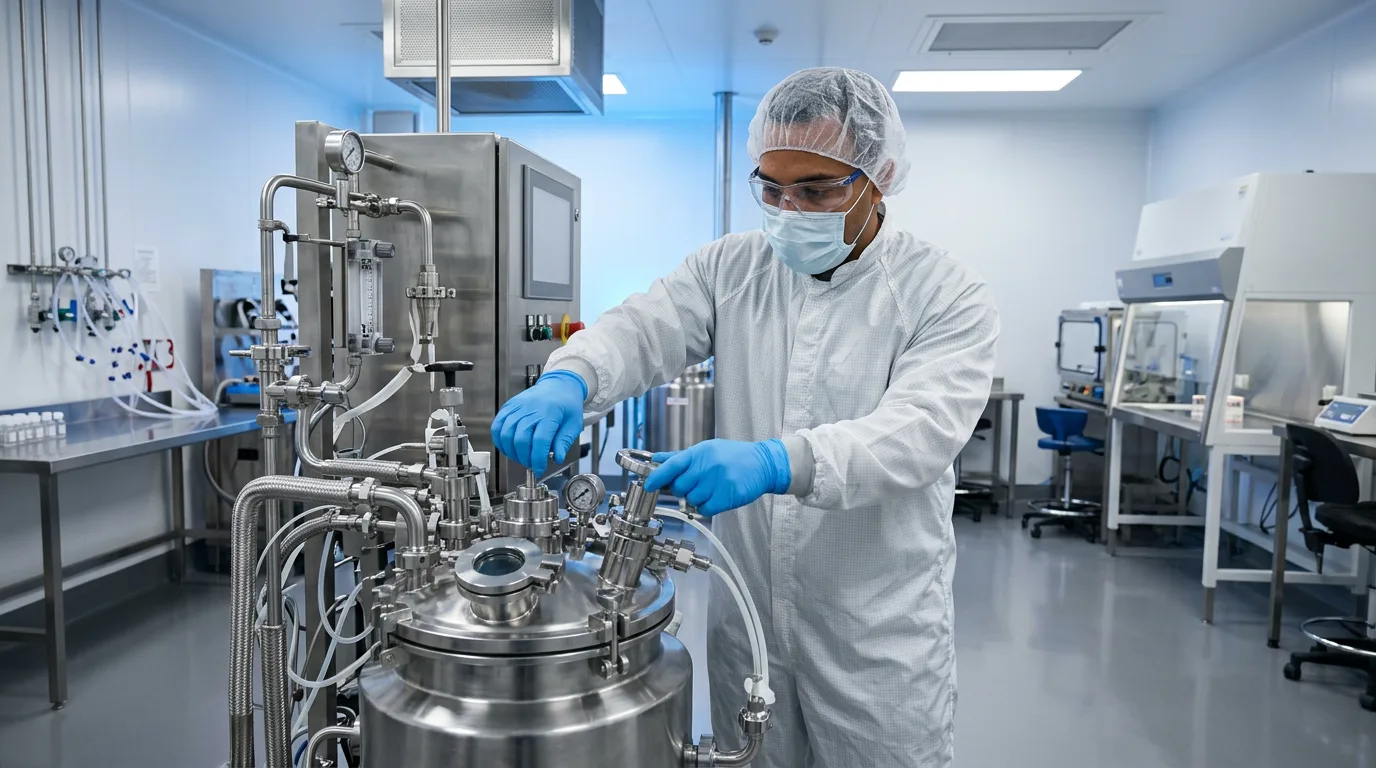
Biotech Roles Our Recruiters Place
From bench scientist to senior leadership. The screening criteria shift dramatically by role family, which is why each one sits with a recruiter who has spent years inside it.
Scientists & R&D
Discovery, platform, computational biology, and senior research associates across modalities.
Manufacturing & Process
Process development, scale-up, GMP operators, manufacturing supervisors, validation engineers.
QA, RA & Compliance
Quality assurance, regulatory affairs, inspection readiness, CAPA, document control, computer system validation.
Clinical & CRO
CRAs, study directors, CMC project managers, clinical operations leads, biostatisticians.

The Recruiter on Your Account Is Built for the Search
Searches sit with the recruiter whose background fits the role. A QA inspection-readiness search runs with a recruiter who spent six years inside QA before moving into search. A cell therapy process search runs with someone who knows the difference between a lentivirus campaign and an AAV one without having to look it up. The kickoff call is shorter because we are not learning your industry from scratch.
Three of our last five gene therapy searches closed in under three weeks because the recruiter already knew the eight people in the country who fit the role. The fourth took six weeks because the candidate pool was genuinely thin. The fifth closed in eleven days when the hiring manager allowed a relocation conversation we surfaced at kickoff. Specifics matter. Average numbers hide them.
What the kickoff call covers
- Therapeutic area, modality, stage of company, and regulatory exposure
- Hiring manager’s screening priorities (what closes a no, what closes a yes)
- Comp band benchmarked against recent placements, not aggregator estimates
- Relocation and remote tolerance, surfaced before sourcing starts
- Where the search has stalled before, if it has been open elsewhere
Hire the Way Your Program Actually Runs
A validation push, a launch campaign, a permanent platform build, or a six-month IND sprint. Each calls for a different engagement model. We match the model to the program.
| Engagement Model | When It Fits |
|---|---|
| Contract | Validation surge, IND push, audit prep, fixed-duration manufacturing campaign |
| Contract-to-Hire | Growth with a measured evaluation period before conversion |
| Direct Hire | Permanent platform roles, leadership hires, long-term capability build |
| Project-Based | Defined technical objective with a fixed timeline and deliverable |
How a KORE1 Biotech Recruiter Runs a Search
Calibrate the Real Role
Stage of company, modality, regulatory exposure, comp band, and where the search has stalled in the past. We surface trade-offs at kickoff so we are not chasing candidates the role cannot pay for or the timeline cannot reach.
Source Inside the Network
Active outreach to passive candidates inside the therapeutic-area network. Not job board pulls. Each recruiter holds direct relationships with candidates at competitor sites in the same modality, which is the reason a four-week search closes in eleven days when the role is well-defined.
Screen, Present, Close
Scientific screening on the first call, not after the technical interview. Structured presentations with placement-relevant context (why this candidate left, what they want next, what stops their yes). Offer negotiation through close with relocation logistics handled before the offer goes out.
Organizations Our Biotech Recruiters Support
- Commercial-stage pharma and biopharma
- Series A through pre-commercial biotechs
- Cell and gene therapy developers
- Diagnostics and IVD companies
- Contract research organizations (CROs)
- Contract development and manufacturing organizations (CDMOs)
- Genomics, sequencing, and platform companies
- Academic and translational research institutions
Ready to Work With a Biotech Recruiter Who Actually Knows the Science?
Start with a kickoff call. We will ask about the role, the therapeutic area, your stage of company, and where the search has stalled before. No pitch deck. No pressure. A direct conversation about whether this is the right fit. Hiring onto the QC bench is its own problem, and we cover QC analyst job descriptions separately.
Common Questions
What does a biotech recruiter actually do?
A biotech recruiter sources, screens, and places life sciences talent into biotech, pharma, diagnostics, CRO, and CDMO companies. The work is therapeutic-area aware. Not every candidate who can pass a phone screen on cell biology has run a viral vector campaign or written a 510(k). The point of a specialist recruiter is the scientific screening, not the sourcing.
How is this different from your biotech staffing pages?
Three angles, three pages. This page is for hiring leaders who care about who the recruiter is and what they know. Our SoCal biotech staffing page covers our deeper San Diego, Carlsbad, and LA cell and gene therapy network. Our biotech staffing agency page covers the three-hub national playbook across Boston, San Diego, and Research Triangle Park.
How long does a biotech search usually take?
Fourteen to twenty-four days on most searches. Highly specialized roles run longer. A senior gene therapy process engineer with sponsor manufacturing experience and FDA inspection exposure is a small pool, expect six to eight weeks. We commit to an honest timeline at kickoff instead of promising numbers the search cannot hit.
What backgrounds do your recruiters come from?
Most have ten to twenty years inside biotech before recruiting. Bench science, QA inspection prep, CRO operations, regulatory submissions, and CMC project management are the most common. The matching matters. A regulatory affairs search sits with a recruiter who has worked alongside RA leaders, not one who learned the acronyms from a training video.
Do you place candidates at early-stage startups, or only established companies?
Both. Series A startups hiring their first head of process development, mid-cap pharma hiring twenty associates for a launch campaign, CDMOs scaling for a new client program. Screening shifts with stage. Startup hires need ambiguity tolerance and scrappy infrastructure habits. Established company hires need to navigate hierarchy and an existing quality system. We screen for stage fit, not just technical skill.
What roles do biotech recruiters at KORE1 cover?
The full continuum. Discovery research, process development, scale-up, tech transfer, GMP manufacturing, QA and QC, validation, regulatory affairs, and clinical operations. Network depth shifts by role type. Bench searches lean on academic networks and early-career relationships. Senior manufacturing searches lean on direct outreach to passive candidates at competitor sites. We run them differently and stop pretending otherwise.
Why hire through a specialist biotech recruiter instead of in-house TA?
Speed, screening, and network. We maintain active passive-candidate relationships that an internal team rebuilds from scratch each search. Our recruiters speak therapeutic area, not just keywords. And a search that opens across Boston, San Diego, and the Triangle needs three local networks, not one centralized sourcer. Most clients use both. We complement in-house TA on the hard-to-fill roles.
