
Last updated: May 22, 2026
Biotech Staffing Agency Serving Boston, San Diego, and Research Triangle
Life sciences recruiting across the three U.S. biotech megaclusters. Scientists, manufacturing, QA, regulatory, and clinical talent for sponsors, CROs, and CDMOs. Contract, contract-to-hire, and direct hire.
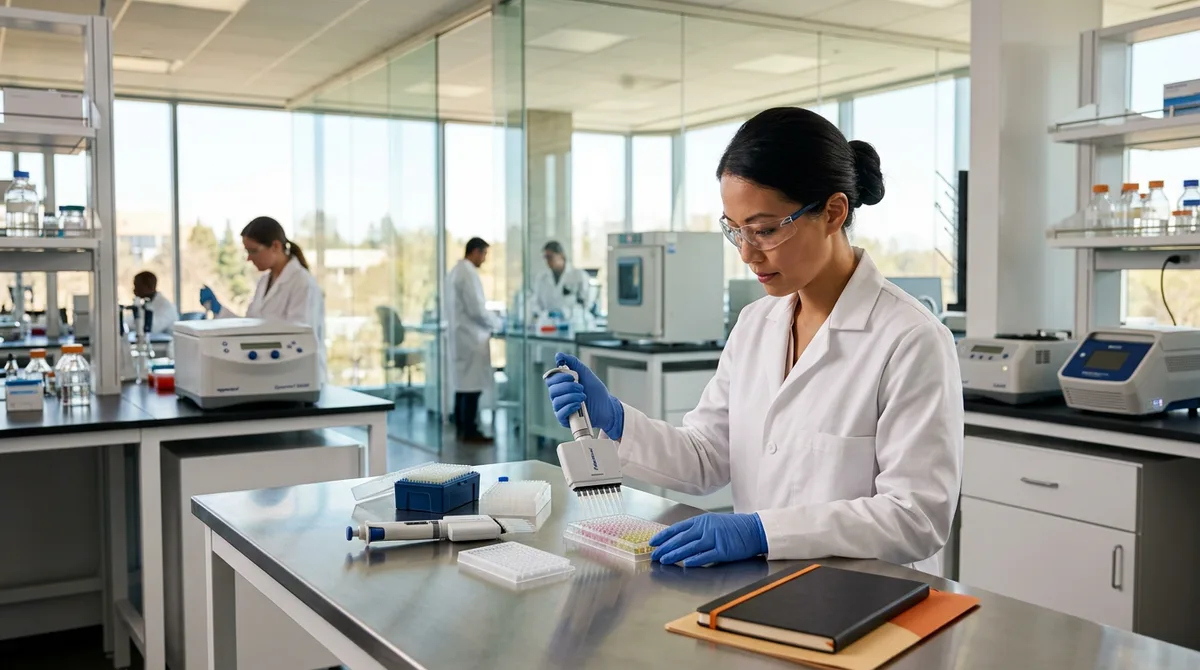
KORE1 is a national biotech staffing agency placing scientists, QA, manufacturing, regulatory, and clinical talent across the three U.S. biotech megaclusters: Boston and Cambridge, San Diego, and Research Triangle Park. Most searches close in 14 to 24 days.
Biotech hiring breaks in predictable ways. A San Diego startup posts a process development role and gets a hundred applicants. Four of them have ever scaled a process past 50 liters. A Cambridge sponsor opens a cell therapy manufacturing search and three weeks later they still haven’t seen a candidate with vector experience and inspection exposure. A Durham CDMO needs a senior validation engineer and the only people answering are senior in years, not in regulated environments. That validation seat is one of several a transfer creates, all listed in our tech transfer seat list.
This is the gap a real biotech staffing agency closes. Not by spraying postings across LinkedIn. By knowing which Series B in Sorrento Valley just lost their head of process to a competitor in Watertown, which Raleigh CRO has a backlog of QC chemists waiting for a sponsor opportunity, and which Boston biotech is paying $15K above market for senior fill-finish because they’ve burned three offers already. When the backlog is QC chemists at a drug maker, pharmaceutical QC and lab contractors tend to be the quicker fix. When the seat is permanent rather than a backlog, recruiters who hire for pharma quality take the search. Our guide to CDMO and pharma quality manager pay covers what that seat costs. Sponsors still deciding whether it’s time can read our take on when a biotech needs a head of quality.
KORE1 supports biotech hiring nationally through an integrated engineering staffing agency and life sciences staffing practice that connects scientific talent to adjacent disciplines across pharma, medical devices, diagnostics, and clinical research. If your team needs scientists alongside biomedical engineers, life sciences IT for clinical data systems, or pharmaceutical IT for GxP and 21 CFR Part 11 work, you stop coordinating three firms and one point of contact handles the whole picture.
For searches anchored entirely in Southern California, our SoCal biotech staffing practice runs deeper on local relationships in San Diego, Carlsbad, and the LA cell and gene therapy cluster. This page covers the multi-hub case, where a search may start in one cluster and finish in another, or where the candidate pool only opens up when all three are in play.
The Three U.S. Biotech Megaclusters
Roughly 70 percent of U.S. biotech employment sits inside these three geographies. They behave differently. Candidates rarely cross between them without a relocation conversation that starts at kickoff.
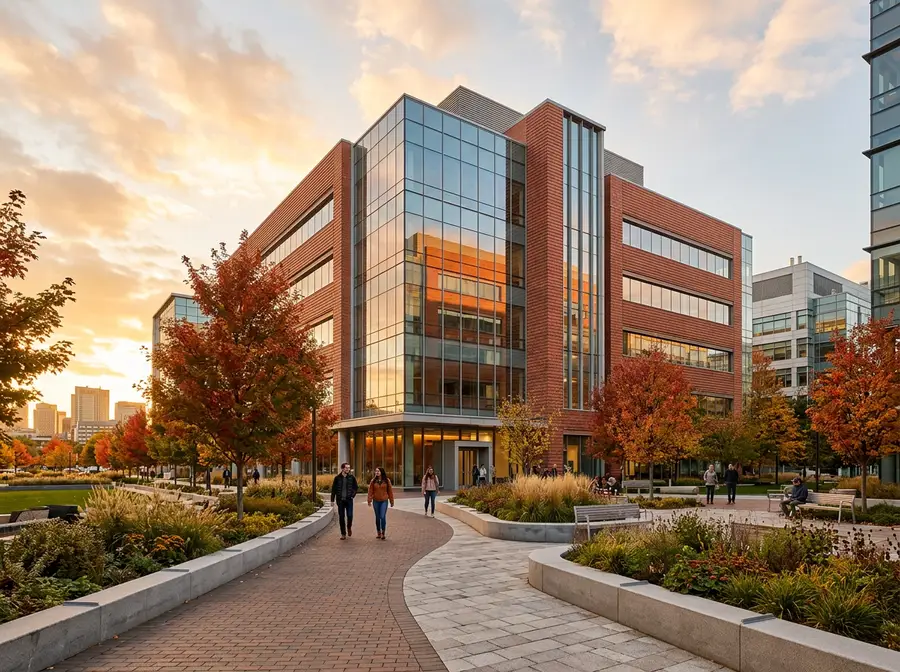
Boston and Cambridge: The Largest U.S. Biotech Cluster
Cambridge is the densest biotech zip code in the country. Kendall Square alone holds research operations for most of the top 25 pharma companies and a constantly shifting roster of platform-stage biotechs. The Seaport pulls clinical and commercial teams. Watertown and Waltham hold cell therapy manufacturing. The Longwood medical area connects sponsor research to clinical operations. Those clinical operations teams, and the sites they run studies at, hire through our CRO and trial site staffing desk.
Boston candidates expect three things. Cambridge-quality science. A real path on the bench or in the clinic. And comp that reflects the cost of living near the Charles. According to the Massachusetts Biotechnology Council, the state’s biotech industry employs more than 100,000 people, the largest concentration in the United States. That density helps hiring speed and complicates retention. The same recruiter network that fills your role is calling your senior associate twelve months in. Pay is harder to read here too. For QC seats, Boston’s gap between technician and chemist pay is wide enough that neither median prices the role.
What we place in Boston
- Cell and gene therapy process development scientists and engineers
- Senior research associates and platform scientists for early discovery
- GMP manufacturing leads for fill-finish, viral vector, and cell processing
- Clinical operations and CMC regulatory leads
- Bioinformatics and computational biology for sequencing pipelines
San Diego: 1,200 Companies Across the Coastal Corridor
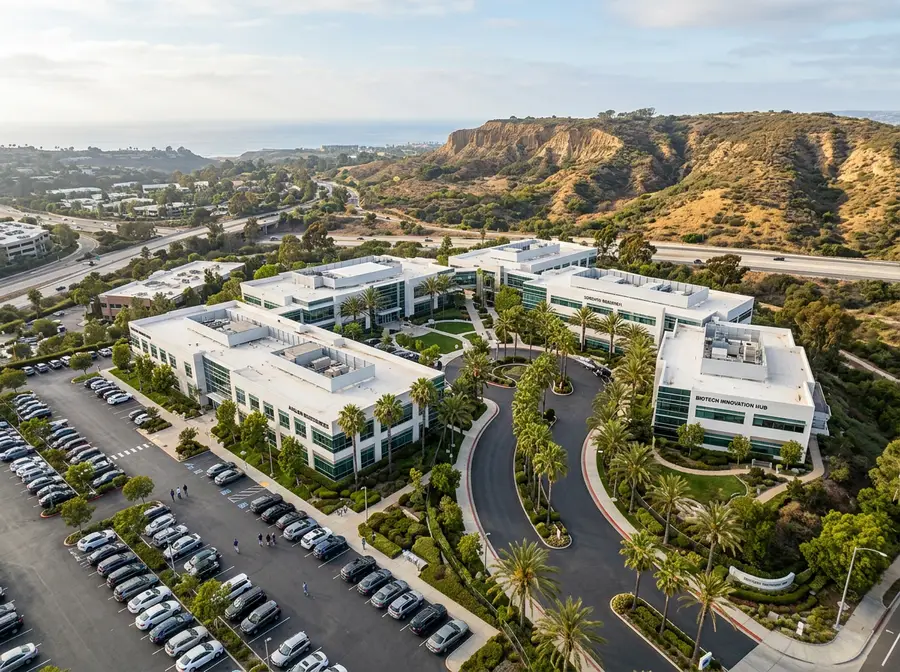
San Diego is more than 1,200 life sciences companies running from Carlsbad down to Sorrento Mesa. Torrey Pines is anchored by Salk, Scripps, and a dense ring of Series B biotechs. Sorrento Valley holds the commercial-stage names. UTC has the diagnostics and clinical lab cluster. La Jolla pulls senior bench scientists out of UCSD. When those bench scientists apply for plant roles, read what transfers from the lab to GMP manufacturing first.
The market behaves differently from Boston. Comp is roughly 10 to 15 percent lower at the senior level. Quality of life and the relocation pull from the Northeast does work that comp alone can’t. Per the California Life Sciences Association, San Diego ranks among the top three U.S. life sciences employment markets and continues to absorb seasoned talent from Boston and the Bay Area looking for a different lifestyle equation.
What we place in San Diego
- Process development and tech transfer engineers for biologics and small molecule
- Diagnostics R&D and IVD regulatory professionals
- QC chemists and analytical method development scientists
- Manufacturing associates and supervisors for upstream and downstream
- Clinical research associates and trial operations leads
For broader market context across the metro, our San Diego staffing page covers our full coverage across the corridor.
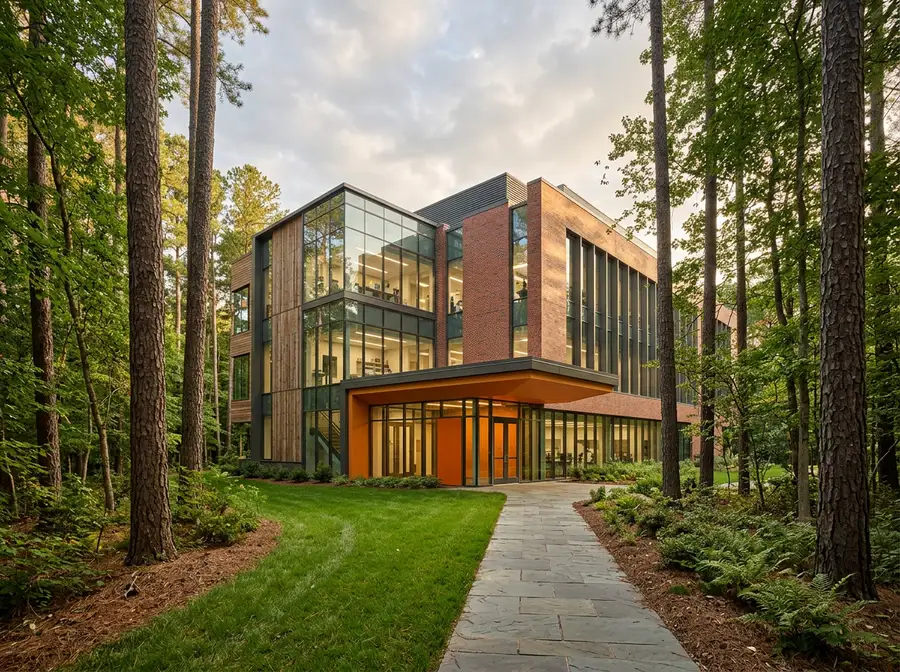
Research Triangle Park: The CDMO and Manufacturing Engine
RTP is the third leg, often underestimated. The Triangle covers Raleigh, Durham, Chapel Hill, and Morrisville. Three research universities (Duke, UNC, NC State) feed the talent pipeline. Major sponsor sites and contract development and manufacturing organizations occupy the park itself. Gene therapy manufacturing has expanded heavily across Holly Springs and Sanford in the last five years. The contract manufacturers in that corridor staff their suites through our CDMO manufacturing staffing desk.
The Triangle hires differently. Comp runs 15 to 20 percent below Boston for equivalent roles. Loyalty is longer. The relocation case in is strong because the cost of living delta closes the comp gap quickly. According to the North Carolina Biotechnology Center, the state hosts more than 800 life sciences companies with concentrated employment in the Triangle. The hiring rhythm here is built around CDMO campaigns and sponsor expansions, not the spiky Series A startup pattern of Cambridge. Why CDMO hiring moves in those waves is explained in our hiring manager guide to CDMOs.
What we place in the Triangle
- GMP manufacturing supervisors and senior operators for biologics and gene therapy
- Validation engineers (IQ/OQ/PQ, cleaning validation, computer system validation)
- QA specialists with FDA inspection readiness and CAPA experience
- CRO study directors, project managers, and CTL leads
- Process engineering and automation roles for new facility startups
Three Reasons National Reach Closes Biotech Searches Local Networks Can’t
Relocation Is the Real Talent Pool
For senior cell therapy, gene therapy, and biologics manufacturing roles, the right candidate is rarely in your zip code. A Boston-to-RTP relocation is real money saved for the candidate, real expansion for the sponsor. We screen for relocation readiness at the first call.
Comp Calibration Without Guesswork
Boston, San Diego, and the Triangle each price differently for the same title. Senior process engineer comp spans roughly $165K to $215K across the three. We bring placed-base data, not aggregator estimates, so the offer holds at signing.
Therapeutic Area Network Depth
Cell and gene therapy talent clusters in Cambridge and the Triangle. Diagnostics talent clusters in San Diego. Antibody discovery cuts across all three. Hiring inside one cluster cuts you off from two thirds of the relevant network.
Biotech Subsectors We Recruit Inside
Biotech is not one industry. Each subsector has its own talent dynamics, regulatory environment, and unwritten rules about who is worth interviewing. We source against the specifics.
Pharma & Biopharma
Drug discovery, preclinical research, process development, and GMP manufacturing under 21 CFR Part 211 and ICH Q7.
Cell & Gene Therapy
Vector development, cell processing, viral manufacturing, and regulatory specialists who actually understand the FDA CBER pathway.
Diagnostics & IVD
Assay development, IVD regulatory submissions, R&D engineers, QC chemists, and the CLIA, CAP, and 510(k) experience that matters.
CROs & CDMOs
Bench scientists, study directors, project managers, and operations leaders for client-facing program delivery on both sides.
Hire the Way Your Program Actually Runs
A validation push, a launch campaign, a permanent platform build, or a six-month IND sprint. Each calls for a different engagement model. We match the model to the program, not the other way around.

| Engagement Model | When It Fits |
|---|---|
| Contract | Validation surge, IND push, audit prep, fixed-duration manufacturing campaign |
| Contract-to-Hire | Growth with a measured evaluation period before conversion |
| Direct Hire | Permanent platform roles, leadership hires, long-term capability build |
| Project-Based | Defined technical objective with a fixed timeline and deliverable |
How We Run a Multi-Hub Biotech Search
Define the Real Picture
Stage of company, regulatory exposure, therapeutic area, comp band, and which hubs are open for relocation. We surface trade-offs early so we are not chasing candidates the role cannot pay for.
Source Across All Three Clusters
Active and passive outreach across Boston, San Diego, and the Triangle, plus targeted reach into the Bay Area and Seattle when a search demands it. Local recruiters in each market handle the conversations because regional context can’t be faked from a different time zone.
Qualify, Present, Close
Scientific screening (not keyword matching), structured interviews, and offer negotiation through close. Relocation logistics, spousal placement context, and comp calibration are handled before the offer goes out.
Organizations We Recruit For
- Commercial-stage pharma and biopharma
- Series A through pre-commercial biotechs
- Cell and gene therapy developers
- Diagnostics and IVD companies
- Contract research organizations (CROs)
- Contract development and manufacturing organizations (CDMOs)
- Genomics and sequencing platform companies
- Academic and translational research institutions
Ready to Open a Biotech Search Across All Three Hubs?
Start with a kickoff call. We’ll ask about the role, the therapeutic area, your stage of company, and where the search has stalled in the past. No pitch deck. No pressure. A direct conversation to figure out whether this is the right fit. For quality control seats specifically, we have a guide to writing the QC analyst posting. Pharma and CDMO QC departments get their own quality control staffing desk.
Common Questions
What is a biotech staffing agency?
A biotech staffing agency recruits, screens, and places life sciences talent (scientists, manufacturing, QA, regulatory, clinical) into biotech, pharma, diagnostics, CRO, and CDMO companies on a contract, contract-to-hire, or direct hire basis. The work is therapeutic-area aware. Not every candidate who can pass a phone screen on cell biology has run a viral vector campaign or written a 510(k). The point of a specialist is the screening, not the sourcing.
How is the new page different from the existing SoCal biotech staffing page?
This page covers national searches across Boston, San Diego, and the Research Triangle. The SoCal biotech staffing page runs deeper on local relationships in San Diego, Carlsbad, and the LA cell and gene therapy cluster. If the search is fully SoCal-anchored, start there. If candidate pool needs to extend to Cambridge or RTP, start here. For hiring leaders who care most about who the recruiter is and what they know, our biotech recruiters page covers our recruiter team and screening methodology.
How long does a biotech search usually take?
Most biotech placements close in 14 to 24 days. Highly specialized searches run longer. A senior gene therapy process engineer with sponsor manufacturing experience and FDA inspection exposure is a small pool, expect 6 to 8 weeks. We commit to an honest timeline at kickoff instead of promising numbers the search cannot hit.
Which biotech roles do you cover?
The full continuum: discovery research, process development, scale-up, tech transfer, GMP manufacturing, QA/QC, validation, regulatory affairs, and clinical operations. Network depth shifts by role type. Bench scientist searches lean on academic networks and early-career relationships. Senior manufacturing searches lean on direct outreach to passive candidates at competitor sites. We run them differently and stop pretending otherwise.
Why hire through a biotech staffing agency instead of in-house TA?
Three reasons. Speed: we maintain active passive-candidate relationships that an internal team rebuilds from scratch each search. Screening: our recruiters speak therapeutic area, not just keywords. Geography: a search that opens across Boston, San Diego, and the Triangle needs three local networks, not one centralized sourcer. Most clients use both. We complement in-house TA on the hard-to-fill roles.
Can you cover hubs beyond Boston, San Diego, and RTP?
Yes. We routinely reach into the Bay Area, Seattle, Indianapolis (Eli Lilly anchor), the Texas medical hubs, and Maryland-DC for cell therapy. The page focus is the three megaclusters because that is where most U.S. biotech employment sits. The reach extends when the search demands it.
Do you place candidates at early-stage startups, or only established companies?
Both. Series A startups hiring their first head of process development, mid-cap pharma hiring twenty associates for a launch campaign, CDMOs scaling for a new client program. The screening criteria shift dramatically. Startup hires need ambiguity tolerance and scrappy infrastructure habits. Established company hires need to navigate hierarchy and an existing quality system. We screen for stage fit, not just technical skill.
