
Last updated: June 26, 2026
Medical Device Staffing Agency
Specialized recruiting for medical device manufacturers, diagnostics, and digital health teams. We place quality, regulatory, R&D, and manufacturing talent vetted for FDA-regulated, ISO 13485 environments.
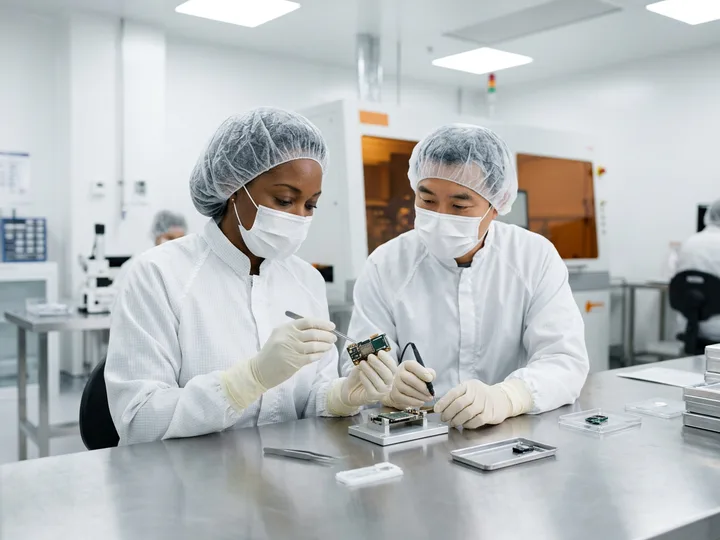
A medical device staffing agency recruits the specialized people device companies run on, from quality and regulatory professionals to R&D, software, and manufacturing engineers, each vetted for real experience inside FDA-regulated, ISO 13485 environments.

Hiring for a Device Company Isn’t General Engineering Hiring.
The résumé can look perfect. The degree fits. Then the interview starts, and the gaps show up. No real ownership of design controls. No time spent inside a live quality system. Plenty of R&D horsepower, but little feel for the documentation that keeps a product shippable.
Medical device work sits where engineering meets regulation, and that’s exactly where hiring mistakes get expensive. KORE1 recruits across that whole landscape, from Class II and III device manufacturers to diagnostics, contract manufacturers, and digital health teams. Medical device staffing is one industry focus inside our broader engineering staffing agency practice. When a role runs deep into hardware or clinical systems, we draw on the same bench that powers our biomedical engineering staffing work, and for connected, hospital-facing products, our healthcare IT staffing team. If you are hiring across more than one regulated environment, hiring for regulated industries compares what the SEC, FDA device, and cGMP pharma gates each add before a start date. For drug makers specifically, recruiters for cGMP quality seats map each cited regulation to the job that answers for it. For what device and drug makers pay the people who own that system, see what quality managers earn by industry. Drug sponsors deciding when that owner becomes a full-time head of quality have a guide of their own.
What a Medical Device Staffing Agency Actually Does
It isn’t general technical recruiting with a healthcare label slapped on. A medical device staffing agency places people who can work inside regulated product environments, where documentation carries weight, quality systems are live, and one design decision can have regulatory consequences. Drug makers get the same treatment from a pharma-side staffing desk built for QC and GMP quality roles. Chemists at food and specialty chemical plants come through our scientific recruiting desk.
That might be a quality engineer owning CAPA, a regulatory specialist preparing a 510(k), a V&V engineer writing test protocols, or a process engineer qualifying a production line. The titles vary. The shared thread is the environment. The person who actually runs that search is one of our medical device recruiters. When a launch also needs medical science liaisons to brief surgeons, that MSL search runs on our medical affairs desk.
Most U.S. device makers operate under the FDA Quality System Regulation, now harmonized with ISO 13485 under the Quality Management System Regulation that took effect in February 2026. The U.S. Food and Drug Administration sets the device regulatory framework, ISO 13485 defines the quality system most of the industry runs on, and the U.S. Bureau of Labor Statistics tracks the broader engineering and life sciences workforce. Candidates who have lived inside those systems ramp faster and carry less risk.


Roles We Staff Across the Device Lifecycle
“Medical device talent” covers far more ground than a single job-board category. A device company needs engineers, sure. It also needs the quality, regulatory, and operations people who turn an idea into a product that can legally ship and stay on the market. We recruit across that full span:
- Quality engineering and quality systems, including CAPA and complaint handling
- Regulatory affairs, from 510(k) and De Novo to PMA and EU MDR submissions
- R&D and product development engineering
- Verification and validation, design controls, and ISO 14971 risk management
- Manufacturing and process engineering, including IQ/OQ/PQ and automation
- Supplier quality, sterilization, and packaging engineering
- Embedded and device software under IEC 62304, including SaMD
- Clinical, complaint, and post-market roles
That spread is why a generalist recruiter tends to struggle here. We screen for the environment a candidate worked in, not just the words on the page.
Where We Work
Different device companies hire for different pressures. We adjust the search to the product and the stage.
Device OEMs, Class II & III
Surgical, cardiovascular, orthopedic, and infusion teams building under design controls and full quality-system oversight.
Diagnostics & IVD
Instrument, assay, and lab-automation companies where validation depth and reliability decide who gets hired.
Digital Health & SaMD
Software-driven and connected devices that blend embedded engineering, cybersecurity, and IEC 62304 discipline.
Why Teams Bring Us In
Engagement Models That Match the Work
A validation surge and a permanent quality-leadership search aren’t the same hire, so we don’t staff them the same way.
| Hiring Model | When It Fits |
|---|---|
| Contract | Validation surge, remediation, a 510(k) push, or a launch ramp with a hard deadline |
| Contract-to-Hire | Growth with a built-in evaluation window before you commit |
| Direct Hire | Core team and leadership roles, from quality managers to R&D directors |
| Project-Based | A defined deliverable, such as a design transfer or a test-method validation |
Most teams mix models. We help match each one to product stage, compliance exposure, and how much internal bandwidth you actually have. Explore contract staffing, direct hire, and project staffing.
How We Approach Medical Device Searches
Regulated hiring rewards clarity upfront. Before sourcing starts, we get specific.
Define the Environment
Product class and stage, regulatory pathway, validation ownership, hardware versus software emphasis, and how hands-on the role really is.
Vet for Regulated Experience
We dig into what a candidate built, validated, and documented, and which quality systems they worked inside. Titles alone don’t tell us much.
Deliver and Stay Close
We present a short list that fits the technical depth and regulatory awareness your team needs, then support the placement through ramp.
Ready to Build Your Medical Device Team?
Whether you’re scaling a quality function, preparing for an FDA inspection, or staffing a launch, we can run the search with focus and a real feel for regulated environments. If the open seat is on the test bench, see our QC analyst job description. Drug and CDMO labs are handled through pharmaceutical QC staffing.
Common Questions
What does a medical device staffing agency actually do?
We recruit the specialized people medical device companies depend on, across quality, regulatory, R&D, software, and manufacturing. The real work is matching candidates to the regulated environment they’ll operate in, not just to a skills checklist. That focus is what separates a device search from general technical recruiting.
Do candidates really need FDA or ISO 13485 experience?
Usually, yes. Device and diagnostics teams run on live quality systems, and engineers who have worked inside 21 CFR Part 820 or ISO 13485 ramp faster and lower compliance risk. Early-stage and pure-research roles can flex on this, but for anything touching design controls or production, regulated experience matters.
How is this different from biomedical engineering staffing?
Think of it as scope. Our biomedical engineering staffing practice focuses on the engineering discipline itself, while medical device staffing covers the whole company, quality and regulatory and operations included. Many clients use both, depending on whether they’re filling an engineering seat or building out a function.
How fast can you fill a role?
It depends on the role. A contract validation engineer tied to a deadline can move in days, while a regulatory affairs leader or a niche V&V specialist takes longer to find and vet properly. We’d rather present the right short list than rush a bad fit, and our placements hold a 92% twelve-month retention rate.
Which roles do you place most often?
Quality and regulatory roles top the list by a wide margin. Quality engineers, RA specialists, V&V engineers, supplier quality, and process engineers move constantly, alongside R&D and embedded software talent. Leadership searches, like quality and regulatory managers, come up steadily too.
Can you support contract, direct hire, and project work?
All three, plus contract-to-hire. Most device teams blend them, a contractor for a validation surge and a direct hire for a quality manager, and we help match the model to product stage and timeline. Tell us what you’re building and we’ll recommend a structure.
