
Last updated: May 23, 2026
Quality Engineering Staffing
A bad ship out is the cheapest part of getting it wrong. KORE1 places ISO-trained quality engineers, Six Sigma Black Belts, validation leads, and supplier quality recruits across regulated manufacturing, medical device, and aerospace, with recruiters who can tell a real CAPA closure rate from a doctored one.

Why Quality Engineering Hiring Is Different
KORE1 places quality engineering professionals, including Six Sigma Black Belts, ISO 9001 and ISO 13485 lead auditors, validation engineers, and supplier quality recruits, with a 17-day average time-to-hire and 92% twelve-month retention rate across 30+ U.S. metros.
Most staffing firms can’t tell a Cpk from a CpK. They send you a “quality engineer” with a CV full of inspection words and zero understanding of what a process capability study actually proves. You burn two weeks of onboarding before the role realizes the candidate’s never run an MSA in their life. Quality roles inside drug manufacturing, where the rulebook is 21 CFR 211 rather than ISO, go to our pharma quality recruiters.
Quality engineering is a regulated specialty. ISO 9001, ISO 13485, ISO 14971, IATF 16949, AS9100, FDA 21 CFR Part 820, GMP. Every one of those standards carries audit consequences. According to BLS Occupational Employment Statistics, there are roughly 81,000 industrial engineers in the U.S., and the slice with quality and reliability depth is much smaller. Pull from the wrong slice and your CAPA backlog starts growing. Pharma QC analysts and GMP QA specialists are a different search again, and our guide on how pharma QC and QA split the work shows where each one sits. QC analysts, microbiologists and data reviewers themselves come through our QC staffing for pharma and CDMOs desk.
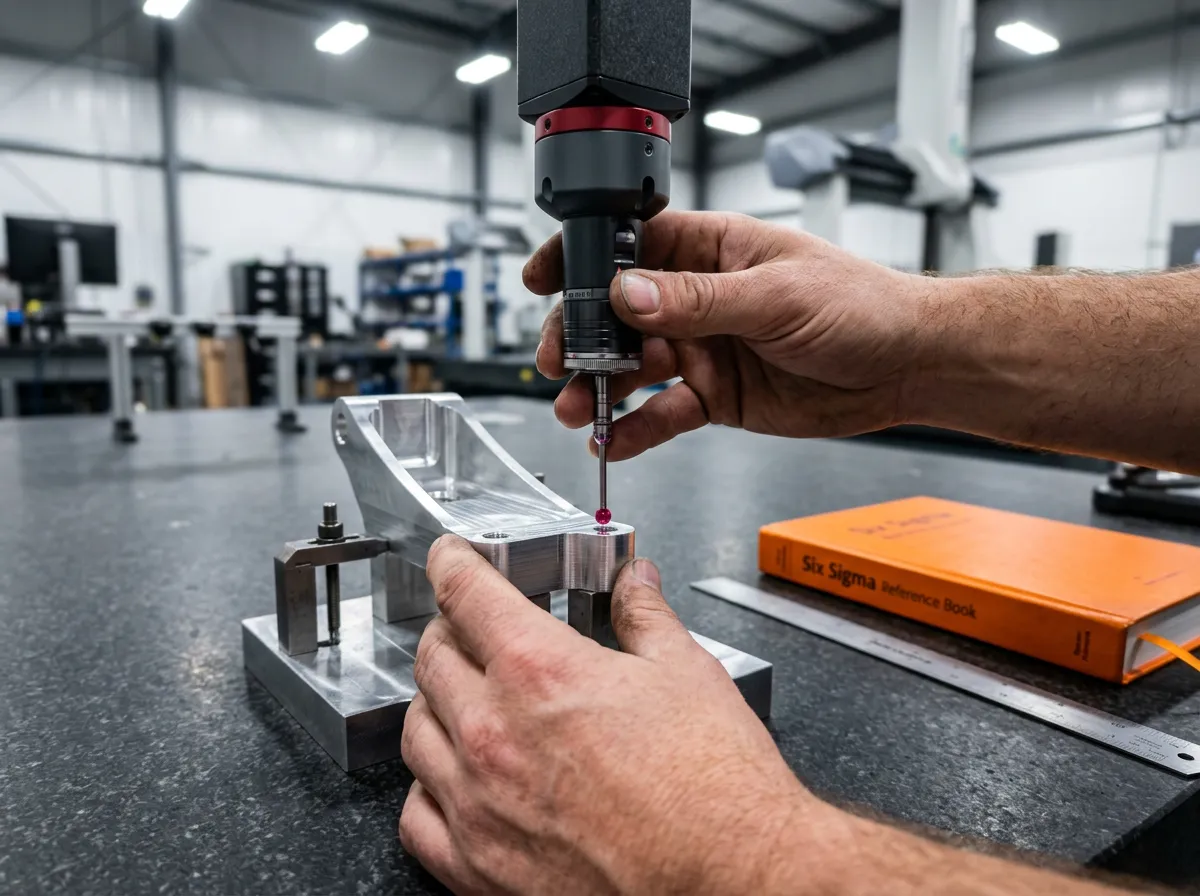
KORE1’s quality engineering practice sits under our broader engineering staffing agency and overlaps directly with manufacturing staffing and industrial engineering staffing. That means your recruiter has the technical vocabulary to screen for CMM operation, Minitab proficiency, PPAP Level 3 submission experience, or ASQ Certified Quality Engineer (CQE) credentials without guessing.
Quality Engineering Roles We Fill
Quality engineering is a wide title. On a medical device line it means design controls and 21 CFR 820. In an automotive Tier 1, it means PPAP and IATF 16949. In a chemical or pharma plant, it overlaps directly with process engineering. In aerospace, AS9100D and FAI. Same job title, different worlds. Our recruiters source against the actual standard you operate under, not the keyword. The QC chemists running the lab at a chemical plant are a different hire, handled through chemical plant lab recruiting.
Quality Assurance & Inspection
- Quality Engineers (ASQ CQE, CSQE)
- Quality Inspectors and CMM Programmers (Zeiss CALYPSO, PC-DMIS, Hexagon)
- Incoming Quality and Final Acceptance Inspectors
- Quality Assurance Managers and Directors
Six Sigma & Process Improvement
- Six Sigma Black Belts and Master Black Belts
- Six Sigma Green Belts running DMAIC projects
- Continuous Improvement Engineers and Lean Specialists
- SPC Analysts (Minitab, JMP, Q-DAS)
Validation & Regulatory
- Validation Engineers (IQ/OQ/PQ, CSV)
- Regulatory Affairs Specialists (FDA, ISO, CE)
- CAPA and Complaint Handling Investigators
- Design Quality Engineers (Risk per ISO 14971)
Supplier & Reliability Quality
- Supplier Quality Engineers (PPAP, APQP, 8D)
- Reliability Engineers (FMEA, FMECA, MTBF analysis)
- Quality Auditors (Lead Auditor, ISO 9001/13485/IATF 16949)
- Quality Systems Managers (eQMS rollouts, MasterControl, ETQ)

The Vocabulary That Separates a Real QE Hire
Anyone can say “I worked on a Six Sigma project.” The screening difference is asking how their DMAIC project actually defined the Y, what their measurement system analysis showed for repeatability versus reproducibility, and what their Cpk landed at after the Improve phase. Two minutes into that conversation, you know if the resume is real. For pharma quality hires, the equivalent test is verifying GMP experience. For the people who review executed batch records before release, it’s a planted-error batch record test.
We screen quality engineers on the same questions your hiring manager would ask if they had four hours per candidate instead of forty minutes. Has this person actually closed a CAPA? Run a Gage R&R that wasn’t theoretical? Submitted a PPAP Level 3 package and survived a customer audit? Read an ISO 13485 nonconformance and write the corrective action without a template?
It matters because the wrong hire compounds. A quality engineer who can’t write a clean 8D is a finding waiting to happen at your next surveillance audit. The FDA’s inspection classification database tracks 483 observations by establishment. The most common citations are still procedures not followed and CAPA closure not on file. Both root-cause to quality staffing gaps. In drug manufacturing, the batch record reviewers and QC analysts behind that CAPA work are GMP quality staff we place on contract. For what those analysts cost to hire outright, see our pay bands for pharma QC analysts. The manager who runs that bench is priced separately in our salary guide for pharma quality managers. The leader above both, and the right moment to hire one, is covered in our guide on when a pharma company needs a quality director.
Whether you need a permanent direct hire quality manager, a contract validation engineer for a single product launch, or a project team to clear a CAPA backlog before a Notified Body visit, we source the same way: against the standard, not the keyword.
Quality Engineering Staffing Results
Three Ways to Staff Your Quality Function
Direct Hire
Permanent placements for quality managers, supplier quality engineers, and validation leads where audit readiness and long-term retention are the priority. We handle the technical screen, the regulatory background check, and offer negotiation.
Contract Staffing
Flexible quality engineers, CMM programmers, and validation specialists for single product launches, design transfers, CAPA backlog burn-downs, or backfill while a regular employee is on extended leave.
Contract-to-Hire
Trial a candidate against your real CAPAs, your real audit findings, and your real supplier base before making it permanent. Most quality clients convert within 90 days because audit pressure makes the decision quickly. For the lab side of the quality department, see what belongs in a GMP quality control analyst posting. The technicians and analysts who staff that bench come from our R&D and QC lab staffing desk.
Common Questions
What does a quality engineer actually do?
A quality engineer designs, monitors, and improves the processes and systems that keep defects out of a manufactured product. Day to day that means running gage R&R studies, closing CAPAs, writing 8D reports, leading internal audits to ISO 9001 or ISO 13485, validating production equipment, and pushing suppliers to clean up their PPAP packages. In regulated industries like medical device or aerospace, they also own design controls, risk files per ISO 14971, and Notified Body readiness. The role bridges production, engineering, and regulatory.
How fast can KORE1 place a quality engineer?
17 days is our average across all engineering placements. Quality engineers tend to land closer to that median when the role is at the engineer or senior engineer level. Quality managers and Six Sigma Black Belts with regulated industry experience run longer, often three to four weeks, because the pool of candidates who have actually closed CAPAs in ISO 13485 or IATF 16949 environments is genuinely thin. We give you a real timeline on the first call.
What’s the difference between a quality engineer and a QA engineer?
Two different jobs that share three letters. Quality engineers work on physical products, manufacturing processes, and ISO quality systems. They live in Minitab, on the shop floor, and inside audit checklists. QA engineers, in the software sense, test code. They live in Selenium, Cypress, and Jira. If your role involves CMM measurements, PPAP submissions, or 21 CFR 820 compliance, you need a quality engineer. If your role involves test automation frameworks and bug triage, see our QA engineer staffing page instead.
Do your recruiters understand ISO and Six Sigma well enough to screen?
Yes, and the screen happens before you see a profile. Our quality engineering recruiters know the difference between an ISO 9001 internal auditor and an IATF 16949 lead auditor with the customer-specific requirements add-on. They know that ASQ CQE is not the same credential as Six Sigma Black Belt, and that a Master Black Belt who’s never run an actual Kaizen event isn’t worth the certification. Candidates who can’t explain their last DMAIC project at the Y, M, and capability level don’t make it into your shortlist.
What industries does KORE1 staff quality engineers into?
Medical device, automotive Tier 1 and Tier 2, aerospace and defense, semiconductor, life sciences and pharma, food and beverage processing, industrial equipment, and consumer products. The standards vary, so the screening varies. Medical device candidates need 21 CFR 820 and ISO 13485 depth. Automotive needs IATF 16949 and PPAP. Aerospace needs AS9100D and first article inspection. We don’t drop a generic ISO 9001 candidate into a regulated environment and hope.
Can you help during a 483 response or Notified Body audit?
Yes. A common reason clients call us is a regulatory event that just outgrew their internal team. FDA 483 observations, EU MDR Notified Body findings, IATF customer-specific audit findings, or a sudden CAPA backlog ahead of a surveillance audit. We place contract quality engineers, validation specialists, and CAPA investigators on a one to two week deployment when the timeline is short. The work is structured: read the finding, scope the response, write and close the CAPA, document the corrective action, and exit clean.
Your Next Quality Engineer Starts Here
Tell us the standard, the timeline, and the audit pressure. We will tell you honestly whether we can fill it, and how fast.
Talk to a Quality Engineering Recruiter →