Last updated: September 4, 2026
Mobile Developer Staffing for iOS, Android, and Cross-Platform Teams
Hire vetted senior mobile engineers across Swift, Kotlin, React Native, and Flutter. Contract, contract-to-hire, and direct hire placements with production-ready candidates across the US.

KORE1 places iOS and Android mobile developers on contract and direct-hire engagements nationwide, with a 17-day average time-to-hire and 92% 12-month retention rate across Swift, Kotlin, React Native, and Flutter specializations.

Two Platforms. One Staffing Practice.
“Mobile developer” sounds like one job. It isn’t.
A senior mobile developer at one company is a React Native specialist who hasn’t touched native code in three years. At the next company over, it’s a Kotlin Compose engineer who thinks JavaScript belongs nowhere near a mobile stack. Same title. Completely different hire. Most agencies send one pool regardless of what the role actually needs, and clients end up sorting it out after the resume screen, which is about the most expensive place to discover a skills mismatch.
We run three separate benches: native iOS (Swift and SwiftUI), native Android (Kotlin and Jetpack Compose), and cross-platform (React Native, Flutter), each screened by recruiters who’ve placed those roles repeatedly and use rubrics built around the actual work, not a keyword list. Separate screeners, separate rubrics, different panel chairs for each. That split is part of why our average time-to-hire sits at 17 days when most mobile searches drag past six weeks. Our mobile developer staffing practice sits inside our broader IT staffing services operation, with direct lanes to iOS developer staffing and Android developer staffing for clients who need one platform specifically.
Mobile Roles We Fill
Three benches. Vetted separately. Different rubrics for each.
Native iOS Engineers
Swift 5.9 and above, SwiftUI, UIKit where the codebase still needs it, and real App Store history. We look for engineers who’ve shipped through multiple OS cycles and can talk honestly about what they’d do differently on the second pass. Roles we fill on repeat: senior iOS engineer, iOS architect, SwiftUI specialist, Apple platform generalist.
Native Android Engineers
Kotlin, Jetpack Compose, Coroutines, and the Android ecosystem top to bottom. Engineers who understand ProGuard, Play Store release tracks, and the long migration from Views to Compose that most large Android codebases are still mid-way through. Roles: senior Android engineer, Kotlin specialist, Android architect, Android lead.
Cross-Platform Engineers
React Native with TypeScript or Flutter with Dart. Engineers who know when to drop into a native module when the framework runs out, and when to stay in JavaScript or Dart because the bridge cost isn’t worth it. We screen for the native-module story. Candidates who can’t name one they’ve built are a gap.
The Mobile Talent Market, In Numbers
Sources: BLS OOH 2025, Stack Overflow Developer Survey 2024, Statista mobile app market data, KORE1 placement records.

How We Screen Mobile Talent
Three parts: architecture conversation, live coding exercise, and a shipped-app story. The whole thing runs about 45 minutes.
For native iOS candidates, the architecture talk centers on a real app they shipped. We ask about the state management choices, the module boundaries, and one decision they’d reverse on a second pass. That last answer tells us more than anything on the resume. Engineers who can name something specific and explain the actual tradeoff usually have the depth the title claims. The live exercise is a SwiftUI state bug or an actor with a data race, designed and scored by a working iOS engineer on our side. The App Store story is the final gate: a real review rejection and what changed to land it.
For native Android, we look at Coroutines and Flow usage and Compose state-hoisting patterns. A candidate who describes “declarative UI” in broad terms without specifics on how they managed state inside a complex composable has memorized the talking points, not the framework. A live Kotlin exercise tests this directly.
For cross-platform engineers, the native-module question is the whole screen. What specific bridge or native module did you build, what drove the decision to go native there, and what were the constraints? Vague answers mean the candidate hasn’t needed to go past the framework boundary. That gap shows up fast in senior roles.
No unpaid take-homes. No LeetCode. The bar is shipped work and the ability to talk about it straight.
Running the loop yourself? Our mobile developer interview questions lay out what to ask in each round, and what a shipped answer sounds like.
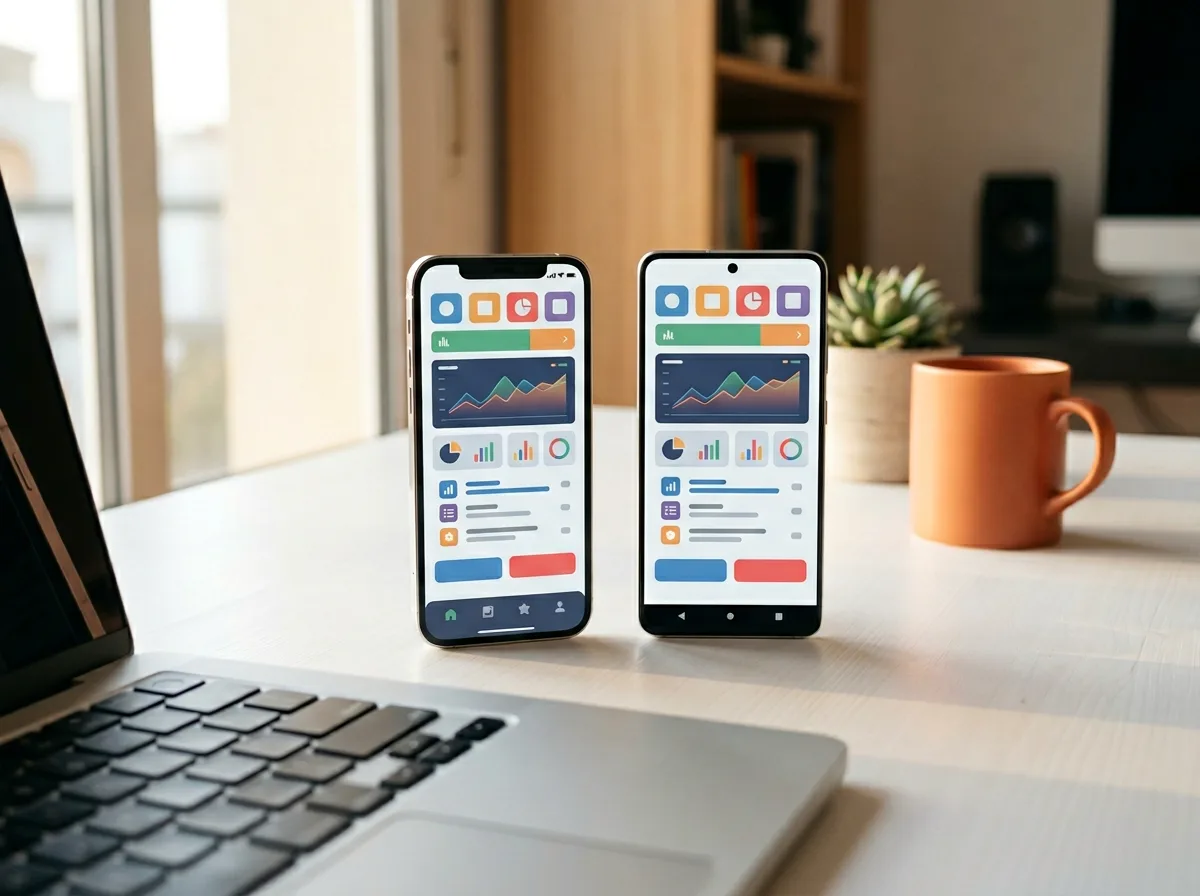
Native vs. Cross-Platform: An Honest Take
Most agencies recommend cross-platform because it sounds cheaper in the initial conversation. We don’t default there.
Native wins when the product leans hard on platform-specific surfaces. HealthKit, ARKit, Live Activities, CarPlay, and StoreKit 2 on iOS. Google Pay deep integration, Android Auto, Nearby Share, or custom camera control on Android. The bridge tax on those surfaces compounds quickly. Teams that force cross-platform for HealthKit work almost always migrate back to native after 18 months, usually with a backlog of technical debt that nobody scoped at the start and one engineer who vaguely remembers why every third bridge exists.
React Native earns its place for content-forward apps, internal tools, and products that need to ship feature-for-feature on iOS and Android with a small team on a tight release cadence where maintaining two native codebases isn’t viable given the head count and the roadmap. Flutter fits when the team has strong Dart experience and a consistent design system that wants pixel parity across platforms, especially for animation-heavy or custom-rendering interfaces where Flutter’s compositor approach gives a real advantage over a bridge-based architecture.
We staff all three benches and we’ll give you a straight take on the first call. Sometimes the right answer is one cross-platform engineer and a part-time native specialist on retainer. That’s a real option and we’ll say so.
How We Engage
Four models. Each fits a different shape of mobile hiring.
| Model | Best For | Typical Duration |
|---|---|---|
| Direct Hire | Permanent iOS or Android lead, mobile architect, mobile engineering manager | Permanent |
| Contract | Feature sprints, platform migrations, React Native to native migrations, bandwidth spikes before launch | 3 to 12 months |
| Contract-to-Hire | Testing fit on senior mobile roles before committing to a permanent hire | 3 to 6 months, then convert |
| Project-Based | Fixed-scope new app build or mobile modernization with a named KORE1 lead | Scoped per engagement |

Why KORE1 for Mobile Developer Staffing
We’ve placed engineering talent since 2005. The mobile practice is built on technical screeners who’ve shipped to the App Store and the Play Store, not generalist recruiters learning the stack one job description at a time. If you want the recruiting side of this rather than the service side, our mobile developer recruiters page covers how we split an iOS search from an Android one. For the Android side of that split, our Android job description guide covers what the posting has to state. The iOS side has its own iOS job description template, built around the SwiftUI split, the deployment target, and App Review ownership.
One placement worth naming. CaringBridge runs a digital health platform for people going through serious illness, and they needed a senior iOS contractor for a Swift and SwiftUI rebuild with Apollo GraphQL on the data layer. The comp band sat below market. Not a little below. The kind of gap that usually ends the search on the third screen when the candidate figures out the numbers. We shaped the search around engineers who’d worked in nonprofit-adjacent environments before and knew what that context meant, people who weren’t chasing a title bump and wouldn’t lose interest when the equity slide didn’t arrive. Placed in 19 days. Retained past the initial contract end date.
Most agencies miss that hire because they’re running the same filter every time. The comp was below market. The mission was the actual offer. Knowing the difference is the job.
We staff mobile nationally. For comp benchmarking before an offer lands, teams use the KORE1 salary benchmark tool to calibrate against current market data. Mobile searches often overlap with our software engineer staffing and fintech staffing practices, where the mobile layer connects to a complex backend, and with our iOS staffing and Android staffing practices when the search is platform-specific. When you’re ready to start a mobile search, reach out to our team and we’ll walk through what the talent market looks like for your stack and budget.
Sources & References
- Apple Developer documentation, Reference for iOS, iPadOS, and Swift development.
- Android Developers documentation, Reference for Android, Kotlin, and Jetpack Compose.
Common Questions
How much does it cost to hire a mobile developer through a staffing agency in 2026?
Mid-level React Native engineers with 3 to 5 years of experience land in the $110K to $140K base range in 2026. Senior native iOS and Android engineers run $145K to $185K, with architects and leads at $185K to $230K depending on the metro and whether the role carries any team management scope, which tends to add a meaningful premium in competitive markets like San Francisco, New York, and Seattle. Contract rates for senior mobile engineers fall between $85 and $145 per hour, with native specialists near the top of that band. Anchoring a 2026 offer to 2022 compensation data is the fastest way to lose a strong candidate in the final round.
Should we hire separate iOS and Android developers, or one cross-platform developer?
That answer starts with the product, not a cost comparison. For feature-parity products with modest UI complexity and a small team, one strong cross-platform engineer is often the right call. Anything that leans on platform-native surfaces like HealthKit, Google Pay, ARKit, or custom device APIs is a different story. Two native specialists will save you the migration you’d otherwise regret not doing at the start. We’ll give you a straight answer on the first call based on what the app actually requires, not based on which model generates more staffing hours.
How long does a typical mobile developer search take with KORE1?
Our average time-to-hire for mobile roles is 17 days. Direct hire searches for senior native iOS or Android engineers typically run 5 to 8 weeks end to end, with most of the variance in the interview cycle rather than sourcing. Searches that close fast have two interview rounds, a clear platform spec, and a comp band calibrated to current data. The ones that stall have five rounds and a salary range that nobody has updated since 2023.
How do you evaluate mobile developers before sending them to us?
Three-part screen: architecture conversation, live coding exercise, and a shipped-app story. For iOS, the live exercise targets a SwiftUI state bug or an actor with a data race. For Android, we probe Coroutines usage and Compose state-hoisting. For cross-platform engineers, we ask for a specific native bridge or module they built and why. No unpaid take-homes. No LeetCode. The bar is shipped work and the ability to talk about it honestly. That filter removes more than half of inbound candidates.
What mobile development skills matter most right now?
For iOS: Swift concurrency (async/await and actors) and SwiftUI are baseline expectations at senior level now. UIKit knowledge still matters on any codebase with a legacy surface. For Android: Kotlin is table stakes, Jetpack Compose fluency is the real differentiator, and Coroutines plus Flow mastery separates strong seniors from everyone else. For cross-platform: TypeScript for React Native, Dart for Flutter, and demonstrated native-module experience for both. The 2024 Stack Overflow Developer Survey puts Swift and Kotlin both in the top 10 for median compensation.
Can mobile developers work remotely for our team?
Almost always. Mobile development ports cleanly to distributed teams. Simulator-based development, async PR reviews, TestFlight and Firebase App Distribution, and App Store Connect all work well in fully remote setups, and most of the iOS and Android engineers we place are already used to shipping with distributed product and design teams across multiple time zones. Our placements split roughly 65/35 remote versus hybrid, with direct-hire senior leads slightly more likely to be hybrid in major metros. Roles that require physical device lab access, regulated environments, or in-office hardware testing are the exception, and we shape searches around those constraints on the first call.
Build Your Mobile Team With KORE1
iOS engineers, Android engineers, cross-platform specialists. Three vetted benches, one practice. Contract or direct hire, nationwide.
Start Your Mobile Search →