
Last updated: June 29, 2026
Power Systems Engineering Staffing
KORE1 places power systems engineers for utilities, ISOs, IPPs, renewables developers, and EPC firms. Protection and control, substations, grid analysis, NERC compliance, BESS integration. We’ve spent two decades building the network most agencies don’t have.
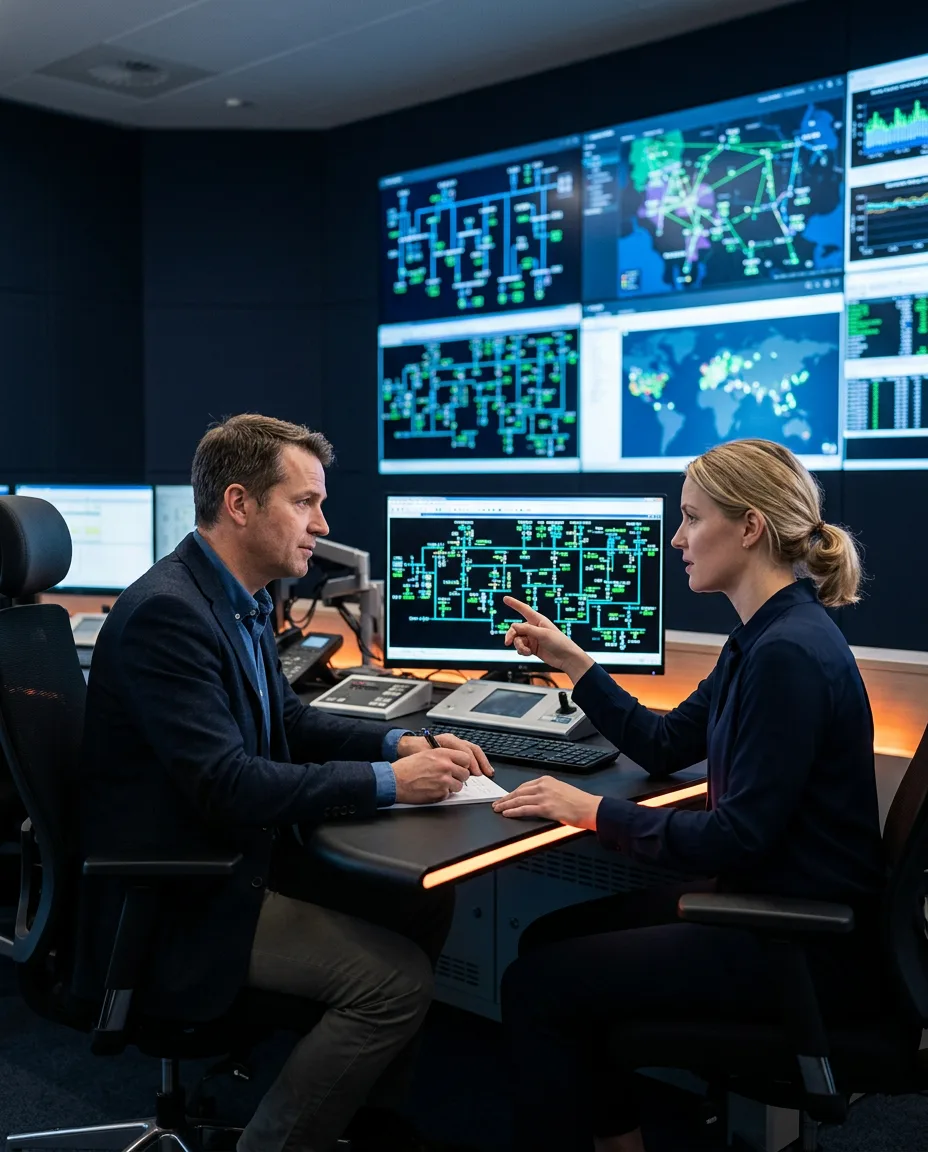
KORE1 staffs power systems engineers for utilities, ISOs, renewables developers, and EPC firms. Our network covers protection and control, substation design, grid analysis with PSS/E, ASPEN, and ETAP, NERC compliance, and renewable integration. Most placements close in 10 to 21 days.
Hiring power systems engineers is harder than it has any right to be. The workforce is older than almost any other engineering discipline, per BLS occupational data. A huge cohort of utility P&C engineers retired between 2020 and 2024, and the bench behind them is thin. At the same time, interconnection queues at PJM, MISO, ERCOT, and CAISO (the FERC-regulated wholesale power markets) have ballooned past anything the industry was staffed for. Everyone is hiring. Almost nobody has a real pipeline.
KORE1 is the engineering staffing agency partner that does. We’ve placed power systems talent for investor-owned utilities, municipal utilities, rural co-ops, ISOs, independent power producers, renewable developers, and the EPC firms that build for all of them. We also run a dedicated renewable energy staffing practice for solar, wind, and storage projects. Our recruiters can tell the difference between a relay technician and a P&C engineer, between someone who has clicked through PSS/E and someone who has built and validated a working short-circuit model. That distinction matters. It saves you three weeks of interview cycles per role.
We also run parallel engineering practices, so if a project needs both grid and other engineering disciplines, you get one point of contact. Electrical engineering staffing for circuit and embedded work. Mechanical engineering staffing for rotating equipment, HVAC, and structural support. Same intake, same recruiter quality, same fill velocity.
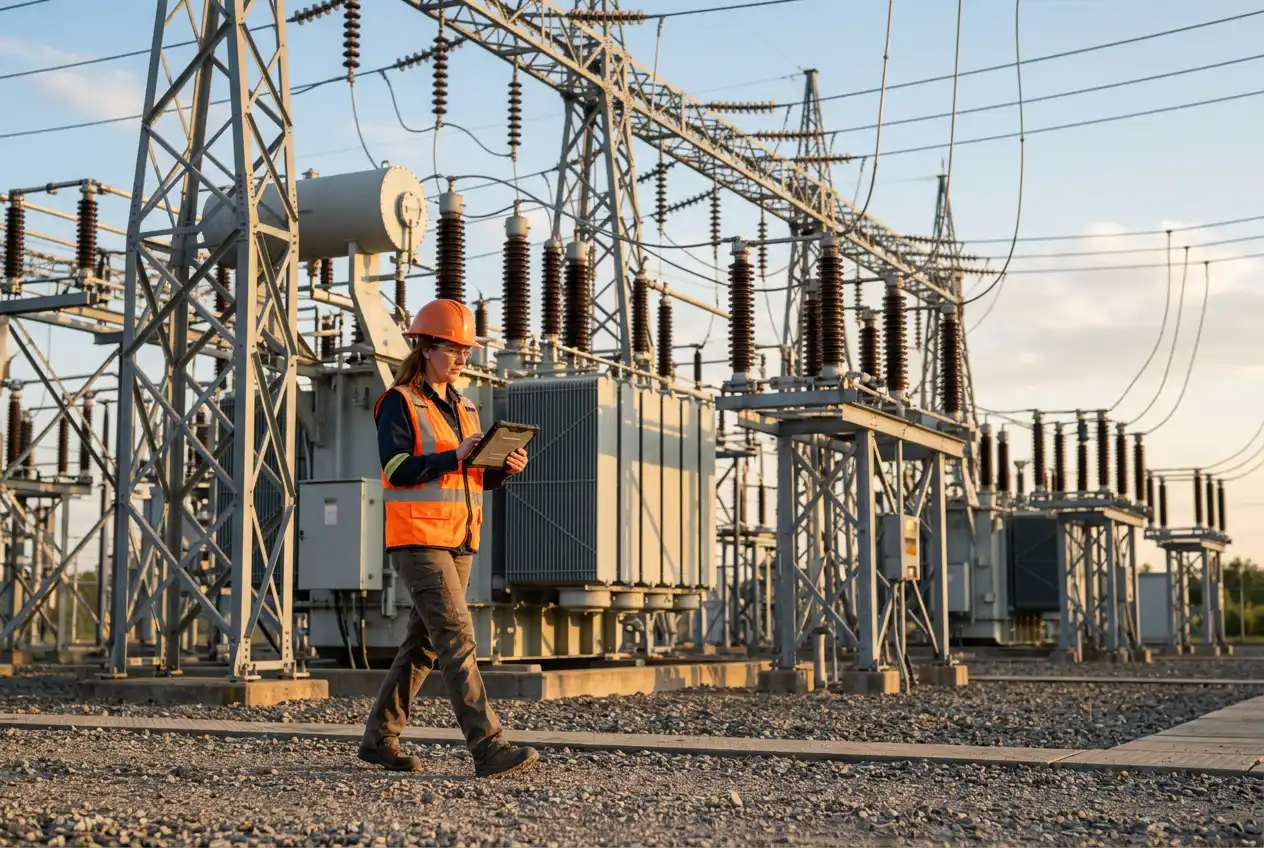
Power Systems Roles We Place
Across the full grid. Generation, transmission, distribution, the renewable interconnect, and everything that holds it together.
- Protection and Control Engineers (overlap with our controls engineer staffing practice) who write relay settings in SEL, GE, Schweitzer, and ABB platforms, and have actually commissioned them in the field instead of just sending settings files to the line crew
- Substation Design Engineers doing physical and one-line layout, equipment specs, bus design, grounding studies, and clearance calcs for 4 kV up through 500 kV switchyards
- Transmission Planning Engineers running power flow, contingency, stability, and short-circuit studies in PSS/E, PowerWorld, ASPEN, and CAPE for ISO interconnection or utility expansion projects
- Distribution Engineers sizing feeders, building DSP and IRP models, and supporting grid modernization and DERMS rollouts at IOUs and munis
- Renewable Integration Engineers on solar, wind, and BESS interconnection studies, plant controls, and Order 2222 compliance
- SCADA and EMS Engineers standing up OSI Monarch, GE PowerOn, ABB Network Manager, or Survalent platforms in control rooms
- NERC Compliance Engineers handling FAC, PRC, CIP, and TPL reporting for BES-registered entities
- System Operators and Operations Engineers running real-time grid, often with NERC RC, BA, or TO certifications
Whether you need a direct hire P&C lead for a long-term substation program or a contract engineer to clear a six-month interconnection backlog, the process is the same. We qualify against your tools and your standards. Not a keyword list.
How KORE1 Finds Power Systems Engineers Others Can’t
Senior power systems engineers do not apply to job ads. They have been at the same IOU or consulting firm for 12 years, their pension is good, and a recruiter who sends a generic LinkedIn note gets ignored by reflex.
We get answered because we’ve built relationships across the industry that pre-date most of our competitors. IEEE PES chapters. CIGRÉ working groups. NERC compliance forums. WECC and MRO working group rosters. Utility engineering alumni networks at Iowa State, Mizzou, Mississippi State, Texas A&M, and the other programs that actually graduate power systems engineers. When a KORE1 recruiter reaches out, the person on the other end has either worked with us before or knows somebody who has.
Our recruiters can hold a real technical conversation, the same way our electrical recruiting desk does one decade up the frequency axis. Symmetrical components. Distance relay zone reach. ARC flash incident energy at a 25 kV bus. Renewable plant Q-V curve compliance. They’re not running a keyword match. So when we tell you within 48 hours whether your search is realistic for the market, we mean it. If the comp band is off for the city or the experience requirement is unicorn-grade, we’ll say so before you waste interview slots on candidates who would say yes and quit in eight months.
Most power systems placements close in 10 to 21 days. NERC CIP-cleared roles take longer. So do searches in tight markets like the Bay Area or Boston. We hold an honest timeline at kickoff. Full engineering staffing capabilities run parallel across mechanical, biomedical, and other disciplines.
Years Placing Engineers
Engineering Placements
Day Average Fill Time
Where We Place Power Systems Talent
Power systems is broad enough that “power engineer” on a resume tells you almost nothing. We source by domain so candidates actually map to your project.
Transmission & Substation
Substation design, transmission line engineering, FACTS device studies, 69 kV through 500 kV. PSS/E, ASPEN, CAPE proficiency screened on the call, not assumed from a resume.
Protection & Control
SEL, GE Multilin, Schweitzer, ABB relay settings. Coordination studies, fault analysis, commissioning. P&C engineers who have been in the yard, not just at a desk.
Generation & Renewable Integration
Solar, wind, BESS, hybrid plants. Interconnection studies, plant controls, IEEE 2800, Order 2222. Engineers who’ve worked through an ISO queue, not just modeled one.
Distribution & Grid Modernization
Distribution planning, DERMS, ADMS rollouts, feeder modeling, hosting capacity analysis. Engineers who understand both the utility planning side and the vendor platform side.
What Makes KORE1 Different
Technical Screening Built for the Grid
We ask candidates about symmetrical components, zone reach, and Q-V compliance. We do not ask whether they’re a team player. You’ll see candidates who can actually deliver the scope you’ve described.
Every Engagement Model
Contract, contract-to-hire, direct placement, or full project teams for an interconnection backlog or DERMS rollout. We build around the project, not the margin.
ISO-by-ISO Market Knowledge
Comp benchmarks in PJM, MISO, ERCOT, CAISO, NYISO, and SPP markets vary by a wider band than people expect. We know what an offer needs to look like in Houston versus Boise versus the Twin Cities.
Common Questions About Power Systems Engineering Staffing
What does a power systems engineering staffing agency actually do?
A power systems engineering staffing agency sources, screens, and places engineers for utility, ISO, IPP, renewables, and EPC roles. The screening is the real work. Anyone can pull resumes. Knowing whether a candidate can actually run a short-circuit study in CAPE, set up a SEL-411L line protection scheme, or interpret a TPL-001 contingency report is what separates a real grid recruiter from a generic technical staffer. We handle outreach, qualification calls, interview coordination, offer negotiation, and onboarding. Our broader engineering staffing agency practice covers electrical, mechanical, biomedical, and other disciplines if you need cross-functional hires for the same project.
How long does it take to hire a power systems engineer through KORE1?
Most placements close in 10 to 21 days. Specialized searches stretch longer. A senior P&C engineer with five years of SEL programming inside a CIP-secured environment is a thinner candidate pool than a substation designer at a consulting firm, and we will say so up front. Speed comes from the network we’ve already built. We’re not starting every search from a blank LinkedIn search. If we tell you we can fill in 14 days, we can.
Can you find engineers with specific tool or platform experience?
Yes, and we screen on the tools properly. PSS/E, PSCAD, ETAP, ASPEN OneLiner, CAPE, PowerWorld, DIgSILENT PowerFactory, CYME, Milsoft WindMil, OpenDSS. Relay families across SEL, Schweitzer, GE Multilin, ABB, and Siemens. SCADA and EMS platforms from OSI, GE, ABB, and Survalent. We don’t just check whether the tool name appears on a resume. We ask candidates about a specific project they ran on the platform, what they modeled, where the platform pushed back, and how they validated the results. If your team uses a proprietary internal tool, tell us up front and we’ll factor the learning curve into screening.
What’s the difference between power engineering and electrical engineering?
Power engineering is a specialization inside electrical engineering focused on the bulk electric grid, substations, generation, and distribution. Electrical engineering is the broader degree, covering circuits, embedded systems, RF, signal processing, and more. The skills barely overlap above the entry level. A senior PCB designer is not interchangeable with a P&C engineer, even though both hold EE degrees. Most universities split the disciplines into separate tracks by junior year. We staff both, but they are separate searches with separate candidate pools. Our electrical engineering staffing page covers the broader EE work.
Do you place engineers with NERC CIP or utility background-check experience?
Yes. A meaningful share of our power systems placements are at NERC-registered entities, which means PRA, drug screen, and CIP-004 access requirements before day one. We track which candidates already hold active CIP-004 status with a current employer, which ones can clear background checks quickly, and which roles you should expect a four to six week onboarding tail on. We’ve placed engineers cleared for CIP-007 ESP environments, EMS control rooms, and BES cyber asset access. For cross-functional NERC CIP cyber roles, see our cybersecurity staffing practice. Tell us at kickoff if the role requires it and we’ll filter from the start.
Contract or direct hire for power systems roles, which is better?
Both work, and the right answer depends on your project. Contract fits surge work, interconnection queue backlogs, and consulting overflow. The engineer stays on KORE1’s payroll, you pay a bill rate, and the relationship ends when the project does. Direct hire is a one-time placement fee for an engineer who joins your team permanently. Contract-to-hire splits the difference, a trial period before conversion. We see utilities lean toward direct hire for P&C and substation roles where institutional knowledge compounds, and contract for studies, queue work, and short-cycle commissioning support.
Ready to Staff Your Power Systems Team?
Start with a 20-minute intake call. We’ll ask about the role, your tools, your ISO market, NERC requirements, and what hasn’t worked in past searches. No pitch deck. Just a conversation to figure out whether KORE1 is the right partner for your grid build.
