
Last updated: September 3, 2026
Controls Engineer Staffing
PLC, SCADA, and DCS talent sourced by recruiters who’ve worked commissioning timelines and plant-floor environments.
12-Mo Retention
Day Avg. Time-to-Hire
Yr Avg. Recruiter Exp
Days to First Candidates
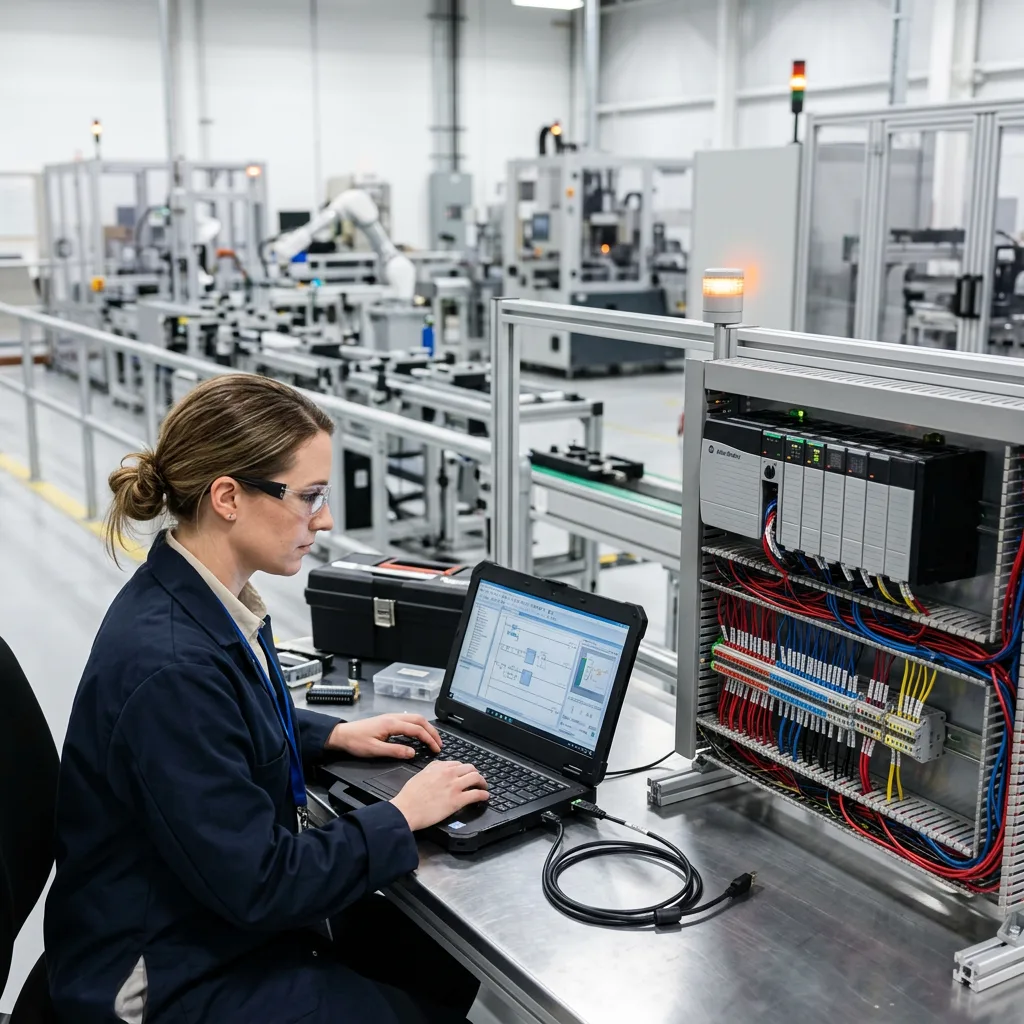
KORE1 places controls engineers across PLC programming, SCADA integration, DCS architecture, and industrial automation, with a 17-day average time-to-hire and 92% twelve-month retention rate.
Most staffing firms treat controls engineering like a subset of electrical engineering. If the scope reaches past the panel into SCADA, historians and line data, our automation engineer searches cover that upper layer. It isn’t. A controls engineer who programs Allen-Bradley PLCs all day has almost nothing in common with someone designing power distribution and grid systems. Grouping them together means your recruiter is guessing.
We don’t guess. KORE1’s engineering recruiters have placed PLC programmers, SCADA architects, and DCS migration leads for manufacturers, utilities, and process plants since 2005. That experience shows up in the candidates we send and the questions we ask before we send them. If you are still scoping the req, our automation engineer job description template covers the four facts a posting has to publish before it lists a single skill. Ready to actually run the search? Our guide to hiring a SCADA engineer covers the four-way title split, the CISA advisories reshaping the role, and the one screening question that predicts the hire.
Why Controls Engineers Are Hard to Find
The talent pool is small and getting smaller. The Bureau of Labor Statistics projects 7% growth in electrical and controls engineering roles through 2034, but retirements are outpacing new graduates in automation-heavy disciplines. Employers posting generic job descriptions on Indeed wait 45 to 60 days and still end up settling.
Three of our last eight controls engineering placements came from passive candidates who weren’t actively job hunting. They responded because our recruiter understood the difference between a Siemens TIA Portal environment and a Rockwell FactoryTalk setup. That specificity is what separates a 17-day fill from a 60-day scramble.
Passive candidates compare offers on total cash rather than base, which is where most bands come apart. Our automation engineer salary guide shows what the published averages leave out, including the overtime and call-out pay that a salary-to-salary comparison never surfaces.
Controls Engineering Specializations
Controls engineering isn’t one job. It’s a spectrum that spans hardware configuration to high-level system architecture. We recruit across all of it.
- PLC Programmers (Allen-Bradley, Siemens, Mitsubishi, Omron)
- SCADA Engineers (Ignition, Wonderware, FactoryTalk, WinCC)
- DCS Specialists (Honeywell Experion, Emerson DeltaV, ABB 800xA)
- HMI/Interface Designers
- Robotics Integration Engineers (FANUC, ABB, KUKA)
- Commissioning & Startup Engineers
- Process Control Engineers
- Instrumentation & Controls (I&C) Engineers

Controls Engineering Disciplines We Staff
| Discipline | Common Platforms | Typical Industries |
|---|---|---|
| PLC Programming | Allen-Bradley, Siemens S7, Mitsubishi | Manufacturing, Automotive, F&B |
| SCADA Engineering | Ignition, Wonderware, FactoryTalk | Utilities, Water Treatment, Oil & Gas |
| DCS Architecture | Honeywell Experion, Emerson DeltaV | Petrochemical, Pharma, Power Gen |
| Robotics Integration | FANUC, ABB, KUKA, Universal Robots | Automotive, Electronics, Logistics |
| Instrumentation (I&C) | Loop tuning, P&ID, ISA-88/95 | Pharma, Chemical, Food & Beverage |
How We Fill Controls Engineering Roles
Scope the Stack
We start with your control system environment. Allen-Bradley or Siemens? Greenfield or retrofit? Regulated industry or general manufacturing? This shapes everything downstream.
Source From Our Network
Our engineering recruiters maintain active relationships with controls professionals across 30+ U.S. metros. We don’t start from scratch on every search.
Technical Screen
Every candidate gets screened on platform-specific experience, commissioning history, and industry fit. No generic behavioral-only rounds.
Place and Support
We handle onboarding coordination and check in at 30, 60, and 90 days. Our 92% retention rate comes from this kind of follow-through.
Flexible Hiring for Controls Engineering
Contract
Project-based PLC programmers and commissioning engineers for plant startups, upgrades, or seasonal surges.
Contract-to-Hire
Test fit before committing. Most clients convert within 90 days once they see the work on their floor.
Direct Hire
Permanent placement for controls engineering leads, automation managers, and senior DCS architects.
Project Teams
Full automation project teams for greenfield builds, system migrations, and multi-site rollouts.
Learn more about our contract staffing and direct hire engagement models.
Ready to Hire Controls Engineering Talent?
Whether you need a PLC programmer for a 3-month commissioning push or a permanent automation lead, KORE1’s engineering recruiters deliver qualified candidates in days. Serving employers in Orange County, Los Angeles, San Diego, and 30+ U.S. metros.
Common Questions
What does a controls engineer actually do day to day?
A controls engineer programs and maintains the automated systems that run physical industrial processes. In a food processing plant, that might mean writing PLC ladder logic for packaging lines and troubleshooting sensor faults all week. In a refinery, the same title means tuning PID loops on a DCS and managing alarm rationalization projects. The common thread is making machines do what they’re supposed to do, reliably, without human intervention at every step.
How much does it cost to hire a controls engineer through a staffing agency?
Bill rates for contract controls engineers typically range from $65 to $110 per hour depending on platform expertise and project complexity. Direct hire fees follow standard contingency models, usually 20 to 25% of first-year salary. For reference, mid-level controls engineers earn $95K to $130K base according to PayScale 2026 data, and senior automation architects push past $150K in competitive markets.
How quickly can KORE1 fill a controls engineering position?
KORE1’s average time-to-hire for engineering roles is 17 days. Controls roles sometimes move faster because we maintain a pre-vetted bench of PLC and SCADA professionals. Three of our last five controls placements closed in under two weeks. Niche DCS migrations or roles requiring specific safety certifications like TUV or CFSE can take 3 to 4 weeks.
Should I hire a contract or direct hire controls engineer?
Contract makes sense for defined-scope projects like a PLC migration, a commissioning push, or a line expansion you need running by Q3. Direct hire is the better play when you’re building an internal automation team or replacing a controls lead who owns institutional knowledge you can’t afford to lose. About 40% of our controls engineering contracts convert to permanent hires.
What certifications matter most for controls engineers?
Certified Automation Professional (CAP) from ISA is the broadest credential in the field. Certified Functional Safety Expert (CFSE) matters in regulated environments like oil and gas or pharma. Vendor certifications from Rockwell, Siemens, or FANUC signal hands-on platform depth. We’ve placed plenty of strong controls engineers who have zero formal certifications but fifteen years of commissioning experience. Credentials open doors, but track record closes them.
What industries hire the most controls engineers?
Manufacturing leads by volume, especially automotive, food and beverage, and consumer packaged goods. Oil and gas, water treatment, and power generation follow close behind because those sectors run on continuous process control. Pharma and biotech are growing fast, driven by FDA validation requirements that demand controls engineers who understand GAMP5 and 21 CFR Part 11. Data centers are a newer player too, hiring controls talent for building automation and power management systems.
How is controls engineering different from electrical engineering?
Electrical engineers design power systems, circuits, and distribution infrastructure. Controls engineers program the logic that tells those systems what to do and when. A controls engineer writes the PLC code that sequences a motor starter an electrical engineer specified. There’s overlap in industrial settings, but the skill sets diverge sharply once you get past basic wiring diagrams. We staff both at KORE1, and we never cross them.
KORE1’s controls engineer staffing services are part of our broader engineering staffing practice, which also covers electrical engineering, industrial engineering, embedded systems, and manufacturing IT roles. For a full breakdown of comp bands and hiring timelines across electrical and controls sub-disciplines, see our guide to hiring electrical engineers. If the requisition still says Electrical Engineer, our electrical engineer recruiters will help you narrow it first. Whether you need automation talent for a single facility or a multi-site rollout, our recruiters understand the platforms, the certifications, and the plant-floor realities that matter.
Build Your Controls Engineering Team
KORE1 has placed controls engineers for manufacturers, utilities, and process plants since 2005. Let’s talk about your next hire.
