
Last updated: October 6, 2026
By Devin Hornick, Co-Founder and Partner, KORE1
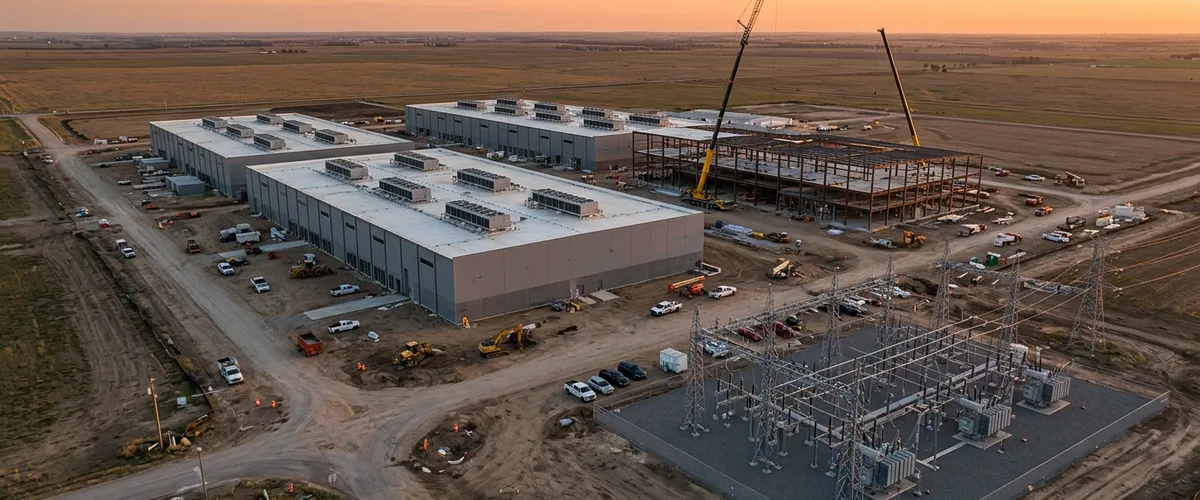
The Broadcom Anthropic deal puts $60 billion of bank debt behind a $125.2 billion TPU lease whose payments start only when hardware goes live in 2027, so hiring pressure hits electricians, commissioning crews, and TPU engineers first. Money got raised in October. The people it pays for have to show up next year.
Most coverage of this deal reads like a credit story. It is one. Banks are syndicating the largest chip financing anyone has tried, Broadcom is playing supplier, lender, and guarantor at the same time, and Anthropic says in its own IPO prospectus that the arrangement creates “potential conflicts of interest.” Fair enough. Bond people will argue about that for months.
I want to look at the other half.
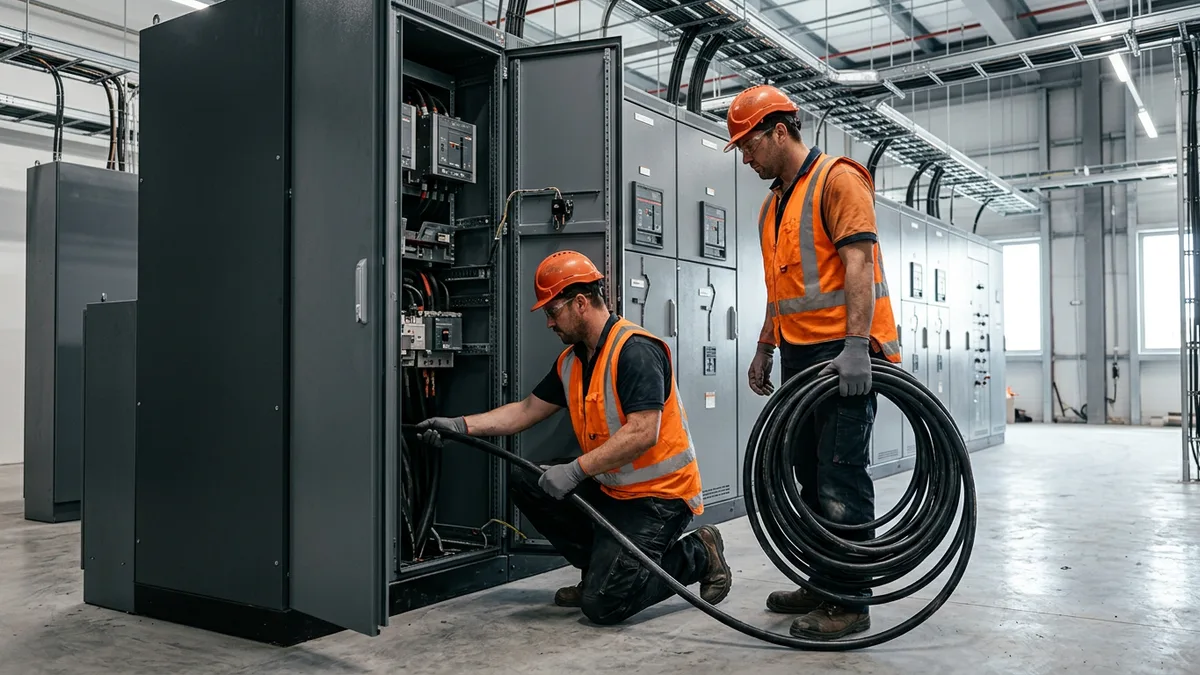
A lease that only pays out once racks are installed is a deadline with a dollar figure on it. Somebody has to pull the cable, set the switchgear, fill the coolant loops, and then write the software that keeps a few hundred thousand accelerators busy. Those people are already scarce. I spend a lot of my week with infrastructure and engineering leaders who hire through our IT staffing services team, and the conversation in the last few days has moved from “is this real” to “who do we lose when it starts.”
Short answer: probably your best commissioning agent.
What Broadcom and Anthropic Actually Agreed To
Four separate pieces got stacked on top of each other, and the headlines tend to mash them together. Here they are pulled apart.
| Piece | What it is | Where it comes from |
|---|---|---|
| Compute deal | About 3.5 gigawatts of next-generation Google TPU capacity, accessed through Broadcom, coming online starting in 2027, mostly in the United States | Anthropic announcement, April 6, 2026 |
| Lease commitment | $125.2 billion over five years for TPU computing capacity | Anthropic IPO prospectus, reported by Reuters October 1 |
| Broadcom lending | Up to $42 billion in convertible notes, usable only for the lease obligations, none issued as of August 2 | Broadcom Form 10-Q, filed September 10 |
| Bank debt | $60 billion: a $42 billion senior secured tranche led by Bank of America, Citigroup, and Morgan Stanley, plus an $18 billion junior tranche with Blackstone putting up about $9 billion | Financial Times and Bloomberg, October 2 |
The 10-Q is the most useful of these documents, and it’s the one almost nobody quotes. Broadcom never names the customer in it. It describes an “AI XPV platform” built with financial partners to enable more than 20 gigawatts of compute through 2028, a first $35 billion tranche in June 2026 for more than 1 gigawatt, and a backstop on that customer’s five-year lease that could cost Broadcom up to about $29 billion if things went badly. Then a paragraph on convertible notes of “up to an aggregate principal amount of $42 billion.” Same number Reuters later found in Anthropic’s prospectus. You can read it yourself in Broadcom’s quarterly filing.
Why would a chip company lend its customer money to rent its own chips? Because the customer’s revenue is growing faster than its cash. Anthropic said in April its run-rate revenue had passed $30 billion, up from about $9 billion at the end of 2025. Broadcom, for its part, booked $16.7 billion of AI semiconductor revenue last quarter, up 221% from a year earlier, and guided to $21.7 billion for the current one, per its September 2 earnings release. Both sides need the racks installed. Fast. Neither wants to wait for the cash.
Why a Chip Financing Turns Into a Hiring Plan
Lease payments start when hardware is deployed. That detail, from the FT’s reporting on the bank package, is the whole story for anyone who staffs infrastructure. Read it twice.
Every month a hall sits finished but unenergized is a month the financing doesn’t earn, so the incentive runs one direction: build faster, commission faster, and pay whatever it takes to get qualified hands on site before somebody else’s campus grabs them. I’ve watched that pressure play out at a smaller scale. Last spring a colocation builder in the Phoenix area lost two of its three commissioning agents in the same six weeks, both to a hyperscale project down the road that offered roughly 30% more and a per diem. The builder’s schedule slipped a full quarter. Nobody did anything wrong. The market just moved under them.
Multiply that by 3.5 gigawatts.
I won’t pretend there’s a clean ratio of workers per gigawatt. There isn’t one anyone publishes that I’d trust. The closest real number comes from Anthropic itself. When it announced a $50 billion data center program with Fluidstack in Texas and New York back in November 2025, it estimated about 800 permanent jobs and 2,400 construction jobs, according to Anthropic’s announcement. That was one program. The TPU capacity in this lease is separate, and the sites haven’t been disclosed. Read the 2,400 as a floor for the kind of crew a single gigawatt-class campus soaks up, not as a forecast.
We’ve written before about how AI infrastructure teams get built from the slab up. What’s different now is the calendar. A lease with a 2027 start date makes 2026 and early 2027 the crunch, not some vague later.
Who Gets Hired, and When
The demand comes in waves. Trades first, then the people who commission and operate, then software. Here’s how I’d sequence it if I were building a hiring plan around this deal or competing for the same labor.
| Role group | Peak pressure | Why this deal touches it | BLS national median, May 2025 |
|---|---|---|---|
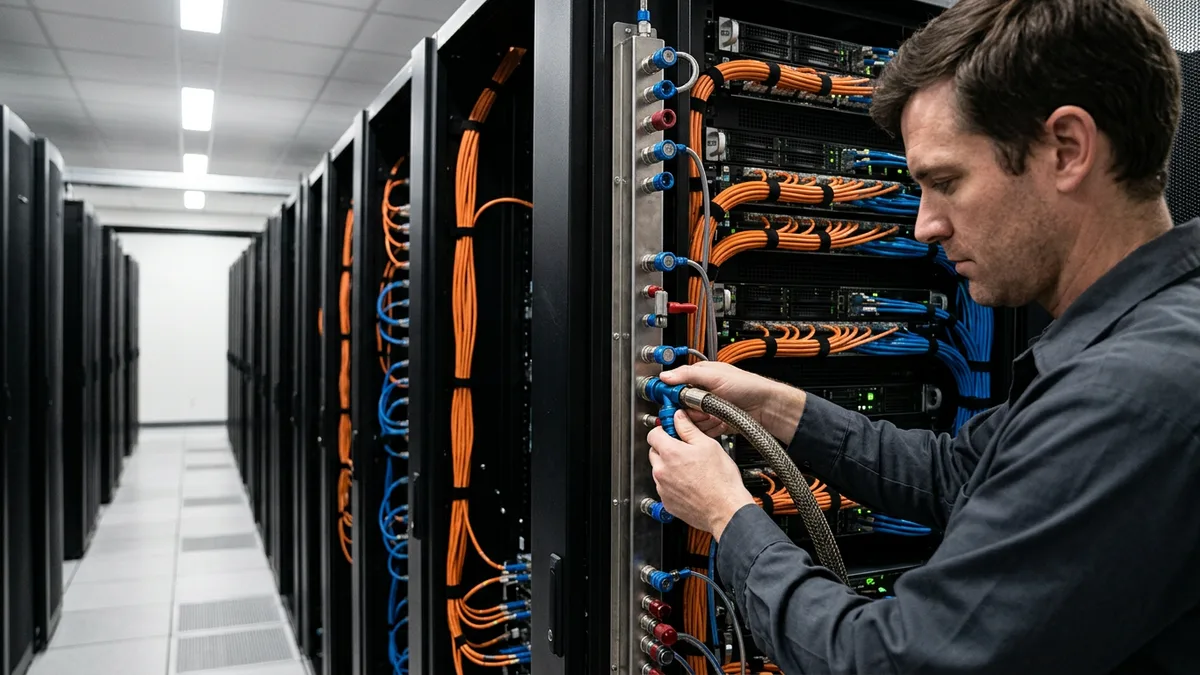
| Electricians, medium-voltage and switchgear crews | Now through mid-2027 | Every gigawatt starts as substations, switchgear, and busway | $63,190 (electricians) |
| HVAC and liquid-cooling technicians | Late 2026 into 2027 | Google’s current TPU pods run direct-to-chip liquid cooling | $61,010 (HVAC mechanics and installers) |
| Commissioning agents and controls engineers | First half of 2027 | Lease payments start at deployment, so commissioning is the gate | No clean BLS category |
| Network and fiber engineers | 2027 | Thousands of accelerators per pod, stitched together with optical links | $134,050 (network architects), $99,130 (network and systems administrators) |
| ML infrastructure engineers with JAX and XLA | Already tight, worse in 2027 | TPUs don’t run CUDA | Varies widely, see below |
The wage figures are national medians from the BLS Occupational Employment and Wage Statistics program, and they undersell what a data center site pays. A journeyman with medium-voltage termination experience on a hyperscale job in Abilene or Columbus is not earning the median. They’re earning the median plus overtime plus per diem, and they know it. There are about 757,220 electricians employed in the U.S., per the same BLS data. Sounds like plenty. It isn’t, once you filter for people who have actually terminated 15kV cable inside a live yard.
For the role-by-role pay picture on the operations side, our breakdown of data center jobs and salary ranges goes deeper than I will here.
The TPU Skills Gap Nobody’s Pricing In Yet
Here’s the part I think most hiring managers are missing.
Almost every ML infrastructure engineer you’ll interview learned on NVIDIA. CUDA, NCCL, Triton kernels, the whole GPU toolchain. TPUs are a different animal. Google’s own Cloud TPU documentation is blunt about it: code that runs on TPUs has to be compiled by the XLA compiler. In practice that means JAX, or PyTorch through the XLA bridge, plus a working feel for sharding a model across a pod, profiling compiler output, and debugging collectives that fail differently than they do on a GPU cluster.
The pool of people who’ve done that at scale is small. Very small. Tiny, really. A lot of them work at Google, at Anthropic already, or at a handful of labs that standardized on TPUs early.
So when a few gigawatts of TPU capacity lands in 2027, the demand for JAX-fluent infrastructure engineers jumps, and it jumps at the exact moment everyone else is still fighting over CUDA people. I had a client this summer, a mid-size AI company in the Bay Area, that wrote a job description asking for “GPU or TPU experience” and treated them as interchangeable. They aren’t. We rewrote the req around XLA profiling and pod-level sharding, the candidate pool shrank by something like 80%, and the person they hired was a former research engineer who’d spent two years on JAX at a university lab. Not who they’d pictured. Right hire, though. Still there.
If you’re building that kind of team, our AI and ML engineer staffing recruiters have been screening for exactly this split.
Upstream, at the Chip Level
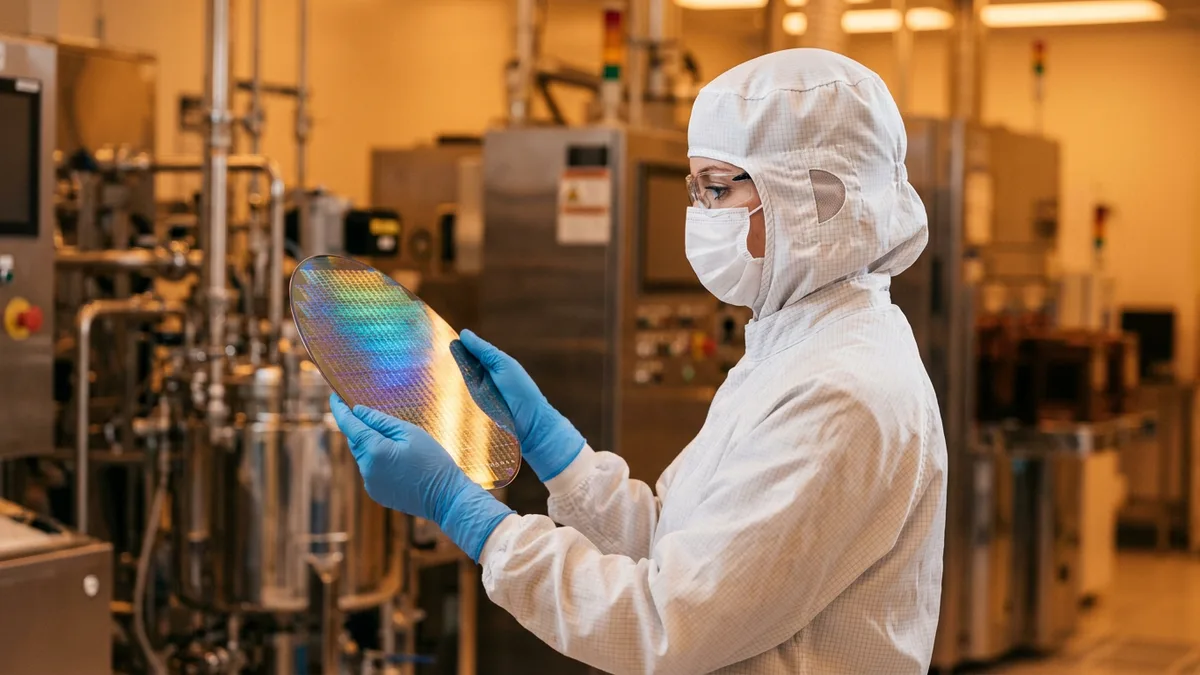
Broadcom co-develops Google’s TPUs. That’s its custom silicon business, a big piece of that 221% growth, and it is now committed to delivering a very large number of chips on a very fixed schedule with its own balance sheet on the line through the backstop.
That shows up in semiconductor hiring. Physical design engineers, design verification, high-speed SerDes, advanced packaging, signal and power integrity. These were tight before Broadcom started lending money against delivery. They’re tighter now. Noticeably. And the companies that feel it most aren’t Broadcom. They’re the smaller chip and hardware firms in San Jose, Austin, and San Diego that compete for the same verification engineers and can’t match a custom-silicon bonus pool. Our semiconductor recruiters are already seeing counteroffers come in earlier in the process than they did in the spring.
The Part That Should Make You a Little Careful
I’d be doing you a disservice if I only told the bullish version. Here’s the other side.
Anthropic’s prospectus, per the Reuters report syndicated by The Star, warns that payment or performance defaults could accelerate large portions of the lease and cut off the $42 billion facility. Broadcom’s backstop exists because somebody thought about what happens if the customer can’t pay. And the junior tranche of the bank debt may not get placed until after Anthropic’s IPO. None of that is a prediction of trouble. It is, though, a reminder that a lot of AI buildout right now is financed against future revenue, and future revenue sometimes shows up late.
What does that mean for hiring? Not much for the trades, honestly. Electricians and commissioning agents will stay busy whatever happens to one lease, because there are other campuses in line behind it. The risk sits with permanent, specialized headcount built around one platform. If you’re staffing up a dedicated TPU operations team, I’d think hard about using contract staffing for the build and commissioning phase and converting the people who prove out once the capacity is live and paying. That’s what contract-to-hire is for.
One more thing. I run a staffing firm. We benefit when labor markets get tight. Weigh my read accordingly. Seriously.
What I’d Do This Quarter
If you run a data center build, a colocation portfolio, or an AI platform team, a few moves are worth making before the 2027 start dates get close enough to feel.
- Lock in your commissioning leads now with retention or completion bonuses. They’re the gate on revenue for the whole industry next year, and recruiters (me included) know their names.
- Stop writing “GPU or TPU” in ML infrastructure reqs. Pick one, and if it’s TPU, screen on XLA and JAX specifically.
- Price your electrical subcontracts with a labor escalator. A fixed-labor bid signed today for a 2027 energization date is a bid somebody will lose money on.
- Keep a bench. A handful of pre-vetted contract electricians and controls techs you can call in a week beats a perfect job description that sits open for ninety days.
None of these are dramatic. They’re just earlier than most teams will do them.
What Hiring Managers Are Asking About This Deal
How much is the Broadcom Anthropic deal actually worth?
The bank financing is $60 billion, supporting Anthropic’s $125.2 billion, five-year TPU lease commitment. Separately, Broadcom agreed to lend up to $42 billion in convertible notes, usable only for those lease payments, according to the 10-Q Broadcom filed in September and Anthropic’s IPO prospectus.
When does the new TPU capacity come online?
Starting in 2027. Anthropic said in April 2026 that about 3.5 gigawatts would come through Broadcom from 2027 onward, mostly in the United States, and the reported lease payments begin once the hardware is deployed.
Is Broadcom really both the supplier and the lender here?
Yes, and Anthropic flagged it. Broadcom co-designs the chips, backstops lease obligations, can lend up to $42 billion, and supports the senior bank debt. Anthropic’s prospectus calls that a source of “potential conflicts of interest” over pricing and access to compute.
Which jobs feel this first?
Electrical trades. Medium-voltage electricians, switchgear crews, and commissioning agents get pulled in well before any chip ships, because a hall has to be powered, cooled, and tested first. ML infrastructure hiring follows, mostly in 2027.
Can a GPU engineer just switch over to TPUs?
Some can, with ramp time. The math carries over, but the toolchain doesn’t: TPU code compiles through XLA, usually from JAX, and sharding and debugging work differently than on CUDA. Budget three to six months before a strong GPU engineer is fully productive on a TPU pod.
Should we wait to see if the deal holds before hiring?
For trades and commissioning, no. That labor is tight regardless of any single lease. For dedicated TPU platform teams, a contract-to-hire structure gives you the people now and the option to convert once the capacity is live.
Where This Leaves You
The Broadcom and Anthropic financing will get written up as a test of whether lenders still believe in AI. Maybe it is. For anyone who actually has to staff a building, it’s simpler than that. Somebody signed for 3.5 gigawatts with a start date, and a start date pulls people toward it whether or not your team is ready.
KORE1 has been placing IT and engineering talent since 2005, with a 92% twelve-month retention rate on our placements. If this deal changes your 2027 plan, talk to a recruiter on our infrastructure team. We’ll tell you honestly which seats to fill now and which can wait.
