
Last updated: May 25, 2026
HVAC Engineering Staffing
KORE1 places HVAC engineers who can actually size a chiller plant, commission a complex AHU, and read a sequence of operations without faking it. Data center cooling. Healthcare facilities. Industrial process loads. Real work, real engineers.
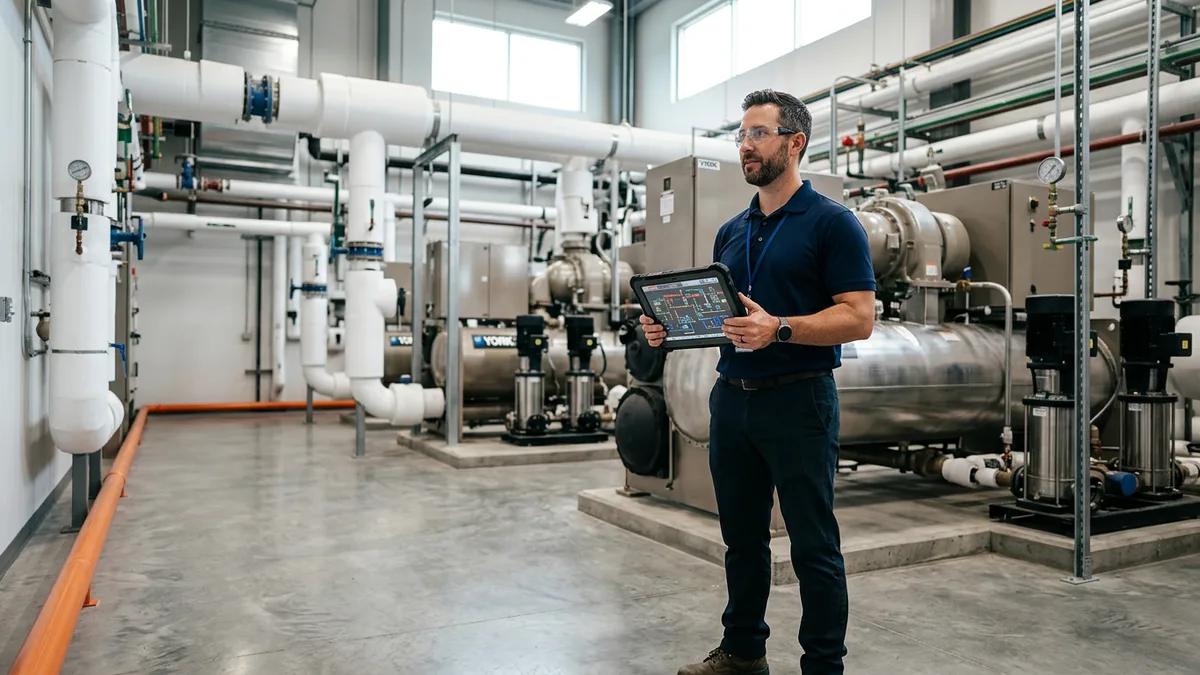
HVAC engineering staffing connects companies with mechanical engineers who design, commission, and operate heating, ventilation, and cooling systems. KORE1 fills these roles in 10 to 21 days, drawing from a 20-year network across data centers, healthcare, and industrial facilities.
HVAC engineering used to be a quiet corner of mechanical engineering. Not anymore. Data centers are pulling 40 megawatts out of single buildings now, and the cooling problem has eaten the entire engineering org chart. Hyperscale operators are bidding up senior HVAC engineers faster than universities can graduate them. Healthcare systems are rebuilding ventilation top to bottom after the lessons of the past five years. Pharma manufacturers need ISO 14644 compliance that nobody can shortcut.
That demand has not been matched by supply. Hard stop. There are fewer than 33,000 HVAC engineers in the United States according to BLS Occupational Employment and Wage Statistics, and the most experienced cohort is heading toward retirement. The candidates with both deep design chops and field commissioning experience are the rarest profile in the discipline. KORE1’s engineering staffing practice has been placing exactly that profile since 2005.
The HVAC vertical sits inside our broader engineering bench. If you need MEP, mechanical engineers, electrical engineers, or controls engineers alongside the HVAC bench, you work with one team instead of juggling three vendors. That matters when you’re staffing a data center build that needs all three at once.
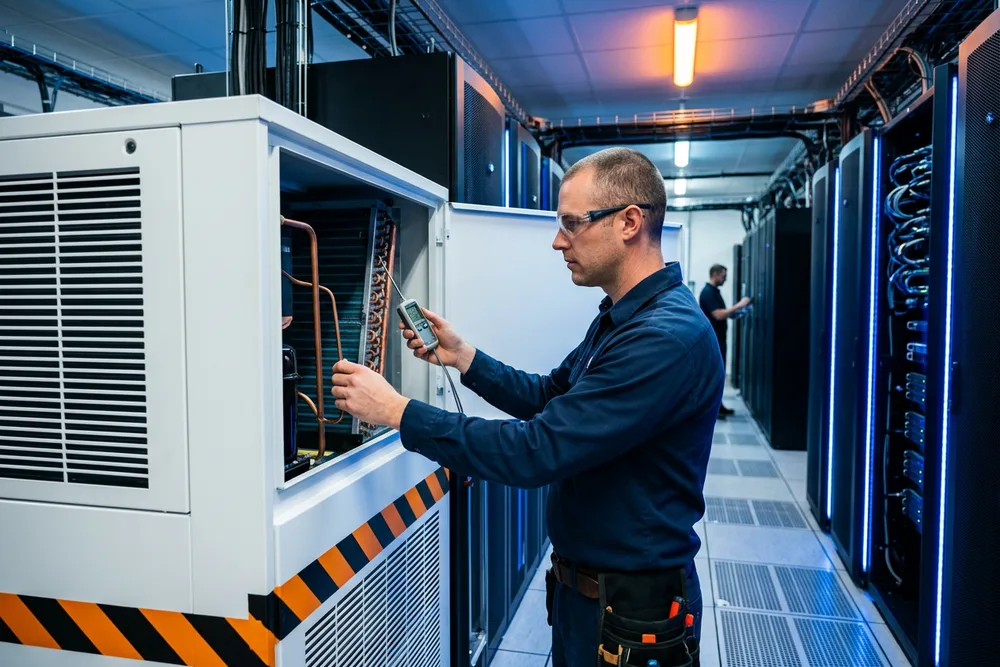
HVAC Engineering Roles We Place
We staff the full spectrum of HVAC engineering work. The boring stuff and the brutally hard stuff. Not every search needs a PE. Some do.
- HVAC Design Engineers who size loads using Trace 3D or Carrier HAP, lay out duct and pipe systems in Revit MEP, and produce drawings that contractors can actually build from
- Data Center Cooling Engineers with real CFD experience in 6SigmaDCX or Future Facilities, comfortable with rear-door heat exchangers, liquid-cooled AI racks, and the 50 kW per rack future that is already arriving. See our data center staffing page for the full infrastructure team
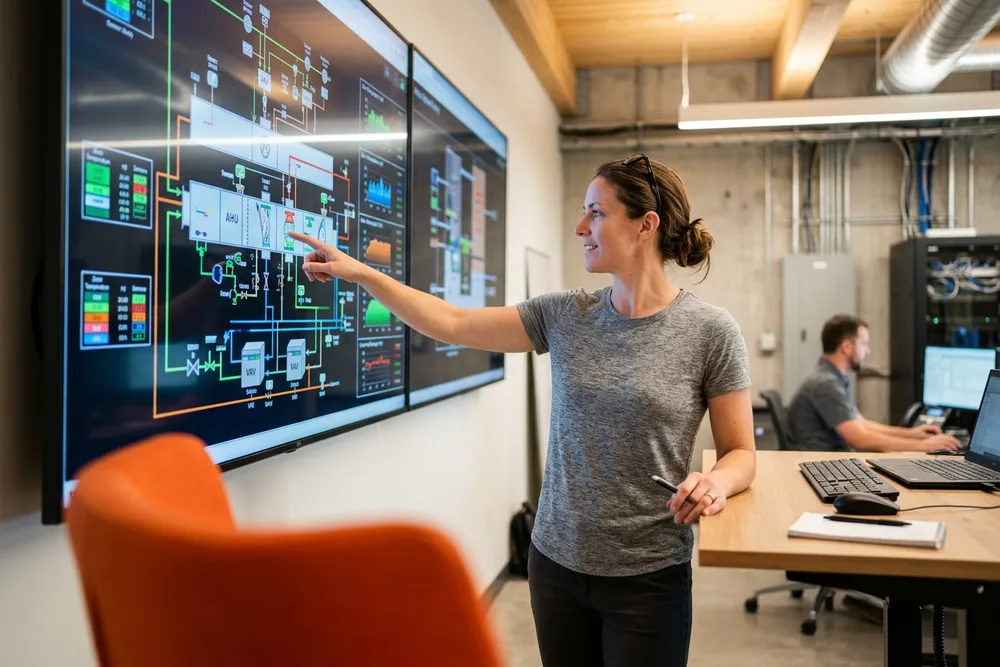
- HVAC Controls Engineers programming Distech, Tridium Niagara, Johnson Metasys, and Siemens Desigo. Sequences of operation that actually save energy instead of just looking good in the spec
- Commissioning Engineers (CxA / BCxP) who run functional performance tests, write deficiency logs, and don’t sign off on an air handler until it can hold setpoint under load
- Energy and Sustainability Engineers doing ASHRAE Level 2 audits, retro-commissioning, and LEED energy modeling for clients chasing 2030 targets
- HVAC Project Engineers running design-build coordination across electrical, plumbing, and structural disciplines on industrial and institutional projects
- Cleanroom and Critical Environment Engineers for pharma, semiconductor fab, and hospital surgical suites where ISO 5 air quality is non-negotiable
- Service and Field Application Engineers supporting equipment manufacturers, OEM technical sales, and post-installation troubleshooting
Whether you need a direct hire to lead your mechanical group or a contract engineer for a 12-month design surge, we follow the same screening rigor. We don’t bury weak resumes inside a stack of pretty ones.
How KORE1 Finds HVAC Engineers Other Agencies Miss
The good HVAC engineers are not on Indeed. They’re inside a regional MEP firm in Atlanta or a hyperscaler’s design ops team in Northern Virginia, and they get five InMails a week that they have learned to ignore. Generic outreach does not move them. Specific conversations do.
We’ve been doing this for 20+ years. Our HVAC recruiters know the difference between someone who can plug numbers into Trane TRACE and someone who can defend a design decision in front of an owner’s engineer. They know which firms ride their juniors hard and produce solid PEs by year five, and which ones promote people who never learned what a wet bulb temperature actually means. That distinction matters at the offer stage, not the resume stage.
Our network reaches into ASHRAE chapters, AEE certification cohorts, the alumni rolls of programs at Penn State, Cal Poly, and Georgia Tech, and the regional consulting engineer firms that quietly train the best benchmarks in the country. When we reach out, we are calling people who already know our name, or who know somebody who does.
Most HVAC engineering placements close in 10 to 21 days. Senior data center cooling roles and PE-licensed leads run longer, sometimes 4 to 6 weeks. We give you an honest read in the first call. If you need a cross-disciplinary build with electrical engineering and controls talent alongside HVAC, the same team can run all three searches in parallel without losing context.
Years Placing Engineers
Day Average Fill Time
12-Month Retention Rate
U.S. Metros Served
HVAC Talent Across Critical Sectors
An HVAC engineer who can size a residential rooftop unit is not the same engineer who can design redundancy for a hyperscale data hall. Industry experience changes the answer. We match candidates against your actual project scope.
Data Centers and Hyperscale
Liquid cooling, rear-door heat exchangers, CFD modeling, PUE optimization for AI workloads. Engineers who have stood inside a 100 MW campus and understand redundancy.
Healthcare and Life Sciences
Operating room pressurization, isolation rooms, ISO 5 cleanrooms, ASHRAE 170 compliance. People who know what happens when an AHU fails on a surgical floor.
Industrial and Manufacturing
Process cooling, dust collection, large-scale ventilation, paint booth and welding exhaust. Pairs naturally with our manufacturing engineering bench.
Commercial and Institutional
Office towers, universities, K-12 retrofit, government facilities. Energy code compliance, ASHRAE 90.1, IECC, and the ESG targets that owners actually report on.
What Makes KORE1 Different
Real Technical Screening
Our recruiters can talk through a chilled water system schematic. They ask candidates about specific design decisions on past projects, not just tool names on a resume. You only see candidates who actually pass that screen.
Every Engagement Model
Contract, contract-to-hire, direct hire, or project teams. We build around your timeline and risk profile, not around what generates the easiest fee for us.
National Reach, Local Markets
Data center corridors in Northern Virginia and Phoenix. Healthcare hubs in Boston and Nashville. Industrial centers in Houston, Cleveland, and Greenville. We know what comp looks like in each market and where licensing reciprocity is friendly.
Common Questions About HVAC Engineering Staffing
What does an HVAC engineering staffing agency actually do?
An HVAC engineering staffing agency sources, screens, and presents mechanical engineers who specialize in heating, ventilation, and air conditioning systems to companies with open roles. KORE1 handles the technical qualification, interview coordination, and offer negotiation end to end. The screening is where most agencies fall apart. Anyone can pull resumes off a database. We test for design judgment, the kind you build over years of running calcs, defending submittals, and getting yelled at during commissioning. Our engineering staffing agency practice covers mechanical, electrical, controls, and structural disciplines if you need a cross-functional MEP build.
How long does it take to hire an HVAC engineer through KORE1?
Most HVAC engineering placements close in 10 to 21 days. Highly specialized roles run longer. A PE-licensed lead with data center cooling experience and a CFD background is a smaller pool, and that search can take 4 to 6 weeks. We tell you the honest range during the intake call rather than promising 14 days on every role. Speed comes from active candidate relationships we have already built, not from cutting screening corners and hoping you don’t notice.
Can you find HVAC engineers with specific software experience?
Yes. Carrier HAP, Trane TRACE 3D, IES VE, EnergyPlus, OpenStudio, Revit MEP, AutoCAD MEP, eQUEST, 6SigmaDCX, Future Facilities, and the full Niagara, Distech, Metasys, Desigo controls stack. We don’t just keyword match. We ask candidates about specific projects, what they modeled, what assumptions they had to defend, and where they ran into limitations that forced workarounds. If your team relies on a proprietary internal toolkit, tell us during kickoff and we factor the ramp time into the screening.
Do you place PE-licensed engineers, or only EITs and unlicensed engineers?
Both. Our network includes PE-licensed mechanical engineers, EITs working toward licensure, unlicensed designers with deep field experience, and senior principal-level technical leads. For projects requiring stamped drawings, we filter on state-specific PE registration and confirm active license status before presenting any candidate. For design-build environments where licensure is less central, we focus heavier on practical commissioning and integration experience. The right answer depends on your project, not on a one-size-fits-all bias.
How is HVAC engineering staffing different from general mechanical engineering staffing?
HVAC is a deep specialty inside mechanical engineering, and treating it as a generic ME search is the fastest way to waste interview cycles. A strong product design engineer who has spent five years optimizing pump impellers is not going to walk into a healthcare retrofit and produce a working sequence of operations on day one. Our MEP, mechanical engineering staffing team carries the broader bench. The HVAC specialists inside that team carry the depth.
What’s driving the spike in HVAC engineering demand right now?
Three things, in order. Data center build-out is the loudest, with AI workloads pushing rack densities past 50 kW and forcing a generational rewrite of cooling design. Healthcare ventilation modernization is the second, driven by ASHRAE 170 ventilation standards and aging hospital infrastructure. Industrial reshoring is the third, including semiconductor fabs, battery plants, and pharma manufacturing that all need critical environment expertise. Demand is unlikely to soften before 2028 based on capital project pipelines reported by the U.S. Energy Information Administration Annual Energy Outlook.
What does a typical HVAC engineer earn in 2026?
Per the BLS Occupational Employment and Wage Statistics, mechanical engineers (the BLS category that includes HVAC) post a 2024 median of $99,510. KORE1 placement data tracks higher, around $115,000 for mid-level HVAC designers and $145,000 to $180,000 for senior PE-licensed engineers in high-demand markets. Data center cooling specialists with CFD experience can clear $200,000 in Northern Virginia. Comp varies wildly by region, sector, and licensure. We’ll send you a calibrated band during intake, not a number pulled from a generic salary survey.
Ready to Build Your HVAC Engineering Team?
Start with a 20-minute intake call. We’ll ask about the project, the pace, what hasn’t worked in prior searches, and the markets you actually want to source from. No deck. No pitch. Just a calibration conversation so we know whether KORE1 is the right partner for this search.
