
Last updated: September 3, 2026
Manufacturing Engineering Staffing
Manufacturing engineer recruiting for OEMs and contract manufacturers across discrete production, NPI, tooling and fixturing, CAM, robotics, and automation cell work. Contract, contract-to-hire, and direct hire nationwide, with recruiters who can read a GD&T drawing before they read a resume.
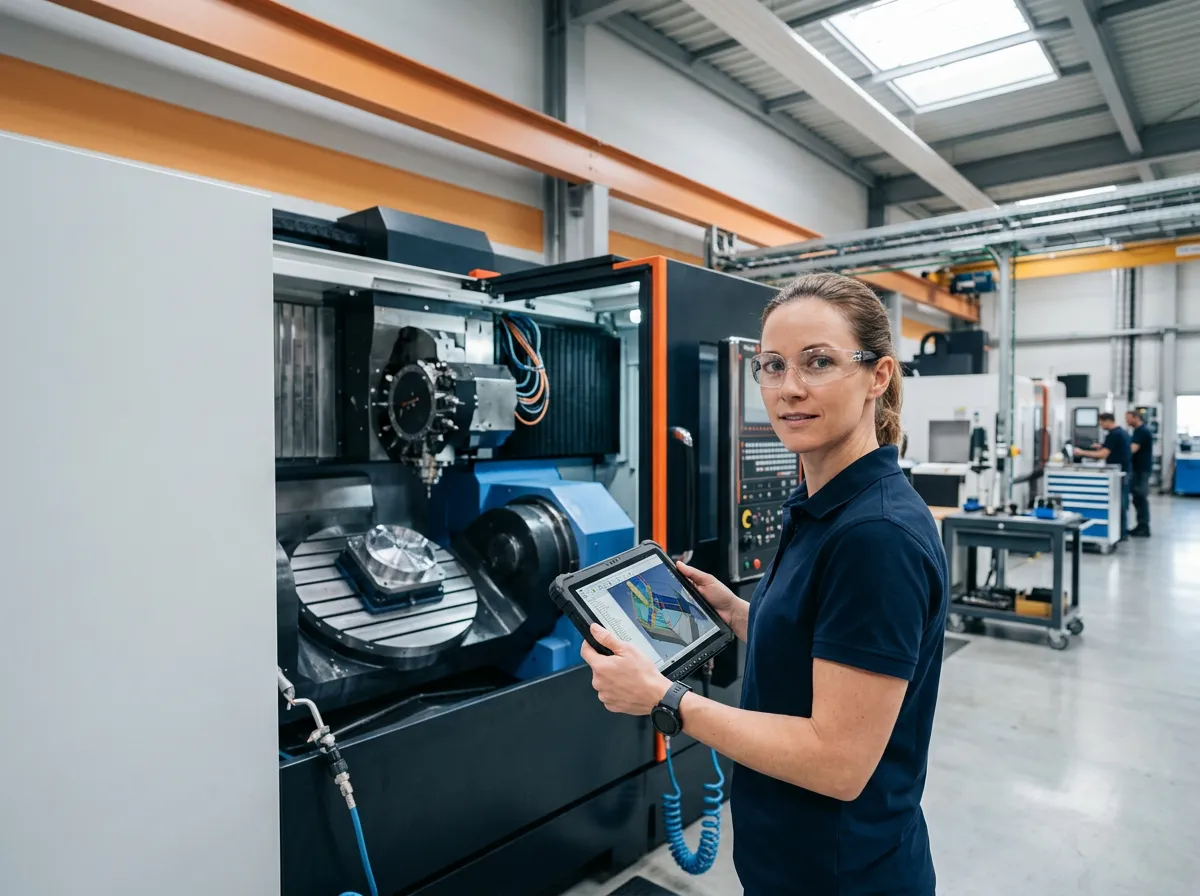
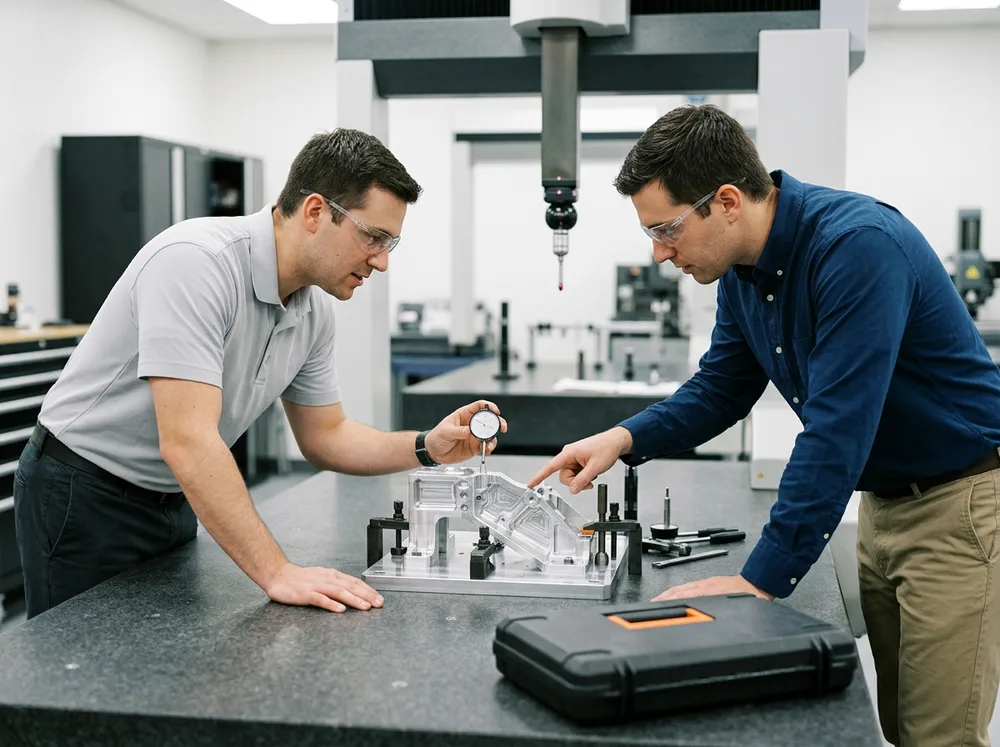
KORE1 places manufacturing engineers for OEMs and contract manufacturers, including tooling and fixturing, NPI, CAM, automation, and quality engineering talent, with a 17-day average time-to-hire and a 92% twelve-month retention rate across 30+ U.S. metros.
Manufacturing Engineering Sits Between Design and Production.
The job title says engineer. The actual scope says translator. A manufacturing engineer takes a release-ready CAD model and turns it into a thing that can be built nine hundred times a week, on time, in spec, with a measurable yield. That work touches a lot. GD&T tolerance stacks. Tool selection. Fixture design. CAM programming. Cell layout. Cycle time. Run-at-rate validation. And the PFMEA that has to land before the line ever turns on.
It isn’t general manufacturing staffing, which covers operators, technicians, controls engineers, and plant leadership. It also isn’t industrial engineering staffing, which is the same family but skews toward system-level optimization, capacity, ergonomics, and supply chain. Manufacturing engineering is the discipline that owns how an individual part or assembly actually gets built. Same factory. Different chair. Different screen. Controls and automation sit on the plant-floor side of that line, and our automation engineer requisition template scopes that seat.
OEMs hire manufacturing engineers to launch new products without burning their existing capacity. Contract manufacturers hire them to take a customer’s CAD package and stand up a cellular line for it inside three months. Both motions fail in the same place. It is the handoff between design and production. KORE1 has spent twenty years recruiting the engineers who survive that handoff. Workforce data from the Manufacturing Institute and the National Association of Manufacturers consistently flag this skilled engineering tier as one of the hardest to fill in U.S. manufacturing. The candidates who can do it well are almost always working somewhere already.
Where Manufacturing Engineers Sit in Your Org
The title is the same on every business card. The job is four different jobs. KORE1 staffs across all four scopes, and we screen for the one your req is actually asking for.
Tooling & Fixturing
Engineers who design jigs, fixtures, end-of-arm tooling, and check gauges. Heavy in SolidWorks or NX, fluent in GD&T, comfortable working a tolerance stack from datum to print. Most build-to-print shops cannot survive without two of them on staff.
NPI & Process Launch
New Product Introduction engineers who own the handoff from design release through pilot, P-PAP, and run-at-rate. They write the PFMEA, build the control plan, and stand on the floor at 5 a.m. during line trials. Where a launch lives or dies.
CAM, CNC & Programming
Engineers who post-process, optimize, and prove out toolpaths for three- through five-axis work in Mastercam, NX CAM, Esprit, or Fusion. They own cycle time and tool life budget on the machining side, and they understand fixturing before they touch the post.
Automation & Robotics Integration
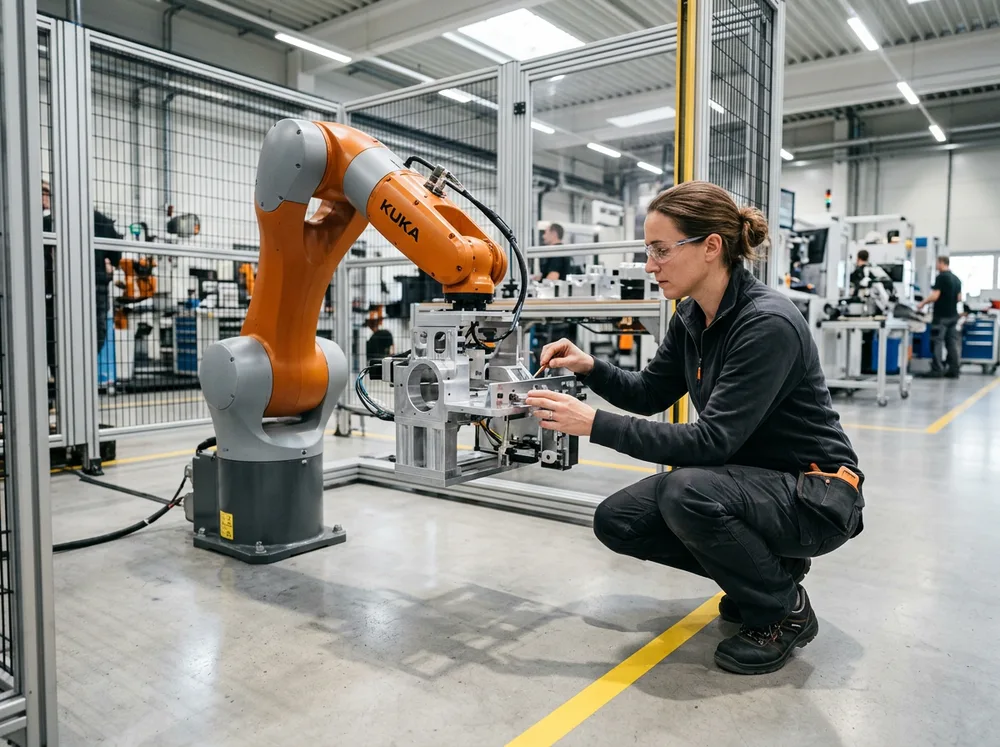
Engineers who scope, simulate, integrate, and validate robotic cells, vision systems, and material-handling automation. For the controls side of those cells we run a dedicated practice staffing automation engineers through commissioning and into the sustaining seat. FANUC, ABB, KUKA, Universal Robots, plus the controls handshake to the line PLC. Deep overlap with our controls engineer staffing.
Manufacturing Engineering Roles We Fill
Titles shift between OEMs and contract manufacturers, and between aerospace, medical, automotive, and consumer electronics shops. The work bucket stays consistent. We screen for the work, not the title.
- Manufacturing Engineer (entry through staff)
- Senior Manufacturing Engineer
- Principal Manufacturing Engineer
- NPI Manufacturing Engineer
- Tooling Engineer (jig, fixture, gauge)
- CAM / CNC Programmer-Engineer
- Process Engineer (discrete manufacturing scope)
- Manufacturing Test Engineer (DFT, ICT, functional)
- Manufacturing Quality Engineer (PPAP, APQP, CAPA)
- Robotics & Automation Engineer
- Manufacturing Systems Engineer (MES integration)
- DFM / DFA Engineer
- Manufacturing Engineering Manager
- Director of Manufacturing Engineering
Direct hire dominates the staff-through-principal band. Contract and contract-to-hire show up most often on NPI ramps, tooling surges, and capacity adds that have to be staffed before payroll headcount catches up. Defined-scope launches sometimes ship as project staffing engagements with fixed deliverables and end dates.
Automation cell work prices differently from the rest of the discipline, and the gap widens once safety-rated or validated scope enters the req. The automation engineer salary guide carries the current bands and contract rates for that seat.
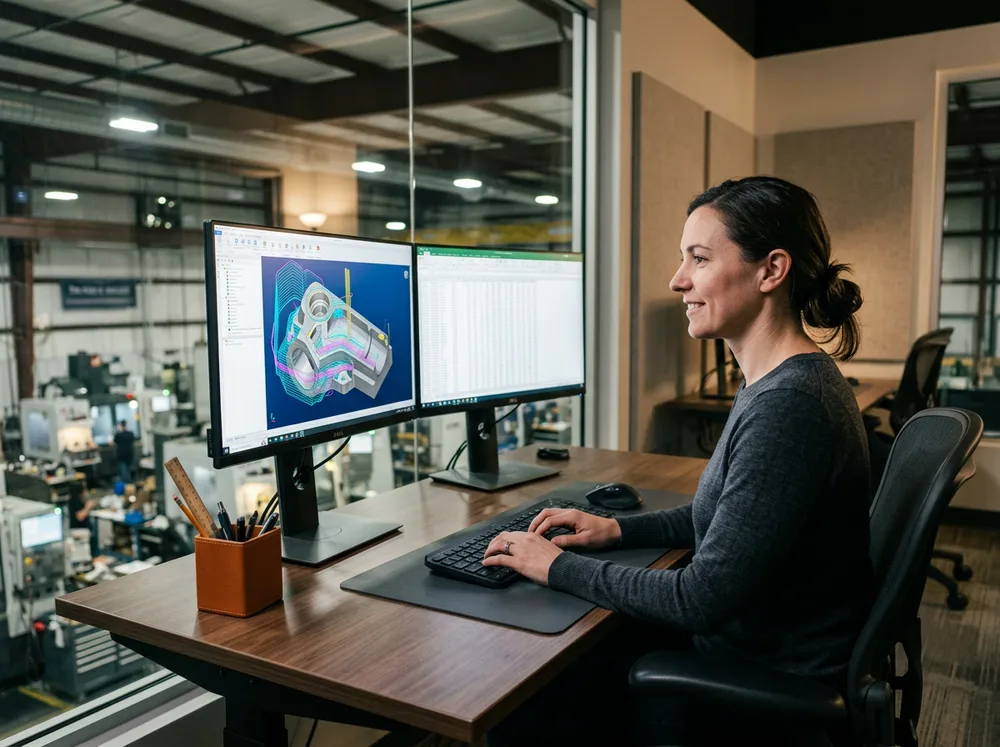
How We Vet Manufacturing Engineering Candidates
Resume screens lose this discipline fast. Half the strong candidates have buzzword-thin LinkedIns. The other half are people who attended one PPAP training in 2017 and never owned a launch. We dig past that on every search. Every time.
Our manufacturing engineering vetting covers five layers:
- Scope fit, not title fit. Manufacturing engineering reads the same on every resume. The actual scope ranges from drawing a fixture in SolidWorks once a quarter to owning a $40M line launch end to end. We document what each candidate has personally signed their name to, not what their team did around them, before any client ever sees the slate.
- GD&T and tolerance literacy. We hand candidates a print scenario and ask them to interpret a position tolerance with MMC, explain when to use a profile callout instead, and walk us through a tolerance stack on a multi-feature assembly. People who learned GD&T on the job answer cleanly. People who claim it from a one-week class start hedging in the first two questions.
- Real NPI scar tissue. Anyone can say they led an NPI. The follow-up question is harder. What broke. What got changed in the control plan. Why. Engineers who actually owned a launch tell specific failure stories about run-at-rate misses, vendor PPAP rejections, or fixture-induced scrap. Engineers who orbited a launch can’t. The difference takes about three minutes to surface on a screen.
- CAM, CNC, and post depth, when relevant. For CAM-heavy roles we ask candidates to talk through a five-axis toolpath problem, an actual one they ran, including stock model setup, tool selection logic, and where the post needed to be tweaked. We do not screen out PowerMill people because the JD says Mastercam. We do screen out anyone who cannot describe how they prove out a path before metal cutting.
- Passive pipeline and counter-offer math. The best manufacturing engineers are working, paid, and respected where they are. Most are not on job boards. KORE1 maintains active relationships across the Midwest auto and aerospace corridor, the Southeast medical device cluster, the Carolinas reshoring builds, the Bay Area and Phoenix electronics fabs, and the Mountain West defense suppliers. We coach clients honestly through counter-offer scenarios before the offer letter goes out. Not after the candidate ghosts.
According to the U.S. Bureau of Labor Statistics Occupational Outlook Handbook, industrial engineers, the BLS classification that captures most manufacturing engineering work, held 333,200 jobs in 2024 with projected 12% growth through 2034, faster than average for all occupations. The headline number sounds calming. It is not. Deloitte’s 2025 manufacturing industry outlook and the Society of Manufacturing Engineers workforce data document the same gap in the engineering tier specifically, and the engineers who can run NPI cleanly are scarcer than the headline data suggests because most of the qualified pool is already employed and not looking.
KORE1 Manufacturing Engineering Performance
Industries Where We Recruit Manufacturing Engineers
The competency set is portable. The context isn’t. A manufacturing engineer trained in aerospace AS9100D workflows will not slide into a Class II medical device launch without ramp time. A contract electronics shop running surface-mount lines uses a different toolkit than a precision machining shop running titanium structural parts. We staff to the context. Always.
Aerospace & defense, AS9100D, build-to-print, configuration management, MRP-driven traceability. Heavy overlap with our aerospace engineering staffing and mechanical engineering staffing benches.
Medical device & combination products, ISO 13485, FDA design controls, IQ/OQ/PQ validation, and risk-managed line transfers. Shared sourcing with our biomedical engineering staffing practice.
Automotive & EV battery, IATF 16949, PPAP, APQP, GD&T-deep build-to-print parts and gigafactory cell-pack lines. Heaviest concentration of NPI work on our desk in 2026.
Electronics & semiconductor packaging, SMT and through-hole assembly, contract manufacturing handoffs from EMS partners, advanced packaging and substrate engineering. Adjacent to our manufacturing IT staffing for MES and Industrial IoT roles.
Consumer products & durable goods, High-mix discrete assembly, automation retrofits, takt-time engineering, and warranty-driven DFM work. Often paired with an automotive engineering hire on the supplier side.
Heavy equipment, defense supply, and industrial OEMs, Low-volume, high-mix CNC machining, fabrication, and complex assembly. Tooling-heavy. Frequently the engineer also owns vendor PPAP intake.
Common Questions
What does a manufacturing engineer actually do day to day?
A manufacturing engineer owns how a specific part or assembly gets built. The day-to-day mix is GD&T review on incoming drawings, tooling and fixture design or selection, CAM programming or oversight, run-at-rate validation, PFMEA and control plan ownership, and the cycle-time and yield budget on the line they support. In a small shop the same person also handles vendor PPAP and writes operator work instructions. In a large OEM, those split across four desks. Same engineer. Different chair. Different scope.
How fast can KORE1 fill a manufacturing engineering role?
17 days on average from kickoff to signed offer, with first candidates typically presented in 3–5 business days. Standard staff-level NPI, tooling, and CAM searches close inside three weeks in any major manufacturing metro. Senior principal engineers, manufacturing engineering managers, and roles requiring active security clearance or specific cleanroom experience run longer, usually 3–5 weeks, because the qualified pool at that level is small and most of those engineers are already employed and not looking.
Manufacturing engineer vs. industrial engineer vs. process engineer, what is the actual difference?
The titles overlap and hiring managers use them inconsistently. The cleanest split is by ownership: a manufacturing engineer owns how an individual part or assembly is built, a process engineer owns the steps and parameters of a process, and an industrial engineer owns the broader system of capacity, layout, and labor that the line lives inside. In discrete plants the same person often wears all three hats. In aerospace, medical, and semiconductor shops, the three split sharply. We screen the actual scope written into the job description, not the title at the top.
How much do manufacturing engineers cost to hire in 2026?
Most U.S. manufacturing engineers we place fall between $90K and $135K base, with senior NPI leads and CAM-heavy principal engineers in aerospace or medical device pushing $150K to $180K. The BLS 2024 OOH median for industrial engineers, the classification that captures most manufacturing engineering work, was $99,380. Our placement data tracks slightly above that, since we recruit heavily for medical device, defense, and EV battery work where the comp band is structurally higher. Comp also varies a lot by metro. A senior manufacturing engineer in Phoenix is not priced like one in southern Indiana.
Do you place manufacturing engineers on contract, direct hire, or both?
Both, plus contract-to-hire. Direct hire is the most common engagement at staff, senior, and principal level because clients lose too much continuity if a manufacturing engineer rotates off mid-launch. Contract placements run heaviest on NPI surges, tooling backfills, capacity adds where payroll headcount is locked, and dual-source qualification work that has a defined end date. Contract-to-hire gives clients a working evaluation on the floor before committing, which is useful when fixture or CAM depth is hard to verify in a phone screen alone.
Which industries hire the most manufacturing engineers right now?
EV battery, aerospace, and medical device lead the volume on our desk in 2026. Strong continuing demand also comes from contract manufacturers running the Carolinas reshoring builds and automotive Tier 1 suppliers in the Midwest. Semiconductor packaging is back after a soft 2024. Heavy equipment and defense supply chain hiring is up sharply year over year. Consumer durables run steadier. The Manufacturing Institute consistently ranks skilled engineering roles among the hardest to fill in U.S. manufacturing. Active reqs line up with that data.
Other Engineering Staffing Practices
Manufacturing engineering overlaps with several adjacent disciplines depending on the production environment. KORE1 recruits the full engineering spectrum through our engineering staffing agency practice.
Need this desk for a defined window instead of a permanent seat? Our temporary engineering staffing page covers degreed engineering coverage bounded by a program milestone, typically four to nine months.
Manufacturing Staffing
PLC programmers, controls engineers, electromechanical technicians, and plant leadership for discrete and process manufacturing facilities.
Industrial Engineering
Industrial, lean, and continuous improvement engineers for system-level optimization, ergonomics, supply chain, and operations engineering.
Mechanical Engineering
Mechanical design engineers, FEA and thermal specialists, and product development engineers for the upstream side of the product lifecycle.
Ready to Hire Manufacturing Engineers?
Tell us the scope, the launch date, and the metro. We’ll present qualified candidates within 3–5 business days.
Start Your Search →