
Reshoring in 2026: Why Manufacturing Jobs Are Coming Back to the US
Reshoring brought 244,000 manufacturing jobs back to the US in 2024, according to the Reshoring Initiative’s 2024 Annual Report. That pushed the cumulative total past 2 million since 2010. The facilities are getting funded. The construction is happening. The part that keeps stalling is finding the engineers to actually run them.
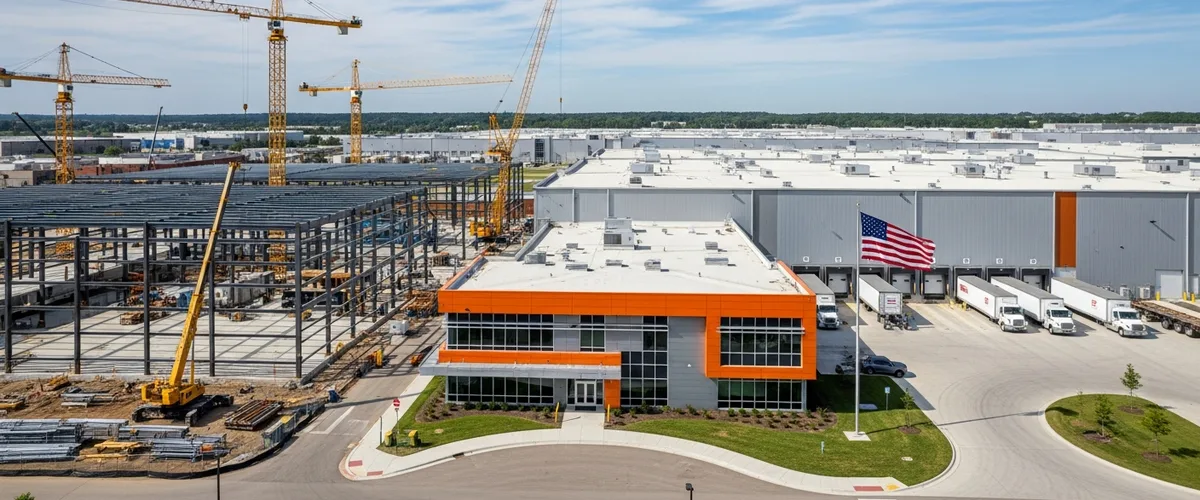
We staff engineers into manufacturing environments through our engineering staffing practice at KORE1. Mechanical, electrical, controls, industrial, quality. The calls we’re fielding right now look different than they did two years ago. It used to be replacement hires, backfills, someone retired and the plant needs a body. Now it’s greenfield facilities. Whole production lines that don’t have a single engineer assigned yet. A client in the Southeast called us in February with 11 open engineering roles across two shifts for a facility that hadn’t finished pouring concrete. They wanted the first four filled before the roof went on.
That’s reshoring in 2026. Not a policy debate. A staffing emergency.
What Is Reshoring, and Why Is Everyone Talking About It Again?
Reshoring means pulling manufacturing operations back to the United States from overseas. Sometimes that’s a US company closing a Chinese factory and rebuilding capacity domestically. Sometimes it’s a foreign manufacturer like TSMC or Hyundai building brand-new production on American soil, which the data calls foreign direct investment but which creates the same kinds of engineering jobs either way.
The conversation isn’t new. People have been talking about reshoring since at least 2010, when Harry Moser founded the Reshoring Initiative and started actually counting the jobs. What changed is the scale. Between 2010 and 2020, reshoring job announcements averaged maybe 60,000 to 80,000 a year. Good numbers. Not transformational.
Then 2022 happened. The CHIPS and Science Act. The Inflation Reduction Act. Combined with pandemic-era supply chain trauma that was still fresh in every operations VP’s memory. Reshoring announcements jumped 53% in a single year, according to data reported by IMTS and the Reshoring Initiative. Semiconductors alone accounted for 35% of all announced jobs. The pace hasn’t slowed since.
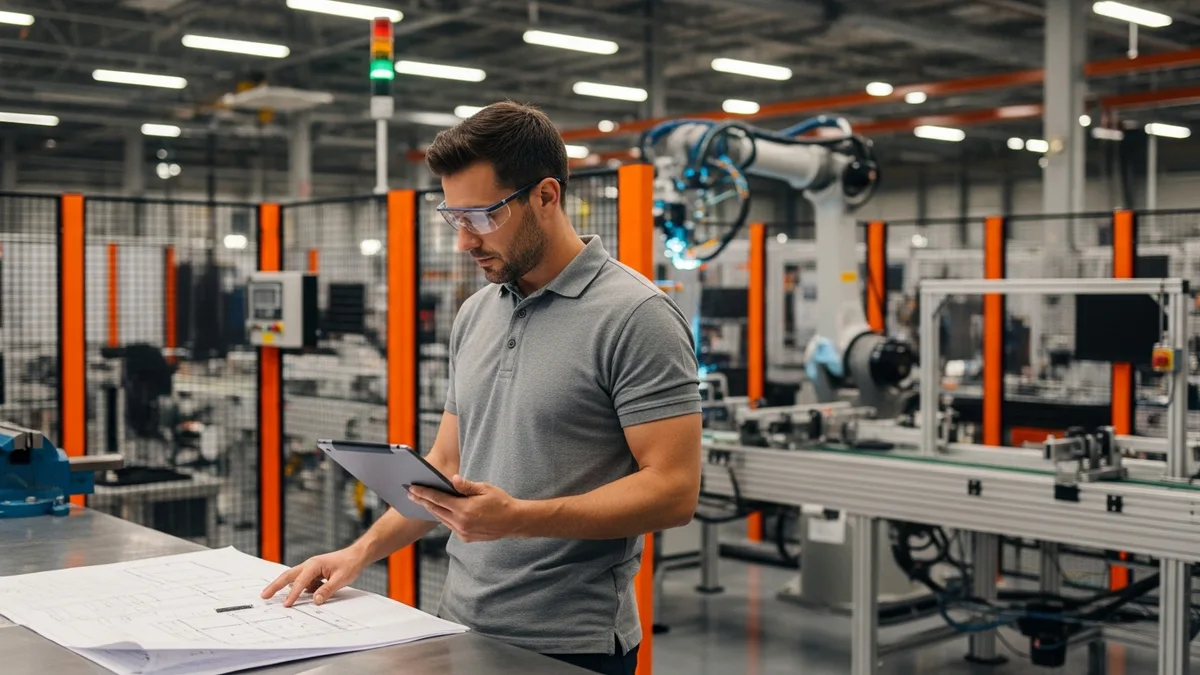
88% of the 244,000 jobs announced in 2024 were classified as high-tech or medium-high-tech manufacturing. Not the assembly jobs people picture when they hear “manufacturing.” These are facilities running advanced robotics, AI-driven quality systems, additive manufacturing lines. They need engineers, and the kind of engineers they need, controls specialists, automation programmers, process designers who understand advanced manufacturing systems, are exactly the profiles that were already in short supply before a quarter-million new positions per year started landing on the demand side.
The Numbers Behind the Comeback
I could bury this in paragraphs, but the trajectory is cleaner as a table.
| Year | Reshoring + FDI Jobs Announced | Notable Driver |
|---|---|---|
| 2020 | ~160,000 | Pandemic supply chain shock |
| 2021 | ~200,000 | Ongoing supply disruption, chip shortage |
| 2022 | ~220,000 | CHIPS Act signed, IRA passed |
| 2023 | 268,000 (record) | CHIPS + IRA funding begins flowing |
| 2024 | 244,000 | Reshoring outpaced FDI by largest margin ever recorded |
Two things jump out. First, the 2023 record hasn’t been beaten but it hasn’t collapsed either. 244,000 is still the second-highest year since tracking began. Second, reshoring outpaced foreign direct investment in 2024 by the largest margin on record. American companies bringing their own operations home, not just foreign companies building here. Different signal.
The construction spending tells the same story from a different angle. The Atlantic Council reported that US companies spent an average of $16.2 billion per month building new manufacturing facilities in 2023. Per month. That figure more than doubled from the year before, which was already historically high, which means the US has been in a sustained manufacturing construction boom for roughly three years running and there are no signs it’s cooling. Since 2020, more than $630 billion has been invested across 140 major projects in 28 states.
Plants are going up. The question is who’s going to work in them.
What’s Actually Driving Reshoring Right Now
Four forces, and they’re compounding.
Tariff policy has rewritten the math. The expanded tariff structures on Chinese imports, and the uncertainty around what’s next, have made the old cost advantage of offshore production unreliable. Companies that spent decades optimizing for $6-an-hour Chinese manufacturing labor are recalculating. US labor runs $25 to $30 an hour, but when you factor in shipping delays, IP risk, tariff exposure, and the carrying cost of three months of inventory floating on a container ship, the gap narrows fast. For some product categories it’s already gone, and for others the risk premium of maintaining a six-week ocean shipping dependency to a country that might face new tariffs next quarter has tipped the math entirely in favor of domestic production even at higher labor rates.
Supply chain resilience became a board-level priority after COVID. That hasn’t faded. 77% of OEMs surveyed by the Reshoring Initiative and reported by IndustryWeek said they worry about geopolitical risks like a potential Taiwan crisis. But 51% still haven’t identified which products they’d reshore as insurance against that scenario. Awareness without action. Which means more announcements are coming.
Federal incentives at a scale nobody expected. CHIPS Act money flowing to semiconductor fabs. IRA credits pulling EV battery and clean energy component manufacturing stateside. Electrical equipment production, mostly EV batteries and solar components, accounted for 31% of all announced reshoring jobs in 2024. Semiconductors took another 35%. Those two sectors alone drove two-thirds of the entire reshoring wave last year.
And automation closed the labor cost gap more than most people realize. A highly automated US plant running collaborative robots, machine vision inspection, and IoT-connected production monitoring can match the unit economics of a labor-intensive overseas facility. The automation doesn’t eliminate engineering jobs. It changes which engineering jobs matter.
The Engineering Roles That Reshored Facilities Need
Not a generic list. These are the roles our engineering recruiters are filling right now, ranked roughly by how many open reqs we’re seeing from clients building or expanding domestic production capacity.
| Role | Salary Range (2026) | BLS Growth Outlook | Why Reshoring Is Spiking Demand |
|---|---|---|---|
| Manufacturing Engineer | $73K-$119K (ZipRecruiter reports $85K avg; Glassdoor reports $119K) | Strong (tied to 9% ME growth) | Every new facility needs process design from scratch |
| Automation / Controls Engineer | $82K-$130K (avg ~$98K per ZipRecruiter) | Very strong | Reshored plants are built around automation from day one |
| Mechanical Engineer | $75K-$130K (18,100 annual openings projected) | 9% through 2034 | Equipment design, tooling, facility layout |
| Electrical Engineer | $78K-$135K | Strong | Power distribution, instrumentation for new facilities |
| Industrial Engineer | $72K-$120K | 11% through 2034 | Facility optimization, material flow, production scheduling |
| Quality Engineer | $68K-$115K | Steady | Domestic production must meet or exceed offshore quality standards |
The salary spread between ZipRecruiter and Glassdoor is worth noting. ZipRecruiter pulls $85,613 as the average manufacturing engineer salary. Glassdoor reports $118,844 from a sample of nearly 25,000 salaries. The gap is methodology. ZipRecruiter skews toward posted job listings. Glassdoor includes self-reported compensation from people already in the role, which captures more senior engineers pulling the average up. Real-world offers we see land somewhere in between, depending heavily on industry and location.
A few of these roles deserve more context than a table cell can hold.
Mechanical engineers are the workhorse of any reshoring buildout. We filled a mechanical engineering role in Q4 last year for a client expanding an advanced materials production line outside of Charlotte. The search took 41 days. Started at $95,000 base. The client’s original budget was $85,000. They adjusted after three weeks of watching qualified candidates decline first-round interviews because the comp wasn’t competitive. The engineer they ultimately hired was coming off a 14-month stint at an automotive supplier that had just delayed its own expansion because it couldn’t fill its controls engineering positions. That kind of cascading shortage, where one company’s inability to hire delays another company’s expansion, is happening everywhere in reshoring right now and it’s hard to overstate how much it compounds the timeline pressure.
Automation and controls engineers are probably the single hardest fill in reshoring right now. PLC programming, SCADA system design, robotics integration. These aren’t skills you pick up in a weekend bootcamp. The candidate pool is small, experienced, and very aware of their leverage. We’ve had clients lose candidates because the interview loop took nine days. Nine. In a normal market, nine days is fast. In this one, three other companies were already at the offer stage.
Electrical engineering talent is getting pulled in multiple directions. Semiconductor fabs need power distribution engineers. EV battery plants need instrumentation specialists. Solar manufacturing facilities need controls expertise. BLS is projecting 9% growth for mechanical engineers and 11% for industrial engineers through 2034. Both well above average, and both numbers were calculated before the latest reshoring acceleration fully showed up in the data. Electrical engineering demand in the manufacturing sector is tracking even higher in practice, though BLS doesn’t break out the manufacturing-specific slice cleanly enough to put a number on it.
Where the Investment Is Landing
Not evenly distributed. Three regions are absorbing the bulk of reshoring capital, and the talent wars in those regions are already intense.
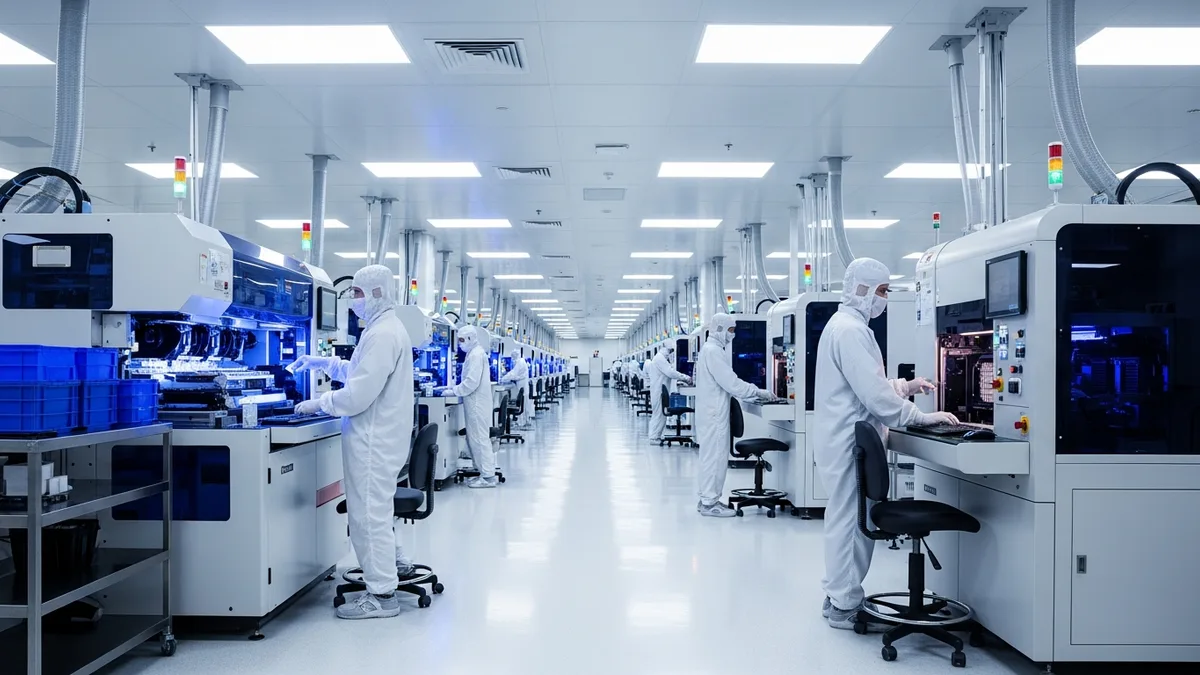
Arizona has become the epicenter of semiconductor reshoring. Amkor Technologies upgraded its Peoria investment from $2 billion to $7 billion, building the first high-volume advanced packaging facility in the US with 750,000 square feet of clean room space. That’s 3,000 skilled jobs at a single site. Nvidia announced manufacturing commitments in Arizona for Blackwell chip production with over a million square feet of space secured. TSMC’s fabs in Phoenix are already pulling thousands of engineers into the metro area, and the ripple effects on housing, schools, and infrastructure are visible. If you’re an engineer willing to relocate to the Phoenix corridor right now, you’re fielding calls from multiple recruiters every week. I’m not being dramatic. The market there is that hot.
Texas is stacking projects. Foxconn in Houston. Wistron in Dallas. Mass production ramp-ups targeting late 2026. The Dallas-Fort Worth metro already had a deep engineering talent pool, but the inbound demand is starting to outstrip it, particularly for controls and automation roles tied to semiconductor packaging and testing.
Ohio and the broader Midwest are having a different kind of moment. Whirlpool put $300 million into its Clyde and Marion operations, projecting 450 to 600 new jobs. Worth paying attention to because it’s not a greenfield build from scratch, it’s an investment in expanding production that’s already running domestically, which is a different kind of reshoring story than the semiconductor megaprojects but arguably just as important for overall manufacturing employment numbers. Other manufacturers in the region are doing the same, investing in modernization rather than building from scratch. The engineering roles look slightly different. More retrofit, more integration of automation into legacy lines, more process optimization. Industrial engineers and manufacturing engineers who know how to work inside constraints, not just on a blank-slate floor plan.
The Southeast corridor, Georgia through the Carolinas into Tennessee, continues to attract automotive, EV battery, and aerospace investment. The business climate is favorable but the local engineering talent pipelines are thinner than what the demand requires.
The Talent Problem Nobody Solved Yet

Here’s the uncomfortable number. Deloitte and the Manufacturing Institute project 2.1 million manufacturing jobs will go unfilled by 2030. Estimated GDP impact: $1 trillion. That projection was made before the current wave of reshoring announcements added another quarter-million positions per year to the demand side.
And here’s the finding that should reframe how companies think about this. The 2025 USA Reshoring Survey, which polled 500 US manufacturers, found that a stronger skilled workforce would bring back more manufacturing than tariffs, a weaker dollar, lower tax rates, or less regulation. Not marginally more. Significantly more. OEMs said they would reshore 30% of their products currently manufactured offshore if the skilled labor existed domestically. Tariffs at 15%? That only brought back 23%. A 15% drop in the dollar? 21%. Corporate tax cuts to 15%? Just 18%.
Workforce is the bottleneck. Not policy. Not capital. People.
56% of manufacturers say attracting and retaining talent is a significant concern. Manufacturing apprenticeships have grown 83% over the past decade, which sounds encouraging until you compare it against the demand curve. The pipeline is growing. The gap is growing faster, and the math gets worse when you consider that the average age of a skilled manufacturing worker in the US is now over 50, which means retirements are pulling people out of the workforce at the same time reshoring is trying to add hundreds of thousands of new positions.
What we see on the ground matches the survey data. A client broke ground on an automotive components facility in South Carolina last spring. Good project. Well-funded. Modern equipment, clean facility, competitive pay structure. They budgeted six months to staff the engineering team. At month four, they had filled two of seven roles. The problem wasn’t compensation. It was availability. There simply weren’t enough qualified manufacturing and controls engineers in the region who weren’t already committed to other projects, many of which were also reshoring-driven expansions happening within a 90-mile radius.
They ended up pulling two engineers from contract staffing pipelines through us on a direct hire basis and running the remaining three positions as contract-to-hire while the facility finished commissioning. Not their original plan. But waiting for perfect permanent hires would have meant missing their production timeline by two quarters.
What Companies That Actually Staff These Plants Do Differently
The manufacturers who hit their reshoring timelines share something. They don’t treat hiring as a phase that starts after construction finishes. They run it in parallel from day one.
Sounds obvious. It isn’t, to most companies.
The typical pattern we see from companies reshoring for the first time: they announce the project, they hire the plant manager, the plant manager hires an HR generalist, and the HR generalist posts seven engineering roles on LinkedIn and Indeed and waits. By month three, they have 200 applications and maybe four qualified candidates, two of whom want fully remote work and one who’s already accepted somewhere else. The plant manager calls us in month four, frustrated, behind schedule.
Companies that avoid that trap do a few things differently, and they’re not complicated. They start recruiting before the site plan is finalized. They use contract-to-hire for the buildout phase so they can staff up fast without committing to permanent headcount before production is validated. They partner with a firm that has existing engineering candidate networks in the specific disciplines and regions they’re hiring in, not a generalist recruiter trying to learn the difference between a PLC programmer and a process engineer during the intake call while simultaneously googling what Allen-Bradley is.
Relocation packages matter more than most companies want to admit. A senior controls engineer with 10 years of experience and a family in suburban Cleveland is not moving to rural South Carolina for the same base salary and a handshake. The companies winning those candidates are offering $15,000 to $25,000 relocation assistance, temporary housing stipends, and in some cases guaranteed buyouts on unsold homes. Expensive? Sure. Cheaper than a six-month production delay because you couldn’t fill three critical roles.
The longer play is workforce development. Community college partnerships, apprenticeship programs, co-ops with regional engineering schools. We’re seeing some of the larger reshoring projects fund dedicated training cohorts through local technical colleges, essentially building their own talent pipeline from scratch. It takes 18 to 24 months to see results. But the companies that started that process in 2024 are the ones who won’t be scrambling in 2027.
Before You Build the Plant, Answer These
So what exactly is reshoring, in plain terms?
Moving manufacturing back to the US from wherever it went. Could be a company pulling its own production home from China or Southeast Asia. Could be a foreign manufacturer like TSMC or Amkor building new facilities on American soil. The Reshoring Initiative counts both categories, and since 2010, the combined total has passed 2 million announced jobs. “Announced” is the key word there. Announced and filled are different things, which is basically the entire point of this article.
Which engineering roles are hardest to fill for reshored facilities?
Automation and controls engineers. Not close. PLC programming, SCADA, robotics integration. The candidate pool was small before reshoring accelerated and it hasn’t grown. Manufacturing engineers are a close second, especially for greenfield projects where you’re designing processes from scratch rather than optimizing existing ones. We’ve seen controls engineering searches stretch past 60 days consistently in 2025 and 2026, and that’s with an active sourcing effort, not just posting and praying.
Do reshored plants actually pay more than traditional manufacturing?
That question needs a qualifier. If you’re comparing a reshored semiconductor facility to a legacy stamping plant? Yes, significantly. 88% of reshoring jobs in 2024 were classified as high-tech or medium-high-tech, and compensation tracks accordingly. A manufacturing engineer at a reshored advanced materials facility is earning $90,000 to $120,000. A manufacturing engineer at a legacy facility doing process optimization might sit at $75,000 to $90,000 doing comparable work with older equipment. The gap is real but it’s driven by industry and technology complexity, not a “reshoring premium” per se.
Is reshoring actually working, or is it just announcements?
Both, honestly. 95% of OEMs surveyed by the Reshoring Initiative reported satisfaction with reshoring outcomes. That’s a strong signal from companies that have actually done it. At the same time, only 2% of companies with reshoring plans have fully completed them. 81% of CEOs and COOs say they plan to bring supply chains closer to home, but planning and executing are different verbs. The construction spending data ($16.2 billion per month in new manufacturing facilities) suggests real capital is moving, not just press releases. But the gap between announcement and production is measured in years, not quarters, and the talent shortage is the single biggest reason that gap exists.
What should a manufacturer do first if they’re considering reshoring?
Honestly? Figure out the workforce plan before you finalize the site. Not after. The Reshoring Initiative found that only 30% of OEMs use total cost of ownership analysis when evaluating reshoring decisions, and switching to TCO could reshore approximately $200 billion in manufacturing. But TCO analysis only works if you’re realistic about what engineering talent actually costs in your target region. We’ve seen projects stall because the financial model assumed $80,000 manufacturing engineers in a market where the real clearing price was $105,000. Do the talent assessment early. Talk to a staffing partner who knows the region. The site incentives don’t matter if you can’t fill the roles.
Give me a realistic timeline for staffing an engineering team at a new facility.
Four to nine months for a full team of 5 to 10 engineers. Could be faster with aggressive contract-to-hire and a staffing partner running sourcing in parallel with construction. Could be much longer if you’re relying solely on internal recruiting and job postings. The variable that matters most isn’t your recruiter’s speed. It’s whether qualified candidates exist in the market at all. In hot reshoring corridors like Phoenix, the answer right now is barely. We filled a seven-person engineering team for a facility expansion in Texas last year in about five months, but that required relocating three of the seven from out of state, and each of those relocations involved negotiation that added two to three weeks per hire.
None of this is going away anytime soon, and the manufacturers who figure out the talent side first will be the ones who actually capture the economic value that reshoring is supposed to create. The capital is flowing. The policy tailwinds are real. What determines whether a reshoring project actually hits its production targets comes down to something less exciting than a new factory or a federal incentive. It comes down to whether you can find a controls engineer who knows Allen-Bradley PLCs and is willing to move to a town with one good restaurant.
If you’re planning a reshoring initiative, expanding domestic manufacturing capacity, or trying to fill engineering roles in a market that doesn’t have enough candidates, talk to our engineering staffing team. We staff engineering roles across mechanical, electrical, industrial, controls, and manufacturing disciplines for facilities at every stage, from pre-construction hiring through full production ramp. We also place light industrial and warehouse talent for the production and logistics side of manufacturing operations.