
Last updated: July 29, 2026
Boeing Engineering Layoffs 2026: Reshoring Opportunity
Boeing’s 17,000-person reduction has put aerospace structures engineers, manufacturing process engineers, and systems specialists into the open market at the same moment reshoring manufacturers across the U.S. are failing to fill those same roles.
Two things happened in U.S. manufacturing between late 2024 and early 2026 that haven’t been connected clearly.
Boeing cut roughly 17,000 positions. Coverage centered on the machinists strike, the Spirit AeroSystems quality issues, and 737 MAX delivery delays. The engineering releases inside that headline number mostly got framed as a Boeing story.
Meanwhile, reshoring manufacturers facing new import tariffs on components from China, Mexico, and Canada spent that same period trying to hire manufacturing process engineers, structures analysts, and systems integration specialists. Not software engineers. Not IT. The same profiles Boeing had just put on the market. Two trends converging like this is genuinely unusual in engineering labor markets, where demand shifts happen slowly and supply changes are typically driven by graduation rates and retirement cycles rather than large discrete events at specific companies.
My perspective on this comes from KORE1’s engineering staffing practice. We place displaced engineers into reshoring and defense-adjacent roles. KORE1 earns a placement fee when a hire happens. Worth saying once.
The rest of this breaks down who is in that pool, what they cost, and where the actual window is.
What Boeing Actually Cut
The 17,000 figure started as a commitment Boeing made in October 2024. Actual separations rolled through 2025 and into 2026 in waves. Understanding the sequence matters if you’re trying to gauge who is actually available right now versus who has already landed somewhere.
| Period | Division | Scope and Context |
|---|---|---|
| Late 2024 | Boeing Commercial Airplanes | First wave of involuntary separations under the Kelly Ortberg restructuring. Concentrated in Renton and Everett, Washington. Manufacturing engineering and quality assurance roles disproportionately affected as Boeing worked through the Spirit AeroSystems integration and 737 production rate issues. |
| January 2026 | Boeing Defense Supply Chain | Boeing announced approximately 10% cuts to the Boeing Defense, Space and Security supply chain work group. Supply chain engineers and program managers in St. Louis, Huntsville, and Seattle affected. |
| February 2026 | Boeing Defense, Space and Security | Approximately 300 additional defense division positions eliminated per Bloomberg reporting. Defense systems engineers, program management, and technical staff across BDS programs affected. |
| Rolling 2024 through 2026 | SPEEA-Represented Engineers | The Society of Professional Engineering Employees in Aerospace documented 438 union members receiving layoff notices in a single wave, including 218 engineers and 220 technicians. Multiple waves preceded and followed that count. |
Boeing’s total workforce actually grew during this period, from roughly 172,000 employees at the end of 2024 to about 182,000 at the end of 2025, per the company’s SEC 10-K filings. The October 2024 cuts targeted management layers and specific engineering support functions, not overall headcount, and Boeing offset them with hiring in commercial production as 737 MAX deliveries resumed after the machinist strike ended.
The Engineering Profiles Nobody Is Connecting to Reshoring
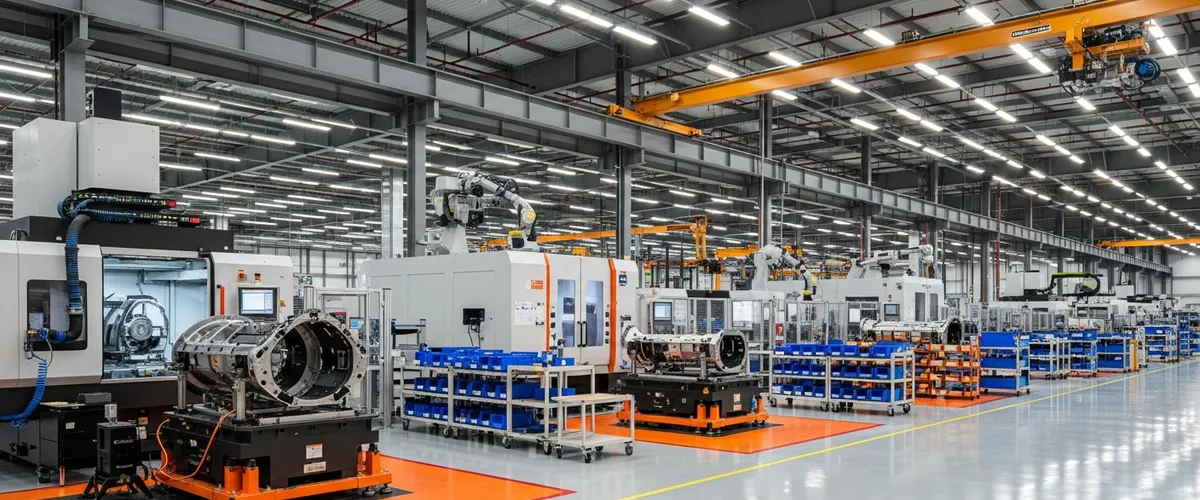
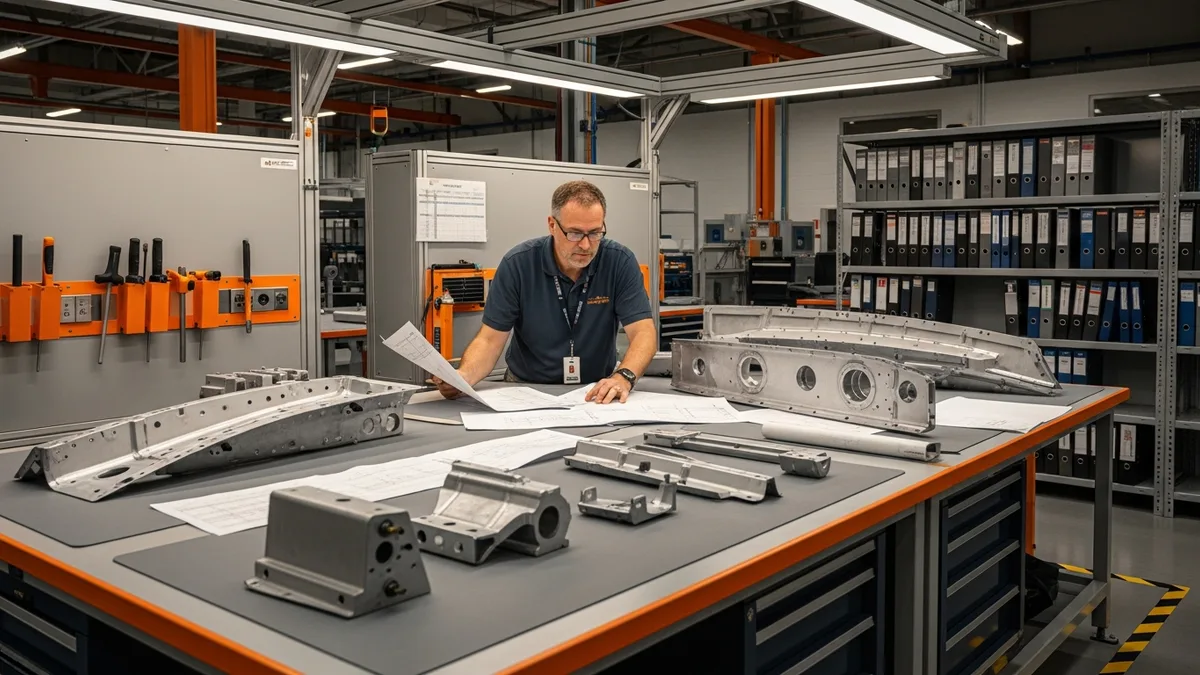
Most Boeing layoff coverage focuses on machinists and aircraft assemblers. That misses the engineering layer, which is where the reshoring connection actually lives. The manufacturing, structures, and systems engineering population is smaller in number than the factory floor workforce but significantly harder to replace, trained on programs and quality systems most industrial manufacturers have never operated under.
Three Boeing engineering profiles cross-apply directly to reshoring manufacturers. These are not obvious transitions on a resume, and they require knowing what to look for beyond a job title.
Manufacturing process engineers. At Boeing, these engineers own how a part gets made. Tooling design, process sheet development, Lean manufacturing implementation on aerospace production lines. Every precision manufacturer reshoring from China needs exactly this capability. The Boeing version is trained to AS9100 aerospace quality standards, which exceed what most industrial manufacturers require. They can step down in standard complexity. Most reshoring manufacturers are trying to step up, which means bringing Boeing process engineers into environments that are actually less demanding than what they left.
A search we ran in Q1 for a defense-adjacent electronics manufacturer in Tucson took six weeks longer than it should have because the hiring manager kept screening out Boeing candidates for being “aerospace-focused.” The candidate we eventually placed had 11 years of Boeing manufacturing engineering. Three weeks in, he delivered a process improvement report written in Boeing’s change documentation format, which the client’s operations team had never seen from an outside hire. The client called it the fastest ramp they had seen in four years of reshoring hiring. The bias against sector transitions costs companies time they do not have.
Structures and stress engineers. Composites analysis, finite element analysis on ANSYS or Nastran, fatigue and fracture mechanics. These engineers are hard to find anywhere. Outside of aerospace primes and Tier 1 suppliers, almost nobody has a ready pipeline for them. Reshoring manufacturers building high-performance components for defense, energy infrastructure, or heavy industrial equipment need this capability and rarely know how to source it. What doesn’t show up cleanly on the resume is tool depth. Boeing structures engineers run failure analyses on ANSYS Mechanical and MSC Nastran under actual aerospace load cases, not simplified models. That experience level does not come from anywhere else in the general industrial market. When Boeing releases a wave of structures engineers, that is a specific and uncommon event.
Systems engineers. Requirements management, interface control, model-based systems engineering using SysML or Cameo. At Boeing, these are the engineers who keep aircraft systems from fighting each other. At a reshoring manufacturer building complex electromechanical products, they keep the product architecture coherent as the design evolves. Systems engineering at Boeing is a different discipline than what the same title means at most industrial manufacturers. On an aircraft program, managing the requirements baseline alone involves hundreds of documents tracing back to specific line replaceable units and FAA certification requirements, a scope most industrial product development processes do not come close to matching. The same Tucson manufacturer above had an open systems engineering req. We had three qualified Boeing candidates on the first submit. None of them had appeared in any job board search the client had run over the previous five months.

Why the Market Timing Matters
2.1 million. That is the Deloitte and Manufacturing Institute estimate for manufacturing jobs that will go unfilled by 2030, published two years ago, before the current reshoring announcement wave added hundreds of thousands of additional production commitments to the domestic pipeline. The gap is wider now.
The workforce problem in reshoring is not capital. It is not equipment lead time. CSIS analysis of reshoring bottlenecks consistently finds skilled workforce availability as the gating factor for production timelines. Companies have signed construction contracts and ordered equipment on 18-month lead times before asking the obvious question of where the engineering personnel qualified to run those production lines will actually come from. That is the actual constraint. The facilities exist. The machines are on order. The engineers who know how to run them are not there.
The Boeing releases happened at an unusual moment in that cycle. Most of the engineers in this pool spent the last decade inside an aerospace prime operating to military-grade quality standards, working in structured program environments, using tooling and processes that most manufacturers outside aerospace have never touched. That background does not normally appear in the external market. It took a 17,000-person restructuring to put it there.
The window is real but it has a shape. Most senior engineers from layoff waves find their next role within 90 to 120 days of separation. Some re-enter Boeing through re-hire programs. The BDS supply chain wave from January 2026 is the freshest cohort right now. If your reshoring initiative touches defense or requires active clearances, that is where to start. Some land at Tier 1 suppliers like Spirit AeroSystems, Safran, or Collins Aerospace. The fraction available to reshoring manufacturers is meaningful but not permanent.
What Displaced Boeing Engineers Cost
The Bureau of Labor Statistics puts the median aerospace engineer wage at $134,830, with a projected 6% growth rate through 2034 and approximately 4,500 annual openings nationally. Compensation expectations from the Boeing cohort reflect Boeing’s internal pay bands, which sit at or above market median for most engineering levels. The placement data from the last six months tells a specific story: packages have closed between $8,000 and $22,000 below the candidate’s Boeing base. Equity and performance bonuses bridge the gap more reliably than counter-offers on base. A clear VP Engineering path, something Boeing’s organizational structure makes essentially invisible below the executive band, matters more than another five thousand dollars to the candidates we are actually placing right now. Boeing engineers who spent a decade watching promotion decisions made three levels above their direct manager understand the value of a company small enough to actually see them. The delta between what Boeing pays and what reshoring manufacturers typically budget is real. It is also usually closeable. The engineers who took voluntary separation packages are running a different calculation than involuntary separatees. Many of them have financial runway from the package. Eight-year Boeing veterans who left on their own terms are comparing total comp across multiple conversations, not taking the first offer that clears their minimum threshold. That creates an opening for companies competing on equity or performance incentives even when the base starts below Boeing’s internal band. The candidates making those trade-offs are generally the ones who have already thought through the calculation carefully enough to know their own number.
| Role Type | Boeing Band (Approximate) | Market Range at Reshoring Manufacturers | Notes |
|---|---|---|---|
| Manufacturing Process Engineer, Mid-Level | $105K to $130K | $95K to $125K | Most accept modest base adjustments when the role scope is broader and the company is growing |
| Manufacturing Process Engineer, Senior | $130K to $155K | $115K to $145K | Range compresses at smaller manufacturers. Equity or performance bonuses help close the gap |
| Structures and Stress Engineer | $120K to $160K | $110K to $150K | FEA-capable candidates with Nastran or ANSYS depth command the top of the range. Supply is genuinely thin |
| Systems Engineer | $125K to $165K | $115K to $155K | MBSE-qualified candidates with Cameo or DOORS experience are rare. Expect full Boeing range from senior candidates |
| Defense Systems and Program Engineers | $130K to $175K | $120K to $160K | Active secret clearance adds significant premium. Not universal in this pool but common in BDS alumni |
One thing worth knowing: Boeing engineers who left with severance packages may have signed non-competes that restrict direct Boeing competitor work. That almost never affects reshoring manufacturers, who are not aircraft primes. Worth confirming with candidates on a case-by-case basis, but not a widespread barrier for this use case.

What Hiring Managers Are Asking
Do Boeing Engineers Actually Want to Work in Industrial Manufacturing?
Three of the last five Boeing engineers we placed in reshoring roles cited decision-making speed as the main reason they accepted the offer over a competing aerospace position. Boeing is a large organization. Manufacturing process decisions at an aerospace prime involve change control boards, qualification cycles, and review layers that can stretch a decision to months. At a 200-person reshoring manufacturer, the same engineer makes the call in a week. We consistently hear Boeing manufacturing engineers cite exactly that dynamic when explaining why they’re open to offers they otherwise might have passed on. The autonomy is worth real money to them.
Are Defense Clearances Common in This Candidate Pool?
Split roughly 60/40. BDS alumni often carry active secret clearances, sometimes higher. Commercial airplane division engineers usually do not. If your reshoring initiative is in a defense-adjacent supply chain, BDS is the population to focus on. Active clearance re-investigation timelines are long enough that a candidate walking in with a live clearance is worth a meaningful comp premium over a candidate who would need to go through the full background investigation cycle.
Realistically, How Long Does This Talent Window Stay Open?
Shorter than most hiring managers assume. The 90-to-120-day absorption window applies from the point of separation, and Boeing’s waves have been staggered. Some engineers from the late 2024 BCA cuts are already placed or re-hired. The BDS supply chain wave from January 2026 is fresher. If you have a manufacturing or systems engineering req that has been sitting open for more than 60 days, the Boeing alumni pool is the most targeted approach available right now. That concentration will not repeat anytime soon.
Should I Adjust the Job Description to Attract Aerospace Engineers?
Almost certainly yes. Boeing’s internal titles do not map cleanly to industrial manufacturing roles. A “Structures Engineer Level 4” at Boeing carries experience significantly deeper than that title suggests to most manufacturing hiring managers. The bigger adjustment is usually removing industry-specific filters that exclude qualified candidates. “Experience with APQP automotive-style quality planning” is a screen that eliminates Boeing process engineers who can run an equivalent process under different nomenclature. We flag these during the req intake before they cost you candidates. A better approach is to describe what is actually missing on your production floor, removing the industry-experience filters from the JD and letting our team translate that problem statement into the Boeing profile that has actually solved it before.
Does KORE1 Have Boeing Alumni in Its Pipeline Right Now?
The pool exists. Volume fluctuates week to week, but our aerospace engineering staffing practice has been actively building this pool since the first SPEEA notices went out in 2024. We screen for specific tools and programs, not just Boeing tenure on a resume, so the candidates we present have been qualified past the surface level. If you have a mechanical engineering or systems engineering req that fits this profile, reach out to our team and we will give you a straight read on what is in the pipeline.
We Have Never Hired from Aerospace. Is That a Barrier?
Wrong question. The relevant one is whether your manufacturing environment has quality requirements that an aerospace-trained engineer could meet or exceed. If you operate to ISO 9001 or IATF 16949, an engineer trained to AS9100 will find your quality system less demanding, not more. The sector translation almost always runs one direction, with aerospace-trained engineers finding commercial industrial quality systems less demanding to document, less rigorous to audit, and less likely to require design authority review before a process change can go live. The places where it fails are usually about culture fit and title expectations, not technical capability.
If You’re Running a Reshoring Initiative Right Now
For context on the reshoring wave itself, the tariff drivers, which industries are moving, and what the talent dynamics look like across the full manufacturing spectrum, see our reshoring manufacturing jobs 2026 overview.
On Boeing specifically: the opportunity is narrow in time and specific in profile. Manufacturing process engineers with Lean and tooling depth. Structures analysts with FEA capability in Nastran or ANSYS. Systems engineers with MBSE experience. Defense systems engineers with active clearances from the BDS side. That is the actual pool.
Most of it will be absorbed by aerospace Tier 1 suppliers and Boeing re-hire programs over the next 60 to 90 days. KORE1 serves 30-plus U.S. metros with an average recruiter tenure of 15-plus years across our engineering team. If you want a direct read on whether your open req maps to what’s available, talk to a recruiter and we will tell you quickly whether there is a real match.
