
Last updated: May 22, 2026
Process Engineering Staffing
Process engineer recruiting across discrete manufacturing, continuous chemical, batch pharma, and semiconductor environments. Contract, contract-to-hire, and direct hire nationwide, with recruiters who can tell a real Lean Six Sigma practitioner from one who took the course.


KORE1 places process engineers across discrete manufacturing, continuous chemical, batch pharma, and semiconductor environments within an average of 17 days, through contract, contract-to-hire, and direct hire engagements nationwide.
Process Engineering Is a Discipline, Not an Industry.
The job title travels. The skill set doesn’t always travel with it. A process engineer who spent eight years scaling polymer reactors will not slide into a semiconductor etch role, and a Lean Six Sigma Black Belt who ran kaizen events at a CPG plant rarely picks up cGMP batch records in their first quarter. The credential reads the same on a resume. The work isn’t interchangeable. The same goes for GMP experience claimed on a process engineer’s resume.
KORE1 provides process engineering staffing as a discipline-level practice, which means our recruiters screen for the actual production environment, regulatory framework, and statistical depth a role needs rather than relying on the title at the top of a resume to do the screening for them. We sit alongside our chemical engineering and manufacturing staffing teams, and the overlap matters because process engineers move between industries more often than other engineering specialists do, which is exactly why our cross-vetting catches mismatches earlier than single-vertical recruiters can. Batch pharma process seats that need a permanent owner route to hiring for pharmaceutical manufacturing.
Production environments don’t forgive bad hires. We’ve built our screening around that reality from the first conversation. Workforce research from the Manufacturing Institute consistently ranks skilled production and engineering roles among the hardest to fill in U.S. manufacturing, which is why discipline-level recruiting matters more now than it did a decade ago. At contract manufacturers, the operators and MS&T scientists beside those engineers come through staffing for CDMOs.
Where We Place Process Engineers
Process engineering reads as one discipline on paper. In practice, the working knowledge breaks into four very different environments. KORE1 recruits across all of them, and we don’t confuse the four.
Discrete Manufacturing
NPI process engineers, manufacturing engineers, and continuous improvement specialists for automotive, aerospace, medical device, electronics, and consumer goods assembly lines. SPC, PFMEA, and cell layout work.
Continuous Chemical
Process engineers for petrochemical, refining, polymer, and specialty chemical operations. Heat-and-material balance, reactor design, distillation, and PSM program work. Deep dive: chemical engineering staffing and oil and gas staffing.
Batch Pharma & Biopharma
Tech transfer engineers, validation engineers, and process development scientists for cGMP drug substance and drug product manufacturing under 21 CFR 210/211 and ICH Q10. Scale-up from gram to commercial.
Semiconductor & Advanced Materials
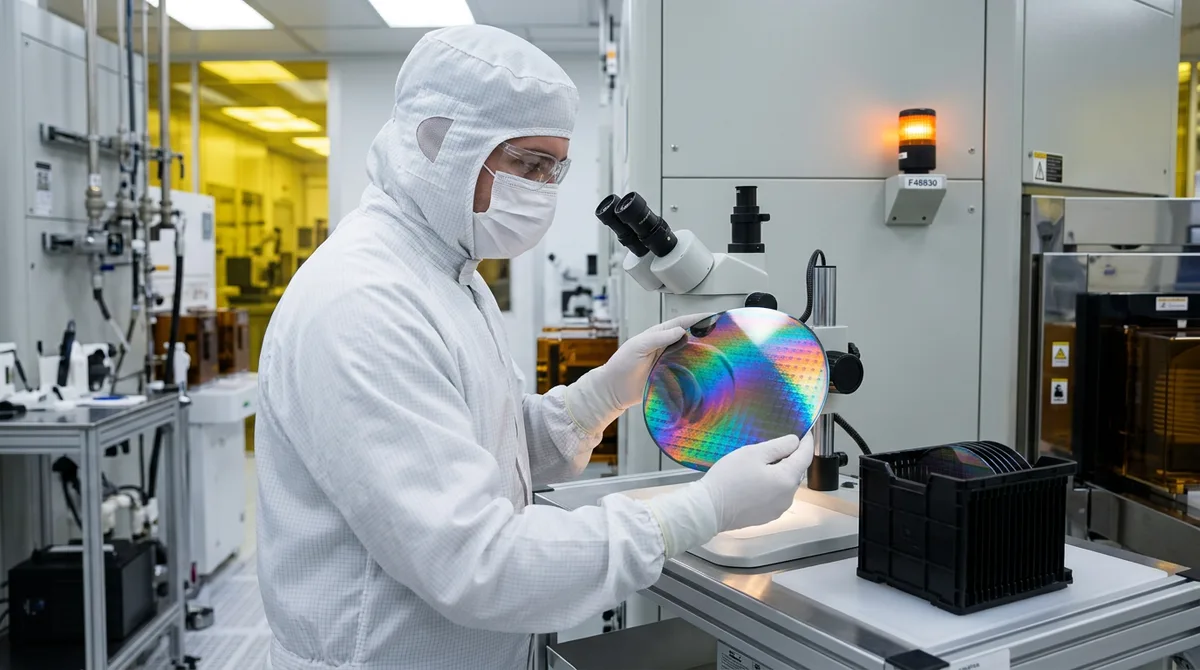
Process engineers for etch, lithography, CVD, CMP, diffusion, and metrology in 200mm and 300mm fabs. Yield engineers, integration engineers, and equipment-process specialists.
Process Engineering Roles We Fill
Titles drift by industry. The function is similar. Whether the role is called Process Engineer, Manufacturing Engineer, Process Development Engineer, or Continuous Improvement Engineer, we screen for the same underlying competencies and adjust for environment.
- Process Engineer (entry through staff)
- Senior Process Engineer
- Manufacturing Process Engineer
- Process Development Engineer
- Scale-Up Engineer
- Continuous Improvement Engineer (Lean / Six Sigma)
- NPI Process Engineer
- Tech Transfer Engineer
- Process Validation Engineer (IQ/OQ/PQ)
- Yield / Integration Engineer (semiconductor)
- Etch, CVD, CMP, and Diffusion Process Engineers
- Process Safety Engineer (PSM / LOPA)
- Controls & Automation Process Engineer
- Process Engineering Manager / Principal Process Engineer
Direct hire is the most common engagement at staff and principal level. Contract and contract-to-hire run heavier in scale-up, validation surge, and NPI ramp work. In drug plants, that validation surge usually pulls in contract QC and quality staff as well. Price those QC seats from QC analyst pay inside drug plants, not the all-industry median.
How We Vet Process Engineering Candidates
Generic screens go off resume keywords and tenure. That’s how a great chemical process engineer ends up on a discrete electronics floor and quits in six months. We dig in earlier. Formulators and QC chemists on a chemical plant are their own search, through our chemistry recruiters.
Our process engineering vetting covers five layers:
- Environment fit, not just title fit. We document which exact environments each candidate has run process work in. Continuous, batch, and discrete are three different mental models. So is regulated versus unregulated. Candidates who blur the lines tend to oversell breadth at the expense of depth.
- Regulatory framework depth. For pharma and medical device placements, we ask candidates to walk through a deviation investigation or process validation package they personally authored, including the protocol structure, the rationale behind the acceptance criteria, and what they would do differently if they wrote it again today. The ones who lived it answer with that level of specificity. The ones who watched from the next cube over can’t.
- Statistical and SPC depth. Process improvement is not the same as having a Green Belt. We ask candidates to talk through a real DOE, Cpk analysis, or measurement system analysis they actually ran, including which factors they controlled, which they couldn’t, and what the final ROI looked like once the control plan landed in production. Lean tools without statistical literacy is a fragile combination, especially in regulated environments.
- NPI and scale-up experience. Moving a process from R&D to commercial production fails for predictable reasons, and candidates who have actually led a tech transfer or new-line qualification can name those failure modes by memory because they lived through the consequences of each one. The ones who only joined a project after stabilization usually can’t.
- Passive candidate pipeline. Strong process engineers at the staff and principal level are rarely on job boards. We maintain ongoing relationships across the Gulf Coast petrochemical corridor, the NJ/PA pharma corridor, the Phoenix and Bay Area semiconductor markets, and the Midwest auto and CPG plants. Most of our senior placements come out of those conversations, not out of inbound applications.
According to the U.S. Bureau of Labor Statistics Occupational Outlook Handbook, industrial engineers, the role classification that captures most U.S. process engineering work, held 333,200 jobs in 2024, with projected 12% growth through 2034, faster than average for all occupations. The number sounds reassuring. It isn’t. Deloitte’s manufacturing industry outlook documents the same pattern at the macro level: total headcount is up, but the qualified pool inside specific environments is genuinely small, especially semiconductor and pharma, where most candidates who fit are already employed.
KORE1 Engineering Staffing Performance
Common Questions
How fast can KORE1 fill a process engineering role?
KORE1’s average time-to-hire for process engineering is 17 days, with first candidates typically presented within 3–5 business days. That figure covers standard manufacturing process, continuous improvement, and process development searches. Senior semiconductor integration engineers, PSM-certified process safety engineers, and principal-level pharma tech transfer engineers run longer, usually 3–5 weeks, because the qualified pool at that level is genuinely small and most of those engineers are working comfortably enough that they’re not actively looking for a new role.
Process engineer vs. manufacturing engineer, what’s the actual difference?
The titles overlap and most hiring managers use them interchangeably. A process engineer owns the process itself: steps, parameters, controls, validation. A manufacturing engineer owns the system around it: layout, tooling, takt time, throughput. In discrete plants the same person often does both. In continuous chemical and semiconductor fabs, the two functions stay separate. We screen for actual scope of work, not the title on a LinkedIn profile, and the difference usually shows up within two questions on a screening call.
Do you recruit process engineers across all industries or only specific ones?
All four major process environments. KORE1 places process engineers in discrete manufacturing (auto, aerospace, medical device, electronics, CPG), continuous chemical and petrochemical, batch pharma and biopharma, and semiconductor and advanced materials. We adjust our screening depth by environment, which is why a pharma client doesn’t get a slate built off automotive resumes and a semiconductor fab doesn’t get candidates whose only cleanroom experience was a medical device class 7 assembly room with looser particulate counts.
Can KORE1 find process engineers with Lean Six Sigma certification?
Yes, and we screen for the work behind the certificate. A Green Belt or Black Belt on a resume means very little on its own. We ask candidates to talk through a specific project, the problem statement, the measure phase, the analysis, the control plan, and the actual dollar impact. Real practitioners answer in specifics. Certificate collectors get general. The qualified pool of Black Belts with documented project savings is much smaller than the pool of certified Black Belts.
Do you place process engineers on contract, direct hire, or both?
Both, and contract-to-hire. Direct hire is the most common engagement for senior and principal-level process engineers because clients can’t afford to lose that person mid-NPI or mid-tech-transfer to a competitor offering a higher base. Contract placements are heavy in scale-up, validation surge work, plant qualification, and process improvement projects with defined end dates. Contract-to-hire gives clients a working evaluation before committing, which is useful for hires where statistical depth or environment fit is hard to verify in interviews alone.
Which geographic markets do you cover for process engineering placements?
Nationwide. Our deepest passive pipelines sit in the Gulf Coast corridor for petrochemical and refining (Houston, Baton Rouge, Beaumont), in the NJ/PA pharma corridor for batch biopharma, in Phoenix and the Bay Area for semiconductor, across the Midwest for auto and CPG manufacturing including Chicago, Cincinnati, and Detroit, and through the Southeast for medical device and aerospace process work. We also run remote-eligible searches when a role allows it. Process engineers have landed for us in markets as varied as West Texas, the Pacific Northwest, and the Carolinas.
Other Engineering Staffing Practices
Process engineering overlaps with several adjacent disciplines depending on the production environment. KORE1 recruits the full engineering spectrum through our engineering staffing agency practice.
Chemical Engineering
Process and chemical engineers for pharma, petrochemical, food and beverage, and specialty chemicals manufacturing.
Manufacturing Staffing
PLC programmers, controls engineers, plant managers, and skilled trades for discrete and process manufacturing facilities.
Industrial Engineering
Industrial engineers for lean manufacturing, ergonomics, supply chain optimization, and operations engineering.
Ready to Hire Process Engineers?
Tell us the environment, the role, and the timeline. We’ll present qualified candidates within 3–5 business days.
Start Your Search →