

Last updated: June 25, 2026
By Robert Ardell
Backend engineer interview questions in 2026 should be calibrated to seniority first and to how much of a live system the person will own second, not to language trivia. Score five things across the loop: fundamentals, system design, debugging under ambiguity, operational judgment, and how the candidate reasons about tradeoffs out loud.
Most backend loops I get pulled into are not failing on the questions. They are failing on the level. A team writes one question set, runs a new grad and a staff candidate through the same forty-five minutes, and then wonders in the debrief why nobody felt like a clear yes. Of course nobody did. You measured both people against a ruler with no marks on it.
Robert Ardell here. I co-founded KORE1 in 2005 and I still sit in on the kickoff for our harder backend searches, usually the ones where a client has passed on four people and cannot say what the fifth one needs to do differently. The fix is rarely a new sourcing channel. It is a loop that knows what it is testing for at each level.
Bias stated plainly. KORE1 places backend engineers through our software engineer staffing desk and our broader IT staffing services bench, and we earn our fee on the hire, not on interview prep. So the rubric here is one we hand clients for free, often before any agreement is signed, because a miscalibrated loop wastes the candidate’s time and yours. We hold a 92% twelve-month retention rate on direct-hire placements across 30+ U.S. metros. A surprising amount of that traces back to one decision made before the first question gets asked. What level is this, really.
One housekeeping note. We already publish a backend developer interview questions guide that slices the role by archetype, the API generalist, the distributed systems specialist, the data-and-storage build. This guide cuts a different way. By level, and by how much of a running system the hire is expected to carry. Different reader, different loop. If you know your archetype but not your level, read both.

Developer or Engineer: The Distinction That Rewrites Your Questions
Titles are mush. I know. Some shops call everyone a “software developer” and some call the same people “engineers,” and the comp does not always track the word. But when a hiring manager tells me the req is for a backend engineer specifically, I push on one thing. How much of a production system does this person own when it is three in the morning and something is on fire?
That question sorts the loop fast. A backend developer, in the way most teams use the word, writes the service. A backend engineer writes the service and answers for it. Deploys it, watches it at 2 a.m., gets paged by it, decides in the moment whether to roll back or fix forward, and then stands up the next morning to explain to a room of stakeholders what broke, why, and what will keep it from happening twice. The code skill overlaps almost completely. The judgment does not.
So the questions move. Less “implement this endpoint,” more “this endpoint is timing out for 2% of users and only in one region, what now.” You are still testing whether they can build. You are also testing whether they can be trusted with the thing after it ships. That second test is the one generic loops skip, and it is the one that predicts the hire.
What a Backend Engineer Loop Should Actually Measure
Five dimensions. Not twelve. If you try to test everything you test nothing, because the panel runs out of time and falls back to gut feel in the debrief. Pick the five below, weight them by the level you are actually hiring for, and score each one out loud against a written scale before anyone in the debrief is allowed to open with the words “I liked them.”
| Dimension | What It Actually Reveals | Weight: Mid | Weight: Senior+ |
|---|---|---|---|
| Fundamentals | Data structures, concurrency, HTTP semantics, transactions. Can they reason about correctness, not just recall definitions. | 30% | 15% |
| System design | Whether they can size a problem, name tradeoffs, and defend a choice under a follow-up they did not rehearse. | 25% | 35% |
| Debugging under ambiguity | The unscripted skill. A vague symptom, no obvious cause, and you watch how they narrow it. | 25% | 20% |
| Operational judgment | On-call instinct. Rollback vs fix-forward, blast radius, what they log, what they alert on. | 10% | 20% |
| Tradeoff reasoning | Do they pick and defend, or hide behind “it depends.” Behavioral and ownership signal lives here too. | 10% | 10% |
Notice operational judgment doubles in weight from mid to senior. That is the whole argument of this guide in one cell. A mid-level engineer can grow into the pager. A senior who has never carried one is a developer with a senior title. You learn that the hard way during your first real incident instead of during the loop, and the incident is by far the most expensive classroom either of you will ever sit in.
Questions by Seniority Level
Same role, four very different conversations. Match the question to the level you are actually paying for. Asking a junior to design a multi-region failover tells you they read the same blog you did. Asking a staff candidate to reverse a linked list tells them you do not respect their time.
Junior and early-career backend engineer
You are testing for foundations and slope, not scope. Can they reason. Do they get unstuck. Are they honest when they do not know.
Walk me through what happens, end to end, when someone hits this API and gets a JSON response. Request to response. DNS, the load balancer, the app process, the database call, serialization, back out. A strong junior will not have every layer, and that is fine. What you want is curiosity at the edges of their knowledge instead of a confident wrong answer. The ones who say “I am not sure what happens at the load balancer, but I would guess it picks a healthy instance” are the ones who learn fast. That is the slope you want.
Here is a function with a bug. Find it, talk while you work. Give them something real and small. An off-by-one, a mutated shared list, a missing await. I used to hand juniors a nastier bug here. Stopped doing it. All it measured was nerves. You are watching the process, not the panic. Do they read the code or guess. Do they reproduce before they fix. A junior who reaches for a print statement and reads the actual output beats one who stares at the screen and theorizes every time. Reading beats guessing.
What is the difference between a 401 and a 403? Small question, real tell. 401 means we do not know who you are. 403 means we know exactly who you are and you still cannot have this. A junior who knows the difference has shipped auth code or read carefully. One who blends them has not, which is worth knowing before they touch your permissions layer. Cheap thing to check.
Mid-level backend engineer
Now you raise the floor. A mid-level engineer owns features and small services. They should have opinions, scars, and at least one real story about a thing they shipped that broke. Scars are good here.
You need to add pagination to an endpoint that does not have it and already has live clients. Go. Offset and limit is the first answer. Not wrong. Just incomplete. The mid answer reaches for cursor or keyset pagination and explains why offset drifts on data that mutates underneath the read. The real signal is whether they ask about the existing clients before they pick. Here is the failure if they skip it. The new cursor scheme ships, the web client updates fine, and the old v1 mobile app that still sends offset and limit params quietly serves the wrong page to a few thousand users until somebody notices on Saturday.
SQL or NoSQL for a new feature. How do you decide? Absolutes are the fail. Anyone who says “always Postgres” or “always document store” is reciting, not deciding. The real answer starts at the access pattern, runs through consistency needs, and lands on operational cost, the part most people forget. PostgreSQL is the most-used database among professional developers at 58.2% in the 2025 Stack Overflow Developer Survey for a reason, and “the relational database we already run, with one more index” is the correct answer more often than candidates expect.
Tell me about a migration you ran that could not take downtime. If they cannot name one, they have not owned much yet, and that is a data point, not a disqualifier. The strong story has a shape. Expand the schema, dual-write, backfill in batches, switch reads after you confirm parity, drop the old column last. The detail I listen for is the parity check. The engineers who have actually shipped one of these tend to mention, without any prompting from me, that they ran a query comparing the old column against the new one for days, sometimes a couple of weeks, before they trusted the cutover enough to drop the original.
What do you put in a log versus a metric? Cheap question, sorts people fast. Logs are for things you grep after the fact. Metrics are for things you graph and alert on. The mid engineer who adds “and do not put a user ID in a metric label or you will explode your time-series cardinality” has been burned by exactly that, which means they will not do it to you. Scar tissue, basically.
Senior backend engineer
Senior is where the loop should feel less like a quiz and more like two engineers arguing about a design over coffee. You are testing judgment now. The facts are assumed.
Design rate limiting for a public API. Then I am going to break it. Let them lay out the three decisions. Where the limiter sits, edge or service. The unit, per key or per IP or per route. The algorithm, token bucket or sliding window. Then push. What happens when the Redis backing your counter goes down. Do you fail open and let traffic through, or fail closed and rate-limit a paying customer to zero. No clean answer exists. Watching a senior weigh “protect the system from abuse” against “do not throttle the paying customer to zero on their biggest sales day of the year” is the entire reason you put a hard tradeoff in front of a senior engineer in the first place.
A read endpoint p99 latency tripled overnight. No deploy went out. Walk me through the first hour. This is debugging under ambiguity with the difficulty turned up. Strong seniors confirm the metric is real before they chase it, then they bisect. Traffic shape, a noisy neighbor, a downstream that got slower, a cache that quietly stopped hitting. The tell is order. They instrument and look before they reach for a fix. The weaker senior says “we would add Redis,” which is a fix in search of a diagnosis. Diagnose first. Always.
Explain a consistency tradeoff you made in a real system, in plain words, no textbook terms. CAP without the letters. I have asked some version of this for years now, and the good answers still surprise me with how specific they get. A real senior names it from their own work. “Our cart service stays available and tolerates a stale read for a second. Our payment ledger does not, so it refuses writes during a partition rather than risk a double-charge.” If they can map availability and consistency onto their own services and say which they chose where, they have done the work. If they recite the acronym, they read about the work.
You inherit a service with no tests and a reputation for breaking. Monday morning, what is your first move? There is no single right answer, which is why I keep it. One engineer starts by reading the last six incidents, because the way a service has failed before is the cheapest map you will ever get to how it will fail next. Another wraps the riskiest path in a test harness before changing a line. A third reaches straight for observability, on the theory that you cannot fix what you cannot see yet. All defensible. The answer that worries me is the quick one. “Rewrite it.” You would be amazed how often a candidate who reads great on paper jumps to the rewrite, because greenfield feels better than the slow work of understanding someone else’s mess, and that exact instinct is the one that turns a flaky service into a flaky rewrite nine months later.

Staff and principal backend engineer
At staff, the technical bar is table stakes. You are hiring for leverage now. Can this person make ten other engineers better and keep a platform coherent as it grows.
Tell me about a technical decision you reversed, and what it cost to reverse it. Staff engineers have been wrong at scale. The good ones can tell you about it without flinching. A real reversal story does a lot of work in one anecdote, because it shows judgment, it shows whether the person can say “I was wrong” out loud without it rattling them, and it shows whether they count cost in engineering-years or only in how clean the new design looks. Anyone who has never reversed a big call has either not operated at this level or is quietly editing their own history. Neither helps you.
Two teams want to build the same capability two different ways. How do you resolve it without becoming the bottleneck? This is the staff job, honestly. The answer is not “I decide.” It is closer to “I make the tradeoffs legible, set the two or three constraints that actually matter, and let each team own the call inside them.” Watch where the power goes. Centralizing every decision through one person scales to exactly one person, and that person becomes the bottleneck the org was trying to design away. Pushing judgment down to the teams is the entire reason the title exists.
The Production-Ownership Questions That Separate an Engineer From a Coder
If you only add one section to your existing loop, add this one. These questions cut across level and they get at the thing the word “engineer” is supposed to mean. Not “can you write it.” Can you run it. The industry has a decent shorthand for this now in the four DORA metrics, deployment frequency, lead time for changes, change failure rate, and time to restore. Someone who carries those four numbers in their head finds the questions below easy, and a little fun. Someone who does not usually gives it away on the first follow-up, which is fine, because not every good developer needs to run production. You just want to know which kind you are hiring before they hold the pager, not after.
Something you shipped is causing errors in production. You can roll back or fix forward. How do you choose? The instinct here is the whole answer. Strong engineers decide on blast radius and time. If the rollback is clean and the fix is uncertain, roll back and debug calmly. If the bad state is already written to the database, a rollback of the code does not undo the data, and they know that, which is the difference between someone who has actually been on call and someone who has read about it.
How do you know your service is healthy right now, without looking at user complaints? Listen for specifics. Error rate by route, p95 and p99 latency, saturation on the connection pool, queue depth, a synthetic check that exercises the real path the way a user would. The thin answer is “we have Datadog.” Sure. But a dashboard license is not a skill, and plenty of teams own every observability tool on the market and still cannot tell you at a glance whether the thing is on fire. Push once. Ask which number, on which dashboard, makes them put down the coffee and look.
Walk me through the last incident you were part of. What actually fixed it, and what changed afterward? The fix matters less than the after. Did they run a blameless postmortem and then ship the dull, unglamorous follow-up work, the alert that should have fired and did not, the timeout nobody had set, the one line of runbook that would have saved an hour at 2 a.m.? That is ownership. The other version is a war story with a hero in it and a system that did not change one bit afterward. First kind prevents the next outage. Second kind collects them.
What is the dumbest outage you have caused? Half culture-fit, half ownership tell. The honest, slightly funny answer, the migration run on prod instead of staging, the cron that fired in the wrong timezone, the config flag flipped backwards, signals someone who owns mistakes and learns in public. The candidate who has never caused an outage either has not shipped enough or will not admit it. Both are worth a second look, gently.
A Backend Search Where I Had the Loop Backwards
A few years ago we ran a senior backend search for a fintech client in the Bellevue corridor. Payments platform, Go and PostgreSQL, real on-call. The client’s loop opened with a ninety-minute algorithms round. Heaps, graphs, the works.
They rejected our first three submittals. All three. Each one a seasoned engineer who had run payment systems at scale and stumbled on a timed graph puzzle they had not touched since their last job hunt.
I asked to see the scorecards. The pattern was right there. Every rejection note was about the coding round. Not one mentioned payments, consistency, or on-call, the things the actual job was made of. The loop was filtering for interview athletes and rejecting operators.
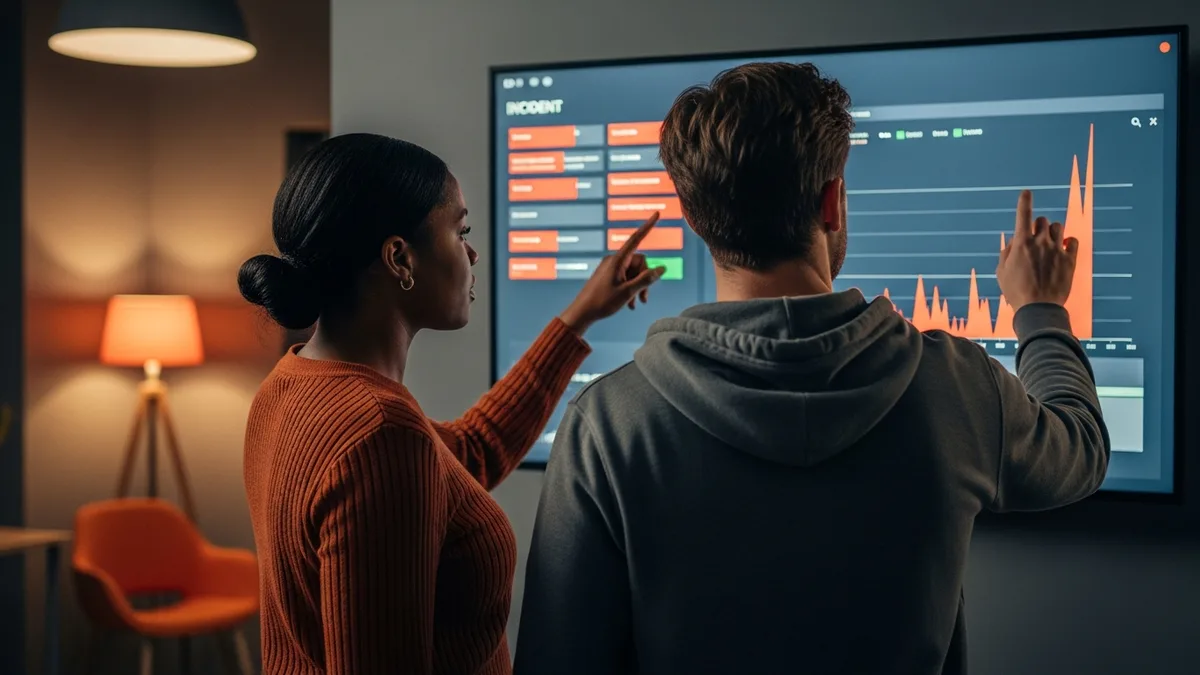
We talked the client into reordering it. Algorithms round moved last and got lighter. A new opening round, a real incident from their own history, sanitized, handed to the candidate to diagnose out loud. Third candidate through the redesigned loop is still there two years later, by the way, and quietly ran their last two on-call rotations without a single Sev1, which is exactly the outcome the old algorithms-first loop would have screened straight out of the building. Same caliber of candidate the old loop kept rejecting. The questions were the problem. Not the market. Not the people.
Red Flags That Survive a Polished Loop
The obvious red flags are easy. Panels rarely miss those. What slips through is the candidate who interviews well and operates poorly, and the only defense is knowing the quieter tells.
The second-follow-up fade. First answer, crisp. Second answer, the one where you ask “okay, and what happens when that fails,” goes soft and general. That distance between the rehearsed answer and the real one is the single most reliable read you get all day, and the way to surface it is boring. Just ask “and then what breaks” twice on every design, and watch which confidence survives the second ask and which one quietly evaporates.
Here is one I learned to trust the hard way. We had a candidate describe a service “handling massive scale,” and when I asked for a number, the room got quiet. Real operators answer in magnitudes without thinking, because the magnitude is the thing that changes the design. 800 requests a second is one architecture. 80,000 is a different one. A candidate who only has adjectives for scale, “a lot,” “pretty big,” “high throughput,” usually watched a system from across the room instead of carrying its pager.
Can they draw it? Ask anyone past junior to sketch the architecture of a system they say they owned. Shared doc, whiteboard, thirty seconds of boxes and arrows. The people who actually lived inside the system start drawing before you finish the sentence. The ones who hovered near it stall, hedge, and ask what level of detail you want, and that stall is the answer.
Last one, and it is subtle. Push back on a single technical answer, politely, and see what the candidate does with it. The engineer you want either holds the line with sharper reasoning or updates cleanly when your point is fair. The one to be careful with digs in no matter what you say. Real incidents are adversarial. At 3 a.m. someone is going to disagree with your read of the dashboard, and you need a person who can keep thinking while that happens.
Calibrate the Loop to the Level and the Band
Here is the calibration failure I watch teams make over and over. The comp band says mid, the loop says staff, and the req sits open for six weeks while everyone blames the candidates. A $130K backend role does not get a distributed-systems gauntlet. A $230K staff role does not get a leetcode sprint and nothing else. The math is quiet and brutal: the senior engineers who could clear that gauntlet are already priced out of your band, and the mid-level people the band actually targets are being failed by a round nobody warned them was coming, so both groups walk and the req just sits there gathering dust. Match the rigor to the money.
Rough bands from our placed base across the last four quarters, reconciled against BLS software developer figures, which still project faster-than-average growth through the decade. Treat these as anchors, not gospel, and pull your local number from our salary benchmark assistant before you set a band.
| Level | Base Anchor (Most US Metros) | What the Loop Should Weight |
|---|---|---|
| Junior | $90K to $120K | Fundamentals and learning slope, one small real bug, honesty at the edges of knowledge |
| Mid | $125K to $170K | Feature ownership, one scenario, a real shipped-and-broke story |
| Senior | $165K to $235K | System design plus production ownership, judgment under a live follow-up |
| Staff / Principal | $220K to $320K+ base | Leverage, cross-team architecture, a decision they reversed and what it cost |
If you are hiring for a permanent seat, our direct hire staffing model fits the loop above. If the work is project-shaped or you want a working trial before a full-time commit, our contract staffing practice calibrates the bar to the project scope instead of a forever role, which changes which questions actually matter.
What Hiring Managers Ask Us About Backend Engineer Loops
How many rounds does a backend engineer loop really need?
Three to four rounds, 45 to 75 minutes each, scaled to level. Five-plus is wasted calendar and tells strong candidates you cannot make decisions.
The shape we recommend most. A screening call, one technical round with fundamentals and a bug, one system design or production-ownership round, and a behavioral round about how they have actually operated. Staff adds an architecture review with a principal. Junior drops the design round for a longer pairing session. The count matters less than the coverage. Every round should earn its slot by testing something none of the others do.
Is it still worth doing a take-home in 2026?
One or the other, take-home or live, almost never both. A paid two-hour take-home with realistic scope beats a leetcode round for most backend roles outside FAANG-tier scale.
A take-home tells you about code quality, test discipline, and how a person decides things when nobody is timing them. Live coding tells you how they hold up under pressure with an audience watching the cursor. Real but narrower. Most backend work looks like the first thing and almost never like the second. So the take-home usually wins. One caveat, and it is not negotiable. Pay for it. The going rate is $150 to $300 for a two-hour exercise. Pay it. The strongest engineers have two other offers, a current job that is not on fire, and no appetite for burning a Sunday on unpaid spec work, so they decline, and after twenty years I have stopped trying to talk them out of it.
Should I let candidates use AI assistants during the interview?
For most roles, yes, and watch how they use it. The skill in 2026 is not avoiding the tool. It is knowing when its answer is wrong.
Ban the assistant and you are testing a world your hire will never actually work in. Let them use it and you get to watch the thing that matters now. Hand them a problem, let them prompt whatever they want, and see whether they trust the generated code or pick a fight with it. The engineer who reads the generated code, spots that it has a race condition under concurrent writes, and says so out loud before you even ask, just told you more about how they will actually work next year than any closed-book whiteboard round ever could. The one who pastes it and moves on told you something too.
How do I tell a real distributed-systems engineer from someone fluent in the vocabulary?
Ask what fails, three times, in one design. Real ones explain failure modes before you prompt. Surface-level ones describe the happy path and get vague the moment you ask about partial failure.
The vocabulary is free now. Anyone can say Kafka, idempotency, eventual consistency. So make them spend it. During the design round ask “what happens when this fails” for the database, then the queue, then a downstream call. Three specific recovery answers with named consistency tradeoffs means they have run these systems. One good answer and two shrugs means they read a very good blog post last week.
My team can pass candidates through the loop but the hires struggle on call. What are we screening wrong?
You are almost certainly testing building and not running. Add the production-ownership round and weight it. The gap you are describing is the exact gap between a developer loop and an engineer loop.
This is the most common version of the problem clients bring us, and it is fixable in one change. Put an incident from your own history, sanitized, in front of the candidate and have them diagnose it live. Watch for whether they think in blast radius, rollback safety, and observability. That single round predicts on-call performance better than every algorithms question combined, in my experience across hundreds of these searches.
When does it make sense to bring in a staffing partner instead of running this ourselves?
When the req has been open more than a month, when your panel cannot agree on what “good” means, or when you do not have a backend engineer free to run the technical rounds well.
An honest answer, including the part that works against my own interest. Calibrated loop, aligned panel, inbound candidates already showing up? You probably do not need us, and I will say so on the first call. Where we actually earn the fee is the ugly searches. Open six weeks. No pattern in the rejections. A hiring manager who is frankly tired of the whole thing. We start with the level and the loop before we send a single resume, and our IT desk closes at a 17-day median once that part is fixed.
Where the Hire Actually Gets Decided
The interview loop is one of three levers, and a great loop cannot rescue a broken band or a vague job description. But of the three, the loop is the one that quietly mislabels good engineers as bad ones and sends them to your competitor with a clean conscience. Get the level right. Test running, not just building. Score out loud against a written scale before anyone falls in love.
If you want a second read on the loop you are about to run, or you would rather hand the search to a team that starts with the level instead of the resume, talk to a KORE1 recruiter and we will open with the calibration call. For the deeper senior rounds, our system design interview questions guide goes well past what fits here. For the archetype cut and the twelve-question core set, the backend developer interview questions guide is the companion to this one, and the backend developer salary guide sets the band before you build the loop at all.
