
Data Staffing in Tampa. The Shallowest Seat Sets the Draft.
A channel carries only what its shallowest cut allows, and a data team carries only what its thinnest seat allows. KORE1 places data engineers, analysts, scientists, architects, analytics engineers and governance specialists across Tampa Bay on contract, contract-to-hire and direct hire.

KORE1 is a data staffing agency serving Tampa Bay, placing data engineers, analysts, scientists, architects, analytics engineers and governance specialists on contract, contract-to-hire and direct hire. Our data desk averages 17 days to first qualified submit, and 92% of placements are still in seat at twelve months.
Last updated: August 23, 2026
Ask a harbor pilot how deep the channel into Tampa is and you won’t get an average back. You’ll get one number, taken at the worst spot on the whole run in from the Gulf.
That’s the controlling depth.
It’s the least depth anywhere along the route, and it sets the maximum draft of every vessel coming in behind it, which is why NOAA’s Office of Coast Survey publishes it as a single figure rather than a range. A ship can be sitting over ninety feet of open water at the sea buoy and still be limited by a cut it won’t reach for another two hours.
Nobody loads a ship to the average depth of the channel.
Data teams get planned on averages all the time. Six seats, five of them genuinely strong, and a roadmap written as though the team were the sum of its people instead of the narrowest point the work actually has to pass through. We’ve been placing technology people out of our IT staffing practice since 2005, and the Tampa data desk opens every search with the same question. Not which seat is open. Which seat sets your draft.
Sometimes it’s the one you were about to backfill anyway. Often it isn’t, and the req arrives written for the seat that was easiest to justify rather than the one holding the ceiling down.
Two things live elsewhere on this site. Model building AI and ML engineering sits on AI and ML engineer staffing. Software, infrastructure and the rest of the metro’s technical bench sit on IT staffing in Tampa. Everything below is data.
Six Cuts, One Draft Limit
Read it the way a pilot does, left to right, from the Gulf entrance to the downtown berths. Depth here means bench strength rather than headcount. Five of these cuts are dredged deeper than this metro currently needs. One isn’t. It decides what the whole team can carry.
Senior data engineer
Streaming ingest, change capture off core systems, the jobs that have to land before anything downstream runs at all. Thinnest bench in the bay. Not close.
Data architect
Picks the platform and owns what it costs to run. Good depth here. Most of it is people who already carried one migration end to end.
Analytics engineer
Same numbers everywhere. Tested, documented, version controlled models carrying one agreed definition of a patient encounter, a shipment, a policy, a store.
Data analyst
Answers the question the business actually asked, in the language it asked it in. Deepest cut on this chart. Easiest seat to fill in Tampa Bay.
Data scientist
Readmission risk, fraud scoring, demand forecasting, storm season load. Sequence matters. Worth a great deal once the seats above hold, and worth very little before that.
Data governance analyst
Who may see what, plus the paper trail behind every approval anyone ever granted. Still thin. Thinner here than in the big supervised markets, though deeper than it was two years ago.
That line isn’t drawn where the depths average out. It’s drawn at Egmont. Hire a second scientist and a second analyst this quarter and the ship still loads to the same mark, because nothing downstream ends up with data it didn’t already have. Dredge the shoal first. Nothing else moves it. It is reliably the least satisfying hire on the list, it is the one nobody writes a business case for, and it is the only one that changes where that line sits.
What Each Seat Is Actually Buying You
Tampa postings blur these six constantly. The correction tends to show up at offer stage, which is where it costs the most.
Data engineer
Owns arrival. Core system extracts, claims and HL7 feeds, port and logistics telemetry, point of sale, anything that has to be in the warehouse before the 6am refresh. Past a certain volume this stops being one job and becomes a big data engineer search.
Analytics engineer
Owns meaning. One definition of a patient, an account, a shipment, plus a test that fails loudly when somebody quietly changes it. This seat gets posted as an analyst more often than not. It shouldn’t be.
Data architect
Owns the blueprint and the bill. Platform choice, storage tiers, retention, and whose budget the compute lands on at month end. Past a certain estate size the job splits, and the other half is a data warehouse engineer.
Data analyst
Owns the answer. Denial rates, throughput, shrink, churn, berth utilization. Dashboard craft sits next door rather than inside this job. When the interface is the deliverable, that’s a visualization engineer and a different search.
Data scientist
Owns the estimate. Risk, fraud, demand, readmission, anything where a number has to be produced rather than looked up. Needs the four seats above to hold or it produces confident guesses.
Data governance analyst
Owns permission. What moves, what doesn’t, and who signed for it. At enterprise scale the same problem arrives instead as a chief data officer search.

We Sound the Whole Bench, Not the Open Seat
Three steps. None of them adds a week to the search.
We ask what the team is trying to carry. Not the title, and not the tech list. The thing that has to exist by December and the person whose name is on it. Roughly a third of the Tampa reqs we take get rewritten on that first call, and the rewrite costs nothing at that point. It costs real money later.
We sound every seat, including the ones you didn’t ask about. Twenty minutes with your lead, one question per seat. It’s the only reliable way to find out that the analyst you’re hiring sits downstream of a pipeline nobody has owned since March, which is a real conversation we had with a Westshore team this year and the reason their search changed shape.
We say so when the seat you posted isn’t the shoal. It costs us placements. We do it anyway, because the search we then run actually lands, and landing is the number we get measured on.
It isn’t a methodology. It’s twenty extra minutes on a call that most desks won’t spend, because the scoreboard everywhere rewards a fast submit over a right one.
A Metro With No Company Town
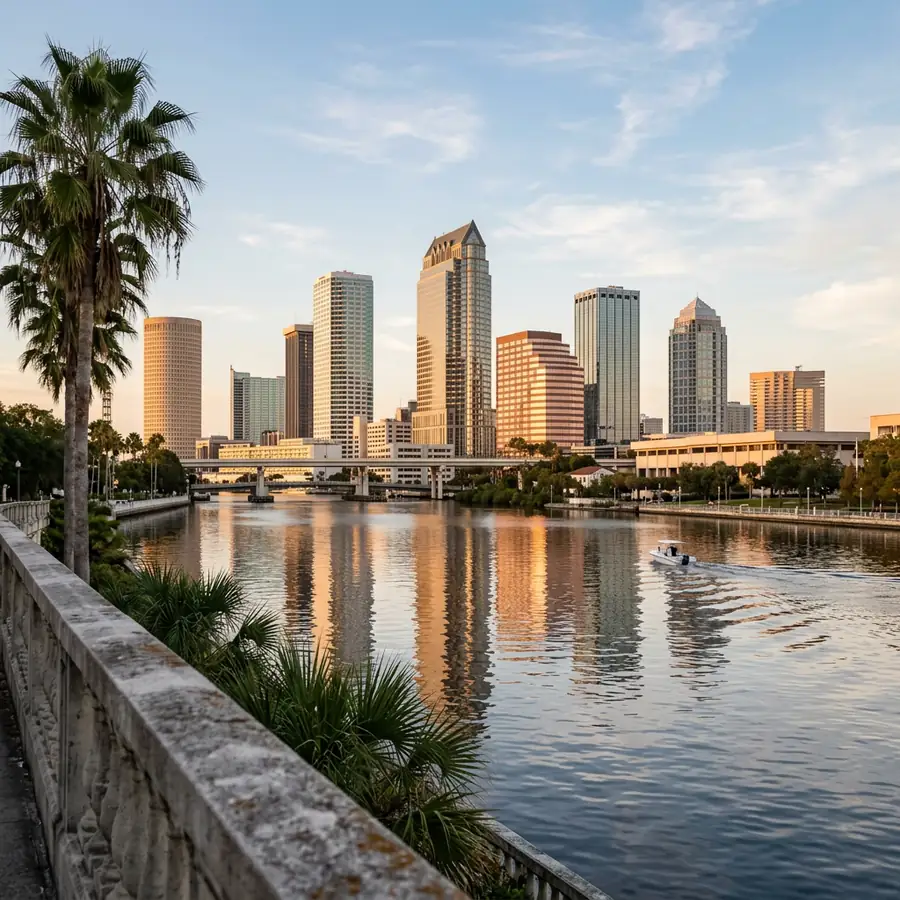
Charlotte has banking. Detroit has cars. Tampa Bay has about eight industries of roughly comparable weight, and that shapes a data search here more than any single employer does.
Financial services runs deep on both sides of the bay. Raymond James is headquartered in St. Petersburg, Citi and JPMorgan Chase both run large Tampa operations, and between them they set what a controls-fluent analyst is worth locally, the same way they do on our banking IT staffing desk. Health systems are the other pillar. Tampa General Hospital, BayCare and Moffitt Cancer Center hold most of the clinical and claims data in west central Florida, which is healthcare IT and revenue cycle territory as much as it is data work, and they hire on a completely different rhythm, slower to start and far slower to let anyone go.
Then it gets less predictable. Jabil runs global manufacturing data out of St. Petersburg, TD SYNNEX runs distribution and channel analytics from Clearwater, Mosaic sits on mining and logistics data downtown, and Publix models several thousand stores from Lakeland, forty minutes east on I-4. Port Tampa Bay is the largest port in Florida and generates operational data most metros of this size simply don’t have.
And then there’s MacDill. Two combatant commands sit on the peninsula south of downtown, US Central Command and US Special Operations Command, and the contractor bench around them gives Tampa a genuine cleared data population. It’s small. It moves slowly. If your req genuinely needs it, the entire search plan changes. The Tampa Bay Economic Development Council tracks the wider employer picture.
Practically, it means a Tampa candidate’s background tells you less than the same background would in a one-industry town. Someone out of a health system arrives careful and audit ready. Someone out of distribution arrives fast and casual about definitions. Neither is a defect. They’re dredged to different depths. Work out which depth your cut actually needs before the req gets written.
Two Counties, One Bridge, and Five Places to Hire
The Howard Frankland is a real variable in a Tampa Bay search. Ask anyone who has driven it westbound at five o’clock.
Downtown Tampa & Water Street
Financial services, the port’s own operation, and most of the metro’s newest platform work. Newest platforms in the metro. Densest Snowflake footprint on this side of the bay, and the submarket most likely to be running something stood up in the last eighteen months.
Westshore & Rocky Point
The airport business district. Corporate finance, insurance, shared services and a lot of quiet mid-market firms. Shortest average commute of any submarket here, and candidates price that in whether or not they mention it.
St. Petersburg & the Gateway
Raymond James, Jabil, and the Carillon corridor around them. This is its own labor pool rather than an extension of Tampa’s, and it behaves that way at offer stage more often than employers expect.
Clearwater, Oldsmar & north Pinellas
Distribution, software and security, with TD SYNNEX and KnowBe4 anchoring the stretch. Best value in the region on mid-level analytics and engineering hires, and the least likely to lose a candidate to a downtown counteroffer.
MacDill, South Tampa & the cleared corridor
Defense contractors and the population holding active clearances. Longest timelines in the region. Least elastic pool on this list. Say on day one if this is your pool, because nothing about it can be compressed later.
Sort the bay crossing early. A Clearwater candidate weighing a downtown Tampa seat is weighing ninety minutes of Howard Frankland a day, and they won’t raise it until the offer is already in front of them. Brandon, Riverview and the I-75 corridor behave as their own commute shed, and Lakeland reads as Orlando’s market about as often as ours, which is what our Orlando data staffing desk covers from the other end of the I-4 corridor. We staff 30+ U.S. metros. If the best person for a Tampa seat turns out to be in Orlando or Jacksonville, you’ll hear it from us in week one, with the relocation number attached.

The Offer You’re Competing With Is Probably Remote
Most metros lose senior data people to the company across the street. Tampa mostly doesn’t.
What you’re up against here is a fully remote seat at a company headquartered somewhere with a much higher comp band. A senior data engineer living in Seminole Heights can take a Seattle salary without changing their address, their tax situation, or which school their kid walks to, and plenty of them have done exactly that. No local comp survey shows it. It’s the counteroffer that never appears in a salary band, and it’s the single most common reason a Tampa search that looked healthy in week three quietly stalls in week six.
The same arithmetic works in your favor on the way in. No state income tax, housing that still reads as reasonable next to the Northeast, ninety minutes to either coast. We’ve had candidates accept a lower base to move here and finish ahead on take-home, and that conversation lands well because it isn’t a pitch. It’s a calculator.
Two things worth settling before you build the offer. Hybrid at three days is the local norm and the large financial employers hold that line hardest. And contract-to-hire converts unusually well in this market, better than in the Northeast metros on our desk, because Florida’s contractor population is large enough that nobody here reads a contract start as a demotion.
Three Ways to Fill the Cut
Choose on how settled the work is, not on which budget line happens to have room.
Contract & Contract-to-Hire
The specialist sits on our payroll and takes direction from you, usually for three to nine months. The right call when the migration or the reporting cleanup has to exist before anyone can size a permanent seat. In this market it converts more often than it doesn’t.
Contract Staffing →Direct Hire
Some seats are the memory. Whoever decided what a patient encounter means inside your warehouse is not a role you want re-explaining itself to a new contractor every nine months.
Direct Hire details →Project & Statement of Work
A migration, a lineage cleanup, a governance framework started from nothing. Fixed end date. We scope it, staff it, run it, and hand it back on a day you can already put in a plan.
Project Staffing →Common Questions
What does it cost to hire a data engineer in Tampa?
Tampa runs below the coastal metros on base and roughly level with the rest of the Southeast, and the spread inside the metro is wider than the gap between metros. Two things move a Tampa rate more than years of experience do.
The first is a clearance. An active one on a cleared data seat carries a premium here that has nothing to do with the technical work and everything to do with a pool of a few hundred people. The second is whether they ever carried the platform themselves, budget and roadmap included, instead of working inside something somebody else paid for. We put a current band in front of you on the first call rather than publish one that ages badly six weeks after it’s written, and our salary benchmark tool is there if you want to calibrate before that call. For national baselines on the occupation itself, the BLS Occupational Outlook Handbook is the cleanest public reference.
Is Tampa a real data market, or is it mostly back-office work for somebody else’s headquarters?
Both, and pretending otherwise costs you a quarter. A large share of Tampa data work is operational reporting run here for a headquarters somewhere else. There is also genuine platform and product data work in this metro, and it’s growing.
The distinction matters at the candidate end, not the employer end. Strong Tampa data people have usually done a stint in a shared services or reporting function and are watching carefully for whether the next role is more of the same. If your seat genuinely owns a platform, lead with that. If it doesn’t, say that too. Month five is where that bill arrives. An offer accepted and then quietly regretted costs more than any other outcome here, and it is nearly always visible in the first conversation if anyone is willing to have it.
How long does KORE1 take to fill a data role in Tampa?
17 days to first qualified submit is the desk average, and Tampa analytics and engineering searches usually land close to it. Architects run four to six weeks. Cleared roles are the exception and nothing about them is fast.
Retention is the number we’d rather be judged on, and ours is 92% at twelve months. Fast submits are easy if nobody stays. Sourcing is rarely the problem. What actually stalls a Tampa search is almost never sourcing. It’s a hybrid policy or a bay-crossing commute that surfaces in week five instead of week one, Each one resets the clock. Everyone already in flight was measured against a different req and has to be looked at again.
Are Tampa data roles remote, hybrid, or onsite?
Hybrid at three days has settled in as the default, and the large financial employers hold that line hardest. Fully remote survives mainly for scarce platform and architecture seats. Cleared work is onsite, without exception.
State the policy on the first call. Including which office. That second part matters more here than in most metros, because “Tampa Bay” covers two counties, two labor pools and a bridge. A candidate in Clearwater hears a downtown address very differently than a candidate in Riverview does, and neither of them will tell you that until the offer stage.
Do I need a cleared candidate, and can you actually find one?
Only if the contract requires it. A surprising share of Tampa reqs ask for a clearance the work doesn’t need, which narrows the pool by an order of magnitude for no benefit at all. When it is genuinely required, we source it, and the search runs differently.
Two practical notes. Write the actual requirement rather than “clearance preferred”, because the preferred version filters out strong uncleared candidates while doing nothing to attract cleared ones. And be clear about active versus previously held, since a lapsed clearance and a current one are not the same hire, the same timeline, or the same rate.
Does hurricane season change anything about hiring or start dates?
Yes, and only in ways you can plan around. Between June and November, expect start dates and onsite interviews to slide a few days around a named storm, and expect some employers to pause non-critical onboarding for about a week.
Data teams often get busier rather than quieter during that stretch, because utilities, health systems, insurers and the port all lean on forecasting and operational reporting exactly when everyone else is closed. We build a few days of slack into September and October start dates as a matter of course, and we tell contractors up front what an evacuation order means for their assignment. Cheap insurance. It has saved more than one start date.
Do people relocate to Tampa for data roles?
More than they used to, and the state income tax math does genuine work in a comp conversation. The harder problem runs the other direction, which is keeping the senior people already here from taking a remote seat at a coastal salary.
For inbound candidates the usual profile is somebody leaving the Northeast or the Midwest with a partner and a mortgage calculation, and they close on lifestyle plus arithmetic rather than on the role alone. Give us the relocation number early. Ask in week one. A Tampa search with relocation attached is a meaningfully different search, and it’s better to know in week one than to discover it after a finalist asks.
Which data platforms come up most in Tampa?
Snowflake first, Databricks second, and AWS underneath both more often than Azure here. dbt has become the default modeling layer, Power BI and Tableau split the reporting layer, and on the health system side almost everything eventually touches Epic or Cerner reporting.
Two legacy pockets are worth naming explicitly in a req if you need them. Distribution and insurance in this metro still run real AS/400 and mainframe adjacent data estates, and Informatica is alive in more Tampa shops than its market share would suggest, which is usually an ETL developer search rather than a modern data engineering one. If a search is platform-specific, our Snowflake recruiters and Databricks recruiters desks run nationally and we pull from them for Tampa reqs regularly. Nationally, hiring Informatica developers is the same brief with a deeper bench behind it.
Tell us what your team can carry today.
Send the req you were about to post. We’ll read it back within a day and tell you whether that’s the cut setting your draft, or whether it’s somewhere else on the chart.
Talk to a Data Recruiter →