
Last updated: May 22, 2026
By Tom Kenaley
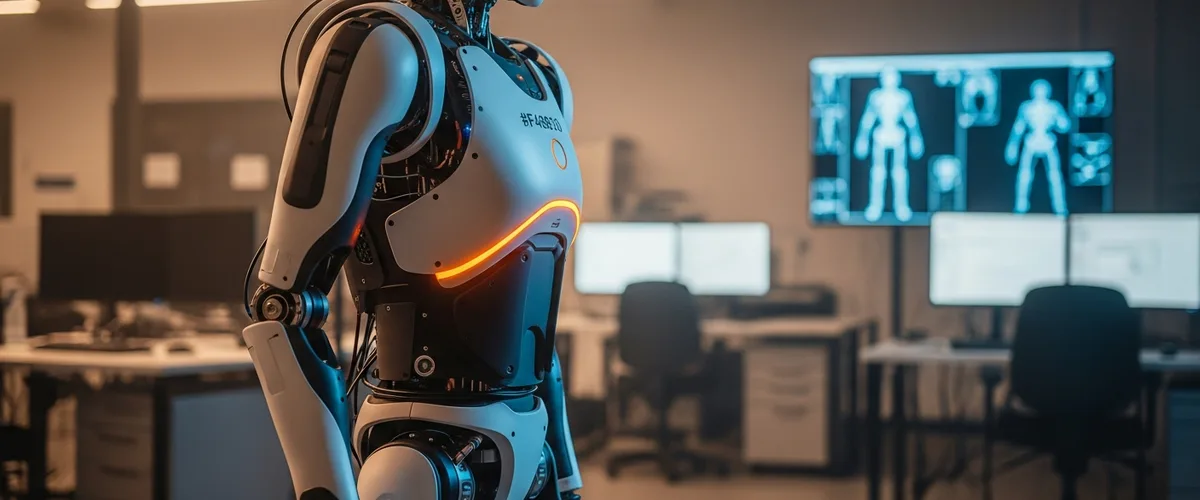
Robotics engineers in 2026 cost $150K to $205K mid-level and $205K to $300K senior in the United States, with humanoid and foundation-model specialists clearing $280K to $475K total comp and most well-scoped searches closing in 6 to 12 weeks. Six career tracks sit behind that title and they barely overlap on a day-to-day basis. The humanoid boom is the variable that has bent the market most. Figure, 1X, Apptronik, and the new electric Atlas program from Boston Dynamics are pulling senior ROS, controls, and learning engineers out of warehouse-automation seats faster than the pipeline can refill them, and the comp bands that closed the same searches in 2024 do not close them now.
The phrase “robotics engineer” has always been overloaded. In 2018 it usually meant a Unity-curious mechatronics graduate who could wire a UR5 and write some Python. In 2026 it can mean a controls engineer staring at MuJoCo trajectory rollouts. A ROS2 platform engineer who has not touched mechanical CAD since college. A perception engineer training vision-language-action models against teleoperation data. A motion-planning specialist living inside MoveIt 2 and OMPL. None of these people interview the same way. None of them cost the same. And the job description that pretends they are interchangeable is the job description that drags a search past ninety days.
I am Tom Kenaley at KORE1. We have placed mechatronics, controls, and robotics talent into industrial automation OEMs, warehouse-automation companies, defense primes, surgical robotics startups, and the new wave of humanoid programs across thirty-plus U.S. metros. Our 92% twelve-month direct-hire retention rate is not an accident. We earn it by sorting the req before sourcing starts, through our engineering staffing agency and IT staffing services desks. Fee on placement. No charge to scope the role honestly. What follows is the intake conversation that catches most of the failure modes before they become an offer letter to the wrong person.

Six Career Tracks Sit Behind the Title
Robotics is broader than software or hardware on its own. Controls theory. Embedded systems. Computer vision, machine learning, mechanical design. Plus a kind of middleware engineering that most other software disciplines moved past a decade ago and the robotics community had to keep alive on its own, because the real-time guarantees nothing else hits the bar. Most of the hiring pain we see lives in the gap between what the JD says and which of these six tracks the team actually needs, and that gap is widening every quarter as the discipline specializes faster than the org charts can catch up. Lock one as the primary scope. A secondary lane is fine. The screening loop has to match.
| Track | Primary Output | Stack Center of Mass |
|---|---|---|
| Robotics Software / ROS Platform Engineer | Middleware, behavior trees, system integration, deployment infra | C++17/20, Python, ROS2 Jazzy and Humble, DDS, Nav2, Docker, real-time Linux (PREEMPT_RT, Xenomai) |
| Motion Planning / Manipulation Engineer | Trajectory optimization, grasp planning, dual-arm coordination | MoveIt 2, OMPL, Drake, CHOMP, TrajOpt, KDL, FCL, CasADi, Pinocchio |
| Robot Perception Engineer | SLAM, sensor fusion, scene understanding, semantic segmentation | PyTorch, OpenCV, ROS perception stack, RealSense, Ouster, Luxonis OAK, CUDA, ONNX, GTSAM, Open3D |
| Controls / Whole-Body Control Engineer | Real-time controllers, MPC, dynamics, balance and locomotion | C++ real-time, MuJoCo, Drake, MATLAB, MPC solvers (OSQP, qpOASES), EtherCAT, CAN, custom motor drivers |
| Robot Learning / VLA Engineer | Imitation learning, diffusion policies, vision-language-action models | PyTorch, JAX, Isaac Lab, Isaac GR00T, π0 and OpenVLA derivatives, Hugging Face, teleop data pipelines |
| Mechatronics / Robotics Hardware Engineer | Actuator selection, harnessing, mechanical integration, DFM | SolidWorks, NX, Altium, harmonic drives, BLDC servo, FEA, EtherCAT, custom motor controller firmware |
A controls engineer can read a ROS2 launch file. He has probably never written a behavior tree for a fleet of twenty AMRs. A ROS platform engineer can describe model-predictive control in a whiteboard answer. She has probably never spent three weeks tuning weights on a whole-body MPC formulation that runs at one kilohertz on a Versal-class real-time core. Both are real engineers. Both are valuable. The interview that tests both at the same depth produces zero hires. If the seat you are filling is plant-floor controls rather than robotics research, the automation engineer job description scopes it differently.
One pattern that repeats. A client wants a learning engineer. The JD reads like a ROS2 platform role with “experience with PyTorch a plus” stapled to the bottom. So the recruiter sources from the ROS platform pool, because that is what the language signals, and then the technical loop tests imitation learning depth the slate was never asked to bring. Four weeks in, no offers, and someone in the room finally says the quiet part. Different track. Restart the sourcing pass. The fix is a single paragraph at the top of the JD that names the primary track in plain English without buzzwords or modifiers, because the second a sourcer reads the post they should be able to tell you which one of the six tracks above the role belongs to.
The Humanoid Renaissance Is the Story of the Year
If you are hiring a robotics engineer in 2026 and you have not factored the humanoid boom into your search, your search is already losing. The market has changed in eighteen months in a way that mirrors what self-driving did to robotics talent between 2015 and 2018, except faster and across more buyers.
Here is the rough shape of it. Figure shipped the second generation of its Helix vision-language-action model in February and is running paid pilots inside BMW Spartanburg. 1X Technologies moved from Neo Beta into early consumer pilots of Neo Gamma in late Q1. Apptronik signed a manufacturing agreement with Jabil for Apollo and an enterprise deployment with Mercedes that has been adding seats each quarter. Boston Dynamics retired the hydraulic Atlas, shipped the electric variant, and is running it inside Hyundai plants under the parent-company umbrella. Tesla is still iterating on Optimus, which has produced more LinkedIn posts than placements but has nonetheless pulled meaningful senior talent into Austin. Agility Robotics keeps growing its Digit footprint inside GXO and Amazon facilities. Physical Intelligence raised at a multi-billion-dollar valuation last fall and is recruiting against every senior learning engineer with a published policy-learning paper since 2023.
That last sentence is the supply story in one breath. There are not enough senior robotics engineers in the United States to staff every program currently funded. There are barely enough mid-level ones. The pool of engineers with hands-on whole-body control, manipulation, or VLA training experience on a real bipedal platform is small enough that we can usually name the company and the project a candidate worked on without being told.
What that means for the buyers who are not humanoid companies. The warehouse-automation OEM trying to hire a ROS engineer in Pittsburgh is now competing for the same senior with Figure in Sunnyvale, Apptronik in Austin, and Boston Dynamics in Waltham. The salary band the warehouse OEM was paying in 2023 does not clear that bar. The candidate who said yes to $180K base in 2022 has a competing offer for $260K base plus pre-IPO equity in 2026, and the recruiter on the other side has been working him since SXSW. Stand still on comp and the search drags.
The smaller story under the headline is foundation-model robotics. The work that came out of Berkeley, Stanford, CMU, and Toyota Research between 2022 and 2024, including Diffusion Policy, RT-2, OpenVLA, and the early π0 work that became Physical Intelligence, has moved from research to production at a speed almost nobody on the controls side predicted. Companies are training generalist manipulation policies on teleoperation data and shipping them to real robots. The talent profile that wins that work is a hybrid of a perception engineer and a deep-learning researcher who also understands enough kinematics to debug the dataset. There are maybe two thousand engineers in the country who can credibly do all three. Every funded humanoid program is trying to hire from the same pool.
What the Salary Sources Actually Say
No aggregator tracks “robotics engineer” as a clean discrete title. Glassdoor blends robotics software with mechatronics. ZipRecruiter pulls from job-post headlines that often conflate the controls and platform tracks. Levels.fyi gets the strongest data on the foundation-model robotics roles but its sample is biased toward the well-funded California buyers. Built In leans warehouse-automation and surgical robotics. The result is wide variance on what looks like one title.
| Source | What It Measures | Median | 25th pct | 75th pct |
|---|---|---|---|---|
| Glassdoor | Total pay, self-reported | $142,400 | $112,000 | $181,000 |
| ZipRecruiter | Base from active listings | $128,500 | $101,000 | $162,000 |
| Levels.fyi | Total comp at venture-backed and FAANG-adjacent | $232,000 | $182,000 | $308,000 |
| Salary.com | Employer-survey base | $112,300 | $96,500 | $132,800 |
| Built In | Tech-startup heavy, base plus equity self-reported | $156,800 | $118,000 | $198,000 |
The gap between Salary.com’s $112K and Levels.fyi’s $232K is not noise. It is two different populations. Salary.com is pulling from traditional industrial automation employers in the Midwest who hire mechatronics graduates into seats that have existed for two decades. Levels.fyi is pulling from Sunnyvale humanoid startups, surgical robotics scale-ups, and Bay Area autonomy programs. Both numbers are correct for their sample. Neither is the right number for your specific search until you have decided which segment of the market you are buying from.
Bands We Are Writing Offers Against in May 2026
Pulled from the last ninety days of actual placements and verified offer letters our desks have seen sign, cross-checked against the aggregators above. Base salary in U.S. dollars, equity layered on top where applicable.
| Track | Mid-Level (3-6 yrs) | Senior (6-10 yrs) | Principal / Staff |
|---|---|---|---|
| ROS Platform / Robotics Software | $150K – $190K | $200K – $270K | $280K – $360K |
| Motion Planning / Manipulation | $155K – $200K | $210K – $285K | $295K – $395K |
| Robot Perception / SLAM | $160K – $205K | $215K – $295K | $305K – $415K |
| Controls / Whole-Body Control | $165K – $215K | $225K – $305K | $315K – $430K |
| Robot Learning / VLA Specialist | $185K – $240K | $250K – $345K | $360K – $475K |
| Mechatronics / Robotics Hardware | $120K – $158K | $165K – $220K | $230K – $310K |
Equity is the noisy variable. A senior VLA engineer at a Series C humanoid company is taking home a base in the $290K range with a refresh grant that, if the company hits its next round at the same dilution profile the last two raised at, projects to another $300K to $700K a year on paper. Most of that paper is paper. The companies that have actually IPO’d in this category in the last decade is a list of fewer than five, and only one of them currently trades above its IPO price. Comp the base honestly and let the equity be a separate conversation, because the candidate’s spouse has heard the equity pitch before.
Geographic premium remains meaningful. The Bay Area corridor running from Sunnyvale through Mountain View and into Palo Alto pays 12 to 20 percent above the table for any senior with humanoid or VLA experience. Boston, anchored by Boston Dynamics in Waltham and the MIT CSAIL alumni network, pays close to Bay Area numbers for controls and manipulation specifically. Pittsburgh, with the Carnegie Mellon Robotics Institute pipeline and the NREC ecosystem, used to be a discount market and is now near-parity for senior ROS and perception roles because of how aggressively the West Coast humanoid companies are recruiting east. Austin has become a Tier-1 robotics market for the first time, on the back of Apptronik and Tesla. Boulder and the Front Range stayed flat on the table for warehouse-automation work. Run your own scenario for a specific role and ZIP on our salary benchmark assistant if you need a tighter number.
Which Stack the JD Should Commit To
Robotics is one of the few disciplines where the stack the candidate has lived in is more predictive of fit than years of experience. A senior C++ engineer from a self-driving car company can ramp into a humanoid platform quickly. The same engineer dropped into a ROS2 navigation stack for an AMR fleet may take months to be productive. The intake call is where we sort that.
ROS2 Jazzy and Humble is the dominant middleware in 2026, and ROS2 has finally eaten the lunch of ROS1 across new programs. Nav2 is the default navigation stack for mobile platforms. Behavior trees, mostly through BehaviorTree.CPP and the various ROS2 wrappers around it, are how task-level logic gets expressed. If the team is building anything that moves through an unstructured environment, the candidate should read DDS quality-of-service profiles in their sleep. The single most common failure on a sourced ROS engineer is one who shipped on ROS1 Noetic in 2022 and has not done a clean ROS2 migration since. The differences are not academic.
NVIDIA Isaac Sim, Isaac Lab, and the GR00T humanoid foundation work are now the default simulation and training stack for anything moving toward humanoid or generalist manipulation. Isaac Lab in particular has become the place reinforcement learning policies get trained at scale, replacing a lot of the in-house simulators humanoid companies used to maintain. A learning engineer who has never touched Isaac Lab in 2026 is a learning engineer who is going to need a quarter of ramp time. Worth it for the right person, but worth knowing.
MuJoCo remains the controls and dynamics simulator of record, especially after Google DeepMind open-sourced it and the controls community standardized on it for whole-body MPC research. If your team writes its own controllers, the controls engineer should have MuJoCo and Drake on their resume or be able to explain why not. Drake, out of TRI and MIT, is the other one to ask about specifically, particularly for manipulation work. Both simulators are open source, which means there is no excuse for a candidate not having played with them.
PyTorch with JAX as a secondary covers the learning side. The VLA work coming out of Physical Intelligence, the Helix model out of Figure, and the OpenVLA derivatives are mostly PyTorch native. JAX shows up more in pure research and Google DeepMind-adjacent work. If your role is building generalist manipulation policies on teleoperation data, the candidate should be able to talk about diffusion policy, action chunking, and the trade-offs between behavior cloning and reinforcement learning fine-tuning without coaching.
Real-time middleware below the stack matters too. PREEMPT_RT Linux, Xenomai, sometimes Acontis or TwinCAT for the EtherCAT side. CAN bus and EtherCAT for actuator communication. The integration engineer who knows where the hard real-time boundary lives in your specific architecture is worth a meaningful premium. Most candidates do not have this experience because most robotics work happens at the application layer. The ones who do are scarce.
Stack mismatch is the most common reason a robotics search drags. A client says “ROS engineer” out loud, the real need is a controls engineer with MuJoCo, real-time C++, and EtherCAT chops, and the team burns six weeks looking at navigation portfolios before someone in the room finally calls it out and admits the JD was wrong from the first draft. Different track. Restart the sourcing pass. Resolving that on the intake call saves a month and saves the candidate experience too, because the engineers we put through the first wrong loop will not come back for the second one once we know what the role actually is.
How to Write a Robotics JD That Sources
The JD is the single highest-leverage artifact in the hiring process and almost nobody treats it that way. Hiring managers borrow last year’s version, paste in three new keywords, and ship it. The result is a noisy pile of resumes and a recruiter who has to do scoping work on the candidate’s time instead of on the company’s time.
Here is what a JD that actually sources looks like. The first paragraph names one of the six tracks above in plain English. Not “robotics engineer.” Not “platform engineer with robotics experience.” The actual track. Robotics software engineer focused on ROS2 platform work. Manipulation engineer focused on MoveIt 2 and OMPL. Controls engineer focused on whole-body MPC. Robot learning engineer focused on VLA training. The track sets the floor for the candidate pool.
The next paragraph names the platform. A wheeled AMR is not a humanoid. A robot arm in a fixed cell is not a mobile manipulator. The work the candidate will do on a Boston Dynamics Spot is meaningfully different from the work the candidate will do on a Universal Robots cobot in an assembly line. Naming the platform tells the candidate what their day looks like and removes the candidates whose interests do not align before the screening call.
Then the stack. Not “ROS.” ROS2 Jazzy specifically. MoveIt 2 specifically. Isaac Lab specifically. PyTorch specifically. The version and the framework. A candidate who has spent two years on ROS2 Humble can answer the Jazzy questions on the screen. A candidate who has spent two years on ROS1 Noetic and has not migrated will not.
And then the actual work. One paragraph. What the candidate will build, on what timeline, with what team, and what success at six months looks like in concrete terms the engineer can picture without having to ask follow-up questions on the screening call. The CFO does not need to read this. The candidate does. The strongest robotics engineers turn down five offers a quarter and they are not picking by base salary, they are picking by what they will be working on, who they will be working with, and whether they believe the team has a real shot at shipping the thing the JD describes.
Two things to skip. Skip the laundry list of “nice to have” stack items. Every nice-to-have you add lowers the response rate from the strongest candidates because they read it as scope creep. Skip the years-of-experience floor unless it is real. “5+ years” filters out the senior researcher who shipped two papers and spent four years inside Boston Dynamics. Years are a proxy. The actual proxy is the work history. Trust the recruiter to screen on that.
The Screening Loop That Actually Predicts Performance
Robotics screening loops fail in two predictable directions. The first failure is testing pure software engineering at the depth a FAANG company would test it. The candidate writes a clean LeetCode solution, the team is impressed, and three months in the new hire cannot debug a TF tree problem because nobody asked him a single robotics-domain question on the loop. The second failure is the inverse. The loop is all whiteboarding of inverse kinematics and the candidate writes unmaintainable C++ that the team has to rewrite at code review.
The screening loop that has produced our highest retention on robotics direct-hire placements has four parts.
- A scoped technical phone screen against the actual track. For a ROS platform candidate this is a forty-five-minute conversation about a real ROS2 architecture they shipped, with hard follow-ups on DDS QoS configuration, lifecycle nodes, and how they handled the simulation-to-real gap. For a controls candidate it is a discussion of a specific controller they tuned and what they would change if they did it again. The interviewer is the technical hire who will be the closest peer to the new hire, not a generalist recruiter.
- A short, take-home or pair-programming exercise in the actual stack. Not LeetCode. A ROS2 node that does a specific small task. A MoveIt configuration for a specific reach problem. A motion-planning question on a specific configuration space. Time-boxed to two to three hours of the candidate’s evening. The exercise is reviewed live by the same engineer who did the phone screen.
- An onsite or extended-virtual loop with two to three engineering interviews. One should be a detailed review of the take-home with the candidate explaining trade-offs. One should be a domain-specific whiteboarding round on the primary track. One should be a behavioral conversation about how the candidate handles ambiguity, because robotics work is more ambiguous than most software work and the engineers who hate ambiguity wash out fast.
- A hiring-manager close conversation that is not an interview. The candidate asks every question they have left. The hiring manager describes the first ninety days. The recruiter sits in to make sure the offer math matches what the candidate has heard so far. This is the step most teams skip and the step that has the highest correlation with the candidate actually accepting the offer once it lands.
The full loop should consume six to eight hours of the candidate’s time across two to three weeks. Anything longer and the strongest candidates take a competing offer mid-loop, usually from a company that did not insist on a five-round process with two unrelated coding tests stapled to the front of it. Anything shorter and the hiring manager has not collected enough signal to commit to a senior offer that will land north of $250K with equity. The Stack Overflow Developer Survey has been clear for three years that interview length is the single biggest reason candidates pull out of processes that they actually wanted to be in. Their 2025 results reinforced it again. Trim the fat.
Where to Source Robotics Engineers Who Are Not on LinkedIn
The strongest robotics engineers are not browsing LinkedIn. Many of them are not on LinkedIn at all, or have a profile that says “Software Engineer at confidential” and nothing else. Cold outbound to the title “robotics engineer” on Sales Navigator returns a population heavy on warehouse-automation generalists and light on the senior controls and learning specialists most programs need.
The channels that consistently surface stronger candidates are narrower and less obvious. The IEEE Robotics and Automation Society publishes a member directory that is more useful than any commercial sourcing tool for finding senior controls and motion-planning engineers. The CMU Robotics Institute alumni network is a tighter pipeline for Pittsburgh and East Coast searches. The Boston Dynamics, Toyota Research Institute, Berkeley AI Research, and MIT CSAIL alumni networks are where most of the senior generalist talent has cycled through at some point in their careers, and a referral from inside one of those alumni networks closes faster than any cold outbound campaign. Conference attendance lists from ICRA, RSS, IROS, and CoRL are the surfaces our desks watch most closely for emerging senior talent.
One under-rated source for mid-level talent is the warehouse-automation companies that have been growing headcount for the last five years and are now sitting on a quietly large pool of engineers who have shipped production fleet software at scale. Locus Robotics, GreyOrange, Symbotic, Vecna, the ROS2 platform teams inside Amazon Robotics. Engineers who shipped real fleet software at one of these companies bring production engineering muscle. The humanoid startups need that muscle and do not have it internally. And a meaningful share of those engineers are quietly ready to move on after three or four years of warehouse-floor work that has started to repeat itself. The signal is on the resume. The relationship is not on LinkedIn.
The Mistakes We See Clients Make
Five patterns we have watched cost clients an extra two to three months on a search.
Confusing the ML engineer profile with the robot learning profile. A senior ML engineer from a Bay Area autonomy company is not automatically a robot learning engineer. The robotics learning roles require enough domain knowledge in kinematics, sensors, and embodiment that a pure deep-learning resume does not predict success. The mistake costs four to eight weeks of sourcing the wrong pool. The fix is naming “robot learning” and “VLA” explicitly in the JD and screening on the data side, not just the model side.
Underestimating equity in offer conversations. The strongest candidates have offers from two or three other companies in this cycle. Base salary alone does not close them. The companies that close consistently are the ones who walk through the equity math honestly, including dilution, vesting cliff, and a realistic conversation about exit timelines. Hand-waving the equity grant loses candidates to companies that did not hand-wave.
Slow-walking the loop. Two-week gaps between rounds are the death of robotics searches in 2026. The candidate has two other companies running parallel and the company that closes is the one that runs the loop in two weeks instead of six. Move the calendar.
Hiring against a future stack the team has not adopted yet. A team running ROS2 Humble in production should not be interviewing on Jazzy-specific features the team has not migrated to. The candidate will smell the gap and discount the role accordingly. Interview on the stack you are running, not the one in the architecture deck.
Skipping the onsite for cost reasons. Remote-only loops have been normal for software since 2021, but robotics is a hardware-adjacent discipline and seeing the candidate in the lab is a real signal. Companies that have moved back to a single onsite day in the loop have higher offer-acceptance rates than companies that did not. Worth the flight.
Common Questions Hiring Managers Ask Us
Realistically, how fast can a robotics search close?
Six to twelve weeks on a well-scoped commercial search, eight to sixteen weeks on a learning or VLA specialist role, and longer when the program requires a cleared candidate or a niche stack combination. The variable that moves the timeline most is not the recruiter or the channels. It is whether the JD names one track or three. Scope hard, source narrow, and the search closes.
Do I need a contract recruiter or can I run this in-house?
If the role is a third or fourth seat on an existing robotics team, your in-house TA team can probably run it with a competent technical screener. If the role is one of the first three robotics seats at a company that has never hired robotics before, an external recruiter who knows the candidate pool by name closes the search faster. Specialty markets reward specialty recruiters. We disclose the bias because we benefit from it.
What is the realistic premium for senior humanoid experience?
15 to 35 percent over the published bands for any senior with hands-on whole-body control or generalist manipulation experience on a real bipedal platform. The premium widens if the candidate has shipped on a platform that customers have actually paid for. It narrows if the candidate’s humanoid time was at a stealth research lab that never shipped.
Can I hire a strong robotics engineer remote?
Some tracks, yes. ROS platform engineering and robot learning roles work remote because the work is mostly simulation and software. Controls and manipulation engineers need lab time on real hardware and lose effectiveness past two days a week of remote. Mechatronics and hardware roles are functionally in-person. Match the remote policy to the track or risk the candidate pool collapsing on you.
Contract or direct hire for a first robotics seat?
Direct hire almost always for the first three seats. The first three engineers set the architecture, the stack picks, and the culture of the team. Contractors are a fit when you have a defined integration project, a known endpoint, and an existing senior engineer to manage them. Reach out through our contract staffing practice if the project shape fits that pattern.
How do I tell a real senior from a resume padder?
Ask about the specific problem they spent the most time on, and follow up three levels deep. The engineer who actually built it can describe what failed, what they changed, and what they would do differently. The resume padder cannot get past the second follow-up question. Two domain-specific deep dives in a phone screen sort the population reliably.
What about adjacent specializations like AI/ML?
The overlap between robotics and applied AI has grown sharply in the last two years. If your robotics role is primarily a learning role, our AI/ML engineer staffing desk works the same candidate pool. If the role is platform or controls, the robotics desk is closer to the right pool. The intake call sorts which desk leads.
What Happens on the First Call With Us
The first call is forty-five minutes. We do not write a single search task until the call has happened. The agenda is the six tracks above, the stack the team is running, the platform the work targets, the compensation band, and the realistic timeline. By the end of the call we usually know which track the role actually is, whether the JD needs rewriting, and where the first ten candidates are coming from. The first slate hits the hiring manager’s inbox inside two weeks on most searches.
If the search is one of the new humanoid or VLA roles, the slate is smaller and the conversation is longer. The candidate pool is small enough that we know most of them. The placement decision becomes less about sourcing and more about positioning the role against the other offers the candidate already has.
Got a specific search running? Reach out to our team. Twenty years and 30+ U.S. metros of placement history sits behind every call we take, and the robotics market is moving fast enough right now that what we placed against six months ago is not what the same role looks like today. That is the actual value of a forty-five-minute conversation before the JD ships.
