

Last updated: September 4, 2026
Hiring an Android developer in 2026 runs about $120K to $210K base for mid-to-senior talent, with most roles filling in three to six weeks. Screen for apps that have survived real devices in the wild, not Kotlin sitting on a résumé. That one shift in what you look for separates a search that closes from one that just keeps spitting out profiles.
I have filled Android roles at KORE1 for a long time, and the way they go wrong almost never changes. A hiring manager opens a req. The sourcing tool returns eighteen hundred people with “Kotlin” and “Jetpack Compose” on their profiles, and the room relaxes. Then the new engineer starts, and three weeks in, QA files a bug that only reproduces on a two-year-old Samsung running One UI, and it turns out the hire has only ever built for Pixels. Anyone can list the keyword. Far fewer have shipped an app, watched an OEM battery optimizer quietly strangle it in the background, and done the unglamorous work of tracing and killing that bug. That second person is what you are actually paying for. Full disclosure before you read on: we get paid when you hire through us. Weigh the rest accordingly. I will also flag the Android roles you can probably handle in-house. A couple genuinely qualify.
Most of this guide is about closing the distance between a clean résumé and an app that holds up across ten thousand device-and-OS combinations. If you want a partner who already lives in that distance, that is what our Android developer staffing desk does. For the rest of the stack, our IT staffing services cover the wider tech bench.
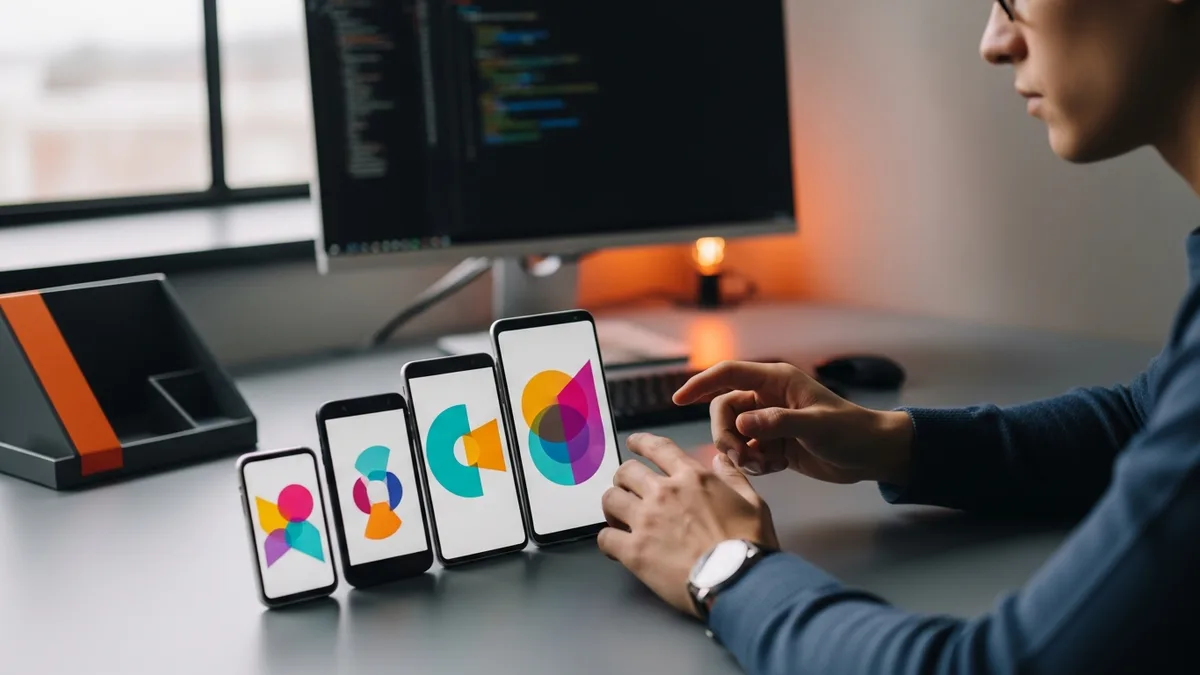
One Title, Four Different Engineers
An Android developer builds the software that runs on phones, tablets, watches, TVs, and cars, almost always in Kotlin now, assembled in Android Studio against Google’s Jetpack libraries. That is the textbook version. It is also where most job postings stop, and the gap between that one line and the real job is where your weeks disappear.
It reads like a single role. It is really four. Maybe five.
First, the consumer product engineer. This is the person who lives in Jetpack Compose and Material 3, obsesses over scroll performance and accessibility, and can keep a dense, image-heavy feed scrolling at a steady sixty frames per second on a phone that shipped two years ago and runs three manufacturer tweaks deep. Second, the SDK and library engineer, who builds the modules other teams import, thinks in public APIs and binary compatibility, and rarely touches a screen at all. Third, performance and media. A separate planet. Media3, ExoPlayer, CameraX, Baseline Profiles, the territory where one dropped frame becomes a one-star review. Fourth, the platform and release engineer who owns the Gradle build, the modularization, the CI pipeline, and the Android App Bundle config that keeps forty people from blocking each other at merge time.
Then there is a fifth flavor that catches people off guard. Embedded Android. Automotive, set-top boxes, point-of-sale terminals, kiosks, anything running close to AOSP. That work looks nothing like building a consumer app, and the engineers who do it rarely cross over with the Compose crowd.
The strongest Compose engineer you ever interview may have no clue how to debug a native crash in a media pipeline. Managers who expect a senior hire to cover every base get burned by this. Every time. Seniority buys depth in one place, not all of them. A retail client of ours posted a “senior Android engineer” role last year that was secretly a point-of-sale build on locked-down hardware, wearing a normal app job as a disguise. Two strong finalists in, neither one a fit. We rescoped it around AOSP and embedded experience and closed it in five weeks. The original posting would still be collecting applicants.
So pin down the track first, before anyone drafts a word of the posting. It is the opening question on every intake call I run, because the answer moves the comp band, the places we go looking, and the entire shape of the screen. Once the track is settled, our Android job description template covers the wording that keeps the wrong applicants out.
What an Android Developer Actually Costs in 2026
Two things set the number. Seniority, and how specialized the work is. That is the whole equation. And the public salary aggregators disagree with one another so loudly on this role that the spread between them tells you more than any single figure ever could.
Glassdoor puts the average Android developer base near $107,000, with its 75th percentile around $141,000 and seniors averaging closer to $160,000. ZipRecruiter sits higher, about $127,000 on average, with top earners near $164,000. Indeed reports roughly $138,000 and shows a ceiling north of $238,000. That is a $31,000 swing in the average alone, for the same two words on a job posting. The gap is the signal. Those averages blend hobbyist profiles with engineers running flagship apps that millions of people open every day, and you are almost never hiring the average. Nobody is.
The bands below are where I open the budget conversation, not where it ends. Your metro, the track you picked, and how badly you need someone in the seat will all push these around before the role is even posted.
| Level | Base Salary (US, 2026) | Contract Rate | What You Get |
|---|---|---|---|
| Junior (0 to 2 yrs) | $90K to $120K | $50 to $75/hr | Kotlin-fluent, light on shipped work. Look for anything that reached the Play Store. |
| Mid (3 to 5 yrs) | $120K to $155K | $75 to $105/hr | The feature builder who owns screens end to end and has met real fragmentation. |
| Senior (5 to 8 yrs) | $155K to $210K | $105 to $145/hr | Owns architecture. Carries scars from a Play policy strike and an ANR at 2 a.m. |
| Staff / Principal / Big Tech | $210K to $320K+ | $145 to $195/hr | Platform owners and media specialists. Bay Area and Seattle premium, equity on top. |
A few notes on the top end. On-device machine learning, real-time media, and Kotlin Multiplatform work push senior comp past $250,000 once you fold in equity and the sign-on bonus those teams use to win a genuinely scarce engineer. Kotlin fluency by itself is no longer the premium it was three years ago. It is table stakes. The lift has shifted to Compose depth, Coroutines and Flow used well, and Multiplatform. The quickest way to lose your finalist is to peg the offer to what the role paid in 2023. What looked generous then looks stingy now, and the Android engineers worth hiring tend to be sitting on a second offer already. When a client wants a band sanity-checked before the offer goes out, we run it through our salary benchmark assistant so the first number lands in range, and the Android developer salary benchmarks for 2026 show where each level actually clears.
On the wider trend, the Bureau of Labor Statistics projects 15% growth for software developer roles from 2024 to 2034, against 3% for the average job, with roughly 129,200 openings a year. The supply of engineers who have actually shipped and maintained an app at scale is not keeping that pace.
The Hiring Process, Step by Step
Boil an Android hire down and you get six decisions. Botch any of the first three and it surfaces later, as a search that will not close or a finalist who says no. It compounds.
1. Name the track before you write the req
Consumer product, SDK, media, platform, or embedded. Decide first. A posting that demands Compose, ExoPlayer, Gradle wizardry, and AOSP internals from one human is four jobs in a trench coat, and the rare person who holds all of them is not scrolling your job board.
2. Set the comp to 2026 and pick the model
Treat the table above as a floor for the conversation, then choose the structure. Direct hire, contract, and contract-to-hire each attract a different candidate, and the rate that lands a contractor is not the salary that lands a permanent senior.
3. Source where Android engineers actually gather
The good ones are mostly not on the job boards. They are in the Kotlin Slack, maintaining open-source libraries on GitHub, giving talks at droidcon or a local Android Worldwide meetup, and quietly shipping polished side projects to the Play Store that no keyword filter will ever surface for you. Blasting people who are already applying reaches a different, smaller pool than the one worth hiring from. Much smaller.
4. Screen for shipped work, not syntax
Ask them to send the Play Store link, then actually open it on the call. A real Android engineer can walk you through a feature they built, the device-specific bug that nearly shipped, and how they caught it. Trivia about the activity lifecycle tells you next to nothing. Skip it.
5. Run a loop that looks like the job
Drop the abstract whiteboard puzzle. Hand them a slice of their own shipped code to walk through, or a small broken project with a real memory leak or a planted ANR, and watch how they hunt it down. You learn more from that than from an hour of sorting algorithms on a whiteboard.
6. Decide your number before the final round
Good Android candidates come off the market within the week. Nothing wastes a strong slate faster than an interview loop that drags. Settle your offer before the last conversation so it can go out that same afternoon, not next week once a committee finally meets. If you are still designing that loop, our Android developer interview questions guide covers what to ask at each round and what a strong answer actually sounds like.

Sorting the Shippers From the Résumés
Up to now this has all been planning. The screen is where the planning meets a real person. Putting Kotlin on a profile costs nothing. Proving you have shipped something that holds together across the Android device landscape is another thing entirely.
First stop, the Play Store listing. Pull it up live. Is the app real, does it still get updates, and will they share a crash-free rate? Then go where the padders cannot follow. Fragmentation. Ask how they chose a minimum SDK, how they tested across screen sizes and manufacturer skins, and what broke on one specific brand of phone. A real one has a name for the device that ate their week. Probably a Xiaomi or a low-end Samsung. They all do.
Then the part that defines Android and barely exists on iOS. Background execution. Doze, app standby buckets, foreground service limits, and the aggressive battery optimizers that Samsung, Xiaomi, and OnePlus stack on top of stock Android. An engineer who has shipped a messaging or fitness or location app has fought this, lost a few rounds, filed bug reports against manufacturers that went nowhere, and eventually found the workaround that kept their service alive in the background on the phones their users actually carry. There is a whole community site called Don’t Kill My App that exists only because of this mess. Ask about it. The shipped ones get animated. The padders get vague.
Keep going under the hood. Coroutines and Flow for concurrency, not a hazy memory of AsyncTask. Compose versus the older XML view system, and, more telling, when they would still reach for XML on purpose. R8 and ProGuard rules, because a release build that strips the wrong class is its own special pain. The Android App Bundle and the Play Console release tracks. Ask about their worst run-in with Google Play review, a rejected update or a policy strike, and the real ones get oddly specific about the policy number and how long the appeal dragged on. The padder pivots to a different topic.
One last probe I rely on. Ask what they would rip out to make the app launch faster. The ones who have done it name something concrete right away, cold-start work, Baseline Profiles, an init block dragged off the main thread. The ones who only read about performance stall.
Full-Time, Contract, or Offshore?
Three options, and the fit depends on what you are building and how long it has to survive in production.
Go with a direct hire when the app sits at the center of the business and will need a long-term owner. The value is someone who absorbs the codebase over months and is still around a year later when the gnarly bug surfaces. Bring in a contract engineer for a bounded build, a launch crunch, or to cover the seat while you run the permanent search. Contractors spin up fast and hand off without lingering, and for a three-month push that is exactly the shape you want.
Offshore always shows up as the way to save money, and on the raw hourly rate it is. The real total gets blurrier once you fold in the device-lab gap, the time-zone lag when a Play policy change lands overnight, and the rework when fragmentation testing was thinner than the pitch promised. For a contained feature build it can work fine. For a flagship app where the bar is high and Google keeps moving the rules, the savings have a habit of dissolving into bug tickets. I have watched it land both ways. Twice on the same client, actually. What usually decides it is how hard the work rubs against real devices and shifting Play policy. The accent on the call is rarely the issue.

The Android Searches That Land on Our Desk
Certain requests come around again and again. A funded startup needs a senior consumer-app engineer yesterday because the launch date already slipped once. A product team is mid-migration from XML to Compose and wants someone who has survived that exact move before, without betting the company on a full rewrite. A contractor gets pulled in to drag a stalled build over a deadline that will not budge. Kotlin Multiplatform comes up more every quarter, usually from teams tired of writing the same logic twice for Android and iOS. And every so often a Java maintainer, because plenty of revenue still runs on apps built before Kotlin took over, and that code does not keep itself alive.
If your role refuses to fit a tidy box, that is the normal case, not the exception. It usually is. The real work is scoping it honestly before the search opens, which is most of what a good software engineer staffing partner earns its fee doing. KORE1 averages a 17-day time-to-hire across IT roles and holds a 92% twelve-month retention rate on our placements, and specialized Android work sits at the slower, harder end of that range.
What Hiring Managers Ask Before the Search
A few questions surface on nearly every intake call. The honest answers, below.
Kotlin or Java in 2026, which should I require?
Kotlin for anything new, with very little debate. Google has been Kotlin-first since 2019 and the modern toolchain assumes it. It is not close. Java still matters when you are maintaining an older app, and a senior who reads both fluently earns a premium on a legacy codebase. For a greenfield build, optimize for Kotlin, Coroutines, and Compose depth.
Can a strong iOS or web engineer cross over to Android?
Sometimes, for simpler apps, given real runway. The language is the easy part to pick up. What does not transfer fast is the device fragmentation, the OEM background-execution quirks, and the instinct for what gets a release pulled on Google Play. For anything customer-facing, hire someone who has already shipped on the platform.
Why does device fragmentation keep coming up?
Because it is the tax that makes Android hard. No other platform comes close. There are thousands of device, screen-size, and OS-version combinations in active use across the install base, each carrying its own manufacturer skin, its own battery rules, and its own quietly different idea of how the system should behave. An engineer who has only built for Pixels ships bugs that surface on the Samsung and Xiaomi phones most of your users actually hold.
How long does an Android hire really take?
Plan on three to six weeks once the role is scoped properly. The niche work, on-device ML or embedded AOSP, takes longer simply because fewer people do it. What drags a search out is a fuzzy description that hides two roles under one title and repels the people who would have been great at either.
Native Android, or React Native, Flutter, or Kotlin Multiplatform?
Go native when performance, deep hardware access, or platform polish carries the product. Cross-platform frameworks earn their place when you ship to Android and iOS on a tight budget and the app is mostly screens and forms. Kotlin Multiplatform is the middle path a lot of teams are choosing in 2026, sharing business logic while keeping native UI on each side.
Contract or direct hire for our first Android engineer?
If the app is central and permanent, hire direct so the knowledge stays in the building. If you are validating an idea or covering a launch window, start with a contractor and convert later if the fit holds. A contract-to-hire arrangement lets you watch someone handle a real device bug before you commit the full salary.
Scope It Right, Then Hire
Android hires fail in a small set of repeatable ways. The title that secretly contains two jobs. The budget frozen at last cycle’s numbers. The screen that grades Kotlin syntax while ignoring whether anything was ever shipped and kept alive. Close those three gaps and most searches land on the first serious slate. Genuinely.
If running this yourself sounds like a poor use of your month, that is what we are for. Our recruiters have spent years learning the difference between a Kotlin résumé and an app that survives the wild. Talk to a recruiter and we will scope the role with you before a single profile goes out. If your need is narrower, our guide to hiring Kotlin developers for Android goes deep on the language itself, and our broader mobile app developer hiring guide covers Android and iOS side by side.
