
Last updated: June 29, 2026
Renewable Energy Staffing
Plenty of resumes say “renewable energy.” Most mean one rooftop install or a grad-school capstone. We place engineers who have actually commissioned megawatts, cleared an interconnection queue, and kept a plant online through a July heat dome. Different pool. Vetted by recruiters who have staffed technical specialties since 2005.
Renewable work cuts across several disciplines, so it lives as a specialty inside our broader engineering staffing agency practice. Most searches flex into electrical engineering staffing and power systems engineering staffing. When a project needs the mechanical and controls bench at the same time, our mechanical engineering staffing and controls engineer staffing teams run the same playbook.
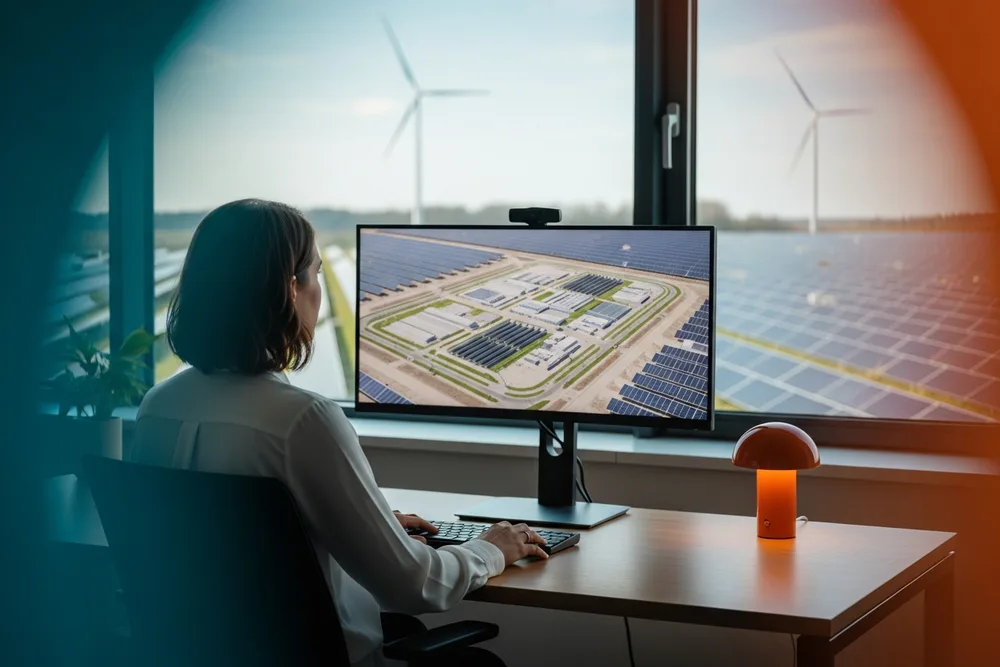
KORE1 is a renewable energy staffing agency that places solar, wind, storage, and grid engineers across the United States, with a 17-day average time-to-hire and a 92% 12-month retention rate.

The Pipeline Is Booming. The Bench Is Not.
The money showed up faster than the people. Demand spiked. Supply did not. Tax credits, corporate clean-power deals, and a wave of utility-scale projects pushed the need for renewable engineers past anything the talent pool was ready to absorb, so the same fifty or so genuinely qualified candidates now get chased by every developer, EPC, and IPP in the market at the same time.
That mismatch is where the wrong hire happens. Picture a solar designer who has only ever touched residential rooftops. Drop them onto a 200 MW project and they stall at the first interconnection study. We screen against exactly that, because we have placed power and energy engineers since before “the energy transition” was a phrase on anybody’s slide deck, and our recruiters can hear the difference between someone who lists PVsyst on a resume and someone who has actually modeled shading losses on a real site with real money riding on the yield. Wind turbine technician, meanwhile, is one of the fastest-growing occupations in the country per the U.S. Bureau of Labor Statistics. The engineering layer above it is scaling just as fast.
Request Renewable Energy Talent →“Renewable energy employment reached 16.2 million jobs worldwide in 2023, the highest annual increase on record.”
— IRENA, Renewable Energy and Jobs Annual Review 2024
Flexible Ways to Staff a Renewable Project.
Some teams need a commissioning engineer for an eight-week startup. Some need a permanent director of engineering who will own the whole interconnection strategy from the first feasibility study through commercial operation. We support every model. And we will tell you up front when the one you asked for is the wrong fit for the job.
Contract
Drop-in expertise for a defined push. Commissioning, an interconnection study backlog, or an owner’s engineer for one project. Fast onboarding, no long commitment.
Contract-to-Hire
Run the engineer against your actual stack and standards for 90 days before converting. Useful when the role is new and scope is still moving.
Direct Hire
Permanent seat for a lead or principal who will set the design basis, own the standards, and mentor a growing renewable team.
Project Teams
Scoped engagement. A full design pod, a commissioning crew, or an O&M bench stood up against a financing or COD deadline.
Renewable Energy Roles We Place.
“Renewable energy engineer” is a dozen jobs wearing one title. The PV designer who lays out arrays. The power systems engineer who fights the interconnection queue. The BESS specialist who sizes batteries and lies awake over thermal runaway. The commissioning lead who lives in a hard hat for three months straight. Same title. Wildly different people. We screen for the lane, not the keyword.
Roles we have placed
- Solar / PV Design Engineers (PVsyst, Helioscope, single-line diagrams)
- Wind Engineers and Turbine Engineers (IEC 61400, loads, mechanical)
- Power Systems Engineers (interconnection, substation, protection and controls)
- Energy Storage / BESS Engineers (battery integration, BMS, thermal)
- Controls and SCADA Engineers (plant controllers, DERMS)
- Commissioning and Field Engineers (startup, testing, punch lists)
- Project Engineers and Owner’s Engineers
- Civil and Structural Engineers (racking, foundations, site civil)
- Power Electronics Engineers (inverters, converters, collection systems)
- Interconnection and Transmission Planning Engineers
- O&M and Asset Management Engineers
- Estimating and Proposal Engineers
Standards come up fast on these calls, and the names matter. A grid-facing power systems hire should be fluent in NEC, NESC, IEEE 1547, and UL 1741, while a wind engineer lives inside IEC 61400 instead. Interconnection is its own filter. A candidate who has cleared studies in ERCOT does not automatically know how CAISO, PJM, or MISO behave, and that gap shows up the hard way. We check. The software bench tends to run PVsyst, Helioscope, PSS/E, ETAP, PSCAD, and whatever SCADA stack keeps the plant talking to the control room. NERC and FERC fluency rounds it out for the transmission roles. For the broader role family, the BLS Occupational Outlook Handbook tracks the engineering categories these positions map to.

How We Hire Renewable Energy Engineers Who Stick.
Scope the role honestly
We get on a call and pin down the real work. Utility-scale or distributed. Solar, wind, or storage. Then the details that actually decide fit, like the interconnection market you operate in, the design basis, the governing standards, and what “good” looks like on day 90.
Source and technically vet
Our recruiters know what shipped renewable work looks like. We dig into real project history, the standards they actually used, and the failure stories nobody volunteers. The shortlist usually lands inside two weeks. Sometimes sooner.
Stay close after start date
We check in at 30, 60, and 90 days with the engineer and the hiring manager both. If something is off, we want to know early. That is how we hit 92% retention.

What “Vetted” Means on a Renewable Search.
Every candidate we send has been through a technical screen run by a recruiter who can tell a real commissioning record from a padded one. No junior bench. No farmed-out calls. We ask about interconnection timelines, the standards they designed to, how they handled a nasty curtailment problem, and the boring field work that quietly decides whether a project actually hits commercial operation on the date the financing model promised the investors.
“Three of our last renewable placements were a storage integration engineer, an interconnection lead, and a commissioning manager. All three closed inside three weeks because we had pipelined the talent before the reqs opened. Two were senior hires most agencies cannot even screen.”
— Devin Hornick, Partner at KORE1
- Real project history at the right scale, not one residential install
- The standards they actually designed to, by name, NEC through IEEE 1547
- Interconnection and ISO experience in the market you operate in
- Field and commissioning hours, not just office design time
- Safety record and the willingness to live on site when a startup demands it
Still scoping comp or the broader build? Our energy IT staffing team covers the data, SCADA, and software layer that sits on top of every modern plant, and our construction staffing crew handles the skilled trades and field labor that go up alongside the engineering bench.
Common Questions
How fast can KORE1 fill a renewable energy engineering role?
Our average time-to-hire is 17 days, and most senior renewable roles like interconnection leads or storage integration engineers close in three to four weeks.
We hold an active pipeline of pre-screened solar, wind, storage, and grid engineers, so a new req does not start from a blank job board. That matters. For an urgent contract need we have placed a commissioning engineer inside five business days. Senior power systems and interconnection roles run longer, because that bench is genuinely thin and the people on it are usually already booked, so we would rather hand you an honest three-week timeline than a fast stack of marginal resumes you have to wade through yourself.
Which renewable energy roles do you actually staff?
We staff across the full project lifecycle, from solar and wind design engineers through power systems, energy storage, controls, commissioning, project engineering, and O&M.
That covers development-stage work like interconnection and feasibility studies, then the design and engineering phase, then construction-phase commissioning, and finally the long O&M and asset-management tail that runs for the twenty or thirty years a plant stays in service. One contact. Every phase. If you need the trades and field crews alongside the engineers, our construction staffing team runs in parallel with the same point of contact.
Do you place contract engineers, direct hires, or both?
Both, plus contract-to-hire and full project teams.
Contract works well for a defined push like a commissioning window or a study backlog. Direct hire makes sense when you are building a permanent engineering function. A lot of clients start contract-to-hire on a new renewable role precisely because it lets them watch the engineer perform against their actual design standards, their actual interconnection market, and their actual project pressure before anyone signs a permanent offer. Smart move. We will tell you which model fits the work instead of pushing whatever carries the easiest margin for us.
What does a renewable energy engineer cost in 2026?
Most renewable energy engineers land between roughly $95K and $165K base depending on discipline and seniority, with senior power systems and interconnection specialists pushing higher.
Numbers move fast. A regional solar developer hiring a mid-level PV designer pays a very different rate than a national IPP hiring a principal interconnection engineer to fight through the ERCOT queue, and both of those numbers shift again depending on whether the role is on site, hybrid, or fully remote. Contract rates generally run $75 to $145 per hour W-2 depending on discipline and field demands. We share live market data when we scope the role, not after you have already lost a candidate to a counteroffer.
Can you staff for utility-scale solar, wind, and battery storage specifically?
Yes. Utility-scale solar, onshore and offshore wind, and battery storage are core to what we place, including solar-plus-storage and grid integration work.
We screen for scale and technology fit, not just a generic “renewables” label. Scale changes everything. A candidate strong on distributed rooftop solar is not automatically right for a 300 MW project with a messy multi-county interconnection. We calibrate the screen to the segment you operate in, whether that is BESS, transmission, microgrids, or green hydrogen.
How do you vet renewable energy candidates?
Every candidate goes through a technical screen run by a senior recruiter who probes real project history, the standards they designed to, and their field and commissioning record.
We ask candidates to walk through an actual project. What they designed, which standards governed it, where the interconnection bottlenecked, and what broke during commissioning. The padding falls apart quickly. That conversation surfaces the difference between someone who merely supported a project and someone who actually owned it from kickoff through the punch list. If your team runs a specialized stack or a tight clearance requirement, we factor that into the screen before anyone reaches your inbox.
Do you place renewable energy engineers nationwide?
Yes. We place renewable energy talent across 30+ U.S. metros, with strong activity in the Texas and ERCOT corridor, the Mountain West, California, and the Northeast offshore wind markets.
Some renewable roles are remote-friendly on the design and study side. Field work is not. Most commissioning, field, and O&M roles are on site by nature, and we honor that without pretending otherwise. Want regional focus near a project? We tighten the funnel. Want the strongest engineer regardless of zip code for a remote design seat? We widen it.
Ready to Build a Renewable Energy Team That Delivers?
The pool of engineers with real production renewable experience is small, and the wrong hire can push a commercial operation date back a quarter. We have spent two decades placing technical specialists and years getting deep on solar, wind, storage, and grid work specifically. Tell us what you are building and we will bring you the people who can build it.
