Last updated: June 27, 2026
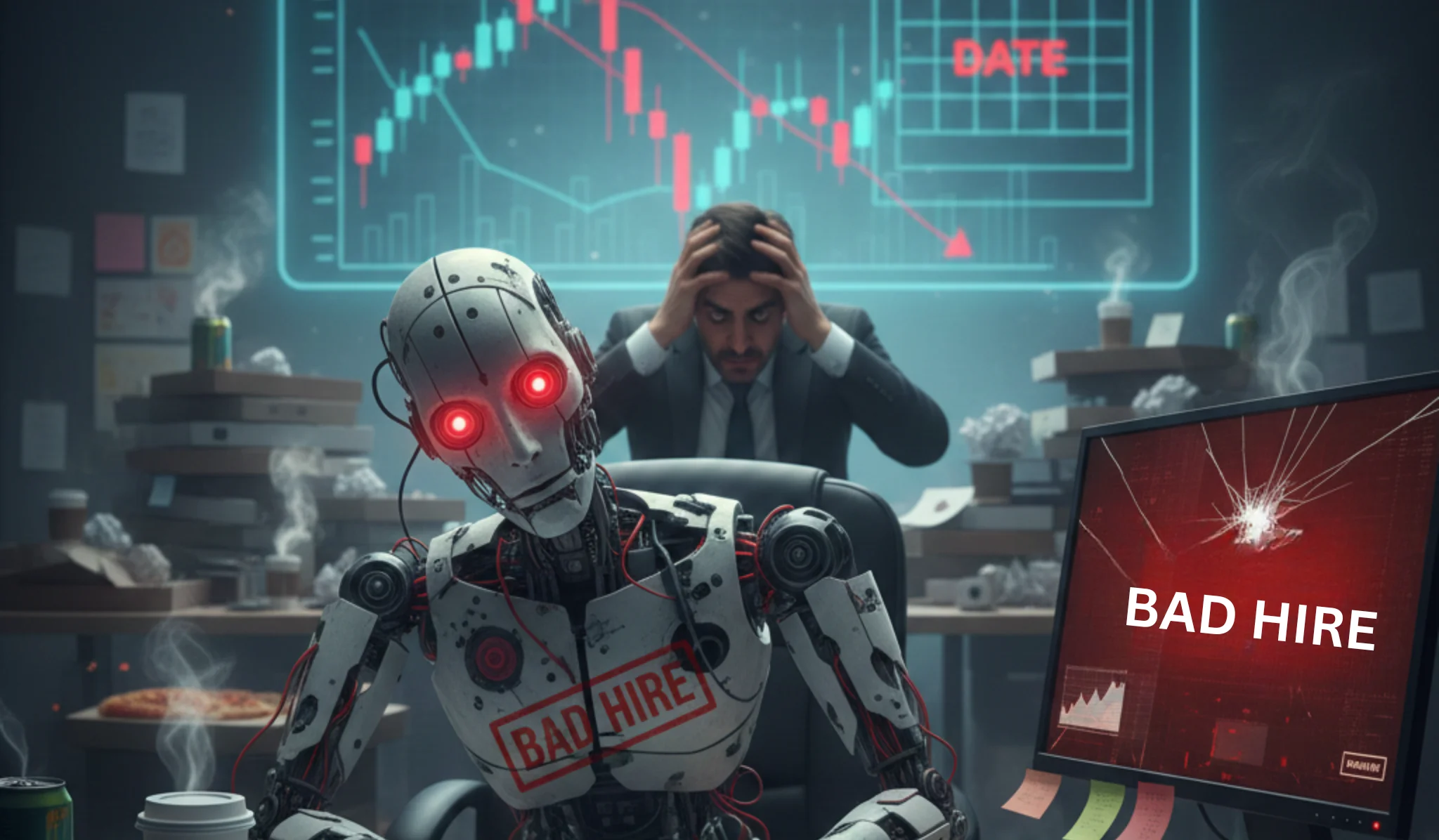
A bad AI hire can cost six to nine months of total compensation once you factor in stalled initiatives, rehiring, lost team productivity, and reputational risk, far beyond base salary.
A bad AI hire can cost far more than salary. Between lost momentum, stalled initiatives, rehiring, and reputational risk, the real cost often reaches six to nine months of compensation or more. The good news is most AI hiring mistakes are preventable with the right interview structure and early warning signs.
AI roles are high-impact, high-visibility, and still poorly understood by many organizations. That combination makes the margin for error small and the cost of getting it wrong unusually high.

The Real Cost of a Bad AI Hire.
Most leaders underestimate how expensive a failed AI hire really is.
The direct costs are only the beginning.
- Salary and benefits
- Recruiting and onboarding costs
- Manager and team time
The hidden costs are where damage compounds.
- Delayed AI initiatives or abandoned pilots
- Rework of models, data pipelines, or architecture
- Loss of executive confidence in AI investments
- Erosion of credibility with the board or investors
CareerBuilder research found that 74% of employers have hired the wrong person, at an average cost of nearly $15,000 per bad hire. For specialized roles like AI engineers and AI leaders the toll runs higher: the SHRM Foundation puts total turnover costs at 90% to 200% of annual salary once lost productivity is included. And research from Gartner and McKinsey shows many AI initiatives stall not because of the technology, but because of organizational readiness, data quality, and leadership and workflow gaps.
Why AI Hiring Mistakes Are More Expensive Than Traditional Tech Hires.
AI hires fail differently than software or infrastructure hires.
AI roles take longer to show impact.
Unlike traditional engineers, AI professionals often depend on data quality, governance, and cross-functional alignment. When expectations are unclear, months can pass before leaders realize something is wrong.
AI talent is scarce and expensive to replace.
Replacing a failed AI hire takes longer and often requires re-educating stakeholders on what went wrong. Working with specialists who hire AI engineers can reduce this risk significantly.
AI work is highly visible.
Failed AI initiatives attract scrutiny from executives, boards, and regulators. One bad hire can stall momentum across the organization.
At KORE1, we consistently see organizations mistake AI hiring as a purely technical decision. In reality, it is a business decision with technical consequences. At KORE1, we have placed specialized technology talent for 20+ years and maintain a 92% 12-month placement retention rate, the vetting discipline that keeps a high-stakes AI hire from becoming a costly mistake.
Common AI Hiring Mistakes Executives Make.
Hiring for hype instead of outcomes
Candidates who speak fluently about models and tools but cannot explain how their work creates business value.
Confusing research experience with production readiness
Strong academic or experimental backgrounds do not always translate to deployed, monitored, and maintained AI systems.
Ignoring data and infrastructure readiness
Hiring advanced AI talent before the organization has clean data, governance, or integration capabilities sets everyone up to fail.
Over-indexing on tools
Tool familiarity changes fast. Judgment, problem framing, and execution discipline matter more.
Red Flags That Signal a Risky AI Candidate.
Technical Red Flags
- Cannot clearly explain how models move from prototype to production
- Over-reliance on pre-trained models without understanding limitations
- Avoids discussing model monitoring, drift, or failure scenarios
Business and Communication Red Flags
- Struggles to translate technical decisions into business impact
- Blames data, stakeholders, or leadership for past failures without accountability
- Cannot define success metrics beyond accuracy scores
Ethical and Judgment Red Flags
- Dismisses concerns about bias, data sourcing, or compliance
- Lacks awareness of regulatory or reputational risk
- Treats AI governance as someone else’s problem
From a CEO perspective, the biggest warning sign is not lack of knowledge. It’s lack of judgment.
Interview Templates to Reduce AI Hiring Risk.
These questions are designed for executives and HR leaders, not just technical interviewers.
Executive Alignment Questions
- What business problem was your last AI project solving?
- How did leadership define success, and how did you measure it?
- What would you do differently if you started that project again?
Technical Depth Questions
- Walk us through how a model you built was deployed and monitored.
- How did you handle data quality issues in production?
- What caused the most unexpected challenges after launch?
Real-World Scenario Questions
- Our data is incomplete and messy. How would you approach the first 90 days?
- If leadership expectations exceed technical reality, how do you respond?
- When do you recommend not using AI at all?
Judgment and Ethics Questions
- How do you evaluate bias risk in real-world datasets?
- What governance checks do you believe are non-negotiable?
- Describe a time you pushed back on leadership about AI risk.
These questions surface how candidates think under real constraints, not just how they talk.
How to Protect Your Organization Before You Make the Hire.
Confirm readiness before recruiting
- Do you have usable data?
- Is ownership clearly defined?
- Are expectations realistic?
Define the role precisely
- Builder, leader, or translator?
- Research-focused or production-focused?
- Individual contributor or strategic owner?
Know when to wait
Sometimes the smartest AI hiring decision is not hiring yet. Many organizations need foundational work before senior AI talent can succeed.
A CEO’s Perspective on AI Hiring Risk.
From a leadership standpoint, most failed AI hires are not talent failures. They’re alignment failures.
Success comes from:
- Clear outcomes
- Honest readiness assessment
- Structured interviewing
- Willingness to slow down before hiring
At KORE1, we view AI hiring as risk management as much as talent acquisition. When done right, AI hires accelerate growth. When done wrong, they quietly drain momentum.
Final Takeaway
The cost of a bad AI hire is rarely obvious on day one. It shows up months later in stalled progress, missed opportunities, and lost confidence.
Leaders who approach AI hiring with structure, skepticism, and clarity dramatically reduce that risk.
Hiring AI talent should accelerate your strategy, not introduce uncertainty. A trusted AI staffing partner can help ensure you make the right hiring decision. If you’re evaluating an AI role or questioning whether your organization is truly ready, KORE1 can help you make the right decision before the hire is made.
Our team partners with C-suite and HR leaders to:
- Clarify AI roles and success metrics
- Identify red flags early in the interview process
- Align AI talent with real business outcomes
- Reduce the cost and risk of misaligned AI hires
Contact KORE1 to discuss your AI hiring strategy and get expert guidance before you commit.
Cost of a Bad AI Hire: Common Questions, Answered
How much does a bad AI hire really cost?
A bad AI hire often costs far more than salary alone. When you factor in lost productivity, stalled initiatives, rehiring, and opportunity cost, the total impact can reach six to nine months of compensation or more. For senior AI roles, the strategic and reputational damage can exceed the direct financial loss.
Why are AI hiring mistakes more expensive than other tech hires?
AI roles are highly specialized, harder to replace, and deeply tied to data readiness and business alignment. When an AI hire fails, organizations often have to undo months of work, reframe expectations with leadership, and rebuild confidence in AI investments.
What are the most common AI hiring mistakes leaders make?
Leaders most often hire for buzzwords instead of business outcomes. Other frequent mistakes include confusing research experience with production experience, ignoring data and infrastructure readiness, and failing to define what success looks like in the first 90 days.
What are the biggest red flags when interviewing AI candidates?
The biggest red flag is a candidate who cannot explain how models move from prototype into production. Others include avoiding accountability for past failures, struggling to convey business impact, and dismissing governance concerns such as bias, compliance, and data quality.
How can non-technical executives effectively interview AI candidates?
Non-technical leaders should focus on judgment, decision-making, and outcomes. Asking candidates to explain past AI projects in business terms, describe failure scenarios, and walk through real-world constraints often reveals more than deep technical questioning.
Should companies hire AI talent before their data is ready?
In most cases, no. Hiring advanced AI talent before data, governance, and infrastructure are in place often leads to frustration and failure. Many organizations benefit from addressing foundational readiness before making senior AI hires.
Read full video transcript
AI is transforming businesses, but one wrong hire can completely derail your AI strategy. This video breaks down the real cost of a bad AI hire and why leaders need to approach this with more caution than they typically do. AI hiring isn't like any other technical hire. Unlike traditional roles, AI hires fail differently. The problem isn't always apparent right away. Most of the time, you won't see the true damage until months later when projects stall, momentum is lost, and key initiatives are delayed. AI roles are high visibility, high impact, and still misunderstood in many organizations. That combination makes the margin for error smaller, and the cost of a wrong hire unusually high. When we think about the cost of a bad hire, most people focus on salary. But that's the smallest part of the equation. Sure, salary, benefits, and recruitment fees add up, but the hidden costs of a bad AI hire are what really drain your business. The true costs show up as stalled initiatives, rework of models, lost confidence from executives, and even the erosion of your credibility with investors. These effects can ripple through your organization, affecting far more than just your tech team. Unlike software engineers, AI professionals take longer to show impact. AI work is heavily dependent on data quality and cross functional alignment. So when things start going wrong, months can pass before leadership realizes there's a problem. By the time it's obvious that something's not working, the damage is already done. You're left with incomplete projects, frustrated teams, and an AI strategy that's lost momentum. So why do AI hires fail? There are a few common mistakes I see over and over again in the field. One. Candidates often talk about buzzwords, models, and tools, but fail to explain how their work directly impacts the business. They can build algorithms, but can they solve real world business problems? Two, confusing research experience with production readiness. Academic experience doesn't always translate into the ability to deploy, monitor, and scale real world AI systems. The gap between research and production can be wide and it's crucial to hire someone who understands the nuances of both. Three, ignoring data and infrastructure readiness. Many organizations rush to hire advanced AI talent before they've established solid data governance, clear ownership, and proper integration. Without these foundational elements, even the most talented AI experts can't succeed. Now that we understand why AI hires fail, let's talk about the red flags you need to watch for during the interview process. One, inability to explain how models move from prototype to production. This is critical. If a candidate can't explain how they deployed, monitored, or adjusted their models post launch, it's a major red flag. Two, overreiance on pre-trained models. Candidates who lean heavily on pre-trained models but can't explain their limitations or how to handle unexpected issues are not ready for the complexity of real world AI systems. Three, blaming past failures on data stakeholders or leadership. AI work is often difficult, but if candidates are unwilling to take responsibility for past mistakes, they might not have the problem-solving mindset required. Now that we know the mistakes to avoid, let's focus on what you should do to reduce the risk of a bad AI hire. One, assess organizational readiness. Is your data clean? Are your stakeholders aligned? Are expectations realistic? If the answer is no to any of these, it's best to hold off on hiring until those foundations are in place. Two, focus on judgment, not just technical skills. The best AI candidates can work through ambiguity, make tough decisions, and understand when AI isn't the right solution. Three, create structured interviews. Ask business aligned questions that force candidates to demonstrate their ability to deliver real world results, not just talk about tools. AI hiring is not just about finding someone with the right technical skills. It's about ensuring they are aligned with your business goals, ready to handle complex challenges, and prepared for the realities of production. Make the right decision, and you'll set your AI strategy on a path to success. If you're evaluating AI talent and want to learn more about how to avoid these hiring mistakes, don't hesitate to reach out. Let's talk about how we can build an AI strategy that actually drives results. Thanks for watching. Don't forget to like, share, and subscribe for more insights on how to build smarter AI strategies.
