
Job Offer Letter Template for Scientific and Lab Hires
A free offer letter for QC, R&D and GMP plant hires, with the shift, gowning and screening language office templates leave out.
Free .docx, no form to fill out. Or read it on this page.

Your finalist has two offer letters on the kitchen table tonight. Which one answers more of the questions they asked you?
A job offer letter template for scientific and lab hires should state the title, pay, schedule and shift differential, start date, manager, benefits and at-will status, plus every contingency (background check, drug screen, gowning qualification) and a reply deadline. The free template below covers all of it.
Last updated: October 16, 2026
That one usually wins. Not always the bigger number.
I tell hiring managers a great candidate is like a great house on the market. Multiple buyers should be interested.
Anyone who has sold a house knows the next part. The seller doesn’t always take the biggest bid. They take the cleanest one, with the fewest open questions and no surprises at closing. Same with candidates.
Your letter is the bid. A lab or plant letter has more to answer than an office one, because the job comes with a shift, a gown, and screening that has to clear before day one.
- This template
- Offer letters an employer sends to QC analysts, lab technicians, R&D scientists, manufacturing technicians and quality staff, written for small and mid-sized science companies without an HR department.
- Somewhere else
- IT offers are a different animal, and our direct hire IT recruiting page marks one up clause by clause. Whether your number is competitive is its own question, answered in is my salary offer competitive.
I place scientists for the life sciences staffing team here, and most of the offers I see go out on a direct hire search or at the end of a contract-to-hire assignment. A clean letter is part of why 92% of KORE1 placements are still in the seat twelve months later.
Job Offer Letter Template, Ready to Copy
Replace every bracketed field. Lines marked optional get deleted when they don’t fit, like the overtime line for an exempt scientist. The Word version has the same text.
Dear [First name],
We’re offering you the role of [Job title] at [Company], based at our [site name] in [city, state]. You’ll report to [Manager name, title]. The work is [one sentence on the work, e.g. release testing of finished product in the QC laboratory].
Status and pay. This is a [full-time / part-time], [exempt / non-exempt] position. Your starting pay is [$ annual salary, or $ per hour], paid [biweekly], less required deductions.
Optional, non-exempt only You’ll be paid overtime at one and a half times your regular rate for hours worked over 40 in a workweek, and as your state requires.
Schedule. You’ll work [shift name], [start time] to [end time], [days of the week].
Optional, shift work This shift pays a differential of [$ per hour, or percent] for every hour worked on it. [If it rotates: The schedule rotates on a (pattern), and changes come with (notice period) notice.]
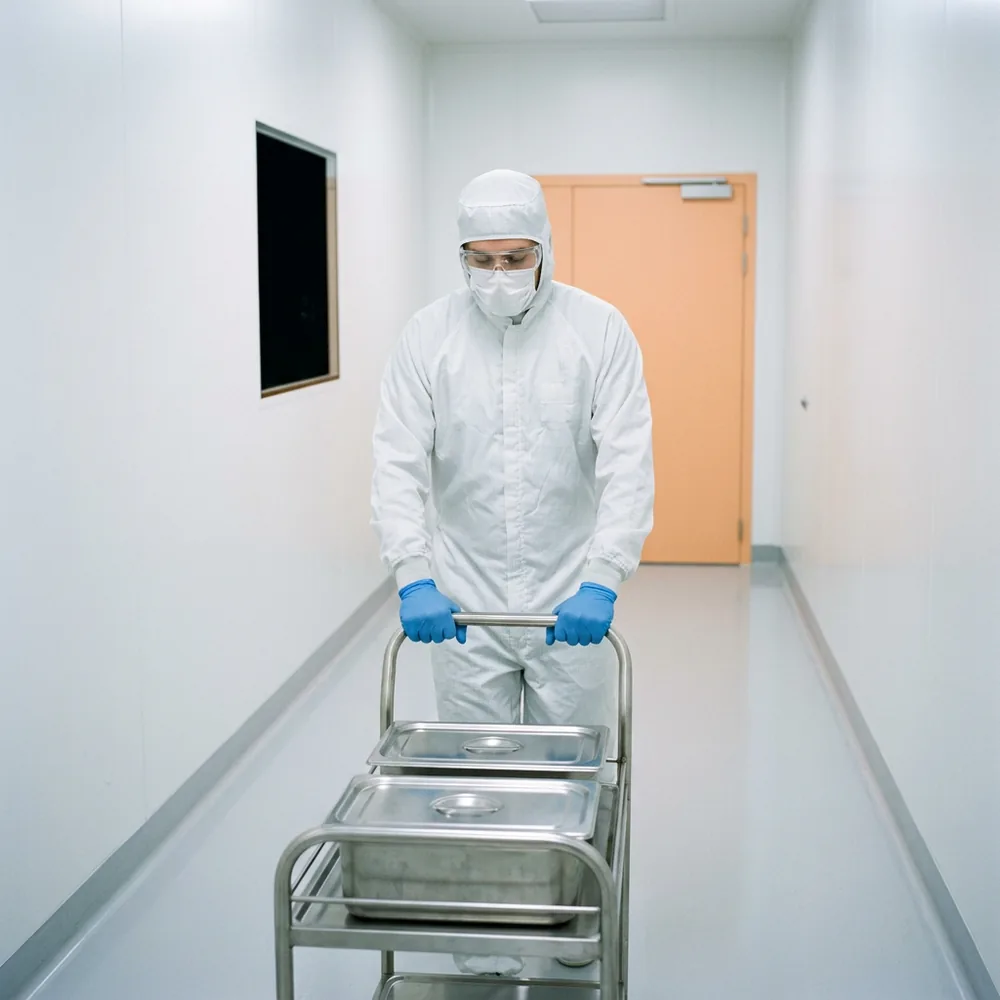
Work environment. This role works in [a GMP manufacturing area / a QC laboratory / a classified cleanroom / a BSL-2 laboratory]. Before working there without supervision, you’ll complete [GMP and safety training, gowning qualification, and any site qualification your role needs]. The area requires [protective clothing and gowning, no jewelry or makeup, and telling your supervisor about any illness or open wound].
Start date. Your first day is [date]. Please report to [place] at [time] and bring documents that show your identity and authorization to work in the United States, for Form I-9.
Contingencies. This offer depends on the satisfactory completion of [a background check, a reference check, a drug screen, verification of your degree, a pre-placement medical evaluation or respirator fit test] before your start date. Authorization forms for [the background check] come to you separately.
Benefits. You’ll be eligible for [medical, dental and vision coverage] starting [date], [a 401(k) plan with a match of ___], [___ days of paid time off a year] and [tuition assistance up to $___ a year]. The enclosed summary has the details, and the plan documents govern.
Optional, sign-on or relocation You’ll receive [a sign-on bonus / relocation assistance] of [$ amount], paid [when]. If you resign within [12] months of your start date, you agree to repay a prorated share.
Agreements. As a condition of employment, you’ll sign our [Confidentiality and Invention Assignment Agreement], enclosed with this letter.
At-will employment. Employment with [Company] is at will. You or the company may end it at any time, with or without cause or notice, and this letter is not a contract for any set period.
Reply. Please sign and return this letter by [date and time]. If anything in it raises a question, call me at [phone] before then.
We’d be glad to have you on the team.
Accepted by Date
A hiring template, not legal advice. Have employment counsel read it once for your state before it goes out.
What a Lab Offer Letter Says About the Work
Most free templates were written for a desk job. Title, salary, benefits, done. For a lab or plant hire, three more things belong in writing.
Shift and differential
Federal law doesn’t require a shift differential at all. If you pay one, it counts toward overtime, because 29 CFR 778.207(b) puts nightshift differentials inside the regular rate. Say a technician earns $28 an hour plus a $2 night differential, so the regular rate is $30 and overtime is $45 an hour, not $42. It adds up fast.
Gowning and health
FDA’s drug GMP rules expect people to wear clean clothing appropriate for the duties they perform, and to keep anyone with an apparent illness or open lesion away from the product. It’s a real job condition. Put it in the letter.
Training before the bench
A new QC analyst can’t release product on day one. Saying the first weeks are training and qualification keeps a good hire from thinking the job changed on them. Say so in the letter.
None of this is fine print. It’s the job.
Write the Offer Letter They Asked For
I run something I call the Blind Recruit. The first time I talk to a QC analyst or a process engineer, I don’t say which company I’m calling for or which job, so nobody tailors an answer to a posting when the question turns to what they want next. That’s different from blind hiring, where names come off resumes. Whatever they say goes in my notes word for word, and later it shapes the offer.
BR·01 They said
“Days. I’ve worked nights for six years.”
BR·01 The letter says
First shift, 6:30 a.m. to 3:00 p.m., in writing. Rotating onto nights for coverage? Say how often. “Hours may vary” loses this one.
BR·02 They said
“I want to stay hands-on at the bench.”
BR·02 The letter says
Is it bench testing, data review or both? Answer that in the opening paragraph, next to the manager’s name.
BR·03 They said
“I’m halfway through a master’s.”
BR·03 The letter says
The tuition program by name, with its yearly cap. If there isn’t one, week two is a bad time for them to find out.
BR·04 They said
“My bonus pays out in March.”
BR·04 The letter says
Start April 1. Or a sign-on bonus that matches the payout, with the repayment terms right beside it.
BR·05 They said
“Last job, the shift pay kept changing.”
BR·05 The letter says
$2.00 an hour. One number, written once.
Not one of those wants shows up in a job description. That’s why I ask before they know which job it is. If you hire without a recruiter, ask the same question on your own first call and write the answer down word for word, because it’s the closest thing you’ll get to the candidate’s own checklist for your letter.
Then read the draft the way a friend would. Would you tell a friend to sign it without calling you first?

Offer Letter Contingencies, in the Order They Happen
Screening comes after the offer, not before it. In many places that order is the law. Order matters. Here’s the sequence I’d build the contingency paragraph around.
Background check
The Fair Credit Reporting Act wants the disclosure in a document that consists solely of the disclosure, with written authorization, before you order the report. That’s why the template sends those forms separately instead of folding them into the letter. Keep them separate.
Conviction history in California
Under the Fair Chance Act you can’t ask until after a conditional offer. If you plan to pull the offer over a conviction, you owe an individualized assessment and written notice, and the candidate gets at least five business days to respond. Plan for the wait.
Drug screen
Fine to require. It belongs in the letter. In California, though, a test that only finds non-psychoactive cannabis metabolites can’t be the reason you rescind, except in the building trades and in jobs that need a federal background investigation or security clearance.
Form I-9
It comes after acceptance, never before. The new hire completes Section 1 by the first day of work, and you complete Section 2 within three business days of it.
Get the order wrong and a good hire can stall for a week. Or walk.
40
hours in a workweek before overtime, shift differential included in the rate
3
business days after the first day to complete Form I-9 Section 2
5
business days a California candidate gets to answer a conviction notice
92%
of KORE1 hires still in the job a year after the start date
Overtime from the Fair Labor Standards Act and 29 CFR 778.207. I-9 timing from 8 CFR 274a.2 and the USCIS employer handbook. California Fair Chance Act, Gov. Code 12952. KORE1 retention data.
Four Offer Letter Clauses to Check for Your State
The template is written to travel. These four lines are where a state can change the answer.
Invention assignment
Scientists invent things. So this one matters more for you than for most employers. California’s Labor Code 2870 keeps inventions made entirely on the employee’s own time, without company equipment or secrets, out of reach unless they relate to your business, and 2872 says you have to tell them so in writing.
Non-compete
Leave it out in California, where Business and Professions Code 16600 makes them void. Elsewhere, it depends.
At-will
Works almost everywhere. Montana is the exception, since its Wrongful Discharge from Employment Act requires good cause once the probationary period ends.
Pay notice
California requires a written pay notice at hire for non-exempt employees, and New York requires one for every new hire, in English and the employee’s primary language. It covers the pay rate and the regular payday, and the offer letter doesn’t replace it. Send both.

How to Send the Offer Letter So It Gets Signed
I call with the number first. The PDF follows within the hour, with the benefits summary and the invention assignment attached, and an e-signature is fine for all of it because the federal E-SIGN Act says a signature “may not be denied legal effect” just for being electronic.
Give the candidate three to five business days. Two days is a squeeze for someone who still has to tell a manager they’re leaving. Two weeks gives that manager’s site time to build a counteroffer, and a plant short two people on second shift will usually find the money.
Candidates for plant jobs often ask whether gowning time is paid. For non-exempt staff, plan on yes. In Steiner v. Mitchell (1956) the Supreme Court held that changing clothes before a shift counts as work when it’s integral and indispensable to the job, and a cleanroom gown is about as integral as clothing gets.
Put that answer in the letter too. A clean letter rarely has to win a bidding war.
Which Version of the Letter You Need
A small lab or plant usually sends four kinds of offer in a year. It’s the same template every time, with a few lines swapped.
Non-exempt · Shift work
Lab or plant technician
Keep the overtime and differential lines, and if the shift rotates, spell out the pattern.
Exempt · Day shift
Scientist or QA specialist
Cut the overtime line, then attach the invention assignment so it gets signed with the offer.
Conversion · Contract-to-hire
Contractor going permanent
New employer, new letter, so say whether time on assignment counts toward benefits waiting periods.
Relocation · Any level
Hire moving for the job
Put the move in the optional paragraph with a dollar cap, what it covers and the repayment window.
On a KORE1 contract-to-hire placement, the person works as our employee first, so your letter goes out at conversion. Lab surges with no conversion planned run through our contract staffing, and QC benches have their own quality control staffing desk.
No HR department at all? My guide to hiring at a small science company without a TA team covers the rest of the process, and the piece on new hire retention covers what happens after the signature.
Common Questions
Is a job offer letter legally binding?
An offer letter with a clear at-will statement usually isn’t a contract for a set term of employment. It is still a record of what you promised, so write only the pay, bonus and start terms you’ll actually honor.
Can we pull an offer after a failed background check?
Yes, if you follow the process first. Under federal law the candidate gets a copy of the report and a summary of their rights before you act. California adds an individualized assessment and at least five business days to respond when the reason is a conviction.
Does the offer letter need to mention the drug screen?
It should, whenever the offer depends on one. Naming it up front avoids a surprise later. In California, keep the reason for any rescission away from non-psychoactive cannabis metabolites, which state law now protects for most jobs.
How long should a candidate get to accept?
Three to five business days is what I suggest for most lab and plant hires. Shorter feels like pressure. Longer invites a counteroffer.
Do we send a new offer letter when a contractor converts?
You do, because the person is changing employers even if the desk stays the same. Restate the pay, benefits start date and at-will terms in your name, and attach the agreements your own staff sign.
Should a lawyer review this template?
Once, for your state, before the first letter goes out. After that the bracketed fields change and the structure doesn’t. That’s the point.
Want a Second Read on the Offer?
Send me the role and the offer you’re planning to make. I’ll tell you plainly how the candidates I talk to would read it, and what they’d ask before signing. No sales pitch.
Let’s Connect →Expert in finding you the right talent, right away.
Prefer LinkedIn? Message Dave Manchester
