
Scientific Staffing Agency for Chemists, Microbiologists and Lab Teams
Pharma, chemical, food and testing labs share one pool of scientists. We screen for your seat’s rulebook.
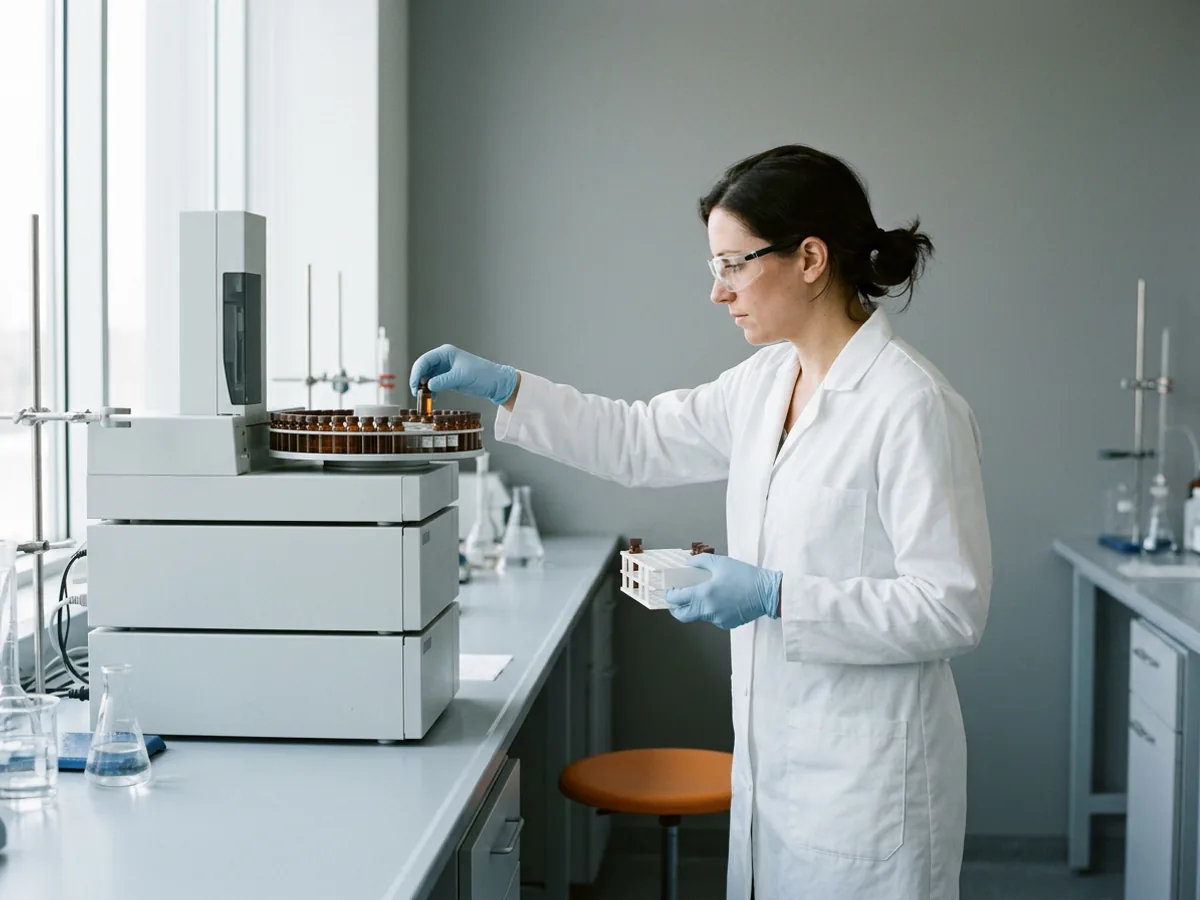
KORE1’s scientific staffing desk fills lab, bench and quality seats for drug, biotech, chemical, food, testing and clinical lab employers, placing chemists, microbiologists and technicians in contract, contract-to-hire and permanent roles. It began as our Scientific Division in 2018.
Last updated: September 19, 2026
Where does a good chemist work? Pharma is the obvious answer. It’s right about one time in six. The rest surprise people.
They turn up in contract research firms, testing labs, resin and coatings plants, soap makers and a long tail of everything else. Microbiologists and lab technicians scatter the same way. Food science technicians mostly don’t. So the analyst who fits your QC bench might be validating methods for a flavor house this week, and a recruiter who only searches pharma job titles will never meet that person.
Scientific searches run through KORE1’s engineering staffing agency group, alongside the life sciences staffing agency desk that covers biotech, pharma, device and diagnostics programs. Drug makers who need GMP bench cover on contract have their own pharmaceutical staffing agency page, and multi-hub biotech hiring goes to the biotech staffing agency team. This page takes the wider view, every employer that runs a lab. KORE1 launched its Scientific Division in December 2018 under Dave Manchester, who now consults on our scientific searches. Employers hiring for a specific R&D, QC or manufacturing bench have their own page on staffing a laboratory. Drug makers filling a permanent quality seat have one too, on hiring pharmaceutical quality leadership. Pay for those leaders sits in our quality manager salary benchmark, built from BLS data.
Scientific Staffing Follows Scientists Across Nine Industries
Read it like a chromatogram. Each trace is one occupation, and each numbered peak is an industry that lands in the same spot on every trace. Peak height is that industry’s share of the occupation’s U.S. jobs, from the May 2025 occupational profiles the Bureau of Labor Statistics publishes.
Share of U.S. jobs by industry, five scientific occupations
Chemists 82,770 U.S. jobs
- 16.4% of chemists work in peak 1, pharmaceutical and medicine manufacturing
- 16.2% of chemists work in peak 2, scientific research and development services
- 12.0% of chemists work in peak 3, architectural, engineering and related services
- 10.8% of chemists work in peak 4, basic chemicals, resins, agricultural and other chemical manufacturing
- 6.1% of chemists work in peak 5, paint, adhesive, soap and cleaning compound manufacturing
Everywhere else 38.6%
Chemical technicians 57,540 U.S. jobs
- 9.4% of chemical technicians work in peak 1, pharmaceutical and medicine manufacturing
- 8.1% of chemical technicians work in peak 2, scientific research and development services
- 20.4% of chemical technicians work in peak 3, architectural, engineering and related services
- 16.9% of chemical technicians work in peak 4, basic chemicals, resins, agricultural and other chemical manufacturing
- 4.3% of chemical technicians work in peak 5, paint, adhesive, soap and cleaning compound manufacturing
Everywhere else 40.9%
Microbiologists 18,940 U.S. jobs
- 14.6% of microbiologists work in peak 1, pharmaceutical and medicine manufacturing
- 22.2% of microbiologists work in peak 2, scientific research and development services
- 12.1% of microbiologists work in peak 3, architectural, engineering and related services
- 8.3% of microbiologists work in peak 7, colleges, universities and professional schools
- 9.7% of microbiologists work in peak 8, federal executive branch
Everywhere else 33.1%
Biological technicians 69,620 U.S. jobs
- 9.1% of biological technicians work in peak 1, pharmaceutical and medicine manufacturing
- 36.0% of biological technicians work in peak 2, scientific research and development services
- 19.1% of biological technicians work in peak 7, colleges, universities and professional schools
- 9.3% of biological technicians work in peak 8, federal executive branch
- 5.8% of biological technicians work in peak 9, general medical and surgical hospitals
Everywhere else 20.7%
Food science technicians 14,600 U.S. jobs
- 58.6% of food science technicians work in peak 6, food and beverage manufacturing
Everywhere else 41.4%
Peak table
- 1Pharmaceutical and medicine manufacturing
- 2Scientific research and development services
- 3Architectural, engineering and related services, where BLS files testing labs
- 4Basic chemicals, resins, agricultural and other chemicals
- 5Paints, adhesives, soaps and cleaning compounds
- 6Food and beverage manufacturing
- 7Colleges, universities and professional schools
- 8Federal executive branch
- 9General medical and surgical hospitals
- Chemists in pharma, their biggest single industry
- 16.4%
- Traces whose tallest peak is pharma
- 1 of 5
- Chemists outside their five largest industries
- 38.6%
- U.S. jobs across all five occupations
- 243,470
BLS lists the five industries with the most jobs for each occupation, and the food science technician peak adds all five food and beverage subsectors on that list together, which is why it towers over everything else on its trace. Shares are rounded to one decimal, so a trace can total 100.1.
Pharma is the tallest peak on exactly one trace, and only by a hair. It employs 13,610 chemists, just 180 more than research and development firms do. Call it a tie. What those chemists earn is a different map, and our QC analyst salary guide walks through it.
Chemical technicians lean the other way. Their biggest employer is the category that holds testing labs, at 20.4%, followed by basic chemical and resin plants at 16.9%, while pharma sits third. Hiring a lab tech for a drug plant usually means recruiting someone who learned the bench somewhere else entirely. Same skills, different building.
Same Degree, Different Rulebook
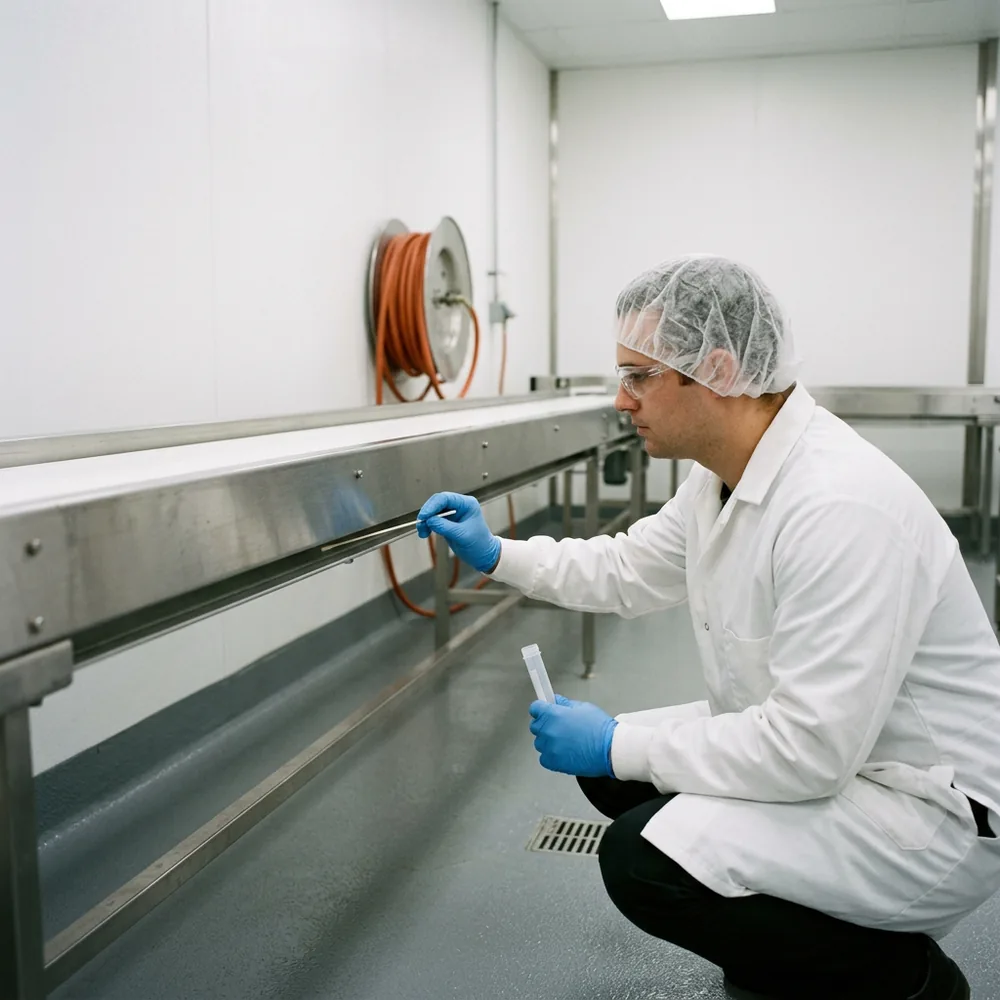
A microbiologist swabbing a conveyor for Listeria and a microbiologist reading plates in a sterile drug plant sat through the same lectures. Their days look nothing alike. Why? The regulation behind each result is different, and so is what it asks of the person producing it.
- Drug and biologic plants
- 21 CFR Part 211. People are trained in the particular operations they perform, and GMP training repeats often enough to keep them current.
- Nonclinical safety studies
- 21 CFR Part 58, good laboratory practice. Every study has a study director, and a separate quality assurance unit inspects it.
- Food and beverage plants
- 21 CFR Part 117. A preventive controls qualified individual prepares or oversees the food safety plan.
- Clinical and reference labs
- 42 CFR Part 493, better known as CLIA. Who may run a test depends on whether it’s waived, moderate or high complexity. What that means for a hire is laid out on our page about staffing a clinical lab.
- Accredited testing labs
- ISO/IEC 17025. Methods are validated, measurement uncertainty is estimated, and the lab proves itself in proficiency testing.
- Medical device makers
- 21 CFR Part 820, now the Quality Management System Regulation. Since February 2, 2026 it has pulled in ISO 13485:2016 by reference.
The science moves between these buildings easily. The rulebook doesn’t. Learning a new one is where a strong hire’s first month goes, so we ask which regulation your data has to survive before we ask for a job title. Our regulated industry tech staffing desk asks the same question about the systems that hold that data.
Method, Matrix, Rulebook
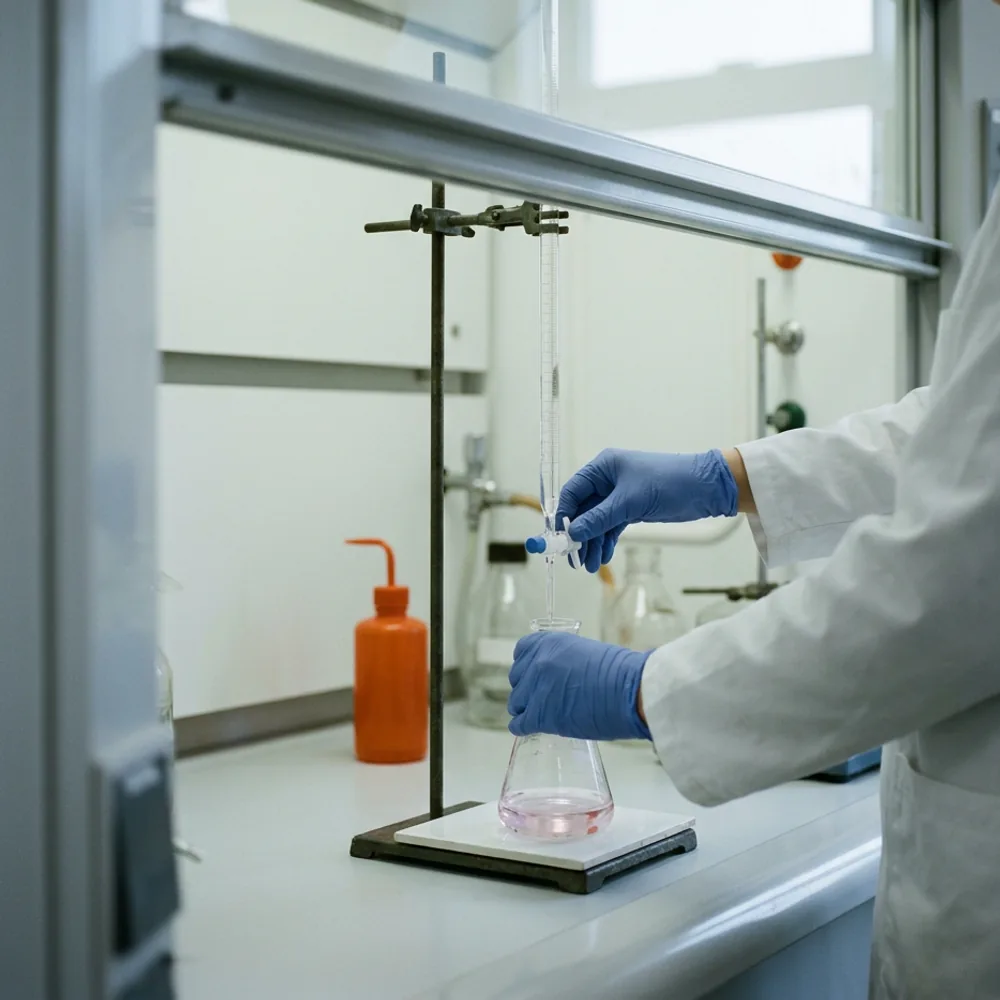
Three questions sort a scientist faster than a title can. We ask all three on the first call, before a resume goes anywhere. Every time.
- Method
- The technique and the instrument. GC-MS, ICP-MS, LC-MS/MS, qPCR, ELISA or a plain total plate count. Methods travel well from one industry to the next.
- Matrix
- What’s actually in the vial. A tablet, blood serum, a resin, a finished beverage, well water. An assay that’s routine in one matrix can need real development work in another.
- Rulebook
- The regulation the result has to survive, from the list above. It’s the slowest of the three to learn.
Two of the three usually carry over. The one that doesn’t carry over tells you how long training will run, so it’s the first thing we flag in the note that goes with every candidate we send, right under the name.
Take an ICP-MS chemist who spent five years on soil samples at an environmental lab. The instrument is familiar on day one. Good start. At a drug plant, what’s new is the matrix and Part 211, and that gap is teachable if you plan for it.
A Science Staffing Agency Started by a Self-Described Science Nerd
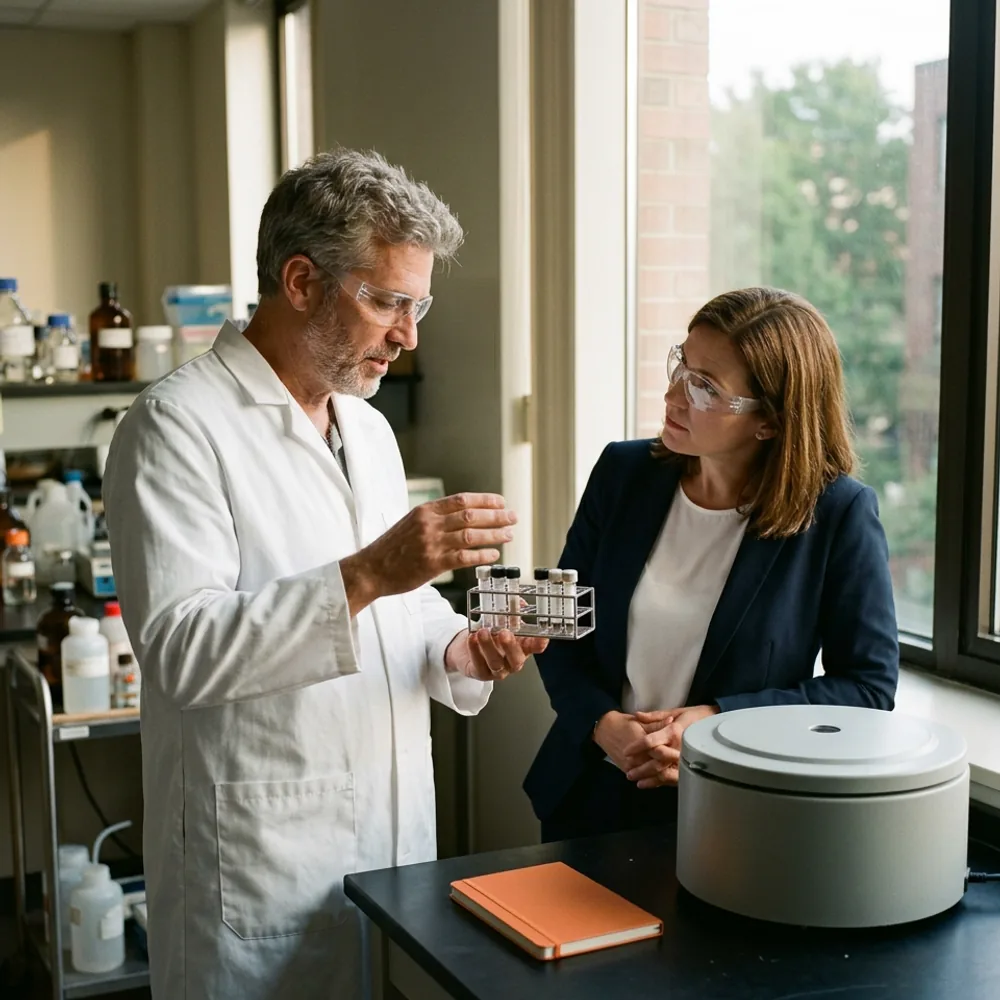
Dave Manchester has a name for the kind of recruiter he tries to be. He calls it the Synergistic Salesperson, someone who recruits in science because they love it, not because somebody assigned them the desk. Odd name, honest idea.
I focus on the Scientific and Engineering industries not because I was forced into it, but because I’m a science nerd and love the industries that I support.
He started as a scientific recruiter at a large national staffing firm, the first hire his office made after an 18-month freeze during the housing crash, and worked his way up to the number two desk in an office of about 40. KORE1 brought him on in December 2018 to launch the Scientific Division for biotech, pharmaceutical, medical device, reference lab and food and beverage employers. He’s back with us now, listed on KORE1’s consultant roster.
Searches run on three terms. Contract staffing covers a study, a validation push or a leave of absence. Contract-to-hire lets you watch someone work under your SOPs before you commit to a salary and a title, and direct hire fills the seat that will own a method, train the next analyst and answer the auditor for years. Pick whichever fits the work.
Scientific Staffing Beyond the Drug Plant
Four kinds of employer, each tagged with the industry codes BLS uses for it. If you’re still weighing an agency against in-house recruiting, start there.
NAICS 3254 · 3391
Drug, biotech and device makers
QC chemists, microbiologists and GMP quality staff for plants that ship regulated product.
Go deeperDevice company hiring
NAICS 325
Chemical, coatings and materials plants
Analytical and formulation chemists plus chemical technicians for resin, adhesive, coatings and cleaning product lines.
Go deeperProcess and chemical engineers
NAICS 311 · 312
Food and beverage producers
Food scientists, QA technicians and plant microbiologists who work under a written food safety plan.
Go deeperPlant and production crews
NAICS 5413 · 5417 · 6215
Testing, research and clinical labs
Lab technicians, research associates and clinical lab staff for contract testing firms, R&D shops and reference labs. If a quality seat is the one you are filling, start with how to write a quality control analyst posting.
Go deeperBiotech research searches
Common Questions About Scientific Staffing Agencies
Which jobs does a scientific staffing agency fill?
Mostly the bench and quality seats that need a science degree, such as chemists, microbiologists, lab technicians, research associates, QC analysts and GMP quality specialists. Lab supervisors and managers too. Process and validation engineers go to our engineering recruiters, and LIMS or lab systems work goes to the life sciences IT desk.
Is scientific staffing the same as life sciences staffing?
Not quite. Life sciences staffing covers biotech, pharma, device, diagnostics and clinical research programs, while scientific staffing covers anyone at a lab bench, including food, chemical and testing labs outside life sciences. The two overlap in pharma and biotech, and the same KORE1 recruiters work both.
Can a chemist from a coatings or chemical plant move into pharma QC?
The method decides it. An HPLC or GC chemist from a resin plant already knows the instrument cold, so what’s new is the drug product matrix, the Part 211 documentation and a quality unit that reviews every result. Plan a longer training period than you would for an internal transfer, and ask the candidate how their last lab handled an out-of-specification result.
Do you place scientists outside pharma and biotech?
Yes. Chemical, coatings, food and beverage, and contract testing employers are part of the same practice, and the 2018 division launch named food and beverage and reference labs right alongside pharma. Same recruiters, too.
What’s a realistic time to fill for a lab or scientist role?
17 days is KORE1’s average time to hire, measured over the IT and life sciences searches we run. Senior method development roles, and clinical seats that need a state license, usually run longer because the pool is smaller. Plan for it.
Do clinical lab hires need more than a degree?
Sometimes. It depends on the test and the state. CLIA sets personnel qualifications by test complexity, and states such as California and New York also license clinical laboratory staff. We confirm the license and the complexity level before anyone interviews.
Can we hire a contract scientist permanently?
20% of first-year base is the conversion fee on our standard agreement below 800 billable hours, 15% from 800 to 1,040 hours, and nothing after that. Roughly 26 full-time weeks in, the scientist is yours at no fee. Decide before a competing offer shows up.
Tell Us the Method, the Matrix and the Rulebook
No req written yet? That’s fine. Send the instrument and the regulation behind it, and a scientific recruiter will come back with what the search looks like.
Let’s Connect →