
Last updated: July 2, 2026
Oil & Gas Staffing
Plenty of resumes say “oil and gas.” Some mean one summer on a rig or a single plant turnaround. We place engineers who have actually held a compressor station together, signed off on an API 610 pump spec, and walked a unit through a turnaround with nobody getting hurt. Different pool. Vetted by recruiters who have staffed technical specialties since 2005.
Oil and gas work spans a dozen disciplines, so it lives as a specialty inside our broader engineering staffing agency practice. Most searches pull in mechanical engineering staffing and process engineering staffing. When a project needs the instrumentation and asset-integrity bench at the same time, our controls engineer staffing and reliability engineering staffing teams run the same playbook.

KORE1 is an oil and gas staffing agency that places upstream, midstream, and downstream engineers across the United States, with a 17-day average time-to-hire and a 92% 12-month retention rate.
Exploration and production. The wellhead, the reservoir, the surface facilities that get hydrocarbons out of the ground.
- Drilling & Completions
- Reservoir & Production
- Facilities & Wellsite
- Petroleum Engineering
Transport and storage. Pipelines, compression, terminals, and the integrity programs that keep product moving safely.
- Pipeline & Integrity
- Compression & Rotating
- Terminals & Storage
- Measurement & SCADA
Refining and processing. Turning crude and gas into fuels and feedstocks inside refineries, gas plants, and petrochemical units.
- Process & Chemical
- Controls & Instrumentation
- Reliability & Turnaround
- Fixed Equipment & Piping
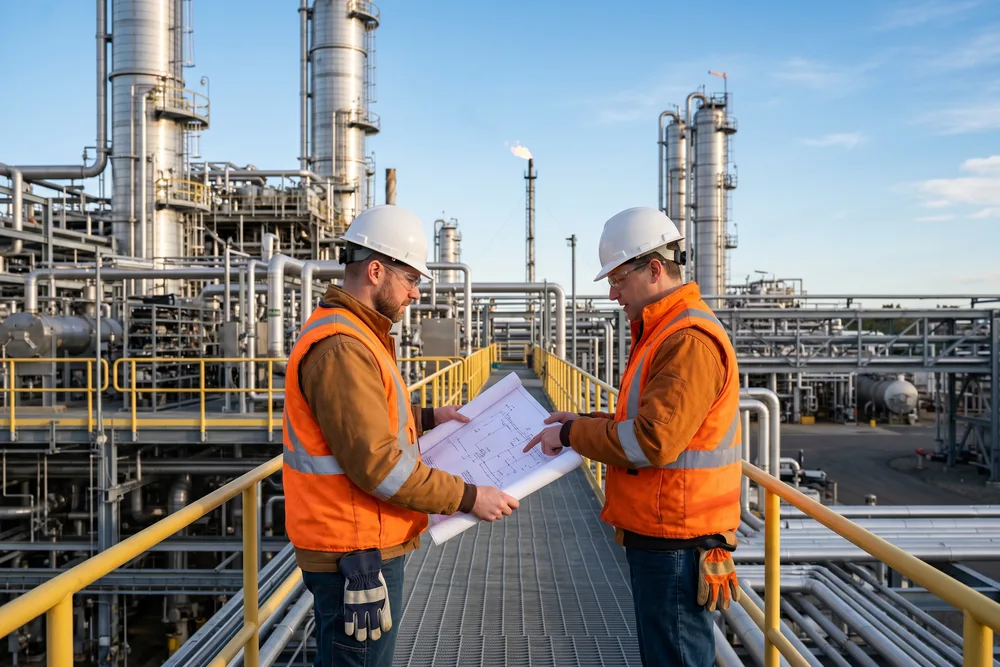
The Barrels Keep Moving. The Bench Keeps Aging.
The U.S. is the largest producer of crude oil and natural gas in the world, and it has held that spot for years running per the U.S. Energy Information Administration. The people who run those assets are a different story. A big slice of the experienced engineering workforce is aging toward retirement at the same time, and the mid-career bench behind them thinned out during the last two downturns when hiring froze and a whole cohort left for tech, renewables, or anything that felt less cyclical.
That gap is where the wrong hire happens. Picture a process engineer whose only real exposure was a summer at a small sweetening plant. Put them on a coker revamp or a live turnaround and they drown by the second shift. We screen against exactly that, because we have placed process, mechanical, and controls talent through boom and bust since 2005, and our recruiters can hear the difference between someone who has HYSYS on a resume and someone who has actually rated a relief valve on a unit that was already running. Petroleum engineers also sit among the highest-paid engineering roles in the country, which tells you how thin the qualified pool really is.
Request Oil & Gas Talent →“The median annual wage for petroleum engineers was well into six figures, among the highest of any engineering occupation.”
— U.S. Bureau of Labor Statistics, Occupational Outlook Handbook
Flexible Ways to Staff an Oil & Gas Project.
Some teams need a commissioning engineer for a six-week startup. Some need a permanent engineering manager who will own asset integrity for the next decade. We support every model. And we will tell you up front when the one you asked for is the wrong fit for the job.
Contract
Drop-in expertise for a defined push. A turnaround, a commissioning window, or an owner’s engineer for one project. Fast onboarding, no long commitment.
Contract-to-Hire
Run the engineer against your actual units and standards for 90 days before converting. Useful when the role is new and scope is still moving.
Direct Hire
Permanent seat for a lead or principal who will set the design basis, own the standards, and mentor a growing engineering team.
Project Teams
Scoped engagement. A full design pod, a commissioning crew, or a turnaround bench stood up against a hard start date.
Oil & Gas Roles We Place.
“Oil and gas engineer” is a dozen jobs wearing one title. The reservoir engineer who models decline curves. The pipeline integrity engineer who lives inside dig programs and ILI runs. The process engineer who sizes a flare header and lies awake over relief scenarios. The turnaround planner who lives in a hard hat for eight weeks straight. Same title. Wildly different people. We screen for the lane, not the keyword. For the planner, scheduler and inspector seats a Gulf Coast turnaround needs for a single outage, see Houston turnaround-window staffing.
Roles we have placed
- Petroleum, Reservoir & Production Engineers (decline curves, nodal analysis, artificial lift)
- Drilling & Completions Engineers (well planning, casing design, frac)
- Process & Chemical Engineers (HYSYS, Aspen Plus, relief and flare, PSM)
- Mechanical & Rotating Equipment Engineers (API 610 pumps, compressors, turbines)
- Fixed Equipment & Piping Engineers (ASME B31.3, API 650 tanks, Caesar II stress)
- Pipeline & Integrity Engineers (API 1160, ILI, corrosion, ASME B31.8)
- Controls, Instrumentation & SCADA Engineers (DCS, SIS, IEC 61511)
- Reliability & Asset Integrity Engineers (RBI, RCM, fitness-for-service)
- Commissioning, Startup & Turnaround Engineers (field, testing, punch lists)
- Project Engineers and Owner’s Engineers
- Electrical & Power Engineers (classified areas, NEC, motors, switchgear)
- Civil & Structural Engineers (foundations, pipe racks, site civil)
Standards come up fast on these calls, and the names matter. A fixed-equipment hire should be fluent in ASME Section VIII, API 510, API 570, and API 653, while a process engineer lives inside API 520/521 relief work and PSM instead. Corrosion is its own filter, and AMPP certification separates the people who understand cathodic protection from the ones who just know the acronym. The software bench tends to run AspenTech HYSYS, Aspen Plus, PIPESIM, OLGA, SmartPlant P&ID, AVEVA E3D, and Caesar II. For the broader role family, the BLS Occupational Outlook Handbook tracks the engineering categories these positions map to.

How We Hire Oil & Gas Engineers Who Stick.
Scope the role honestly
We get on a call and pin down the real work. Upstream, midstream, or downstream. Then the details that actually decide fit, like the governing standards, the units or assets involved, the field time required, and what “good” looks like on day 90.
Source and technically vet
Our recruiters know what shipped oil and gas work looks like. We dig into real asset history, the codes they actually used, and the failure stories nobody volunteers. The shortlist usually lands inside two weeks. Sometimes sooner.
Stay close after start date
We check in at 30, 60, and 90 days with the engineer and the hiring manager both. If something is off, we want to know early. That is how we hit 92% retention.

What “Vetted” Means on an Oil & Gas Search.
Every candidate we send has been through a technical screen run by a recruiter who can tell a real turnaround record from a padded one. No junior bench. No farmed-out calls. We ask about the units they ran, the codes they designed to, how they handled a nasty relief or corrosion problem, and the boring field work that quietly decides whether a startup lands on schedule or slips a month and burns the budget the whole plant was measured against.
“Three of our last oil and gas placements were a rotating equipment engineer, a pipeline integrity lead, and a turnaround planner. All three closed inside three weeks because we had pipelined the talent before the reqs opened. Two were senior hires most agencies cannot even screen.”
— Devin Hornick, Partner at KORE1
- Real asset history at the right scale, not one small skid
- The codes they actually designed to, by name, ASME through API
- PSM and process-safety experience where the role demands it
- Field, commissioning, and turnaround hours, not just office design time
- Safety record and the willingness to live on site when a startup demands it
Still scoping the broader build? Our energy IT staffing team covers the data, SCADA, and software layer that sits on top of every modern facility, and our construction staffing crew handles the skilled trades and field labor that go up alongside the engineering bench.
Common Questions
How fast can KORE1 fill an oil and gas engineering role?
Our average time-to-hire is 17 days, and most senior oil and gas roles like pipeline integrity leads or rotating equipment engineers close in three to four weeks.
We hold an active pipeline of pre-screened upstream, midstream, and downstream engineers, so a new req does not start from a blank job board. That matters. For an urgent contract need we have placed a commissioning engineer inside five business days. Senior process-safety and integrity roles run longer, because that bench is genuinely thin and the people on it are usually already booked, so we would rather hand you an honest three-week timeline than a fast stack of marginal resumes you have to wade through yourself.
Which oil and gas roles do you actually staff?
We staff the full value chain, from upstream drilling and reservoir engineers through midstream pipeline and integrity roles to downstream process, controls, reliability, and turnaround engineers.
That covers exploration and production work, then the pipelines and compression that move product, then the refineries, gas plants, and petrochemical units that turn it into something useful. One contact. Every segment. If you need the trades and field crews alongside the engineers, our construction staffing team runs in parallel with the same point of contact.
Do you place contract engineers, direct hires, or both?
Both, plus contract-to-hire and full project teams.
Contract works well for a defined push like a turnaround or a commissioning window. Direct hire makes sense when you are building a permanent engineering function. A lot of clients start contract-to-hire on a new role precisely because it lets them watch the engineer perform against their actual units, their actual codes, and their actual field pressure before anyone signs a permanent offer. Smart move. We will tell you which model fits the work instead of pushing whatever carries the easiest margin for us.
What does an oil and gas engineer cost in 2026?
Most oil and gas engineers land between roughly $95K and $180K base depending on discipline and seniority, and the BLS puts petroleum engineers among the highest-paid engineering occupations.
Numbers move with the commodity cycle. A regional midstream operator hiring a mid-level integrity engineer pays a very different rate than a major hiring a principal process engineer for a Gulf Coast refinery, and both of those numbers shift again depending on whether the role is on site, rotational, or hybrid. Contract rates generally run $70 to $150 per hour W-2 depending on discipline and field demands. We share live market data when we scope the role, not after you have already lost a candidate to a counteroffer.
Can you staff for upstream, midstream, and downstream specifically?
Yes. Upstream production, midstream pipelines and compression, and downstream refining and petrochemical work are all core to what we place.
We screen for segment fit, not just a generic “oil and gas” label. The segments are not interchangeable. A candidate strong on upstream facilities is not automatically right for a downstream FCC revamp, and a pipeline integrity engineer is a different animal from a refinery process engineer. We calibrate the screen to the segment and the assets you actually operate.
How do you vet oil and gas candidates?
Every candidate goes through a technical screen run by a senior recruiter who probes real asset history, the codes they designed to, and their field, commissioning, and turnaround record.
We ask candidates to walk through an actual project. What they designed, which codes governed it, where the unit gave them trouble, and what broke during startup. The padding falls apart quickly. That conversation surfaces the difference between someone who merely supported a project and someone who actually owned it from kickoff through the punch list. If your team runs a specialized DCS or a tight process-safety requirement, we factor that into the screen before anyone reaches your inbox.
Do you place oil and gas engineers nationwide?
Yes. We place oil and gas talent across 30+ U.S. metros, with strong activity in the Permian Basin and Gulf Coast, the Bakken, and the Appalachian gas markets.
Some roles are remote-friendly on the design and reservoir side. Field work is not. Most commissioning, turnaround, and integrity roles are on site or rotational by nature, and we honor that without pretending otherwise. Want regional focus near a plant or a basin? We tighten the funnel. Want the strongest engineer regardless of zip code for a remote design seat? We widen it.
Ready to Build an Oil & Gas Team That Delivers?
The pool of engineers with real production oil and gas experience is small, and the wrong hire can push a startup back a quarter or, worse, put a unit at risk. We have spent two decades placing technical specialists through every up and down of the cycle. Tell us what you are running and we will bring you the people who can run it.
