
NetSuite Staffing in Detroit for Tooling Paid Back by the Piece
Michigan suppliers build dies their customers own, then earn the cost back one shipped part at a time. Our job is finding the NetSuite people who can show what each tool is still owed.

KORE1 provides NetSuite staffing in Detroit and across Southeast Michigan, placing NetSuite administrators, SuiteScript and SuiteFlow developers, functional consultants and solution architects in contract, contract-to-hire and direct hire roles, usually with a first qualified candidate by day 17.
Last updated: October 5, 2026
Detroit NetSuite Accounts Live on Somebody Else’s Production Schedule
The big Tier 1 suppliers in Troy, Auburn Hills and Novi mostly run something heavier. NetSuite lives one rung down. Tier 2 and Tier 3 stampers, molders and machine shops, aftermarket parts brands, EV and battery startups, and the contract manufacturers who fill the gaps all moved onto it over the past decade.
Almost every one of them ships to a schedule written in Warren or Dearborn. Volumes move when a program moves. And the money that funds a new part, the steel tool that makes it, tends to come back slowly.
The federal numbers say the same thing. The Detroit-Warren-Dearborn metro counted 2,042,000 nonfarm jobs in the Bureau of Labor Statistics preliminary estimate for August 2026, with 235,400 in manufacturing and 106,300 in transportation equipment manufacturing alone. Tech pay sits below the coasts. Computer and math workers here averaged $52.63 an hour in the bureau’s May 2025 wage survey, about five dollars under the national $57.73.
Detroit searches run through the recruiters behind KORE1’s NetSuite consultant staffing practice, part of our wider IT staffing services. On most intake calls somebody mentions a tool inside the first ten minutes.
Customer-Owned Tooling Is the NetSuite Record Most Michigan Suppliers Get Wrong
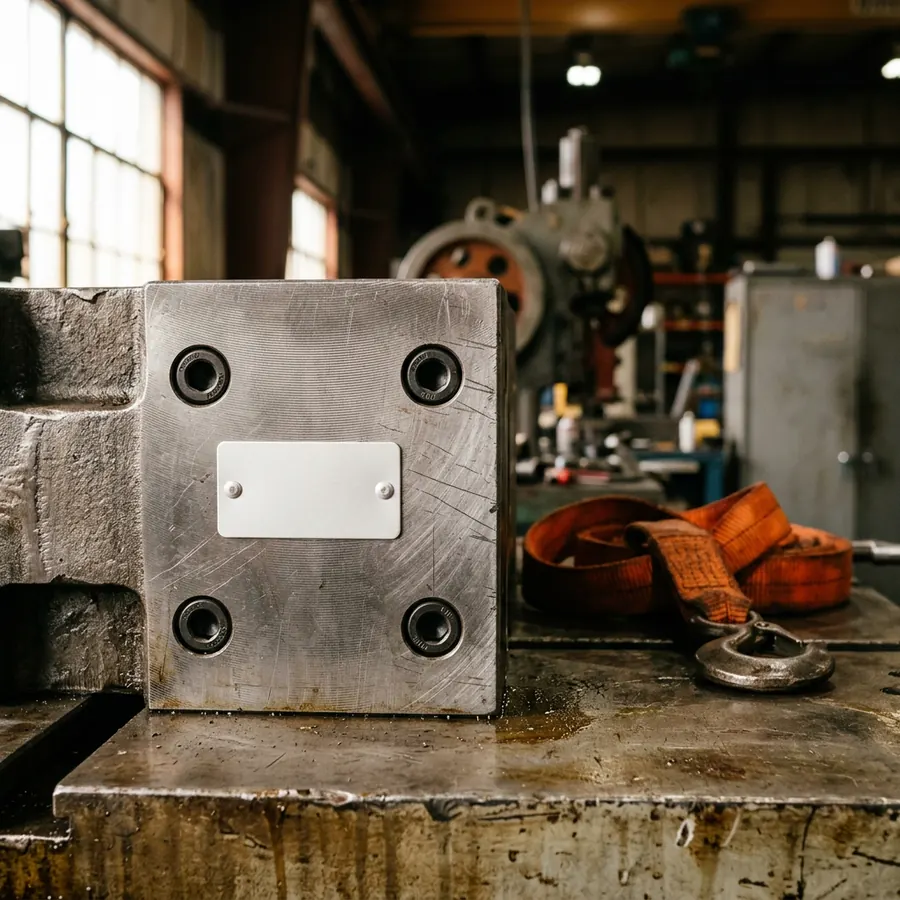
Here’s how it usually goes. An OEM or a Tier 1 awards you a part. You pay a toolmaker $480,000 for the progressive die, the customer takes title when the part passes PPAP (the AIAG production part approval process), and you get the money back either as one lump-sum invoice or a little at a time inside the piece price.
Accounting has a rule for this. Under ASC 340-10, which grew out of EITF Issue 99-5, the cost of a tool a supplier won’t own gets capitalized only when the contract guarantees reimbursement or gives the supplier a noncancellable right to use it. Otherwise it’s expensed. Which one applies depends on paper, not on where the die sits.
Foretopia, the NetSuite partner whose 2026 delivery documents feed several numbers on this page, has a habit worth copying. Its change process records every classification together with the reasoning behind it, so a decision made today can be audited on why it was made. Do that for tooling. A custom record per tool, the owner, the clause that decides the treatment, and a field that says why.
Building that record is a job for a NetSuite implementation consultant who has sat with a supplier’s controller. Keeping it honest after go-live falls to the NetSuite administrator.
Read the Tag on One Customer-Owned Die
Every customer-owned tool in a Michigan plant carries a metal tag stamped with who owns it. The tag never says how much of it has been paid back. NetSuite should.
The tool, the volumes and the dates are illustrative. Real programs differ. The arithmetic is the part that doesn’t.
Who owns it, and why
- NetSuite should hold
- A tool record with the owner, the contract clause and the reasoning for the accounting treatment.
- Usually holds
- A vendor bill coded to construction in progress. No owner.
- Kept by
- Functional consultant
How the money comes back
- NetSuite should hold
- Lump sum or per piece, the planned volume, and the 1.20 as its own line or item.
- Usually holds
- One unit price of $4.85 with the tooling folded in where nobody can find it.
- Kept by
- Administrator
How much has come back
- NetSuite should hold
- Pieces shipped and dollars recovered per tool, totalled by a saved search anyone can run.
- Usually holds
- Revenue. All of it, in one account.
- Kept by
- SuiteScript developer
What is still owed
- NetSuite should hold
- The claim. Cost, recovered and unrecovered per tool, with the invoices behind each figure.
- Usually holds
- Nothing yet. Somebody starts a spreadsheet.
- Kept by
- Solution architect
The supplier above is owed $300,000, which is 62.5 percent of the tool. Getting it back is a negotiation, and the side holding a per-tool figure with invoices attached tends to get further than the side holding an estimate. When the real problem is the cost accounting behind the piece price and not the software, our Detroit accounting and finance desk covers that hire.
When an EV Program Ends Early, Your NetSuite Data Becomes the Claim
This isn’t hypothetical anymore. General Motors booked $1.6 billion of charges in the third quarter of 2025 as it pulled back on electric vehicle capacity, and about $0.4 billion of that was contract cancellation fees and commercial settlements. The fourth quarter brought roughly $6.0 billion more, including about $4.2 billion in supplier commercial settlements, cancellation fees and other cash charges, and GM told investors to expect further charges in 2026 from continued negotiations with its supply base.
Every one of those settlements had a supplier on the other side of the table, and from what we hear on intake calls the ones who walked in with per-tool numbers left with more than the ones who walked in with a controller’s best estimate and a promise to follow up. Some brought numbers. Others brought a guess.
The difference usually comes down to whether the account can answer three questions per tool without a week of digging. What did it cost? What came back? What’s left?
Planning releases help with the forward view, since an X12 830 planning schedule shows when a tool should be paid off at current volumes. Our EDI analyst staffing page covers the people who keep those releases flowing in. Turning them into a recovery forecast inside NetSuite is work for a SuiteScript developer.
Detroit NetSuite Staffing Runs Along Four Freeways
Southeast Michigan is a driving market. Most of our NetSuite briefs come from four stretches of it, and the accounts in each look noticeably different from the next.

Troy, Auburn Hills & Rochester Hills
Supplier country along I-75. Engineering offices of the large Tier 1s sit here beside dozens of smaller parts makers that run NetSuite for finance and purchasing. Tooling records, intercompany with a Mexican plant and the first SuiteScript hire come up most.
Sterling Heights, Warren & Shelby Township
Macomb County’s stamping, machining and tool and die belt, close to the assembly plants it ships to. Smaller shops, tighter margins, a lot of family ownership. Work orders, scrap reporting and a cleaner chart of accounts lead the asks.
Novi, Livonia & Plymouth
The western suburbs along I-96 and I-275, home to distributors, aftermarket brands and tech-heavy suppliers. Ecommerce order flow, warehouse integration and multi-book reporting for a parent company overseas fill these briefs.
Downtown, Corktown & Ann Arbor
Mobility and EV startups, software companies and investor-backed hardware firms, from the Michigan Central campus out to Ann Arbor. Growth-stage accounts with funding milestones, SuiteBilling, and OneWorld the year a Canadian subsidiary opens across the river in Windsor.
Commutes here are long and nobody pretends otherwise. We ask which side of Eight Mile a candidate lives on before the first interview. Then we settle the in-office days in writing.

Show Me Where the Tooling Lives on a Sales Order
We ask it on nearly every Detroit search. Pull up a sales order from your last supplier account and show me where the tooling recovery sits. Most candidates point at the unit price. Wrong place.
The good ones talk about a separate item or a custom column, a link from each line back to a tool record, and a saved search that totals recovery by tool without anyone exporting to Excel. Some built it with a custom segment instead. That’s fine too, as long as they can explain why.
Then we push on the messy part. What happened when the customer changed the planned volume halfway through? Strong candidates describe recalculating the per-piece rate from that point forward, keeping the old rate on everything already invoiced, and leaving a note on the tool record saying who approved the change, when and on which document, which is the kind of detail a claim falls apart without.
Weak ones say they’d update the price. Our NetSuite recruiters stop the interview there and ask again. The rest of the questions we lean on are in our NetSuite consultant interview guide.
Match the NetSuite Seat to the Stage the Tool Is In
Every one of these people can touch the whole record. The stamped stages on each card show where that seat earns its rate.
NetSuite Administrator
Sets up tooling items, keeps planned volumes current and owns the recovery searches.
SuiteScript & SuiteFlow Developer
Writes recovery to the tool record on every invoice and builds the claim report.
Functional & Implementation Consultant
Designs the tool record and agrees the accounting treatment with your controller.
- NetSuite OneWorld
- Standard, Premium, Enterprise & Ultimate service tiers
- Advanced Manufacturing
- Work Orders & Assemblies
- Advanced Revenue Management
- Fixed Assets Management
- Quality Management
- NetSuite WMS
- SuiteAnalytics Workbook
None of them ships with a customer-owned tool record. Somebody has to design one.
A Claim Has a Deadline, a Tool Record Doesn’t
One is a project with a settlement meeting at the end of it. The other lasts as long as you make parts.
Contract & Contract-to-Hire
You get the person and we carry the payroll, usually for three to six months. Rebuilding three years of tool history ahead of a settlement meeting fits here, and so does the recovery script. Plenty of these contractors stay on once the process is running.
Contract Staffing →Direct Hire
Right for the administrator who’ll keep every tool record current through launches, volume changes and the next program. Memory matters in this seat. Hire it.
Direct Hire Staffing →Project & Statement of Work
Scoped, priced and done. A NetSuite health check that finds where tooling went, a reporting rebuild so margin by program is real, or a move off QuickBooks for a shop that just won its first big award.
Project Staffing →Common Questions
What do NetSuite consultants charge in Detroit?
On 2026 Detroit searches, contract NetSuite administrators run roughly $65 to $96 an hour, SuiteScript developers $80 to $133, functional and implementation consultants $92 to $151 and solution architects $125 to $196.
Those are bill rates. Salary is a different number, and our NetSuite consultant salary guide tracks it, with administrator pay on its own page. Detroit lands a little under Chicago and Minneapolis, which lines up with the federal wage data. Plant-floor experience is worth more here than a longer resume, and the full cost of hiring a NetSuite consultant is laid out by engagement model.
How long does a Metro Detroit NetSuite search take?
Our average is 17 days from intake to a first qualified candidate. Detroit administrator and developer searches tend to land right around it.
Architects run longer. So does any search asking for manufacturing, tooling and SuiteScript in the same person. Rank the three.
Can NetSuite track customer-owned tooling without an add-on?
Yes, for most suppliers. A custom record per tool, linked to the customer, the item, the tooling purchase order and every invoice, covers the job with saved searches doing the totals.
One caution. Fixed Assets Management is built for equipment you own, so a tool that belongs to the customer usually shouldn’t sit in your register as if it were yours, even when its cost lands on your balance sheet. Your auditors decide the treatment. NetSuite should record what they decided and why.
Where should tooling amortization go on a NetSuite invoice?
On its own line or item, not folded into the part’s unit price.
Folded in, it’s invisible. Split out, every invoice adds to a per-tool total you can report on any day of the year, and a volume change becomes a new rate going forward rather than a rewrite of the past. Some customers won’t accept a second line on their invoice. A custom column on the same line handles that.
What happens to unrecovered tooling when an OEM cancels a program?
Typically the supplier claims the unrecovered balance as part of a commercial settlement, and the claim is only as strong as the per-tool records behind it.
GM disclosed about $4.2 billion of supplier settlements, cancellation fees and related cash charges for the fourth quarter of 2025 alone. Suppliers who could print cost, recovered and unrecovered by tool were negotiating from a document. The rest were reconstructing one.
Which NetSuite role should a Michigan supplier hire first?
A functional consultant first if nobody has designed how tools are recorded, then an administrator to keep those records current.
Bring in a developer once invoice volume makes manual updates impractical. And if you’re cleaning up years of old tools at the same time, scope that as its own piece of work. Foretopia’s proposals price pre-existing data problems separately for a reason. Our rundown of common NetSuite implementation mistakes shows what happens when nobody does.
Do you cover Troy, Auburn Hills, Ann Arbor and the rest of Southeast Michigan?
Yes. KORE1 recruits NetSuite talent across Detroit, Troy, Auburn Hills, Rochester Hills, Southfield, Novi, Livonia, Plymouth, Dearborn, Sterling Heights, Warren and Ann Arbor at the same pace.
For a module with a shallow local bench, we’ll widen the search to remote candidates. Tell us which one early.
Could your account print cost, recovered and still owed for every tool by Friday?
If it can’t, send us the list of tools you’re carrying and we’ll tell you which NetSuite hire closes the gap. A first qualified candidate usually arrives in about 17 days.
Start a Detroit NetSuite Search →