
Embedded Software Recruiters for Talent That Isn’t on GitHub
Firmware careers leave almost no public trail. The code shipped inside somebody else’s product, under NDA, often under a safety standard. We recruit these engineers the only way that works, by already knowing them and by asking about the bug they chased.
KORE1’s embedded software recruiters place firmware, RTOS, and embedded Linux engineers across automotive, medical device, aerospace, and industrial teams, screening on shipped-product evidence rather than public code, with 92% of placements still in seat at one year.
Last updated: August 24, 2026
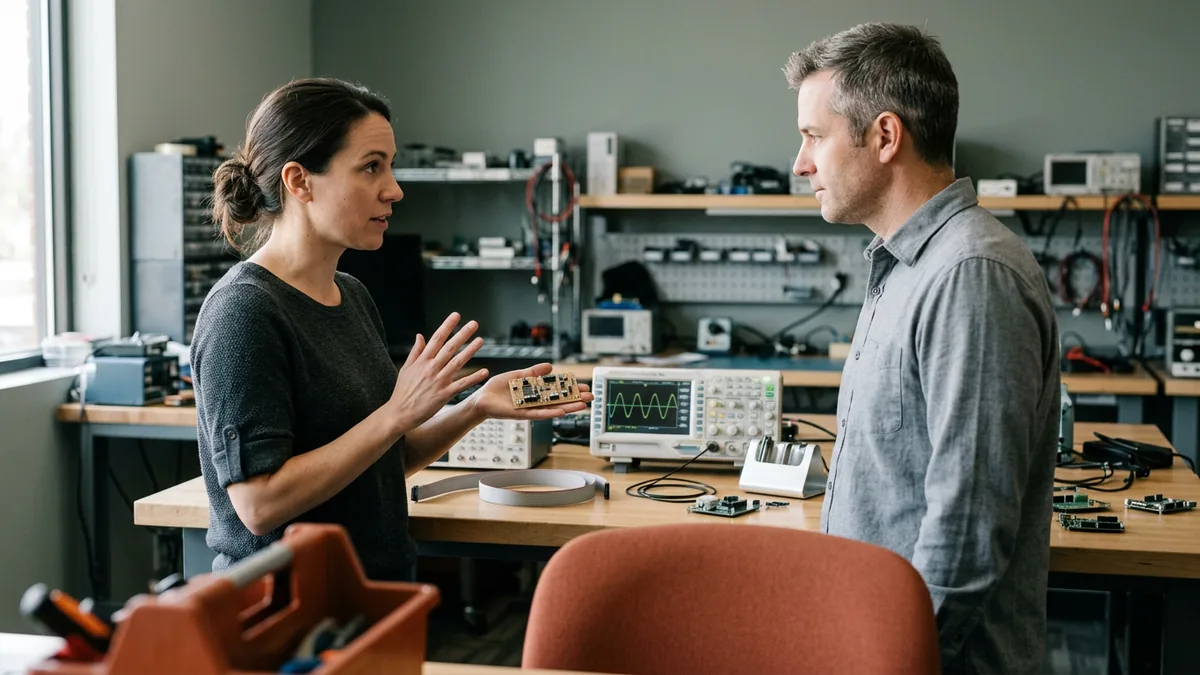
A hardware director in Orange County sent us a shortlist last spring and asked what he was doing wrong. Five candidates. All five looked right. Every one of them had C, C++, FreeRTOS and the words “embedded systems” on the resume, and every one of them had come out of a keyword search that looked, on paper, like it had worked perfectly.
Two of the five had never put a probe on a live board. Not once. One had written application code that sat on top of a board support package somebody else maintained and updated. A fourth was genuinely strong on Cortex-M bare metal, which would have been great except the role was embedded Linux on an i.MX8.
None of that shows up in a search. It shows up about nine minutes into a conversation with a recruiter who has sat through a board bring-up.
Embedded hiring goes sideways in the same place nearly every time. The screen gets built around a job title, and in this field the job title means six different things depending on which layer of the stack the work actually lives at. This desk sits inside our wider engineering staffing practice, alongside the technology recruiting team, and either way the recruiter starts from the layer rather than the label. The shortlist looks completely different by the end of the first call. Where the seat sits at the register and driver level, our firmware recruiters map which hardware companies to call before anyone screens.
The Best Firmware Engineer You Could Hire Has No Public Code
Ask a web developer for a portfolio and you get a GitHub profile, a couple of side projects, maybe a package with real download numbers behind it. Ask a firmware engineer the same question and you usually get a shrug, because four years of their best work is a binary sitting in flash on a device somebody bought at a store, and the source belongs to a former employer.
That isn’t a red flag. It’s the normal condition of the field.
Which means a keyword screen does something worse than nothing here. We screen on the work instead, using the same questions we ask firmware engineers on client panels. It quietly ranks the candidates who wrote hobby code above the ones who shipped ten million units, because hobbyists leave a trail and professionals sign NDAs. Backwards, in other words.
So our recruiters screen on shipped evidence instead. The questions behind that screen are written up in our embedded software engineer interview questions guide. Which silicon family, what the RAM budget looked like, who owned the bootloader, what the field return rate did after launch, whether any of it went through a certification audit and who wrote the traceability matrix. An engineer who lived through that answers in specifics inside two minutes. An engineer who watched it happen from the next desk cannot, and the difference is obvious the moment somebody asks. Every time. For the full role scope, stack breakdown and engagement options, our embedded systems engineer staffing page covers the job itself in depth.
Four Failures That Tell You Who Actually Owned the Firmware
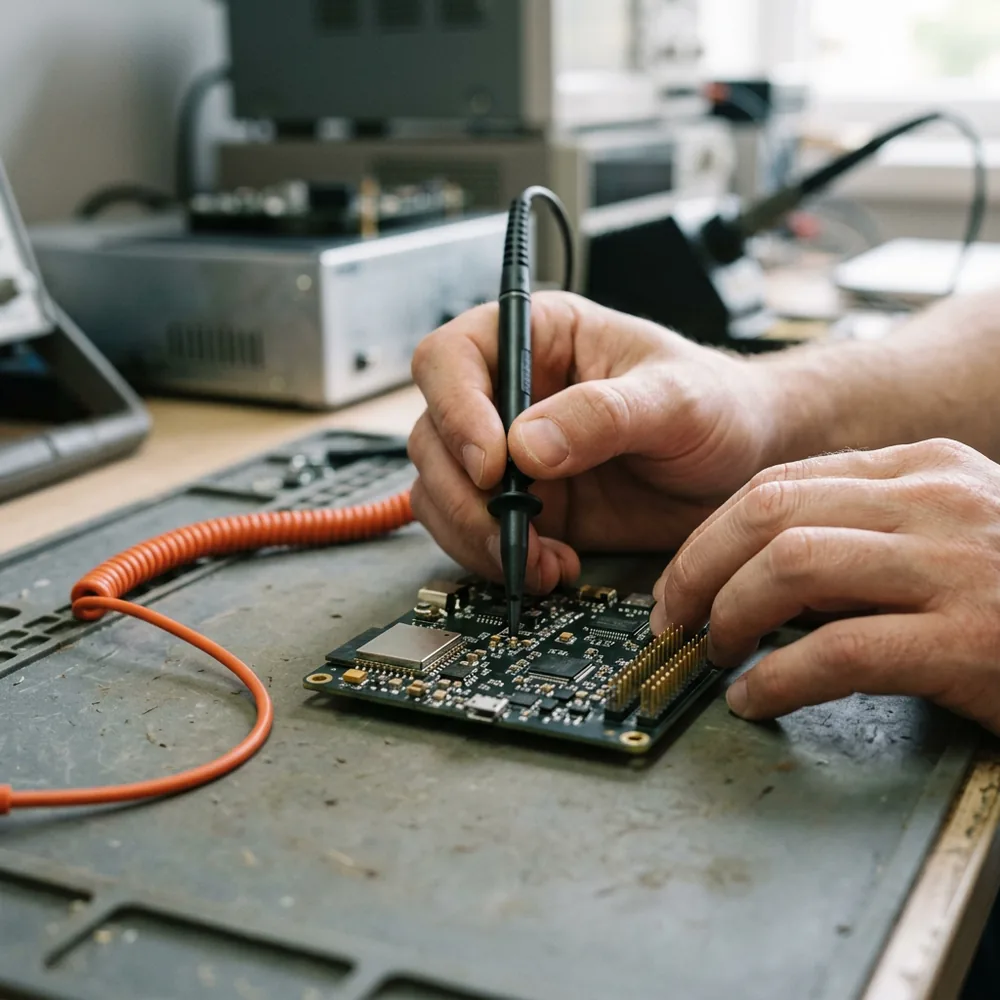
Every embedded engineer worth hiring has been on the wrong end of at least one of these. A logic analyser is how their team found the problem. The story they tell about it is how we find them.
The interrupt that came back late
We ask what the jitter actually measured and how they proved it. An engineer who owned the timing budget names the number and the instrument. Everyone else says the word “optimised” a lot. That gap is loud.
The watchdog that kept biting
Watchdogs don’t cause bugs. What starved the task, and what changed so it stopped? Blaming the watchdog is the wrong answer. Finding the priority inversion underneath it is the right one.
The bug that took nine days to appear
Slow leaks and fragmentation are the ones that reach customers, because nobody runs a soak test long enough. We ask how long they ran theirs. Usually not long enough.
The update that bricked units in the field
Volume matters here. How many devices, and what did the rollback path look like? Anyone who has shipped an over-the-air update at volume has a very specific answer, usually with a date attached.
You Cannot Bring Up a Board From a Kitchen Table
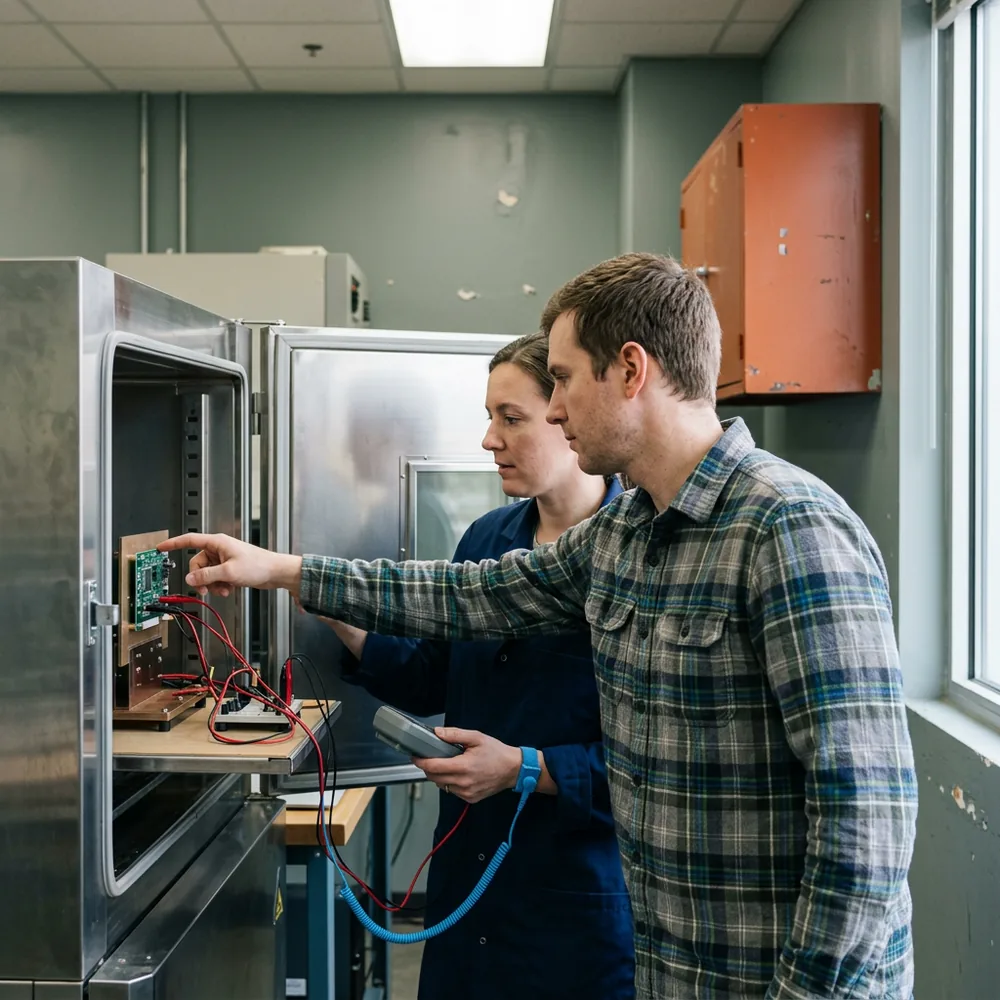
Remote works fine for the parts of embedded that are only software. Protocol stacks, unit tests, build tooling, a driver you can exercise against a simulator. Then hardware shows up. It stops working the second the job needs a scope, a JTAG probe, a thermal chamber, or a rev-B board that exists in three places on earth and all three are in your building.
Generalist recruiters miss this constantly. They present a strong remote-only candidate for a role that has hardware-in-the-loop testing in week two, everyone likes each other, and the whole thing dies at the offer stage over something that was never going to move. Nobody wins that one.
Defense and aerospace work adds a second filter on top. Export control, and in a lot of cases an active clearance, which is not something a candidate can go acquire between interviews. It takes months.
We pin the on-site cadence, the lab access and the clearance requirement during calibration, before a single resume goes out. Most searches land somewhere in the middle, two or three days on site and the rest wherever, and saying that out loud on the first call is cheaper than discovering it in week six. Much cheaper.
The Standard Transfers. The Language Usually Doesn’t.
C is C everywhere. What actually decides whether an engineer can do your job is the certification regime they have already survived, and how much of the paperwork they wrote themselves.
Automotive
ASIL decomposition, AUTOSAR Classic and Adaptive, CAN and Automotive Ethernet. We screen on the ASIL level an engineer actually worked to, not the one printed on their old team’s charter.
Medical Device
Software safety classification, design history file evidence, and the risk trace that has to survive a submission. The FDA’s premarket guidance for device software is the document these teams live inside. Pairs closely with our medical device recruiters desk.
Airborne Systems
Design assurance levels, structured coverage analysis, and qualified tooling. The FAA’s airborne software certification guidance sets the bar, and the engineers who have been through a DAL A audit are a small, well-known group.
Industrial & Energy
Safety integrity levels, PLC and motion control alongside custom firmware, long product lifecycles measured in decades. Overlaps heavily with our manufacturing recruiters bench.

Six Job Titles, One Job, and a Comp Band Nobody Agrees On
Firmware Engineer. Embedded Software Engineer. Embedded Systems Engineer. Device Software Engineer. Platform Engineer. Systems Software Engineer. Six postings. Same words. Different jobs. Depending on the company any two of them might be the same seat, or might be three layers apart.
The layer is what matters. Bare metal on a microcontroller, an RTOS like FreeRTOS or Zephyr or QNX, and embedded Linux with Yocto and device trees are three separate labor markets that happen to share a language. If the seat lives at the register and driver level, that is firmware engineer staffing. If the C++ itself is the specialization rather than the hardware, that is C++ developer staffing. If it lives above the driver and below the cloud, on board support packages, RTOS task design, protocol stacks and over-the-air updates, that is embedded software engineer staffing. Hiring across those lines without knowing it is how a search burns two months. We check first, and the 2026 guide to hiring an embedded software engineer lays out how we draw the line.
Comp follows the same split, and the metro moves it again. A bare-metal automotive engineer in Detroit and an embedded Linux engineer in San Jose are not the same money, and a national average band helps nobody. The U.S. Bureau of Labor Statistics projects software development employment growing much faster than the average occupation, and the certified embedded end of that pool is not growing at the same rate. Supply is the problem.
We give you a real band on the first call, set against your stack layer and your metro, and we will tell you if the band you brought is going to lose. That conversation is uncomfortable for about four minutes and it saves entire searches. Worth it. Adjacent benches worth knowing about: semiconductor recruiters for the silicon side and Rust developer staffing for teams moving safety-critical modules off C, and electrical engineer search when the board itself is the hard part. For Rust firmware seats, our embedded Rust job description template covers the compiler and unsafe code lines a C posting never needed.
What Happens After You Brief an Embedded Recruiter
Same five moves whether the seat is a single firmware hire or a bring-up squad. Depth changes. Order doesn’t.
- 01
Stack-Layer Calibration
Bare metal, RTOS, or embedded Linux. Silicon family, safety standard, and the honest on-site cadence. Nothing else starts first. Thirty minutes here removes most of the reasons a search stalls later.
- 02
Bench Activation
Outreach starts with engineers our recruiters have personally spoken with, not a fresh scrape. In a field with no public portfolio, the warm bench is the portfolio. That’s the whole edge.
- 03
Shipped-Evidence Screen
The four-failure conversation, plus a walkthrough of one real bug the candidate chased end to end. You get notes your hardware lead can read in ninety seconds.
- 04
Lab and Clearance Check
Site access, export control, and clearance status confirmed before your team spends interview hours. Ask early. Nothing kills momentum like finding this out at offer.
- 05
Offer and 90-Day Check-Ins
We run the offer conversation and check back at 30, 60, and 90 days. That habit is most of why 92% of our placements are still there at a year.
Three Ways to Bring Embedded Talent In
Same recruiters, same bench, same screen. Pick the shape that matches where the program is right now.
Direct Hire
For the firmware owner you expect to still have in four years. Fee on start date, and the 90-day check-ins run either way.
Direct Hire details →Contract & Contract-to-Hire
Bring-up crunches, certification pushes, and coverage while a permanent search runs. Common when a tape-out or a submission date is fixed and the headcount isn’t.
Contract Staffing →Project Team
A small embedded team assembled around one deliverable, usually a platform port, a driver stack, or a safety-case rewrite with a hard end date.
Project Staffing →Common Questions
What does an embedded software recruiter do that a general tech recruiter can’t?
An embedded software recruiter screens by stack layer and shipped hardware, so they can tell a bare-metal microcontroller engineer from an embedded Linux engineer on the first resume line instead of treating both as “C developers.”
Treat them as one pool and you get sent the wrong half of the market. The logistics of a search are the same for anyone. The judgment isn’t. A generalist has no way to tell whether a candidate owned the bootloader or just built on top of one, and that gap shows up in month three when the new hire cannot debug a boot failure without help.
How do you screen firmware engineers when their code is under NDA?
By asking about failures instead of code. Timing budgets, watchdog resets, memory leaks that surfaced on day nine, over-the-air updates that bricked units. Engineers who owned the work answer in numbers and instruments within two minutes.
Nobody needs a code sample. Nobody has to disclose anything proprietary for that conversation to work, which is exactly why it works. A candidate can describe how they cornered a race condition without naming the product, the customer, or a single line of source.
How long does it take to fill an embedded software role?
17 days is our average time to fill across our technology desks. Embedded roles with a safety standard, an active clearance requirement, or a narrow silicon family attached typically run longer, often three to six weeks.
Speed comes almost entirely from the bench. Not from pressure. When the first outreach goes to people a recruiter already knows, you skip the slowest part of a normal search. We would still rather add ten days than force a date and watch the hire come apart in the first quarter.
Do you recruit for safety-certified work like ISO 26262, IEC 62304 or DO-178C?
Yes, and the certification history is usually the first thing we verify. We screen on the assurance level an engineer personally worked to and how much of the traceability and verification evidence they wrote themselves.
Those pools are small and they overlap in odd ways. An engineer out of a DO-178C DAL B program often transfers cleanly into IEC 62304 Class C work, because the discipline is the same even though the auditor is different. That kind of substitution widens a shortlist without lowering the bar.
Firmware engineer, embedded software engineer, embedded systems engineer. Are those the same job?
Sometimes. Often not. The titles are used interchangeably across companies, so we scope by stack layer instead: bare metal on a microcontroller, an RTOS such as FreeRTOS or Zephyr or QNX, or embedded Linux with Yocto and device trees.
An embedded systems engineer job can also lean hardware, with schematic and bring-up responsibility attached. Getting that pinned down in calibration is the single cheapest thing you can do for the search, and it takes about ten minutes.
Can embedded software roles be filled remotely?
Partly. Protocol work, build systems, and driver development against a simulator run fine remotely. Board bring-up, hardware-in-the-loop validation, and anything needing a scope or a thermal chamber does not.
Most of the searches we run land on a hybrid cadence, two or three days on site. We confirm that before sourcing rather than after, because a remote-only candidate and a lab-heavy role never survive the offer stage together.
Do you cover contract and contract-to-hire, or only direct hire?
All three, through the same recruiters and the same bench. Direct hire, contract, contract-to-hire, and small project teams assembled around one deliverable.
Dates drive it. Contract tends to spike around fixed dates, a certification submission or a launch, when the work is real but the headcount hasn’t been approved yet. Our contract staffing and project staffing pages cover how each one is structured, and the broader technology bench sits under tech recruiters.
Tell us what the board does. We’ll tell you who can actually bring it up.
One call is usually enough to pin the stack layer, the standard, and a comp band that will hold.
Talk to an Embedded Recruiter →