Last updated: July 5, 2026
Manufacturing Recruiters Who Know the Floor, Not Just the Résumé
Anyone can list Lean, Six Sigma, and a CNC background on a resume. Our recruiters know which lines that engineer actually ran, which yield problem they actually fixed, and who can hold a shift on day one. That is the whole job.

KORE1’s manufacturing recruiters place production, process, quality, and controls talent across the plant floor in an average of 17 days, with a 92% one-year retention rate and recruiters who average 15-plus years in the seat.
What a Manufacturing Recruiter Actually Does
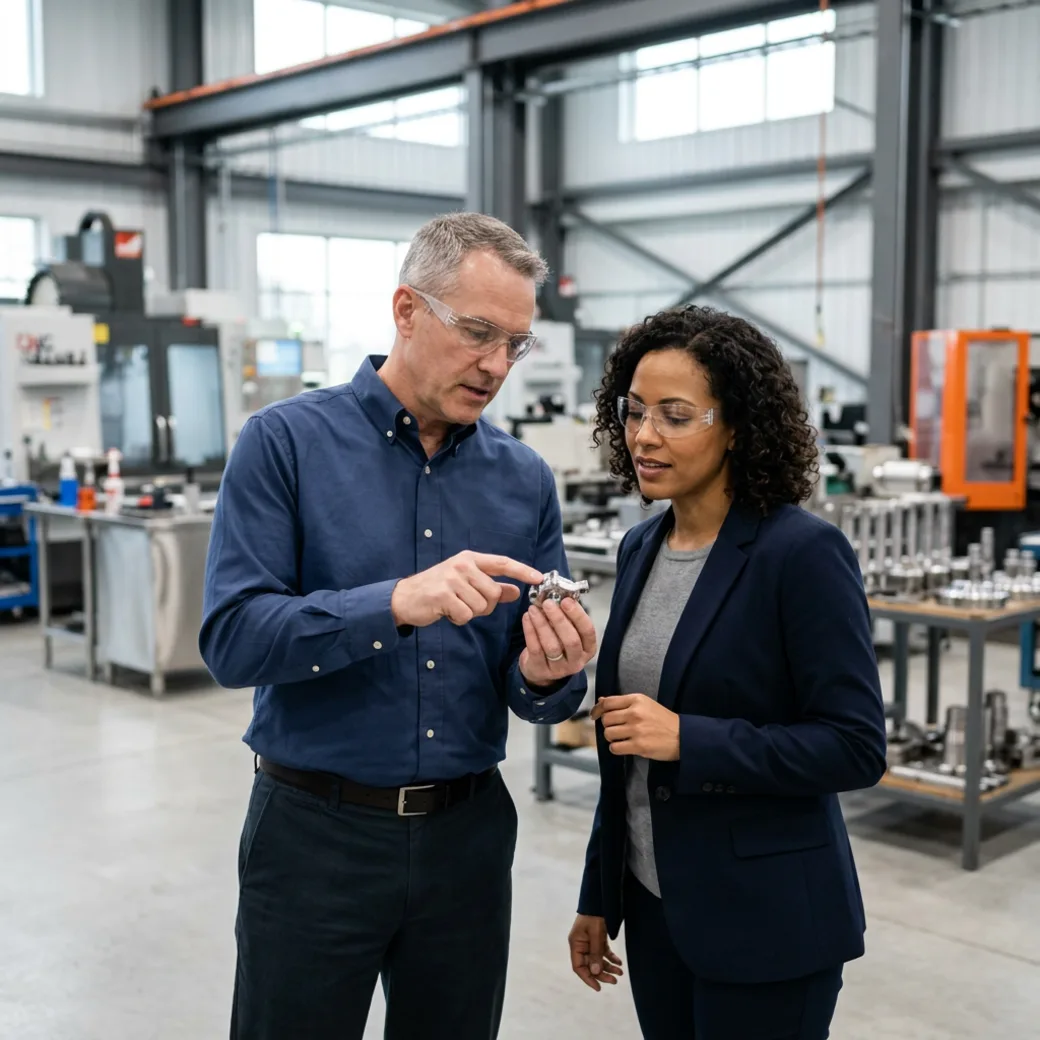
A real manufacturing recruiter does the thing a keyword search never will. They read the floor. Anyone can put “improved OEE” or “led the launch” on a resume. The question is whether that engineer owned the FMEA and the PPAP submission, or sat two benches down while someone else ran it and put the whole program on their resume anyway. We ask. Then we check the answer against the work. On a GMP drug floor the same question gets asked by recruiters who hire for pharma plants. At a chemical, coatings or adhesives plant, the lab chemists come through our recruiting desk for chemical makers. Drug plants receiving a client’s process have a different hiring problem, covered in our guide to staffing a pharma tech transfer.
That read comes from years on the same desk, not from a parser. Our recruiters have placed process engineers chasing a scrap problem on an injection molding cell, controls engineers who live in Allen-Bradley and Siemens PLCs, quality engineers running a CMM and a GD&T argument at the same time, and plant managers who turned around a line that was bleeding takt. So when you call about a manufacturing engineer who can actually drive a part from first article through capable production, we are not guessing. We have placed that person. This is the people side of engineering recruiting, aimed squarely at the plant, and it is what this page is about.
The strongest operators are rarely looking. The Bureau of Labor Statistics projects steady demand for industrial and manufacturing engineers, and a widely cited Manufacturing Institute and Deloitte study warns that 2.1 million manufacturing jobs could sit unfilled by 2030. The people who consistently ship parts do not answer a job-board post. They get poached. A recruiter who stayed in those conversations can reach them. A direct hire listing cannot.
Get a Manufacturing Recruiter AssignedThe Screen Most Manufacturing Recruiters Skip
Plenty of recruiters just match titles. They see “Manufacturing Engineer” on the resume, “Manufacturing Engineer” on the req, and forward it on. Title to title. That is how you end up three interviews deep with someone who has never released a part to production or held a line through a bad quarter, and you only find it out in the reference calls. We watched a client burn most of a quarter on exactly that, working a shortlist they inherited from an agency that screened on job titles and nothing under them, then billed for the privilege.
Our recruiters work a candidate before you ever see them. The first call is built to separate the engineer who owned the fix from the one who was simply nearby when it happened, because on a resume those two look identical and in a real debrief they almost never do. What was your piece of that launch? What broke that you had to solve, and what did the Cpk look like before and after? Whose SPC chart was that? Walk me through a build you got wrong and what the scrap taught you. Specifics, not slogans. The ones who answer with them go to the shortlist. The ones who keep saying “we” when you ask “you” get a polite pass.
We also screen for the parts no job description lists, the ones that quietly decide whether a hire sticks on a plant floor. Is this person leaving because they outgrew the role, or because they could not keep up when the schedule got real and the line was down at 2 a.m.? Do they want a greenfield build, or do they need a mature process and a mentor down the hall? Can they hold their ground with a production supervisor twice their age? That part is invisible on paper. Those answers shape ramp time, and they are a big reason our placements land at a 92% one-year retention rate instead of washing out by month four, long after a title-matching agency has cashed its check.

Where Our Manufacturing Recruiters Go Deep
Not at a “we post manufacturing jobs” level. At a “we know what good looks like on this line” level.
Production & Process
Manufacturing, process, and continuous improvement engineers who own yield, takt, and the launch. We can hear the difference between someone who ran a cell and someone who watched one.
Quality & Reliability
Quality and reliability engineers fluent in APQP, PPAP, GD&T, and a CMM. IATF 16949, AS9100, ISO 13485, we place for the standard your audit actually runs on.
Automation & Controls
Controls and automation engineers in Allen-Bradley, Siemens, and Rockwell PLCs, robotics, and vision. Those searches run through our automation engineer staffing desk. The hardest bench to fill, and one we have built for years.
Operations Leadership
Production supervisors, industrial engineers, and plant managers who run a P&L, a safety record, and a floor without dropping any of the three.
Roles Our Manufacturing Recruiters Fill, Repeatedly
Every line below is a search we have actually closed, most of them more than once. A few we have run so often that we already know who is open, and who just took a retention bump to stay, before the req hits our desk. The list keeps growing.
- Manufacturing and production engineers
- Process engineers and continuous improvement leads
- Quality engineers, SQEs, and quality managers
- Controls, automation, and robotics engineers
- Industrial and manufacturing systems engineers
- Reliability and maintenance engineers
- Production supervisors and shift leads
- Plant managers and operations managers
- Lean, Six Sigma, and Kaizen specialists
- Supply chain, materials, and planning managers
- EHS and safety managers
- Directors of Operations and VPs of Manufacturing
How Our Manufacturing Recruiters Work a Search
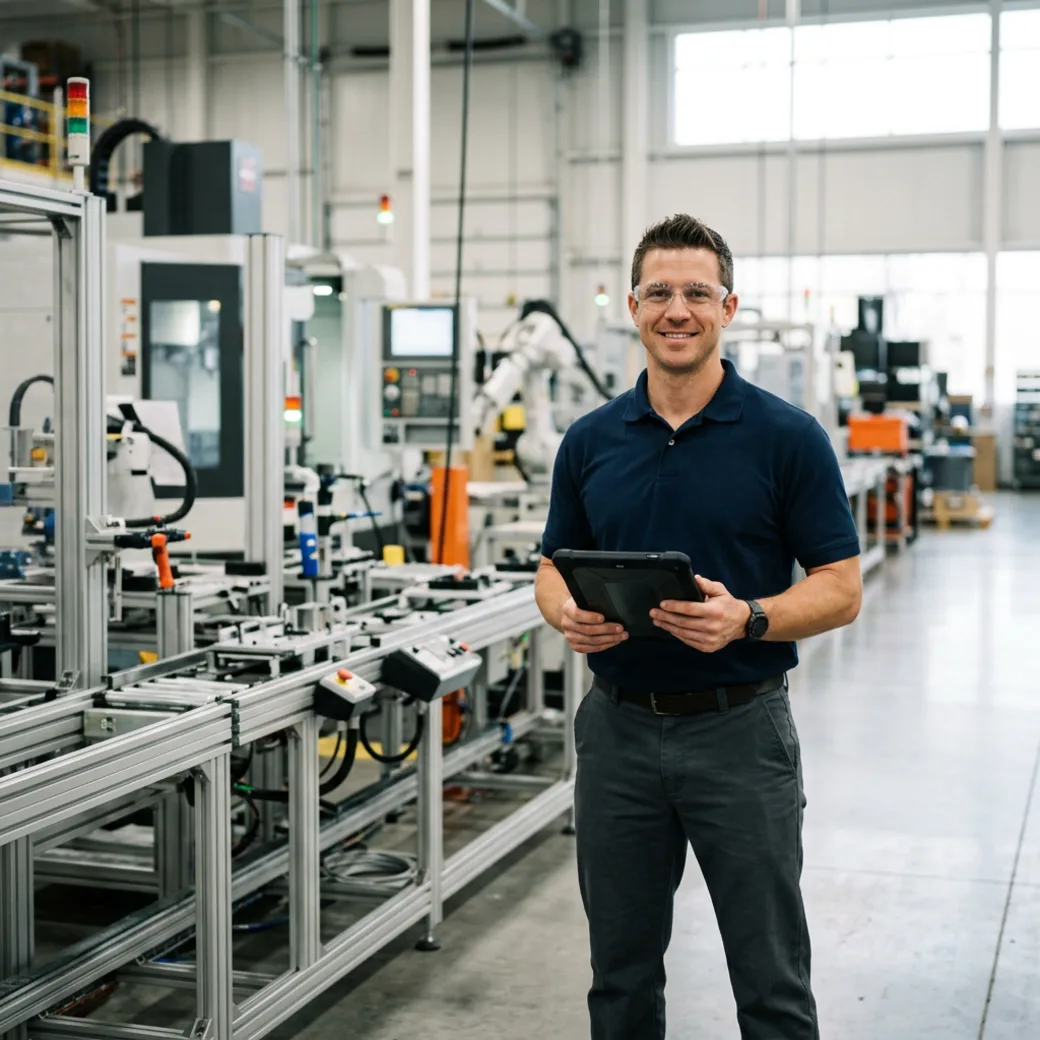
We do not post the req and wait. The operators you actually want are heads-down running a line, and the process is built around that.
Floor-Level Intake
What does this person own end to end? Which processes, which standards, which shift? High-mix low-volume or a 24/7 line? Union or not? On-site by definition, so is the comp band real for that plant and that ZIP code? Twelve questions, twenty minutes. We do not source until that grid is filled in.
Shortlist in 3 to 5 Days
Three to six candidates. Screened on the actual work, not just the title. Already vetted on scope, comp, commute, and whether they want the kind of plant you are running. Not a stack of forwarded resumes. If we cannot find a strong match in that window, we tell you straight.
Through Offer and Ramp
Manufacturing offers fall apart late. A counter. A shorter commute across town. A spouse who does not want to relocate to the plant’s city. We stay in front of all of it. And we do not vanish at the start date. We run 30, 60, and 90-day check-ins with both sides while the hire ramps.
When to Bring in a Manufacturing Recruiter
The Line Is Short a Key Seat
Every week a controls engineer or a shift supervisor seat sits open, overtime climbs and the rest of the crew absorbs the gap. If your internal team has worked a search for six weeks with nothing to show, the bottleneck is usually reach. Not effort. Reach. An outside recruiter with a live bench of passive operators fixes reach fast.
You Need a Bridge While You Search
When the engineer who anchors a launch gives notice, you do not have months. A recruiter who has filled that exact seat dozens of times can move in days. Days, not months. And a contract engineer can keep the program moving while you run the permanent search.
The Role Straddles Disciplines
A controls hire who also has to write the PLC logic and stand up the vision system. A quality engineer who has to run supplier audits and the internal SPC. Those mixed roles are where a generalist recruiter forwards three half-right people. We read the actual work, so we send the one who can do all of it.
It Is a New Plant or a New Shift
Standing up a second shift. Opening a new facility. Reshoring a line that used to run overseas. If your team has never hired at that scale that fast, a recruiter brings calibration built from having stood up three plants this year and watching first-hand what the comp actually closes at. We can tell you what good looks like, what the comp actually closes at in 2026, and what the candidate will ask you on the call.
You Are Building a Whole Team
Sequencing a plant’s hires in the right order matters more than any single one. Quality before the launch. Maintenance before the ramp. A manager before it gets unwieldy. That is where our manufacturing staffing bench and talent acquisition support earn their place, and where a single-req agency runs out of runway.
The People You Want Will Not Apply
The best operators are not refreshing job boards. They are mid-launch on something hard, already getting called by two other plants a month. Reaching them takes relationships built over years of staying in touch with people who had no reason to take your call, the kind of low-stakes check-ins that feel pointless right up until the week you need one of them to pick up. That network is the whole job. It is what you are really hiring us for. For director and VP searches we pull in our executive recruiting team.
Talk to a Manufacturing Recruiter
Tell us the role, the process, and the date you need someone at the plant. We will tell you honestly whether we can hit your window. No fluff. Most agencies take a week to reply. We answer same day. And because manufacturing is one slice of how we hire across direct hire and contract teams, if the search bumps into plant IT, supply chain, semiconductor fabs, or engineering, the same group handles it.
Common Questions
What does a manufacturing recruiter do that my HR team can’t?
A specialist manufacturing recruiter brings a pre-built network of passive operators, a technical screen that verifies what the candidate actually ran instead of trusting the resume, and offer support through counters and commute objections. Those are the three places internal teams run out of time.
Most HR teams are strong at general hiring. It is a different muscle. Manufacturing is its own animal, and the passive network gets built over years. We have already talked to the controls engineer who is quietly carrying a plant and not looking. We can tell in one call whether someone “led” a launch or watched it happen. And the close, where offers die over a counter or a 20-minute-longer drive, is where a recruiter who has run hundreds of these earns the fee back in a single tense afternoon. This supplements your team. It does not replace it.
How much do manufacturing recruiters charge?
Most contingency manufacturing recruiting runs 15% to 25% of the hire’s first-year base, billed only when the person actually starts. Contract and contract-to-hire placements bill at an hourly rate with the markup built in, and senior or plant-leadership searches sometimes use a retained model where you pay in stages for a dedicated, confidential search.
The fee is not the number that matters. The cost of the seat staying open is. That is the real bill. A line running short-handed on overtime, a launch that slips, a quality escape that ships to a customer, those quietly cost far more than any placement fee. So does the wrong self-sourced hire who interviews well and washes out at month four. We will walk through which model fits the role and the budget before you commit to anything.
Manufacturing recruiter versus manufacturing staffing agency, what’s the real difference?
A manufacturing recruiter is the person who runs your search. A manufacturing staffing agency is the wider operation around them, including engagement models, compliance, and payrolling. KORE1 is both, so the recruiter on your search is backed by more than 20 years of infrastructure.
If you want to know who picks up the phone and works your req, that is the recruiter, and that is what this page is about. If you want the full menu of how we engage, our manufacturing staffing and manufacturing engineering pages go deeper on that side. Same team behind all of it. Same people. We just split the pages so the people do not get buried under the process.
Do you recruit skilled trades, or only engineers and managers?
Our recruiters focus on the professional and technical roles: manufacturing, process, quality, controls, and industrial engineers, plus supervisors, plant managers, and operations leadership. For high-volume skilled-trades and light-industrial staffing, we route you to the right desk internally.
The reason is depth. Screening a controls engineer on their PLC and vision experience is a different conversation than staffing a shift of assemblers, and pretending one recruiter does both well is how candidates fall through. When your need is more warehouse and production floor than engineering, our light industrial and warehouse team takes it, and the handoff stays inside the same firm.
How fast can your manufacturing recruiters deliver candidates?
First shortlist in 3 to 5 business days. Average hire in 17 days across our recent placements. Often faster. For urgent coverage, like a plant that just lost its only controls engineer, we have bridged with a contract hire the same week, though that pace is the exception.
Speed comes from relationships, not from scraping LinkedIn. Not luck. We are not starting from zero when you call, so the first names usually come from operators we already know are open, or quietly willing to listen when the right plant is the one calling. It also means we can be honest when a role needs a longer runway. A journeyman-level controls engineer with medical-device experience in a small market is not a 3-day shortlist, and we would rather say that than waste a week pretending otherwise.
Do your recruiters handle contract, contract-to-hire, and direct hire?
Yes, all three. Contract for covering a launch or a ramp. Contract-to-hire for higher-risk roles where a trial period lowers the cost of a wrong call. Direct hire for core engineers and plant leadership.
The model should follow the work, not the other way around. A six-month capital project does not need a permanent headcount. A plant quality manager almost certainly does. If you ask for a structure that does not fit the work, expect us to say so. That candor is part of what specialist recruiting buys you, and it is a lot cheaper than finding the mismatch a quarter into a contract that should have been a direct hire from day one.
If the load genuinely ends on a milestone rather than converting to permanent, our temporary engineering staffing page covers how we scope that defined W-2 window instead of a headcount.
Do you recruit plant leadership, or only individual contributors?
Both. Individual contributor engineering is our daily work, and we also run leadership searches for production managers, plant managers, directors of operations, and VPs of Manufacturing, where the screen shifts from personal output to whether someone can run a floor and grow a team.
The higher the seat, the more the network matters, because the strongest plant leaders, the ones the Bureau of Labor Statistics classifies as industrial production managers, are almost never publicly looking. For confidential or board-level searches we lean on our executive recruiting team and a retained model. You get the specialist manufacturing lens without shopping for a second firm to cover the top of the org chart.
