
Firmware Recruiters Who Know Which Companies to Call
We find firmware engineers where they already work, inside hardware companies, and price your offer against that pool.
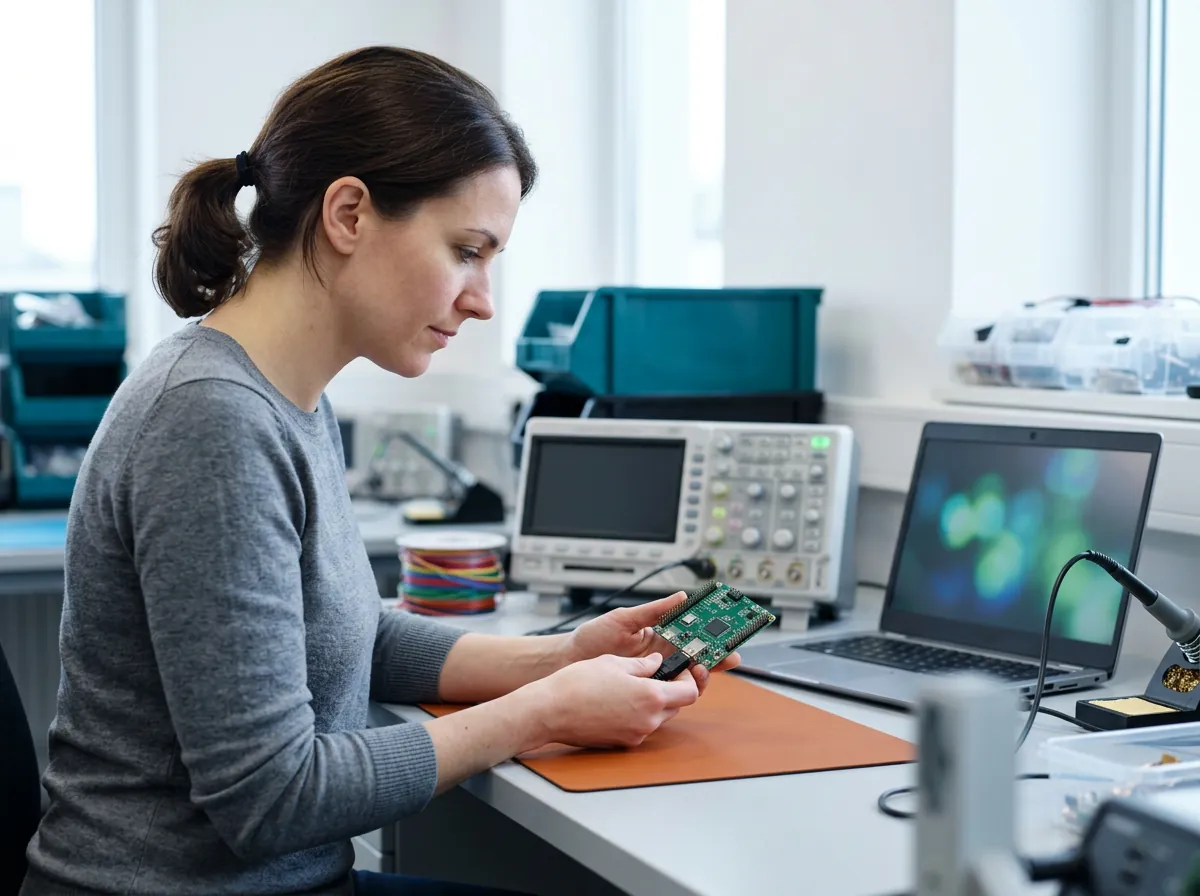
Firmware recruiters find embedded C, RTOS and driver engineers who are already employed, mostly inside companies that build hardware. KORE1 runs each firmware search by calling into the industries that hold that talent, and by pricing your offer against them.
Last updated: October 10, 2026
- This page
- How a firmware search actually runs. Where we source, how the source pool sets the price of your offer, and when firmware engineers are willing to move.
- Covered elsewhere
- The roles we place and the engagement models are on firmware engineer staffing. The failure-story screen lives with our embedded software recruiters, and hardware-to-firmware seams with the embedded systems desk.
Most firmware requisitions get filled the slow way. A posting goes up, a few hundred resumes come back, and maybe four of them belong to people who have actually brought up a board. The rest wrote some C once.
The engineers you want aren’t reading postings. Not on job boards. They’re in the middle of a product cycle at a company that makes things, and you reach them by knowing which companies those are and when their program is about to let go of them. That’s most of the job. Our firmware desk sits inside the KORE1 engineering staffing agency practice and works next to the broader engineering recruiters team, so every search starts from the hardware you ship.
Nobody Counts Firmware Engineers, So Firmware Recruiters Map Them
There’s no federal job code for a firmware engineer. The Bureau of Labor Statistics files these people under software developers, or under computer hardware engineers when the title leans toward the board, and 18,120 of those hardware engineers work in semiconductor manufacturing alone. One quiet fact. It explains a lot of bad searches.
A developer at an insurance carrier and a developer writing motor-control firmware for an infusion pump both sit inside the same national number, 1,687,890 software developers in May 2025, and if you search that number as one pool the firmware people simply disappear into it, which is exactly what a keyword search on a job board does. Searched by employer, they show up fast. Nobody writes interrupt handlers at a bank.
So a KORE1 firmware search starts with a map. Which manufacturers in your metro, under your certification regime, on your silicon family, employ people doing this work right now, this quarter, on a program that’s close enough to finishing that they might actually pick up the phone? The list is shorter than you’d think. It’s also the list your competitors’ engineers are on. We start there.
Where Firmware Engineers Actually Work
Each line below is a hardware industry, probed the way a kernel probes a bus at boot. The count is software developers employed there in May 2025. The figure on the right is their median annual wage.
- [ 0.000000]scan: OEWS May 2025 · SOC 15-1252 software developers · national, by industry
- [ 0.031250]probe nav, measuring & control instruments 334533,020$154,470
- [ 0.062500]probe aerospace product & parts 336422,750$135,490
- [ 0.093750]probe semiconductor & components 334419,770$169,030 (highest median on the log)
- [ 0.125000]probe computer & peripheral equipment 334113,430$168,400
- [ 0.156250]probe machinery manufacturing 33312,340$107,450
- [ 0.187500]probe communications equipment 33428,870$136,430
- [ 0.218750]probe medical equipment & supplies 33913,100$134,540
- [ 0.250000]probe motor vehicle parts 33632,400$127,030
- [ 0.281250]pool: 115,680 attached across 8 hardware industries · 6.9% of 1,687,890
- [ 0.312500]skip computer systems design 5415515,410$132,050
Reading the log
- A teal meter is software developers employed in that industry, drawn against the largest hardware pool, 33,020.
- The orange underline marks the highest median on the log. That’s the salary a candidate from that line is used to.
- The grey skip line is the generalist pool where keyword searches land. It’s fifteen times bigger than the largest hardware line, so its meter is cut off, not drawn to scale.
Two things jump out. The hardware pool is small, about 115,680 developers across eight industries, or under 7% of the national count. And the pay spread inside it is wide. Really wide. Semiconductor firms pay software developers a median of $169,030, motor vehicle parts suppliers pay $127,030, and machinery makers pay $107,450. Same language. Very different price.
Not all 115,680 write firmware, obviously. Some of them build test tooling, some build the cloud side of a connected product, and a few are honestly closer to IT than to anything with a reset vector, which is fine, because the count was never meant to be a headcount of firmware people. But that’s where firmware engineers are concentrated, and that’s where our recruiters spend their phone time. The 515,410 developers in computer systems design are where a keyword search mostly lands. We skip that line on purpose. That pool is a different search, and our software engineer recruiters run it.

The Pool You Recruit From Sets the Price
This is the part of a firmware search that surprises hiring managers. Your offer isn’t competing with a national median. It’s competing with whatever the candidate earns today, plus whatever their manager will add to keep them, and both of those depend almost entirely on which line of the log they came from. Every time.
Say you build infusion pumps and your band sits near the medical equipment median of $134,540. Recruit off the semiconductor line and you’re asking someone to take roughly $34,490 less than their industry’s median, before anyone has mentioned equity or a sign-on. That conversation goes badly. Usually on the second call. Sometimes the first.
So we match the pool to the band before we source. A medical device team usually does better recruiting out of aerospace, auto suppliers and instrument makers, where medians sit closer to its own, and then selling what money can’t buy. Ownership of the bootloader. A real lab. A product that ships this year. It works, often.
If the seat truly needs semiconductor experience, we’ll say the band has to move and roughly by how much, and our semiconductor recruiters know that market from the inside. Level-by-level ranges live in the embedded software engineer salary guide, and the embedded systems salary benchmarks cover the hardware-adjacent seats.
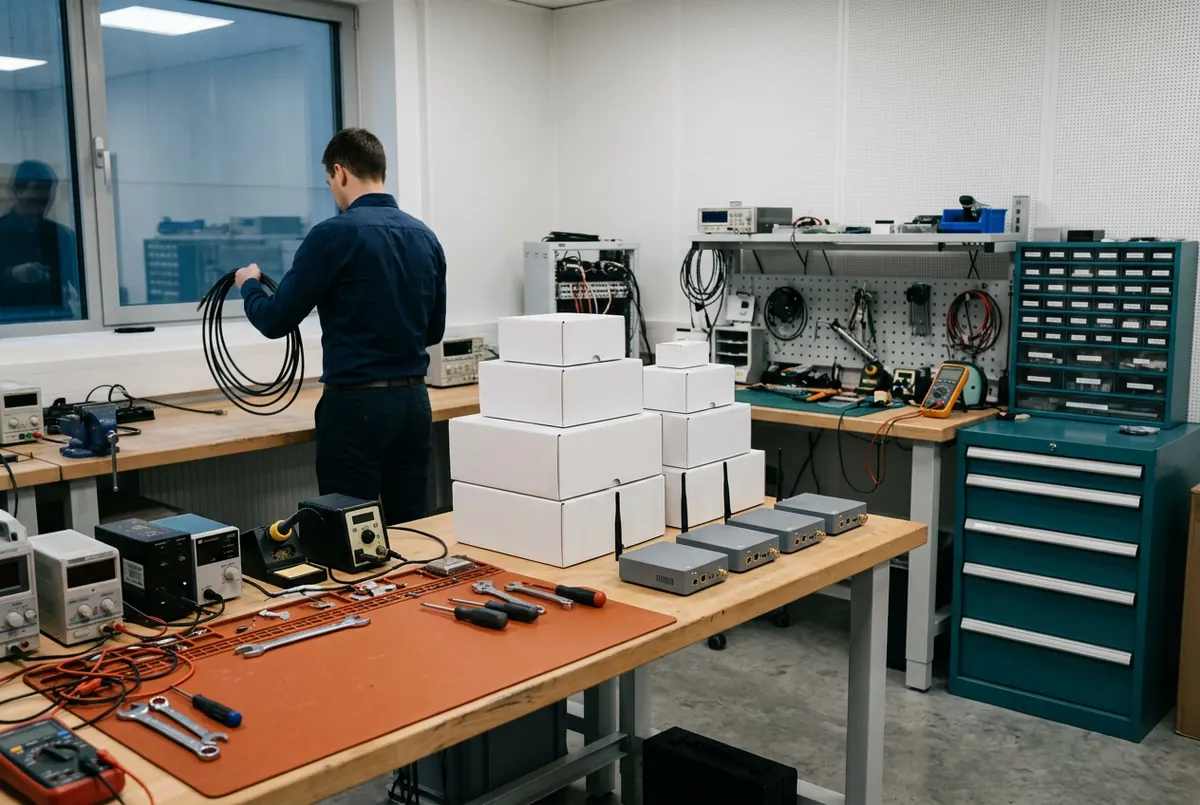
Firmware Engineers Move Between Programs, Not Between Jobs
A good firmware engineer three weeks from a production release won’t take your call. Fair enough. Nobody walks away from a bring-up they’ve been fighting for a whole quarter, not with the scope still on the bench and the second board revision due back from the fab, and the ones who would do that aren’t really the ones you want anyway.
They do move, though. They move at the seams of a program. Right after a launch. Right after a certification audit closes. When a platform gets cancelled, when a site consolidation puts the lab two states away, or when a reorg hands their code to a team they’re now expected to train.
So our recruiters track where people’s programs are, not just what’s on their resumes. Every call includes the same two questions, when does the current product ship and what comes after it. Ten months is a real answer. We call back in nine. Our guide to hiring embedded engineers covers the interview loop once they do pick up.
Counteroffers follow the same logic. A manager in the middle of a program will pay a lot to keep the one person who understands the boot sequence, so we talk about the counter on the first call, long before anybody is emotionally invested in it. Plan for it.
6.9%
of U.S. software developers work in the eight hardware industries on the log
$169,030
median for software developers in semiconductor manufacturing, May 2025
92%
of KORE1 placements are still in the role at twelve months
2005
the year KORE1 started recruiting engineers, with 15+ years average experience per recruiter
Employment and wage figures from the BLS Occupational Employment and Wage Statistics program, May 2025 industry-specific estimates, which anyone can query in the BLS OEWS data tool. The cross-industry median for software developers is $135,980, and the BLS Occupational Outlook Handbook covers the outlook. Retention figure from Why KORE1.
How Our Firmware Recruiters Run a Search
- Pin the layer and the constraintsBare metal, RTOS or embedded Linux, plus lab days, clearance and the certification regime. Thirty minutes, and plenty of reqs get rewritten right there.
- Build the source mapWe list the employers in your metro that run comparable silicon under the same standard, then cut any your band can’t realistically compete with, because a call into a company that pays twenty or thirty thousand more than you do mostly helps the candidate negotiate a raise where they already are. What’s left is the call list.
- Approach by program, not by postingFirst calls go to engineers whose programs are at a seam, a lot of them people we’ve placed or worked beside before. Some say no. We note when to call back.
- Screen on what shipped, then closeOne shipped product, walked end to end with the questions in our firmware engineer interview questions, and the counteroffer handled before the offer goes out.
Four Kinds of Firmware Search We Run
-
Permanent
Direct hire search
A firmware engineer or platform owner for the long run, with a first shortlist in about three weeks.
-
Project
Contract firmware engineers
A bring-up, a certification push or a six-month sprint, covered by engineers on our W-2.
-
Trial first
Contract-to-hire
Watch an engineer work on your actual hardware for a few months before you convert the seat.
-
Leadership
Firmware leadership search
A firmware manager, director or head of embedded, searched quietly through the same network.
Common Questions
What does a firmware recruiter actually do?
A firmware recruiter finds embedded engineers who aren’t job hunting, confirms they’ve shipped firmware on hardware like yours, and gets them to an offer. Most of the work is sourcing from the right employers and timing the approach. Screening comes after that, and it’s the part that needs a recruiter who has sat through a bring-up.
How long does it take to hire a firmware engineer?
Two to three weeks to a first shortlist is typical for us. The full hire takes longer, because firmware engineers give notice at program milestones rather than on demand. KORE1 averages 17 days to fill across its technology desks, and firmware runs above that, especially when a seat needs a clearance or DO-178C experience.
How much do firmware engineers earn?
$135,980 is the May 2025 BLS median for all software developers, the category firmware engineers are counted in. Inside hardware companies the range is wide, from $107,450 in machinery manufacturing to $169,030 in semiconductors. Which employer your candidate comes from matters more than the national number.
Is a firmware recruiter different from an embedded software recruiter?
Mostly by layer. Firmware searches sit at the register, driver and bootloader level, right next to the silicon, while embedded software mostly runs higher, on RTOS application code, protocol stacks and embedded Linux. Plenty of seats need a bit of both. Our embedded software recruiting team covers the upper layers.
Can you recruit firmware engineers who hold a security clearance?
Yes, but the clearance is a filter we set on day one, not something a candidate picks up mid-process. Aerospace product and parts makers employed 22,750 software developers in May 2025, and much of the cleared firmware work sits in that industry. It’s a small, well-networked group, so these searches run on referrals more than outreach. Expect a longer search.
Should we hire firmware engineers on contract or direct?
Contract fits work with an end date, like a bring-up, a certification push or a board re-spin. Direct hire fits ownership, someone who will still be maintaining the bootloader in five years, still answering questions about why the watchdog timeout is set where it is, and still around when the next silicon revision lands. If you can’t tell yet, contract-to-hire lets you see an engineer on your hardware first. Honestly, it’s the most common answer we give.
Tell Us What Your Board Runs
Send the silicon, the RTOS or Linux build, the certification regime and the metro. We’ll come back with the employers we’d call first and an honest read on whether your band reaches them.
Brief a Firmware Recruiter →Or call 949-706-6990 and ask for the engineering desk.
