Embedded Systems Recruiters for the Gap Between the Schematic and the Code
Embedded programs rarely fail inside the hardware or inside the firmware. They fail at the handoff, and the org chart usually shows nobody owning it. That boundary is the first thing we scope, before anyone talks about titles.
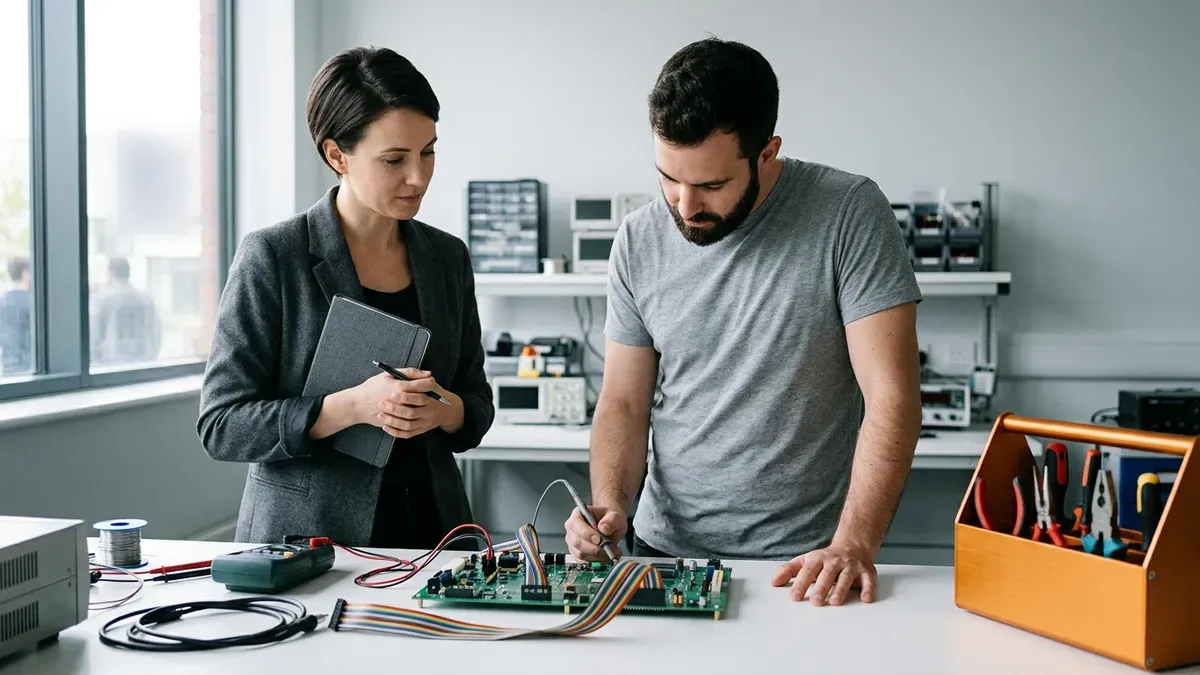
KORE1’s embedded systems recruiters scope a search by which layer boundary is unowned, because hardware, firmware, application and integration are four different hiring markets. 92% of the engineers we place are still in seat a year later.
Last updated: August 31, 2026
Everything Passed. The Product Still Didn’t Work.
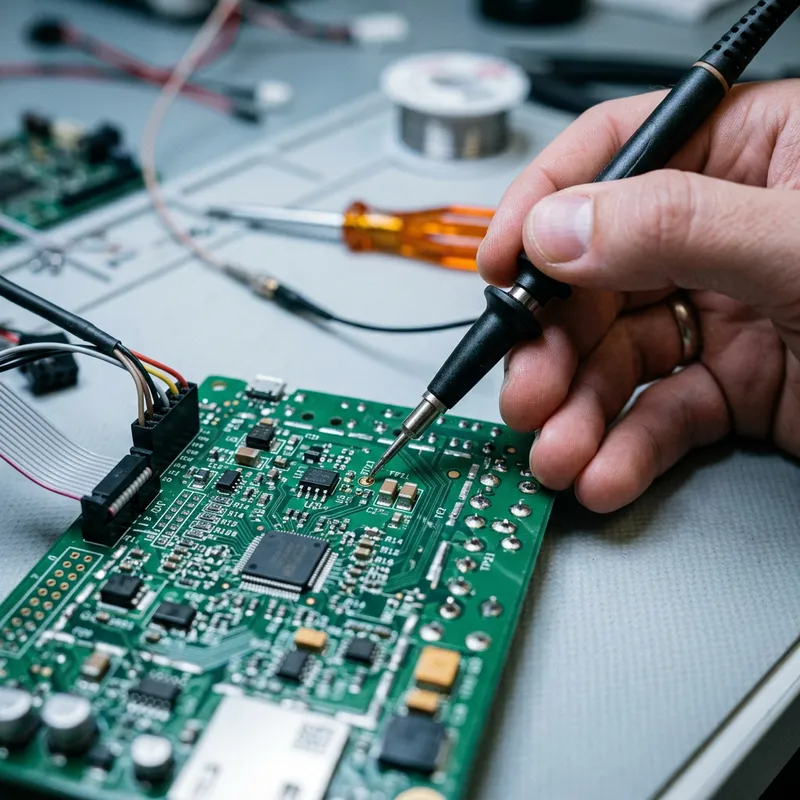
The board came back clean. Every net passed. Firmware had run on the dev kit for three weeks without a fault, and nobody was worried about it. Then the two met. The ADC started reading garbage above 40 degrees C, and eleven days went into finding out why.
That is the shape of most embedded escalations we get called about, and it is almost never a bad hardware engineer or a bad firmware engineer sitting in the middle of it. A reference design gets copied without the errata sheet. A peripheral gets routed to a pin that supports the function on paper but not at the drive strength the design actually needs, which nobody catches because schematic review was looking at the schematic and not at a datasheet footnote. Bring-up belongs to everyone. Which means nobody. Each discipline did its own job correctly, and the seam between them went unstaffed.
So the first thing we settle isn’t seniority or stack. It’s the boundary. Which one is unowned right now, and who has ever actually been paid to stand on it. That question sits underneath everything our engineering recruiters do, and on embedded work it shapes a shortlist far more than any keyword string does.
Four Boundaries. Whoever Owns One Is the Hire.
An embedded product is a stack, and the expensive failures live between its layers rather than inside them. Which boundary your team can’t currently cover is the single most useful thing to establish before anyone opens a resume, and it is almost never the boundary the requisition was written about.
Can this part actually do what the schematic assumes?
The function exists on that pin in the datasheet table. It just falls over at the drive strength the design needs, or the alternate-function mapping collides with a peripheral somebody already assigned two revisions ago. Schematic review clears it. Bring-up finds it, months later, with tooling already ordered.
Hardware Engineer · Board Design Engineer · Embedded Hardware Engineer
Is the sensor dead, or is the driver wrong?
Without one person fluent on both sides, that question costs days every time it comes up. Hardware says the rail’s fine. Software says it’s garbage. Both are telling the truth, and the argument runs until somebody who can put a scope on the bus and also read the driver source walks over and settles it.
Bring-Up Engineer · Firmware Engineer · BSP Engineer
Does timing that held on the bench hold under load?
Priority inversion. A blocking call that sneaked into an interrupt handler. A watchdog that only starts biting once the radio gets busy. The bench never reproduces any of it, so this seam usually gets found by a customer instead.
Embedded Software Engineer · RTOS Engineer · Embedded Architect
What happens to the units already in the field?
Update paths, rollback, provisioning and remote diagnostics get designed last, and owned by nobody in particular. Nobody argues for them. Then a release bricks a few hundred units in the field, and the recovery story turns out to have been one bullet on a slide that nobody had ever costed or tested.
Systems Engineer · Integration Engineer · Connected Product Engineer
Nearly every engineer we place is deep on one layer and literate on the one beside it. Two layers of real depth is rare, and worth paying for. Three is nearly a myth. We have seen it a handful of times in twenty years, and every one of those people took a deliberate detour through a job that paid them less to get there. Naming the boundary that matters most to you costs one conversation. It changes the entire shortlist.
Deeper on individual layers: the systems engineer role itself, firmware engineer staffing, how we screen firmware talent, electrical engineer recruiters and controls engineer staffing.
We Ask About the Bring-Up That Went Sideways
A resume can’t separate the engineer who watched a board come up from the one who brought it up. Both write “board bring-up.” Both mean it. More or less honestly.
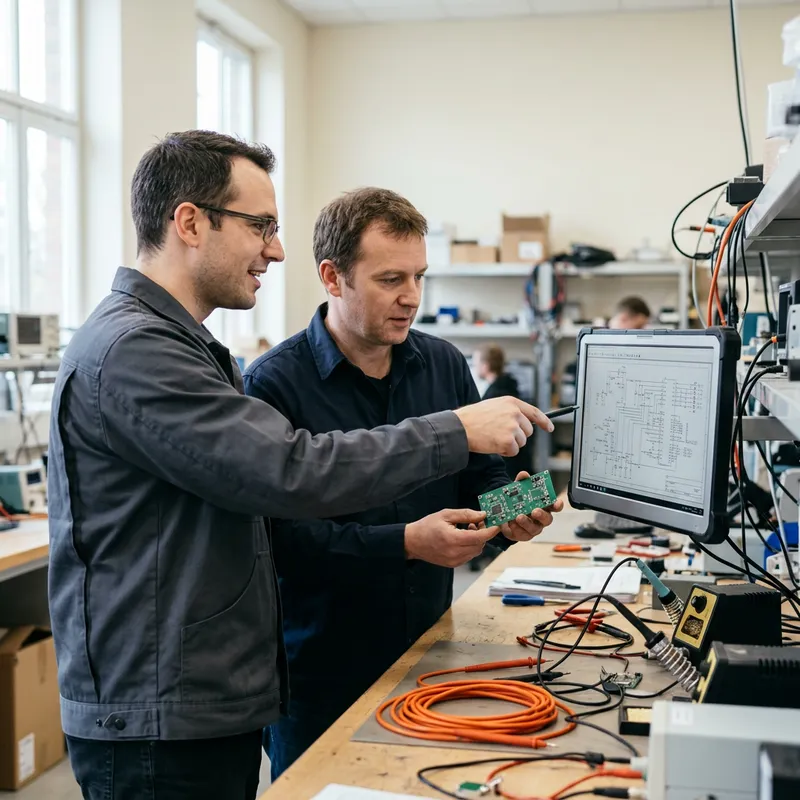
So our recruiters pick one program and walk the whole thing. Which revision finally worked, what failed first, whether the scope or the debugger found it, who they had to go and argue with about whose problem it was in the first place. An engineer who genuinely owned that seam gets specific inside a minute and usually gets a little heated about it, because a defect that ate two weeks of their life is not something anyone forgets. Nobody does. Someone who only sat adjacent to the work hands you a tidy process description instead. You can hear it. Usually inside three minutes.
We have been on this desk since 2005 and our recruiters average 15 years each. A fair number of these engineers we have placed twice. That helps more than any reference form.
Three Shapes an Embedded Request Usually Takes
The requisition almost never says which one it is. Naming it on the first call changes who we pick up the phone to.
One engineer for an unowned seam
Someone who can read a schematic and a linker script, brought in because a boundary has gone unstaffed for two quarters. Hardest of the three. Also the one that fixes the most.
Hardware, firmware and test together
A bring-up or a re-spin with a date on it. You’re buying coverage across the layers rather than depth in any one of them, and the group has to have worked that way before.
A departure with a hole under it
Somebody left who quietly owned two layers, and the replacement req got written for one. Most common of the three. Roughly half the embedded reqs we rewrite are this exact situation. When the hole is purely firmware, the firmware search desk runs a narrower search from a map of the employers that hold that talent.
Occupational demand and outlook data comes from the U.S. Bureau of Labor Statistics for computer hardware engineers and electrical and electronics engineers.
What Happens After You Brief Us
We find the unowned boundary
Thirty minutes on what the product does, what already exists in silicon and in code, and where the handoffs break down today. Most reqs get rewritten right here. Nobody has minded yet.
We settle the constraints before sourcing
Lab access, on-site days, export control and whether the band survives contact with the market. Discovering any one of those in week three is what turns a one-month search into a five-month one, and we would rather have that awkward conversation on day one than explain the delay to you in week six.
We work a network, not a job board
The engineers worth hiring are employed, working under NDA, and not reading postings. Twenty years on one desk means most first calls go to people we already know. Some of them we placed.
We screen on a program that shipped
One real bring-up, walked end to end, failures included. You get a shortlist with the technical notes attached, usually inside two to three weeks. The notes matter more.
Scoping the role rather than the search? Our embedded systems engineer staffing page covers the roles and industries we place into, and embedded software engineer staffing works through how many people a program actually needs. Writing the requisition yourself? The 2026 guide to hiring embedded systems engineers has the interview loop and the screening questions, and current pay bands sit in the embedded systems engineer salary guide.
Three Ways to Bring Embedded Talent In
Direct hire
Where the engineer who owns the architecture belongs. Most bridge hires and principal systems roles land here.
Direct hire staffing →Contract
Bring-up and certification pushes run hot, then stop. Contract also covers a boundary while the req is still budget-blocked.
Contract staffing →Project team
A re-spin or a qualification campaign needs several engineers across layers at once, on a scope with an end date.
Project staffing →Common Questions
What does an embedded systems recruiter do that a general engineering recruiter can’t?
A systems recruiter scopes the role by layer boundary before sourcing, then works a standing network of employed engineers rather than job board applicants. That is most of the distance between a two-week shortlist and a five-month search. A generalist can absolutely run this play. The good ones do. What they usually don’t have is twenty years of embedded relationships already sitting in somebody’s phone.
We already have hardware people and firmware people. Why would we need a systems hire?
You might not, and plenty of teams cover that boundary informally for years without trouble. The tell is bring-up. If the hardware side and the software side each conclude the fault belongs to the other one, and settling it takes days rather than an afternoon, the seam is unowned. That is a hiring problem rather than a communication problem, and it does not fix itself.
How long does an embedded systems search usually take?
Two to three weeks to a shortlist on most searches, longer when the role needs safety-standard evidence or an active clearance. Bring-up and integration people move quickly because there are fewer of them and they tend to know each other. Then you add a metro where three defense primes are chasing the same forty engineers, and it stretches. We say that on the first call. Week three is too late.
Is this the same as your embedded software recruiting?
Same desk, different question. Our embedded software recruiters page is about firmware talent specifically, why it leaves almost no public trail and how we screen for it. This page is about the whole stack and the boundaries inside it, which is what you want when the gap is not clearly on one side. Both routes land in the same inbox, so pick whichever matches what you are trying to work out.
Can embedded systems roles be done remotely?
Some of it, yes. Application-layer and integration work travels fine, and bring-up work does not. Anything needing a scope, a bench supply and the actual board in hand has to happen where the board is, and writing that role as fully remote costs you candidates late in the process. Hybrid with a real lab inside driving distance is where most of our clients land.
Do you recruit for safety-certified programs?
Yes, across ISO 26262 automotive, IEC 62304 medical device and DO-178C airborne work. At the systems level the useful signal is not the standard printed on a resume. It is whether the engineer has carried a hazard analysis all the way through to requirements traceability across both hardware and software. Far fewer people have done that than have worked on a certified product. Plan for a longer search.
What should we have ready before the first call?
Four things. What the product does in one line, the block diagram, who owns each layer today, and the last handoff that went wrong. That last one tells us more than the requisition does, and it is the one people leave out. If you only have two of the four, call anyway. We will get to the rest on the phone.
Tell us where the handoff breaks. We’ll tell you who you’re hiring.
Give us thirty minutes on the architecture and the org chart. You’ll leave with a sharper brief whether or not you run the search with us. Most people keep the brief.
Start an Embedded Search →