

Last updated: October 2, 2026
By Dave Manchester, Scientific Recruiting, KORE1
A scientist with six years in a GLP lab applies for your manufacturing opening. Same thing as GMP, more or less? No. GLP governs how nonclinical safety studies are run and recorded so regulators can trust the data, while GMP governs how a drug is made, tested, and released so patients can trust the batch.
One letter apart. Not the same job.
I get why people treat them as one thing. They’re both FDA. They both come with standard operating procedures (SOPs) and signatures and a quality person who is paid to check up on you, and when the two acronyms sit near each other on a resume, GLP on one line and GMP three lines down, they look like cousins. They aren’t. Not on a production floor, anyway.
My desk sits inside KORE1’s life sciences staffing agency. Lab people and plant people, mostly, plus a steady stream of lab people who’d like to become plant people. I’m for it. I minored in chemistry and never quite got over it, so anybody trying to stay near the science while the career changes shape has my sympathy. What I won’t do is tell you the move takes care of itself.
So this one is for whoever’s doing the hiring. I’ll go through what each rulebook actually covers and what a GLP scientist really does carry into a plant. Then what stays behind in the lab. Then the conversation I’d have with a research scientist before anyone signs anything, which matters more than the first three put together.
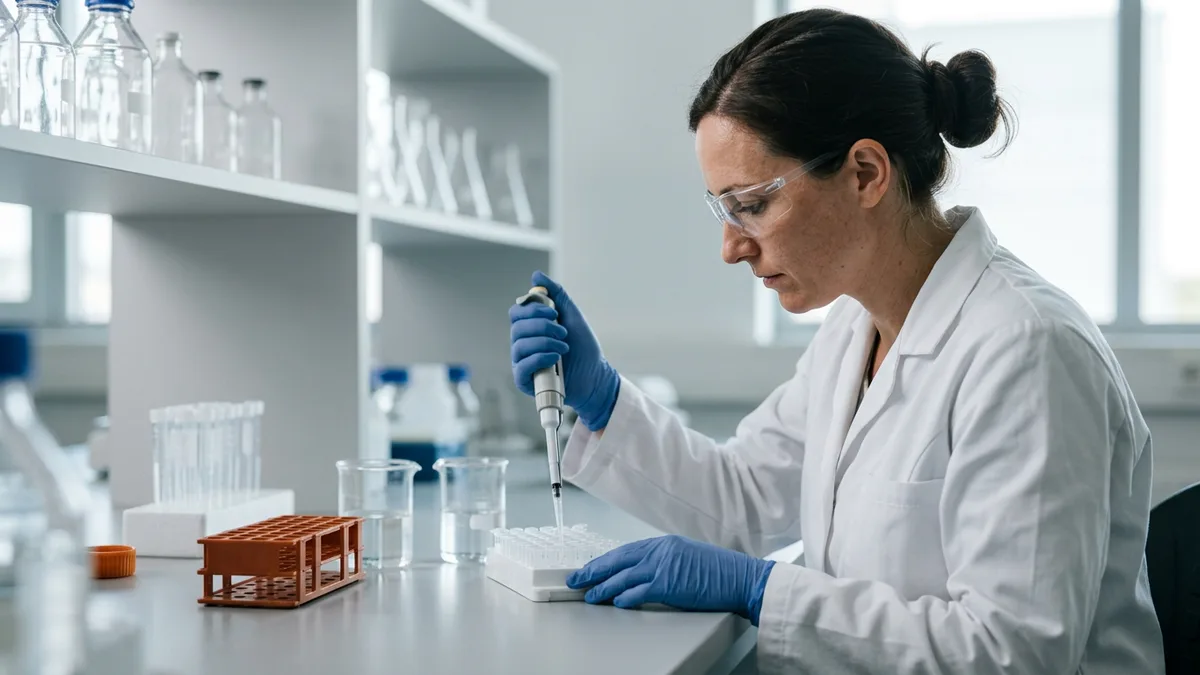
GLP vs GMP, Side by Side
Good laboratory practice (GLP) is the FDA rulebook for nonclinical laboratory studies, the safety experiments run on a product before it reaches people. Current good manufacturing practice (GMP, or CGMP) is the rulebook for making, testing, packing, and holding drugs. GLP protects the integrity of a study’s data. GMP protects every batch that ships.
They sit in different parts of the Code of Federal Regulations. GLP is 21 CFR Part 58. Drug GMP is Parts 210 and 211. FDA finalized them within about three months of each other, the rewritten drug GMP rule in September 1978 and the first GLP rule that December, which tells you the agency saw them as separate problems from the start. Same agency. Same year.
| GLP | GMP | |
|---|---|---|
| FDA rule | 21 CFR Part 58 | 21 CFR Parts 210 and 211 for finished drugs |
| What it protects | Safety data that supports an application | The drug itself, one batch at a time |
| Unit of work | A study, with a start, an end, and a final report | A batch. Then the next batch |
| The plan | An approved protocol written for that study | Master production records and SOPs, the same every run |
| Who answers for it | The study director | The quality control unit, which approves or rejects |
| What quality assurance does | Inspects studies in progress and reports to management | Reviews the batch records before anything is released |
| When work goes off plan | Authorized by the study director, documented, described in the final report | Recorded, justified, investigated, and the batch can be rejected |
| The finish line | A signed report and an archive | A released batch and a customer waiting on the next one |
| Records kept | At least two to five years, depending on the filing | At least one year past the batch’s expiration date |
Source, 21 CFR Parts 58, 210, and 211. A summary for hiring conversations, not regulatory advice.
If you only read one row, read the third. Unit of work.
A study happens once, which sounds obvious until you think about what it does to a person’s working life, because somebody designs it, writes a protocol for it, and then one named scientist carries the whole thing to the end. Part 58 gives that person “overall responsibility for the technical conduct of the study” and calls the study director “the single point of study control.” A good GLP scientist spends years either being that person or working for one. Then the report is signed, the boxes go to the archive, and a new study starts with a new design.
A batch doesn’t end like that. It ships, and tomorrow there’s another one that has to come out the same.
The international version says it more plainly than FDA does. The OECD Principles of Good Laboratory Practice define GLP as a quality system for how nonclinical safety studies are “planned, performed, monitored, recorded, archived and reported.” Six verbs. “Manufactured” isn’t one of them.
Three Kinds of Lab Hide Behind One Word
Which lab, though? Pin that down first, because “lab experience” covers three different places and resumes rarely say which.
Most common is plain research. Discovery groups, university labs, early R&D at a startup where the notebook is whatever’s nearest. None of that is GLP or GMP. Part 58 says so in its own definitions, where the definition of a nonclinical laboratory study leaves out “basic exploratory studies carried out to determine whether a test article has any potential utility.” So you can be a brilliant discovery chemist, fifteen years in, and never have worked one day under either rulebook. That’s no criticism. Discovery is supposed to be loose.
Then the real GLP lab. Toxicology. Safety pharmacology. The bioanalysis that props those up. A good deal of it gets done at contract research labs, and every study there has a protocol, a study director, and a quality assurance unit that answers to management and not to the people running the study.
The third lab is where the trouble starts. It’s the quality control lab inside a drug plant, and the people working in it say “GLP” a lot. They mean good lab habits. Lowercase. Clean notebooks, calibrated balances, a label on everything. I’m all for it. But that lab tests raw materials and finished product so a batch can be released, which puts it squarely under GMP, and if you go looking you’ll find the laboratory rules sitting inside Part 211 itself, where section 211.160 says its requirements “shall be followed and shall be documented at the time of performance.” So an analyst who has released product out of a QC lab has GMP experience. Doesn’t matter which acronym made it onto the resume.
How do you tell them apart? Ask one thing. “Was your work part of a study with a protocol and a study director?”
A quick yes, with the director’s name attached, means Part 58. A pause and a puzzled look usually means the letters were shorthand for a tidy notebook. Nothing wrong with a tidy notebook. It isn’t a regulation, though.
GMP gets stretched on resumes the same way, and that one got its own write-up on what GMP experience really covers.
What a GLP Scientist Carries Into a Plant
Quite a lot. More than the acronym gets credit for.
- Start with the records. Part 58 wants data “recorded directly, promptly, and legibly in ink,” each entry dated and signed, and any change made “so as not to obscure the original entry.” That’s section 58.130. Hand that person a batch record and the reflexes are already in place.
- SOPs don’t scare them. They’ve followed the dull ones for years, equipment maintenance and calibration included.
- They’ve been audited. Mid-study, by a quality assurance auditor with a checklist who watched them work and then wrote up what went wrong. Nobody enjoys it the first time. By the tenth you stop taking it personally, and a few people end up friends with the auditor.
- Bench skill, obviously. HPLC, LC-MS, cell-based assays, dose formulation analysis. The HPLC has no idea which part of the CFR it’s running under.
- And they’ve had a training file before. GLP facilities keep a summary of training and experience plus a job description for every person on a study, so being qualified on paper before you’re allowed to touch anything won’t come as a shock.
Is that worth something to a plant? A great deal. It’s why I push back when a hiring manager wants to drop these candidates over the acronym, because a person who already signs and dates everything, already expects somebody else to check the work, and doesn’t flinch when quality walks in is miles ahead of the bright new graduate who has to be taught every bit of that from nothing.
Head start. Not a finished race.
What Stays Behind in the Lab
Here’s the part the acronym hides.
Start with surprises. In a study, when a result comes back odd, you write it down, you think about it, maybe you argue about it over lunch, and eventually it gets explained in the report, and honestly on a good day it’s the most interesting thing that happened all month. On a production floor that same surprise stops the line. It opens an investigation. It puts a batch worth real money on hold until quality decides what becomes of it. Same event. Opposite mood.
The rule behind that mood is 21 CFR 211.192. Any unexplained discrepancy “shall be thoroughly investigated, whether or not the batch has already been distributed,” and the investigation has to reach other batches that might share the problem. Nothing in a GLP lab quite prepares a person for the phrase “already been distributed.”
The stakes are written down too. Under section 210.1, failing to follow the GMP rules renders the drug “adulterated,” and the person responsible is subject to regulatory action along with the product. Adulterated. FDA’s word, not mine.
Then there’s authority. A study director is one person with the final say on a study. A plant doesn’t work that way. The quality unit approves or rejects, production executes, engineering owns the equipment, and a change to almost anything, a gasket or a mixing time or one line on a form, goes through change control and waits its turn. A senior scientist who has spent a decade being the single point of control can find that slow. Maddening, even. In a lab, the instinct to improve a method is the job. In a validated process, improving the method without permission is the violation.
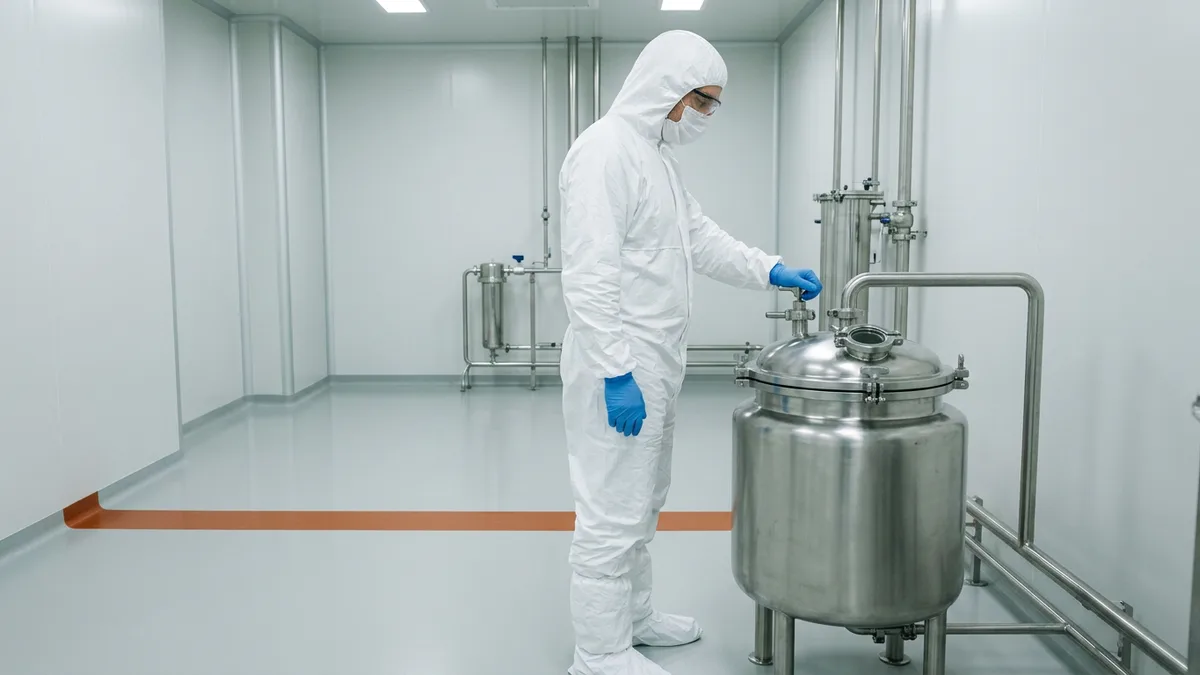
And the work itself is physical in ways a bench job often isn’t. Gowning. Shifts, at plenty of sites. Long stretches on your feet in a suite, gowned to the eyes, running the same steps in the same order you ran them yesterday, because sameness is the whole point of a validated process.
Nobody publishes a batch record.
The vocabulary changes as well. Line clearance, lot disposition, CAPA, change control, hold time. A sharp person picks it up in weeks. They still have to pick it up.
None of this is hard to learn. It’s hard to like if nobody warned you.
The Honest Conversation With a Research Scientist
My rule with candidates is simple. Talk to them the way you’d talk to a friend who asked whether to take the job. A friend gets the truth, including the parts that might talk them out of it.
So when an R&D scientist asks me about a plant role, here’s roughly what they hear.
- You’ll stop designing experiments. Someone else designed the process, and your skill will be running it the same way every time.
- Your good idea goes on a form and waits.
- Expect gowning, and maybe a shift that doesn’t start at nine.
- When something goes wrong, you’ll stop and tell someone, even if you’re sure you could fix it yourself in thirty seconds.
Then the other half, because there is one. What you make leaves the building on a truck, and some weeks or months later it ends up in a patient who will never know your name but is counting on you having followed step fourteen. For a lot of scientists that was the reason for getting into science to begin with. It was mine, back when the plan was pre-med and orthopedic surgery. The plan changed. The reason didn’t. Plant experience also opens doors a bench career doesn’t. Pharma QA, validation, manufacturing science, supervision. Some of those roads end in the site and quality leadership seats our search desk for pharma plant and quality leaders fills. And the work is steady in a way that grant-funded and early-stage research often isn’t.
Some scientists hear all that and light up. Others go quiet. Both reactions are useful, and you want them before the offer, not in month four.
Why would you, as the hiring manager, want a recruiter saying discouraging things to your candidates? Because the ones who hear it and still want the seat tend to keep it. There’s research behind that. A 1998 meta-analysis in the Academy of Management Journal pooled 40 studies of realistic job previews and found they were related to higher performance and lower voluntary turnover. Forty studies to establish that telling people the truth works. I’ll take it.
Across KORE1, 92% of placements are with the same employer at the twelve-month mark. Screening doesn’t get all the credit for that. A share belongs to candidates who knew what they were walking into.
You can run your own version of the conversation. Walk the finalist through the suite before the offer. Let them page through a blank batch record. Introduce them to an operator, not only the director. Then ask three things.
What did you do the last time a result surprised you? Have you ever needed to change a method partway through a study, and what had to happen first? How do you feel about running one procedure for the fiftieth time?
A GLP scientist with the right temperament will tell you about a protocol amendment the study director had to sign, the wait for it, and probably a small complaint about how long the signature took, which is exactly the complaint you’re hoping to hear. The one who is going to struggle tells you how they improved things on the fly. Great story. Wrong building.
Where Lab People Land Well
Not every seat in a plant is the same distance from the bench. Shortest walk first.
QC is the short walk. The instruments are ones they already know and the day looks familiar, only now there’s a new rulebook and a release date that somebody in planning cares about very much. There’s more about that bench on our quality control staffing page. Not sure who does what after the result is in? Read QC and QA in pharma first.
A bit farther out are jobs that still want a research brain. Analytical development. Method transfer and validation. Process development, manufacturing science, whatever your site calls the group that sits between the lab and the floor. Contract manufacturers hire a lot of these people, and the CDMO hiring guide gets into why.
Pharma QA tends to come later. One exception, and it’s a good one. Anybody who worked in a GLP quality assurance unit already audits for a living, so GMP quality assurance is a shorter hop for them than for nearly anyone else you’ll interview.
Then the production floor. Longest walk by a distance. For the right person it can also be the best job in the building, though I’d have the honest conversation twice before making that offer.
One practical thing about how you hire. If neither of you is sure, set it up as contract-to-hire staffing, so the scientist gets a few months of real batches before anybody commits. You’ll both learn more from that than from a fourth interview. Where do you find these people? Wherever a lot of research is going on. Boston. San Diego. Research Triangle Park. The biotech staffing agency side of KORE1 recruits in all three. Opening stays in the lab after all? Then our laboratory staffing agency desk is the right door.
GLP and GMP Questions I Hear From Managers
GMP vs GLP, which one is stricter?
Neither one is stricter, because they police different things. GLP is unforgiving about study data and who controlled the study. GMP is unforgiving about the product and who released it. People moving in either direction tend to call the new one stricter, mostly because it’s the one they haven’t learned yet.
Our QC lab follows “good lab practices.” Is that GLP?
A QC lab that tests materials or product for a drug plant works under GMP, not GLP, and its laboratory rules are in 21 CFR Part 211. GLP in the regulatory sense means Part 58 and nonclinical safety studies. Lowercase good lab practices are habits. Good ones.
Where does GCP fit with these two?
GCP, good clinical practice, is the third rulebook, and it covers trials in human volunteers and patients. The rough order runs GLP for safety studies before people are involved, GCP for the clinical trials, and GMP for making the product those trials use and everything sold afterward. Clinical hiring is a separate lane, and our clinical research staffing team handles it.
Does EPA have a GLP rule too?
EPA has two GLP rules of its own, 40 CFR Part 160 for pesticide studies and Part 792 for chemical testing under the Toxic Substances Control Act. A candidate from an agrochemical or environmental testing lab can have years of real GLP experience that never touched FDA. Don’t discount it. The discipline is the same, and so is the gap between it and a manufacturing floor.
How long until a GLP scientist is productive in a GMP role?
No regulation sets a number, and the seat matters more than the person. A QC bench role can go quickly, since the instruments and the record habits carry over. Anything that executes or reviews batch records takes longer, because your site has to train and qualify the person on each operation one at a time, with a trainer signing off, before they’re allowed to sign for it themselves.
Should our posting say “GLP/GMP experience required”?
Write the one the job actually runs under, because the slash tells candidates you haven’t decided. If the seat is in a plant, ask for GMP and say that GLP or other regulated lab experience will be considered. You’ll get the lab scientists worth meeting without implying the two are interchangeable.
Tell Them What the Job Is
The conversation is the part to hold onto. Lab experience is worth a lot in a plant. Not automatically, though. It carries over when the scientist knows what they’re walking into and you know which lab the experience came from.
Hiring a lab scientist into a manufacturing seat, or trying to work out whether the resume on your desk is GLP, GMP, or neither? Let’s connect. Send me the resume and the job description and I’ll tell you how far apart they are. You can also reach me on LinkedIn.
