
Last updated: September 28, 2026
By Dave Manchester, Scientific Recruiting, KORE1
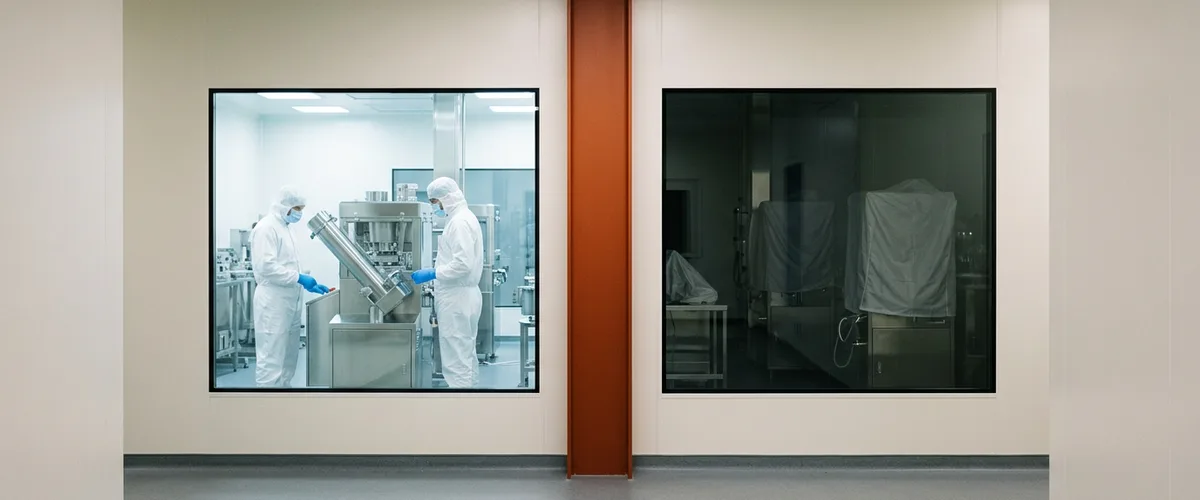
Is a CDMO just a factory you rent? Not quite. A contract development and manufacturing organization is a company that develops and manufactures drugs for other pharmaceutical and biotech companies under contract, from formulation and process development through clinical supply and commercial batches.
The D is the part people skip.
A contract manufacturing organization makes a drug somebody else already knows how to make. A CDMO can also help work out how to make it in the first place. One extra letter. It changes who’s on the payroll, and it changes how you should hire.
Ask me about contract manufacturers and you’d better have lunch booked. I’ll try to keep this shorter than lunch. My desk at KORE1 fills scientific and plant seats, a good share of them inside contract manufacturers, as part of KORE1’s life sciences recruiting practice. This guide is for whoever is doing the hiring. That could be a manager inside a CDMO trying to staff the next client program, or a manager at a drug company that just handed its product to one and now has to decide who stays in-house to keep an eye on it.
Contract Development and Manufacturing Organization, Defined
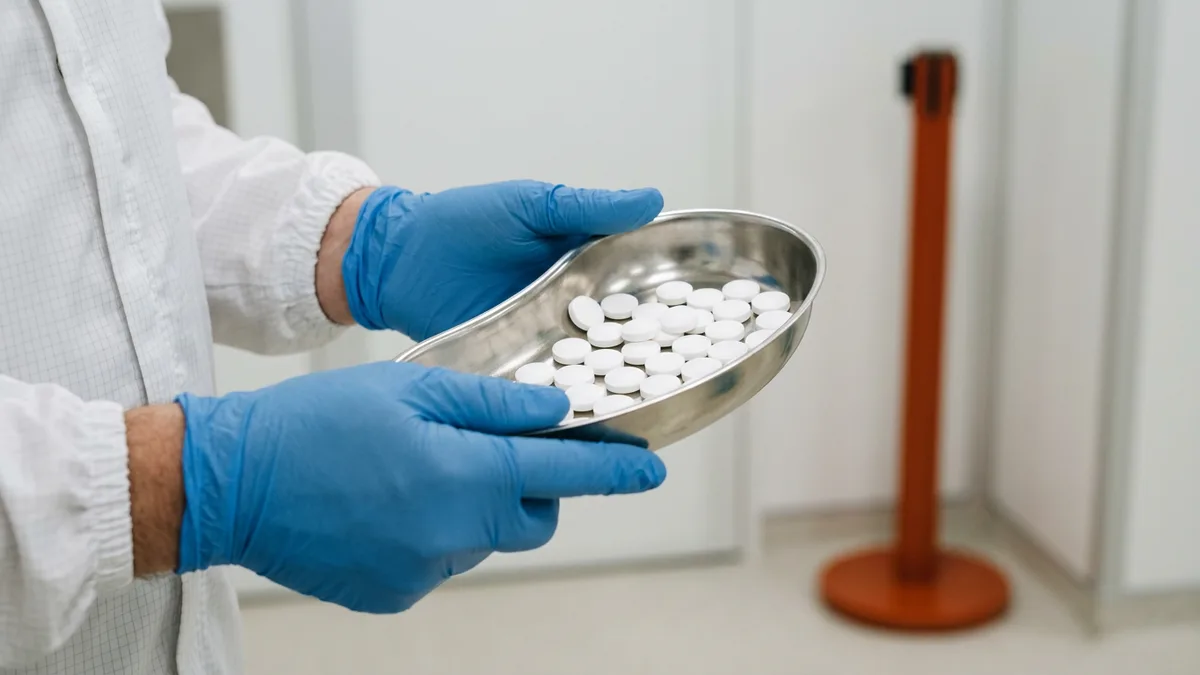
A contract development and manufacturing organization (CDMO) is a company paid to develop and produce another company’s drug. Development covers formulation, analytical methods, and scaling up the process. Manufacturing covers clinical trial batches and commercial product. The drug, the application, and the regulatory responsibility all stay with the client.
CDMO is the industry’s name for it. Regulators describe the arrangement in their own words. FDA’s guidance on cooperative manufacturing arrangements for licensed biologics, from November 2008, says contract manufacturing is when another entity performs “some or all of the manufacture of a product as a service to the license manufacturer.” Europe’s GMP guide, in Chapter 7 on outsourced activities, which came into operation on January 31, 2013, calls the two sides the Contract Giver and the Contract Acceptor.
Contract Acceptor. I like that one. It sounds like a job title nobody would ever apply for.
The Chapter 7 wording matters for hiring, and it rarely makes the explainers. Before outsourcing anything, the Contract Giver is responsible for assessing “the legality, suitability and the competence of the Contract Acceptor.” Clause 7.9 then says the acceptor has to be able to do the work, “such as having adequate premises, equipment, knowledge, experience, and competent personnel.”
Competent personnel. Written into the rulebook, right next to the equipment. On purpose.
So a CDMO’s people are part of what it sells. A prospective client auditing the site before signing will look at training records, meet the program manager, and ask who ran the last tech transfer, and a thin bench can cost you a proposal your price had already won.
CMO vs CDMO, One Letter and Two Different Hiring Plans
A contract manufacturing organization (CMO) takes a finished, validated process and runs it. The client hands over the batch record, the specifications, and the test methods, and the CMO makes product to them. A CDMO does that too. It also works on the earlier stretch, before anybody has written a commercial batch record at all.
In real life the line is blurry. Many large contract manufacturers call themselves CDMOs now, and smaller shops use whichever label suits the brochure. Don’t read the acronym. Read the org chart.
Here’s the hiring version of the difference, with the CRO added because it gets mixed up with both.
| CMO | CDMO | CRO | |
|---|---|---|---|
| Paid to | Make a defined product with the client’s finished process | Develop the process and methods, then make clinical and commercial supply | Carry out sponsor duties in a clinical trial |
| Hands back | Batches and executed batch records | Development reports, tech transfer packages, batches | Monitoring reports, trial data, submission materials |
| Main rulebook | CGMP (21 CFR 210 and 211, EU GMP) | CGMP, plus development work that ends up in the filing | Good clinical practice and, for drugs, 21 CFR Part 312 |
| Scientists you expect to hire | MS&T, validation, QC analysts | Everything a CMO has, plus formulation, analytical development, and process development | Clinical research associates, clinical project managers, data managers, biostatisticians |
| Plant crew | Large | Large, often with pilot or clinical suites | None |
These are generalizations, not legal definitions. Plenty of companies sit in more than one column.
The development seats are where the two really split. A formulation scientist who has taken three different clients’ molecules from powder to a stable tablet is a CDMO hire, and a pure CMO may never need one. The reverse is just as true. Someone who spent years running one validated line knows commercial manufacturing cold and may never have watched a process change halfway through development, which is the normal state of affairs in a development lab.
What Is a CMO in Pharma? Check Which One They Mean
In pharma, CMO has two common meanings. Contract manufacturing organization. Chief medical officer. One runs tablet presses, the other runs clinical strategy and medical affairs, and you’d think context would sort it out.
Usually it does. Not always.
But if a board member asks you to “find us a CMO,” ask one more question before anybody writes a search spec. On the rest of this website CMO means chief marketing officer, by the way. Three jobs, one acronym. Nobody asked me.
For the manufacturing meaning, a CMO in pharma is a company that makes drugs for other companies to their specifications. I spell it out when I write about them and lean on CDMO wherever it fits, because the bare acronym trips people up.
CDMO vs CRO, Making the Drug or Running the Trial
This is the comparison that gets muddled most, including on a few CDMO websites. A CDMO makes the drug. A contract research organization (CRO) helps run the study the drug goes into.
The CRO has an actual legal definition. Under 21 CFR 312.3, a contract research organization is a person that “assumes, as an independent contractor with the sponsor, one or more of the obligations of a sponsor,” with protocol design, selecting or monitoring investigations, and evaluating reports given as examples. 21 CFR 312.52 lets a sponsor hand some or all of those obligations to a CRO and requires the transfer to be described in writing. Anything the writing doesn’t cover stays with the sponsor.
A CDMO does produce clinical supply, meaning the capsules or vials the trial doses. It doesn’t monitor sites. It doesn’t enroll patients.
Why should a hiring manager care? The talent pools barely touch. A clinical research associate spends the week visiting trial sites and checking source records against case report forms, while a manufacturing associate spends it in a gown, and both technically “work in pharma outsourcing” and can surface in the same applicant search if the keywords are loose. Neither can do the other’s job on Monday. Different trades.
A few large firms own both sides, and some brand themselves CRDMOs to say so. Their divisions still hire separately, from separate pools. Treat them as two employers that share a parking lot.
Why CDMO Hiring Swings With the Book of Business
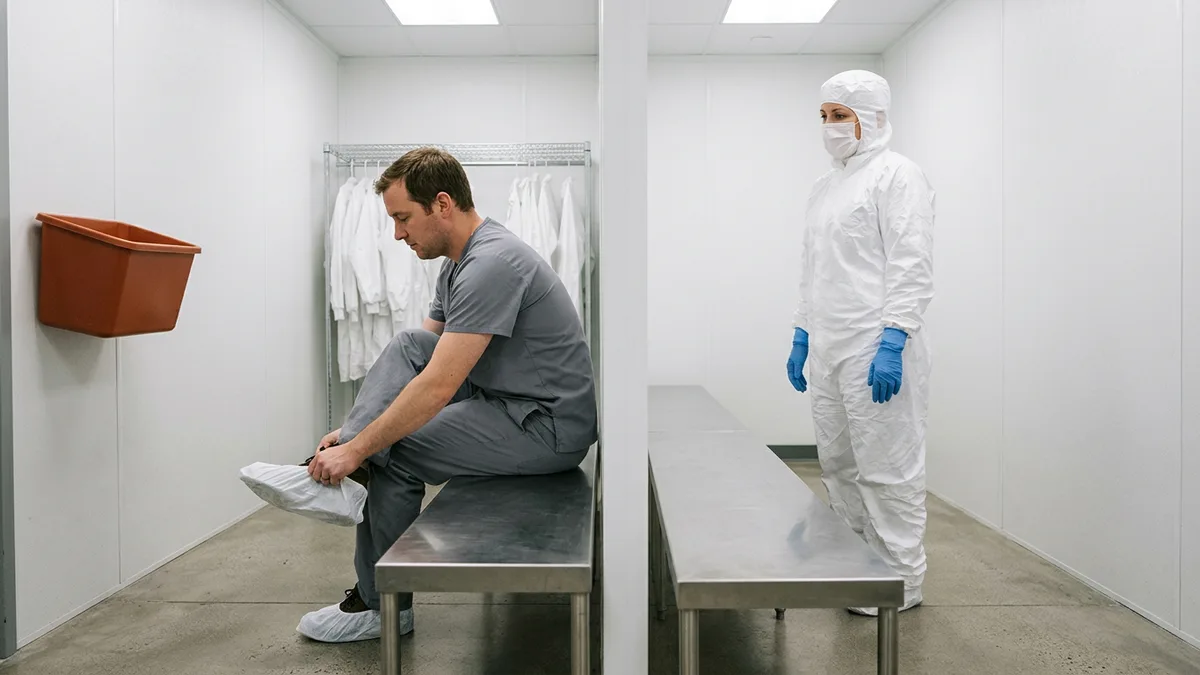
A drug company hires to its pipeline. A CDMO hires to its client list.
That one line explains most of the odd things you’ll notice about CDMO hiring. A new client signs and the site needs a tech transfer team this quarter and a trained crew before validation. A client’s program fails in phase 2, or the client moves it to a different site, and a suite goes quiet. Nobody inside the CDMO made either call. Small biotech clients live and die by trial readouts and funding rounds, and every one of them carries that uncertainty straight into the building, onto the schedule, and into the headcount plan, which is why a site can post twenty jobs in March and none in June without anything being wrong with it.
Candidates notice the waves. Some read them as instability. Fair. Others see a chance to work on five products in five years. Also fair.
My advice to CDMO hiring managers is to staff the core and flex the edge. The people who carry knowledge from program to program, the MS&T lead, the pharma QA managers, the program managers who know every client by name, are permanent hires, and our pharmaceutical recruiters run those searches. Seats tied to one program’s volume are where contract staffing earns its keep. The CDMO staffing page shows how the crews line up by program phase, so I won’t redraw that here.
Be straight with candidates about the swings, too. I treat a candidate the way I’d treat a friend asking whether to take a job, and a friend would want to know the role exists because one client signed. Tell them. The ones who still want it know what they’re walking into.
The Seats Inside a CDMO
A mid-sized CDMO site looks a lot like a small pharma company with an unusually busy front office. What makes it a CDMO rather than a plain plant is mostly on the development and client side.
- Formulation scientists turn an active ingredient into a dosage form that stays stable. At a CDMO they do it for several clients at once, each with its own deadline and its own opinions.
- Analytical development. Builds and validates the test methods before QC ever runs them. Easy to confuse with QC on a resume, and not the same job.
- Process development and MS&T (manufacturing science and technology) scale the process up and write the package that moves it from the lab into a suite.
- Who reads a client’s request for proposal, estimates the lab work, and refuses to promise a timeline the bench can’t hit? A proposal scientist. Underrated seat.
- Program managers, the client’s daily contact.
- Then the plant itself, with manufacturing associates, aseptic operators, QC analysts, and pharma QA specialists, same as any GMP site.
The QC and QA split works the same way it does at a brand-owned plant, with QC testing the product and GMP quality assurance owning the system that decides whether it ships, and I went through that split in QC vs QA in pharma. If the lab side is what you’re building, our quality control staffing desk handles it. Engineers who scale processes come through process engineering staffing.
If You Outsource to a CDMO, Who Stays In-House?
Now the other side of the table. Say you’re a 12-person biotech with no plant, and you just signed with a CDMO. Who still needs to be on your own payroll?
More people than most founders budget for. FDA’s 2008 guidance doesn’t soften it. A license manufacturer that contracts out manufacturing stays responsible for the product’s safety, purity and potency, for complying with its own application and the CGMP rules, and for a long list that runs from release specifications to change reporting to personnel training. Europe says the same thing in fewer words. Chapter 7 makes the Contract Giver “ultimately responsible” for controlling outsourced work and tells it to “monitor and review the performance” of the acceptor.
Somebody has to do that monitoring. Usually three kinds of somebody.
- A CMC lead, who owns the chemistry, manufacturing, and controls section of your filing and knows the process well enough to argue with the CDMO’s scientists.
- Pharma QA, reviewing the CDMO’s executed batch records, deviations, and change requests before your company signs off on anything, which early on is often a consultant who comes in two days a week and already knows your program.
- An external manufacturing or supply manager who keeps the production schedule honest and notices when a slot slips.
At the smallest companies one person wears two of those hats. Fine, for a while. When the quality hat turns into a full-time job, my piece on when a small pharma company needs a director of quality covers the triggers.
There’s one seat people forget. When a critical batch runs, many sponsors send their own person to be on site at the CDMO for it. That person needs to know GMP well enough to watch without getting in the way, and needs the people skills to raise a concern with another company’s operators without starting an incident. Hard combination to find. Worth finding before the batch, not the week of. Plan for it.
Hiring Someone With CDMO Experience
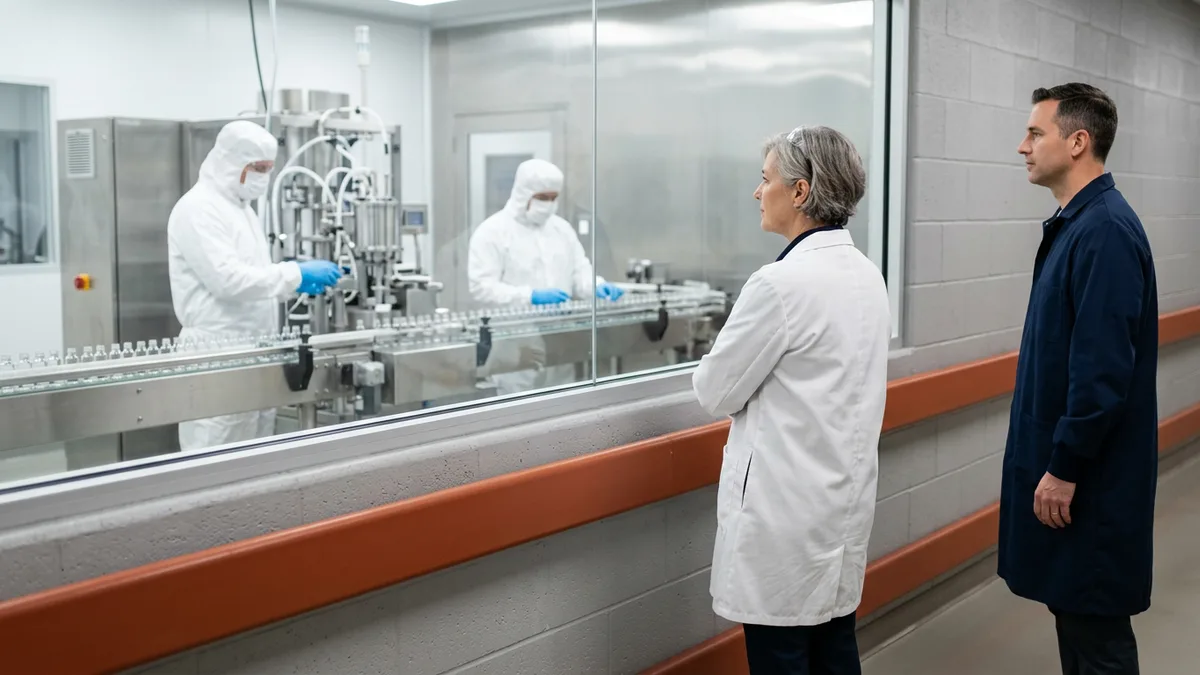
CDMO alumni turn up on biotech shortlists often, and there’s a reason. The background gives you some things reliably and leaves out one thing just as reliably.
Range comes first. A CDMO scientist has usually worked on several clients’ molecules, often across more than one dosage form, and has been audited by people who were paying the invoices. They know change control from the side that has to ask permission, a handy habit at a sponsor too. They’re used to writing for an outside reader, because every development report, deviation summary and batch record they touched was going to a client who had paid for it and read it closely.
Ownership is what may be missing. At a CDMO the client makes the big product calls, so somebody moving to your biotech has to start making those calls themselves. Some people love that. Some miss the variety inside a year. That’s the trade.
So ask about it directly. “Tell me about a decision on a client’s program you disagreed with. What did you do?” You’ll hear whether they deferred, escalated, or pushed back, and you’ll know which of those your team actually needs.
Hiring the other direction, from a brand or a biotech into a CDMO, flips the question. Can this person juggle three clients’ priorities in one week without taking it personally when somebody else’s batch jumps the queue? Some can’t.
One caution applies to both. “GMP experience” on a resume covers everything from running a validated line to walking past one on the way to the cafeteria. Pin it down. Which suite, which dosage form, and which batch records did they actually sign? I wrote up how to verify GMP experience on a resume separately.
What Hiring Managers Ask Me About CDMOs
So is a CDMO the same thing as a CMO?
Close, not identical. A CMO manufactures with a process the client already has, while a CDMO can also develop that process and its test methods first. Many large contract manufacturers now offer both and use the CDMO name, so check the org chart rather than the label.
Do CDMOs run clinical trials?
They make the clinical supply, not the trial. Monitoring sites, managing trial data, and other sponsor duties are what a sponsor can hand to a contract research organization, in writing, under 21 CFR 312.52. The two hire from different talent pools.
Why do CDMO job postings show up in bunches?
Because work arrives with client programs. A signed contract can create a tech transfer team and a trained crew in the same quarter, and a lost program can quiet a suite just as fast. The postings follow the client list, not the calendar.
Contract or direct hire for CDMO seats, which one?
Both, split by whether the seat outlives one program. Knowledge that moves across clients, like MS&T, pharma QA, and program management, justifies direct hire recruiting. Volume tied to a single client’s program usually fits contract or contract-to-hire better, and it keeps a lost program from turning into layoffs.
Will a CDMO scientist do well at our 20-person biotech?
Often, if they want to own decisions. They bring range and audit experience from many clients, and the adjustment is going from recommending to deciding. Ask how they handled a client call they disagreed with and listen for whether they want the final say.
What does CMO mean on a pharma org chart?
Almost always chief medical officer. On an org chart the CMO is the executive over clinical development and medical affairs. In outsourcing conversations the same letters mean a contract manufacturing organization, so confirm which one before anyone opens a search.
Before You Staff the Next Client Program
KORE1 has been recruiting since 2005. Our hires tend to stay put. Twelve months in, 92% are still on the payroll of the company that brought them on. At a contract manufacturer that number carries extra weight, because every departure takes program knowledge with it, and clients notice at the next audit.
Staffing a CDMO’s next program, or deciding who stays in-house after you sign with one? Let’s connect. If the plant you’re hiring for isn’t a GMP site, our manufacturing staffing agency team is the better fit, and I’ll hand you over. I’m on LinkedIn as well.
