
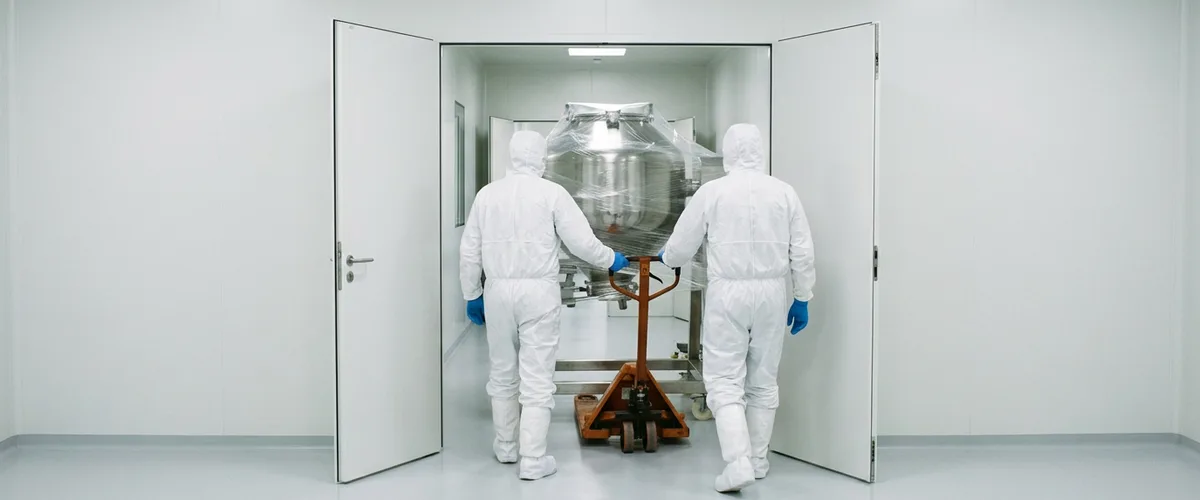
Last updated: October 4, 2026
By Dave Manchester, Scientific Recruiting, KORE1
Who on your payroll is going to catch a process somebody else spent years building? Tech transfer in pharma moves a product’s process, test methods, and know-how from a sending site to yours, and the receiving site has to supply most of the people who make it work.
Usually the receiving site is a contract development and manufacturing organization (CDMO). Sometimes it’s your own second plant. Either way the paperwork arrives first and the hiring problem shows up about a week later.
I fill scientific and plant seats through KORE1’s life sciences recruiting team, and transfers are where I see good managers get caught short. Not because they hire badly. They hire late, or they hire the wrong seat first, or they assume the sending site’s experts will stick around longer than they will.
So here’s the receiving side of it. What actually moves, which seats you need and roughly when, which ones you can borrow, and what to tell the candidates before they say yes.
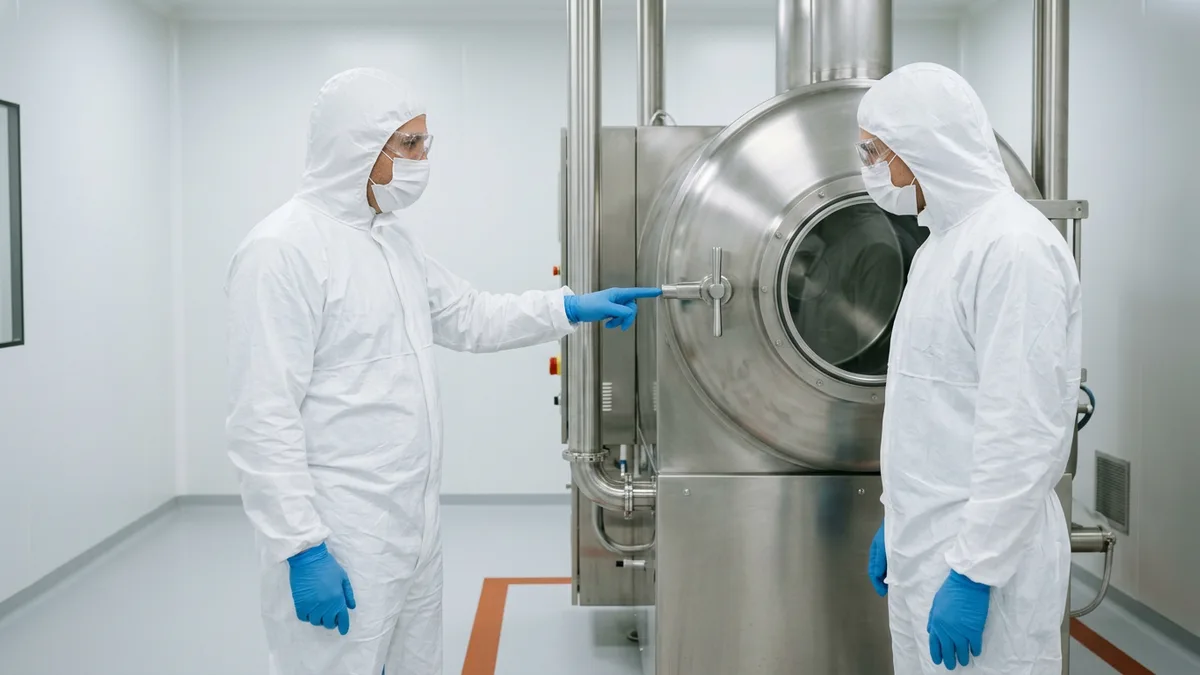
What Tech Transfer in Pharma Actually Moves
Technology transfer is the documented handoff of a product’s manufacturing process, analytical methods, and the knowledge behind them from a sending unit to a receiving unit. Under the World Health Organization’s 2022 guideline, a successful transfer ends with documented evidence that the receiving site can routinely reproduce the product against agreed specifications.
Routinely. That’s the word I’d circle. One good batch doesn’t count.
The WHO guidelines on technology transfer in pharmaceutical manufacturing replaced the 2011 version and use two terms you’ll hear in every kickoff meeting, the sending unit (SU) and the receiving unit (RU). They also say, right in the introduction, that a transfer needs “a sufficient number of adequately trained personnel with suitable qualifications and experience.” That line is the reason this post exists.
Transfers come in three common shapes.
- Development to commercial, when a process leaves the pilot plant for full-scale production.
- Plant to plant inside one company. A consolidation, a capacity move, a new building.
- Sponsor to CDMO, the version this post is mostly about, where a client hands you its product and expects your site to make it as well as they did, maybe better, and on their calendar rather than yours.
One quick detour. If you searched “tech transfer” hoping for patent licensing, you want a university technology transfer office. Different job entirely. Licensing managers and lawyers, mostly, and nobody in a hairnet.
The Receiving Site Does Most of the Hiring
Read the WHO guideline closely and a pattern jumps out. The sending site teaches. The receiving site writes, staffs, and runs.
Section 12.21 gives the receiving unit a list of tasks, and one of them is writing and approving “a training plan and standard operating procedures for all production operations,” from dispensing and granulation through tablet compression, coating, encapsulation, liquid filling, packaging, and in-process testing. That’s a lot of SOPs. More than you’d guess. Somebody on your side has to write every one of them, and somebody else has to be trained on them before the first batch. For the lab, the sending unit provides method-specific training for your analysts where it’s needed (12.26), while the receiving unit has to “ensure that adequately trained and experienced personnel are in place for analytical testing” (12.27). Read those two side by side. They teach. You staff.
Section 12.7 goes a step further. If the receiving site has limited manufacturing experience or the process is complex, the sending site “should consider providing extensive training and on-site support” before execution begins.
Helpful. Temporary, too.
The sending site’s scientists have their own plant to run. They’ll fly in for the engineering runs and the method transfer, answer the hard questions, sign off on the report, and fly home. Everything after close-out belongs to whoever you hired. Nobody else. I’d plan the team around that day, not around kickoff.
Who You Need, Phase by Phase
The WHO guideline splits a project into four phases, initiation, planning, execution, and review and close-out. Here’s how I’d map the seats onto them. Treat the last column as my opinion, not a rule.
| Seat | What they own in the transfer | Bring them in by | Yours or borrowed? |
|---|---|---|---|
| Transfer lead or project manager | The plan, the schedule, and the impact of every change on cost, timing, and resourcing | Initiation | Yours if transfers keep coming; a senior contractor for a one-off |
| Pharma QA lead | A seat on the gap analysis, then the deviations, change controls, and final report | Initiation | Yours |
| MSAT (manufacturing science and technology) or process engineer | Translating the sending site’s process onto your equipment and owning the critical process parameters | Initiation, at the latest planning | Yours for the lead; contract help at the peak |
| Regulatory affairs | Whatever filing the site change needs before product made here can ship | Initiation | Often shared with the client or contracted |
| Analytical chemist | The method transfer protocol, comparative testing, and the quality control (QC) methods after close-out | Planning | Yours if the product stays; contract for the surge |
| Validation engineer | Equipment and room qualification, cleaning validation, then process validation | Planning | Contract or a project team works well |
| Technical writer or document specialist | SOPs, the master batch record, and the training plan | Planning | Contract |
| Production supervisor and operators | Training on the new SOPs, then making the validation batches next to the experts | Execution, before validation batches | Yours |
Phase names follow WHO TRS 1044, Annex 4, section 12. Role assignments are my recommendations.
A few of those rows deserve more than a table cell.
Pharma QA comes first because the guideline wants them there from the start. The gap analysis is the side-by-side check of what the sending site has that you don’t, and section 4.3 says it should be done by a qualified team and that “it is recommended that the quality units of the SU and RU participate.” Small sites feel this first. If your quality unit is one person who is also covering release, deviations, and the annual product review, that person is going to be at the sending site for a week while your batch records stack up. Plan for it. Early. A quality hire made for the transfer usually turns into the quality hire you needed anyway, and I wrote up the warning signs in a post on whether it’s time for a director of quality.
Regulatory is the seat people forget. EU GMP Annex 15 says that when a legacy product changes sites, the process “must comply with the marketing authorisation” and variations should be submitted if necessary. In the US, 21 CFR 314.70 has the holder of an approved application notify FDA of each change to its approved conditions, by supplement or annual report depending on the change, and assess the effects before shipping product made with it. Either way, somebody has to know what the filing says and whether your version of the process still matches it, and if nobody on your side can answer that, the client’s regulatory group will be asking you to explain differences you didn’t know existed.
The document specialist is the cheapest seat on the list and the one I’d fight hardest for. Hand your MSAT lead a stack of SOPs to write and you’ll find out exactly how fast an engineer types. Not fast.
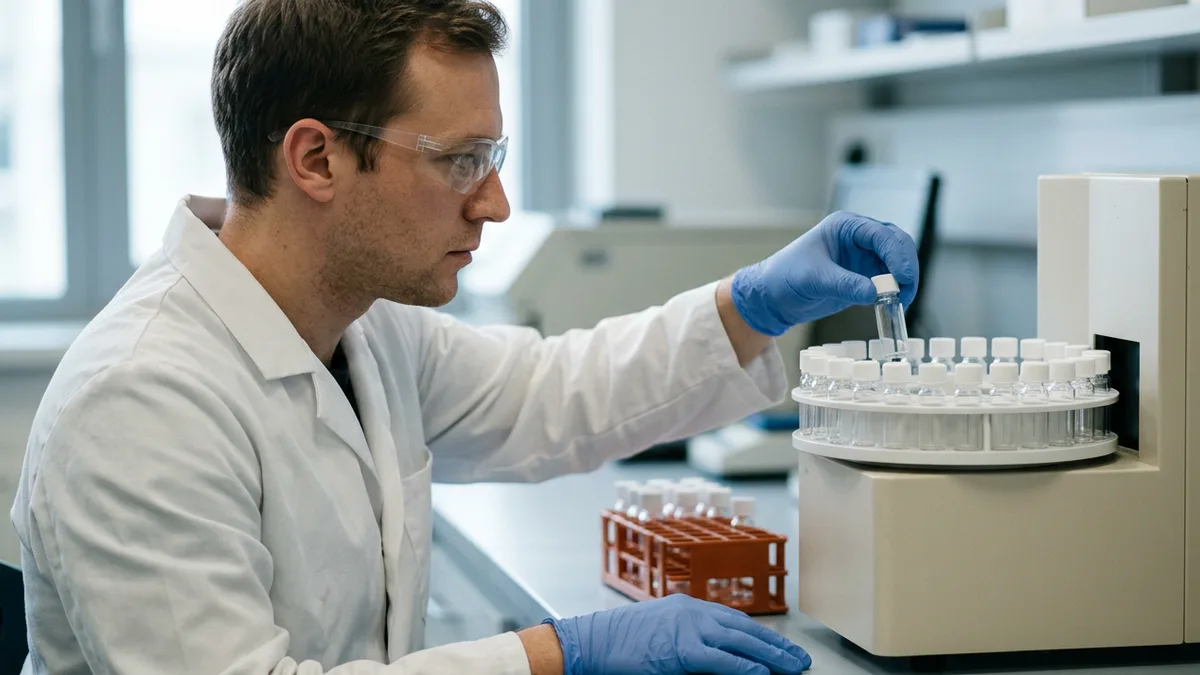
Borrow the Expertise, Keep the Crew
This is the part where I’ll disagree with how a lot of sites staff a transfer.
The instinct is to bring in a contract team for the whole project, get through validation, then hire the permanent crew once the program is “real.” It feels careful. It isn’t. It’s backwards. EU GMP Annex 15 on qualification and validation, in operation since October 2015, says production, development, or other site transfer people may be involved in process validation batches, and then adds the line that matters for hiring.
“It is expected that production personnel are involved in the manufacture of validation batches to facilitate product understanding.”
Your production personnel. Not the visitors. The people who will run batch forty, not just batch one. If the crew that makes your validation batches walks out the door afterward, the product understanding walks out with them, and you’ve validated a process with people who won’t be running it.
So my split looks like this. Borrow the expertise that peaks during the project, meaning validation engineers, technical writers, extra MSAT hands, and sometimes the project manager. Fixed-scope work like that fits project staffing or plain contract help. Keep the people who carry the process forward, meaning the MSAT lead, pharma QA, the QC analysts who will run the methods (our quality control staffing desk fills that bench), and the supervisor and operators. Hire those as direct hires, early enough that they’re trained before the validation batches start. On a CDMO floor the operator side of that has its own rhythm, and our CDMO staffing page goes through the crew in more detail.
There’s a practical reason, too. Annex 15 lets a site transfer use a bracketing approach to cut the number of validation batches, but only when “existing product knowledge, including the content of the previous validation” is available. Knowledge has to live somewhere. Ideally in a binder. And a person.
MSAT, MS&T, Tech Transfer Engineer. Same Seat?
Mostly, yes. The titles drive recruiters a little crazy. Me included.
MSAT is short for manufacturing science and technology. Some companies write it MS&T. Others call the same person a technical services engineer, a process engineer, a tech transfer engineer, or a manufacturing scientist, and at a small site it might be whoever on the team understands the chemistry best. What they share is the job. They read a process written for someone else’s equipment and make it run on yours, and then they stay to keep it running.
When I screen for this seat I’m not looking for the word “transfer” on a resume. I’m looking for evidence the person has been on the receiving end of one. A few questions get there fast.
- On your last transfer, what was different about the receiving site’s equipment, and who noticed first?
- Which document did you have to ask the sending site for because it wasn’t in the package?
- Tell me about a parameter you changed. How did the change get approved?
- What happened to your job after close-out?
That last one tells you whether they stayed long enough to live with their own decisions. Worth knowing.
Candidates who can answer all four are like professional athletes on the market. If they’re good, more than one company wants them, and a slow interview process or a lowball offer just hands them to someone faster. With experienced transfer people I’d move from first call to offer as quickly as your process honestly allows. Process engineers are the core of our process engineering staffing work, and the good ones rarely sit on the market for long.
A note on adjacent backgrounds. A strong process development scientist from R&D can grow into MSAT, but lab work and plant work run under different rules, which I covered in GLP vs GMP. And when a resume just says “GMP experience” without saying what the person signed, my post on reading GMP experience on a resume walks through how to check it.
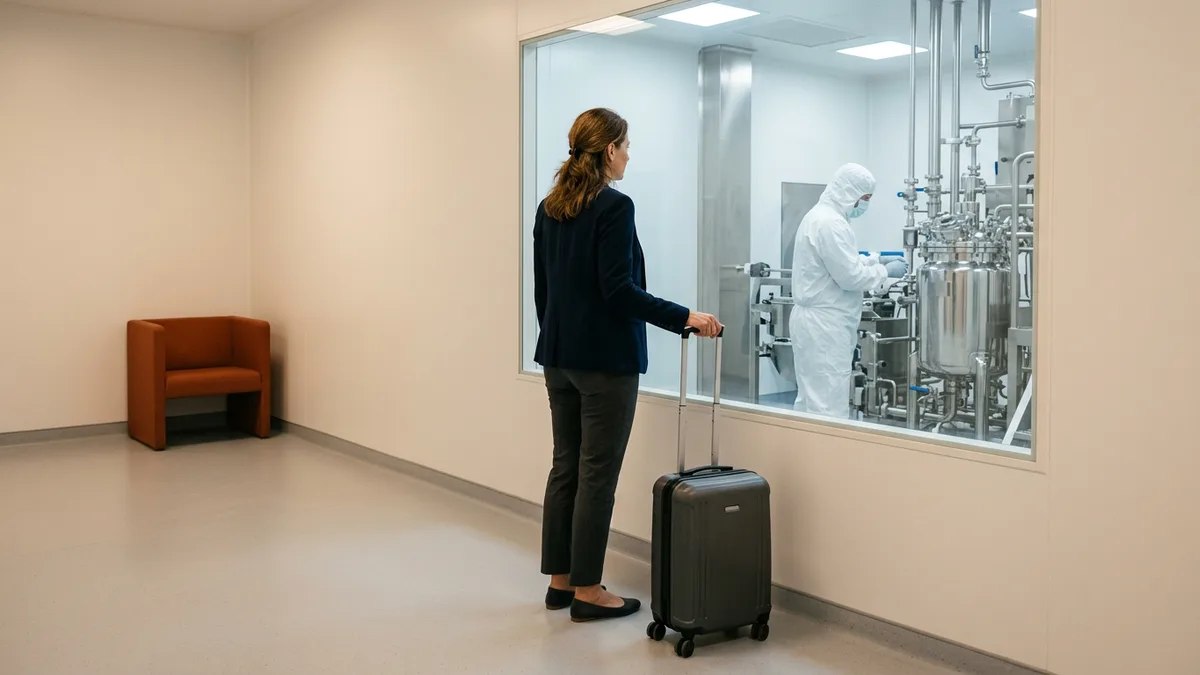
Tell Candidates About the Travel
I talk to candidates like friends. That means telling them the parts of a transfer role that don’t make the job posting.
Travel is the big one. Always. The WHO guideline opens every project with due diligence and a gap analysis “through visits to the SU and RU,” and a good share of the training can happen at the sending site. Your MSAT lead and analytical lead may spend real time at another plant, sometimes in another time zone, sometimes during the weeks they’d planned to move house. Say so in the first conversation. Not the offer call.
Then there are the hours around engineering runs and validation batches, which follow the process, not the clock. And the job changes after close-out. A tech transfer engineer who loved the project phase may not love supporting routine commercial batches, and it’s kinder to talk about that before the offer than to find out from a resignation letter in month eight.
None of this scares off the right person. It just keeps the wrong one from saying yes.
When the Client Program Moves In
For a CDMO, a transfer isn’t a project you schedule. It’s a contract somebody signed, often with a date already attached. The client owns the product. You own the people. Simple split. If you’re new to how that relationship shapes hiring, start with my guide to CDMOs for hiring managers.
That date is why I push for the permanent seats first and the borrowed ones second. Contract help can be lined up quickly. A pharma QA lead or an MSAT engineer with real transfer experience usually can’t, and those are the seats a client’s auditors ask about when they visit before the program starts. When the program also brings new production lines with it, our manufacturing recruiters handle the supervisors and plant leadership that come with the expansion.
It’s also why I care about who stays. At KORE1, 92% of placements are still there a year on, and on a transfer that number carries more weight than usual. The person who learned the process is the asset. Keep them.
Tech Transfer Questions From the Receiving Side
Is pharma tech transfer the same as a university technology transfer office?
No, they share a name and almost nothing else. A university technology transfer office licenses patents and inventions to companies, so its staff are licensing managers and attorneys. Pharma tech transfer moves a working manufacturing process and its test methods into a plant, and the people involved are engineers, chemists, quality staff, and operators.
So who’s in charge, the sending site or us?
Both sites share it on paper, but the receiving site inherits everything once the transfer closes. The WHO guideline calls for responsible people from each site and formal written agreements that spell out each party’s responsibilities before, during, and after the transfer. Since the plant is yours afterward, the hiring plan should be yours from day one.
Can contractors make our validation batches?
They can help, but EU GMP Annex 15 expects production personnel to be involved in making validation batches so they understand the product. Contract validation engineers and technical writers fit the project well. The operators who will run commercial batches should be trained and on your payroll before validation starts.
Does our MSAT lead need experience in our exact dosage form?
For the lead, I’d hold out for it if the market lets you. Tablets, sterile injectables, and biologics fail in different ways, and someone who has lived through a transfer in your dosage form already knows where to look. Supporting engineers can come from a neighboring form and learn it.
How early should we start hiring for a transfer?
Before the gap analysis, at least for the transfer lead and pharma QA. The WHO guideline puts due diligence and a gap analysis at the start of every project, covering personnel along with premises, equipment, and everything else, so the people doing that assessment need to exist already. Operators can come later. Not after validation, though.
Before the Kickoff Meeting
Timing is the whole story here. The sending site’s experts are visitors. The people you hire are the ones who will be making this product long after everyone else has flown home, so hire them while there’s still someone around to teach them.
Got a client program coming in, or a product moving between your own sites? Let’s Connect. Send me the transfer timeline and the seats you think you need, and I’ll tell you which ones I’d fill first. I’m on LinkedIn too.
