
Clinical Lab Staffing for Hospital and Reference Laboratories
Medical technologists, lab technicians and supervisors, checked against CLIA and your state license before you ever read a resume.
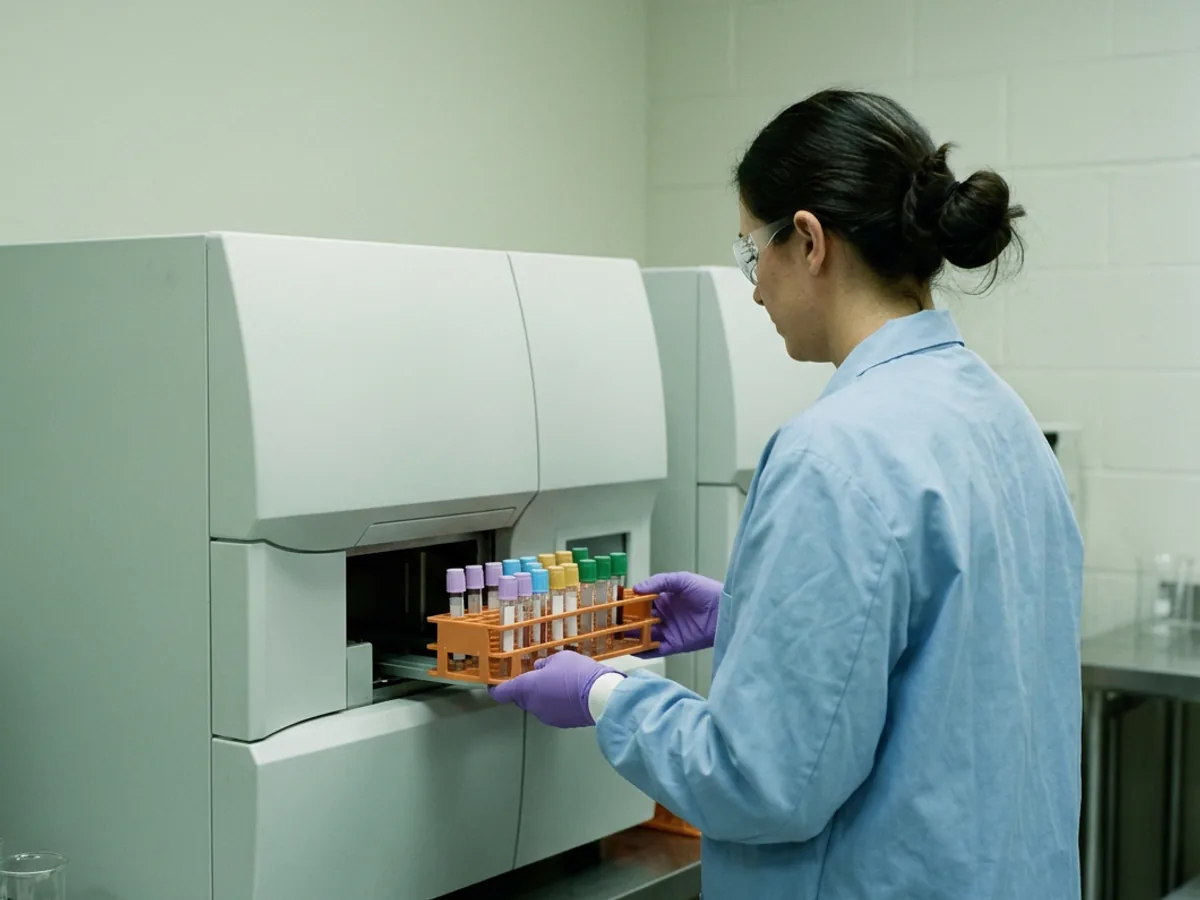
Clinical lab staffing fills the CLIA-regulated seats in hospital, reference and physician office labs. KORE1 places medical technologists, lab technicians and supervisors as contract, contract-to-hire or permanent hires, checked against test complexity and state licensure first.
Last updated: September 23, 2026
Can the person you’re about to hire legally run your analyzer? Not always. And the resume won’t tell you.
In a clinical lab the regulation writes part of the job description for you. CLIA, the Clinical Laboratory Improvement Amendments, decides who’s allowed to run a patient test and who has to supervise it. It decides that one test at a time. So two hospitals can post the identical “medical technologist” req, word for word, and still be recruiting from groups of legally qualified people that barely overlap, because one test menu includes a high complexity assay and the other doesn’t.
- This desk
- Hospital core labs, independent reference labs, physician office labs, outpatient and specialty testing.
- Routed elsewhere
- R&D, QC and manufacturing benches, which our laboratory staffing agency desk handles.
We start there. The person comes second. Across every desk, 92% of KORE1 placements are still employed there a year later, and the whole practice sits under KORE1’s life sciences staffing agency group, next to our scientific staffing desk.
Clinical Lab Staffing Starts With the Test Menu
Every nonwaived test system is graded on seven criteria, one to three points each, under 42 CFR 493.17. Twelve points or fewer is moderate complexity. Thirteen or more is high. That one line decides who you’re allowed to put on the bench.
Test complexity scorecard
- Knowledge
- Training and experience
- Reagents and materials preparation
- Characteristics of operational steps
- Calibration, quality control and proficiency testing materials
- Test system troubleshooting and equipment maintenance
- Interpretation and judgment
Moderate complexity · 7 to 12
Four required roles
- Laboratory director
- §493.1405
- Technical consultant
- §493.1411
- Clinical consultant
- §493.1417
- Testing personnel
- §493.1423
Bench floor High school diploma plus documented training for the test. Associate and bachelor’s nursing degrees qualify.
High complexity · 13 to 21
Five required roles
- Laboratory director
- §493.1443
- Technical supervisor
- §493.1449
- Clinical consultant
- §493.1455
- General supervisor
- §493.1461
- Testing personnel
- §493.1489
Bench floor Associate degree in laboratory science or medical laboratory technology, or 60 semester hours with lab training. Nursing isn’t on the list.
Waived tests under §493.15 are never scored, and Subpart M sets no personnel standard for them.
So ask for the test menu before the job description. Always. A chemistry bench running only moderate complexity assays can hire nursing graduates and trained high school graduates. Add one high complexity test, though, and everybody who runs it needs a laboratory science degree or one of the equivalents the regulation spells out, which shrinks the pool a lot.
That’s why a req copied from another hospital so often goes nowhere. Same title. Different menu. It cuts the other way too, since a lab that retires its last high complexity assay can hire testing personnel from the wider moderate complexity pool.

The Grandfather Clause Only Covers Unbroken Service
CLIA‘s personnel sections were rewritten in a final rule published December 28, 2023, with a compliance date one year later. Most of the change is quiet. One sentence isn’t.
Under the current 42 CFR 493.1489, someone who doesn’t meet today’s education list still counts as qualified high complexity testing personnel if they were qualified and serving on December 28, 2024 and have served continuously since. The moderate complexity and general supervisor sections carry the same clause.
Continuously is the word to read twice. A technologist who stepped away for a year and holds a degree the current list doesn’t name, a physics degree for instance, may come back to a bench they’re no longer qualified to run, and nothing on the resume flags it.
So we check three things before anyone interviews. Not after the offer.
- Service dates
- Against the current text and its continuous-service clause
- Degree
- Against the fields the regulation actually lists
- License
- Against the state the lab sits in

Ten States and Puerto Rico Add a License of Their Own
The American Society for Clinical Laboratory Science counts ten states that license laboratory personnel, plus Puerto Rico. California, Florida, Hawaii, Louisiana, Montana, Nevada, New York, North Dakota, Tennessee and West Virginia. In those places CLIA folds the state license into the federal standard, so an unlicensed technologist isn’t qualified at all, however good they are.
California goes further and applies its own education and training standards through the Clinical Laboratory Scientist license. It isn’t a formality. Plan the lead time for a contract traveler before you plan the start date.
Then there’s the money. A licensed generalist has options, and the hospitals know it.
Candidates on the market are like a professional athlete. If they are amazing then multiple companies should be interested in hiring them.
Dave Manchester · KORE1 Scientific Recruiting
Hospitals employ about 45% of the country’s clinical lab technologists and technicians and pay them a $69,000 median, against $58,320 at medical and diagnostic laboratories, according to Bureau of Labor Statistics wage data. A reference lab competing for the same licensed generalist is starting $10,680 behind on base, so the offer has to win somewhere else. Pharma QC benches recruit chemistry and biology graduates too and price the seat their own way, which our QC analyst salary guide breaks out.
Shift. Weekends. A path to supervisor. We find out which one moves this particular person in the first conversation, through Dave Manchester and the recruiters of a Scientific Division that has named reference labs as a market since KORE1 launched it in 2018.
332,940
clinical lab technologists and technicians employed in the U.S., May 2025
$10,680
hospital median pay over medical and diagnostic labs
17.9%
of surveyed lab professionals intend to leave within a year
~320,000
laboratory entities under CLIA, per CMS
Sources: BLS OEWS May 2025, SOC 29-2010. Ritter et al., Laboratory Medicine, 2026, 302 participants. CMS CLIA program page.
Clinical Laboratory Staffing, Seat by Seat
Each seat is labeled with the section that decides who can sit in it. That’s the order we screen in.
§493.1489(b)(2)
Medical laboratory scientists
Generalist and specialty MLS and CLS hires for high complexity chemistry, hematology, microbiology and blood bank.
§493.1489(b)(3)
Medical lab technicians
MLTs whose associate degree in laboratory science qualifies them for high complexity patient testing.
§493.1461
General and technical supervisors
The person who answers for the bench and the reported result when the director isn’t in the building.
§493.1489(a)
Night, weekend and leave coverage
Contract technologists for the overnight shift or a leave, with the state license confirmed before day one.
Coverage work usually runs as contract staffing or through our backfill and leave coverage program. Contract-to-hire gives you a few months to watch a technologist work your analyzers and your SOPs before you commit, while direct hire suits the supervisor seat you want filled for years. If the real question is whether an agency costs more than a recruiter of your own, we ran that math in in-house recruiting versus a staffing agency.
The people who build and support the laboratory information system, Epic Beaker or Oracle Health PathNet analysts, are an IT hire rather than a bench hire, and our healthcare IT staffing desk finds them. The biomedical equipment technicians who keep the analyzers running are an engineering search through our biomedical engineering staffing agency, and diagnostics companies developing assays rather than running them work with our medical device recruiters. Different searches, one call. Occupation detail for the two bench titles lives on O*NET, for medical and clinical laboratory technologists and their technician counterparts.
Common Questions
What does clinical lab staffing cover?
Clinical lab staffing covers the people who perform and supervise patient testing in CLIA-certified labs, from lab technicians to general supervisors. KORE1 fills those seats in hospital, reference and physician office labs, for temporary coverage, a trial period or a permanent hire. Research and manufacturing labs are a separate desk.
How much does a medical technologist cost to hire?
$62,930 is the national median for clinical lab technologists and technicians, per BLS OEWS May 2025. Hospitals pay a $69,000 median and medical and diagnostic labs $58,320. Licensure states, night differentials and a specialty like blood bank move it from there, so we price the seat before the search starts.
Can a nurse run tests in our lab?
For moderate complexity testing, yes, subject to state law. The current 42 CFR 493.1423 lists associate and bachelor’s nursing degrees as qualifying. High complexity is different, because 493.1489 doesn’t include nursing, so a nurse on that bench needs another qualifying route.
What changed on December 28, 2024?
The revised CLIA personnel requirements reached their compliance date. People who were qualified and serving on that date keep their qualification as long as they’ve served continuously since. So ask about gaps. Every one.
Do contract technologists need our state’s license?
They do in any state that licenses laboratory personnel. CLIA makes the state license part of the testing personnel standard, so a traveler without it can’t run your patient tests on day one. We confirm the license, or the application timeline, before the first interview.
Who answers for the bench overnight?
The general supervisor. Under 42 CFR 493.1461, when the director and technical supervisor are absent, the general supervisor is responsible for how every procedure is performed and for the results that go out. So an overnight lead is a regulatory seat, not just the most senior tech with a badge.
Do you staff research or pharma QC labs too?
Yes, through a different desk. R&D, QC and manufacturing benches run through our lab staffing agency page and pharma sites through pharmaceutical staffing. If a site runs both kinds of lab, mention it when you first call and each seat goes to the right desk.
Send the Test Menu, Not Just the Title
Tell us the complexity, the state and the shift. One of our scientific recruiters replies with who qualifies and what the seat should pay.
Let’s Connect →