
Executive Producer Staffing and Head of Production Search
Producers who can defend a bid to the client, protect the budget, and run the whole department.
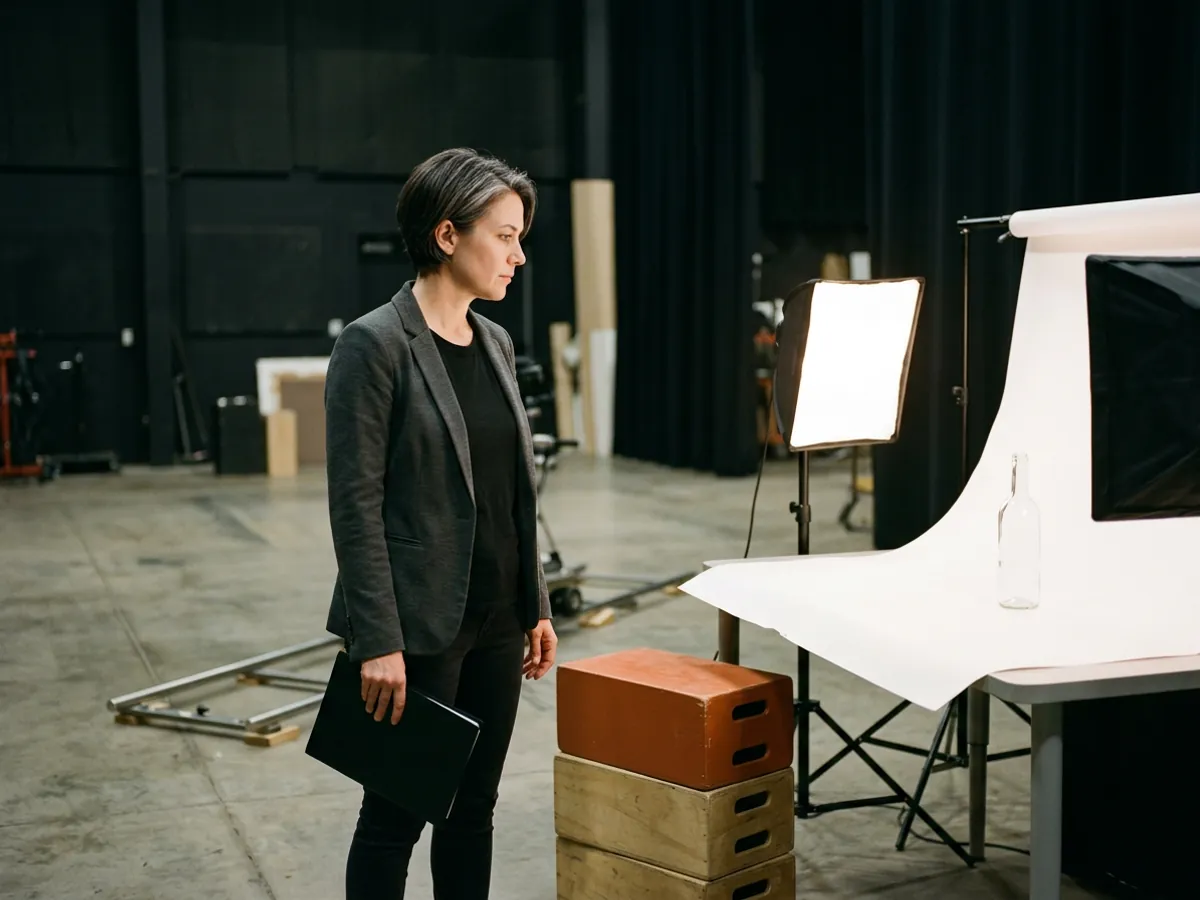
Executive producer staffing is how agencies, studios and brands hire the senior producer who owns a job’s budget, bids and delivery, or the head of production who runs every producer, vendor and schedule in the department. Sometimes both, in one person.
Last updated: September 24, 2026
Those are two different jobs. They share a lot of vocabulary and not much else. An executive producer lives inside a handful of productions from the first bid to the final delivery, while a head of production sits above all of them deciding who produces what, which vendors get the work and what gets made in-house.
Pick the wrong seat and you’ll hire somebody brilliant at the wrong altitude. It’s an easy mistake.
KORE1 recruits both through our digital and creative staffing practice, right next to the desk that runs creative director searches. That matters. A producer and a creative director who can’t work together will sink a shoot. This page covers production leadership at advertising agencies, entertainment marketing shops and in-house brand studios, while the marketing hires who usually sit around those producers start with our marketing recruiters.

Is the Open Seat About the Jobs or the Department?
Start there. Before the band, before the posting, before anybody argues about the job title. The title won’t settle it.
At a big network agency, the head of production usually sits over a floor of executive producers and approves their staffing. Some entertainment marketing agencies run it the other way, with the executive producer carrying a client book, pitching next to the creative director and out-earning whoever runs day-to-day production operations.
Same two titles. Opposite org chart.
So before anyone touches the job description, we ask what’s actually going wrong. Here are four answers we hear, and the seat each one points to.
- Executive producerOverages keep reaching the client after the shoot, when nobody can do anything about them.
- Head of productionTwo jobs booked the same editor for the same week, and it surfaced on Thursday.
- Head of productionEvery bid goes to the same three production companies. Why those three?
- Executive producerYour creative director is producing shoots at night because nobody else can talk to the director.
Mostly one kind? Then you know which search to run.
Split down the middle? Probably both. Or one unusual person. Those are the hard-to-fill searches, and they need a plan of their own.
Who Answers for Each Strip on the Board?
Film crews schedule on a strip board, one colored strip per scene. We’ve drawn a production department’s slate the same way. One strip per job, colored by where it stands this week.
Production board
- J-01 Holiday :30 and two :15s
- J-02 Social cutdowns, 24 versions
- J-03 Retail catalog photo shoot
- J-04 Series trailer, 30 versions
- J-05 Key art and outdoor shoot
- J-06 Radio, four spots
- J-07 Branded series, six episodes
- J-08 Launch event capture
Start with the three strips under the short bracket. One executive producer awarded J-01 off three competing bids, will sign off every overage between now and delivery, and has to track talent usage under the SAG-AFTRA Commercials Contract, the three-year deal that took effect April 1, 2025. That’s $1.03 million of a client’s money. One name on it.
Now the long bracket. J-04 and J-07 are out to bid the same week, J-02 and J-04 want the same editor, and three staff producers are covering eight strips. None of it’s on any one budget. All of it lands in the month-end numbers.

Executive Producer Pay Runs Past the Federal Top Tenth
Agencies quoting an executive producer seat right now tend to land around $300,000 plus upside. A head of production usually comes in between $150,000 and $200,000. Both look high next to the government’s numbers for producers and directors, the federal occupation that lists executive producer among its job titles. The gap is the interesting part.
| Where they work | Median | Top tenth starts | Range on the scale |
|---|---|---|---|
| Every industry | $90,360 | $198,540 | |
| Advertising and PR agencies | $108,610 | $186,690 | |
| Film and video production | $105,300 | $223,860 | |
| Streaming and content networks | $98,520 | $215,660 | |
| Radio and TV broadcasting | $62,600 | $133,460 | |
| Los Angeles metro | $131,600 | $325,310 | |
| New York metro | $108,460 | $222,580 |
Read the right-hand edge. The head of production band overlaps the top end of every row except broadcasting, which is about right for someone running a whole department. The executive producer band clears every 90th percentile on the chart but one. Only Los Angeles reaches it, at $325,310.
Even New York tops out at $222,580. So an EP number that sounds high usually is high. That’s fine.
You’re paying for someone who has personally carried big production budgets and answered for every dollar of them, so look hardest at the upside, because it varies far more than the base does. A bonus. A share of their accounts. Sometimes new business.
Want a second opinion on your band? The salary benchmark tool on our site costs nothing, and we’ve written a longer walkthrough on building a pay band that survives the offer stage. KORE1’s fee sits outside all of this. It changes with the engagement model.
Head of Production Staffing and the Seats Around It
Most production departments have some version of all four. A smaller shop folds two of them into one person. That person is usually tired.
Head of production
Staffs every job, owns the vendor roster and rate cards, and decides what gets made in-house.
Hire when the slate outgrows one person’s memoryExecutive producer
Runs the triple bid, recommends the award, and handles every overage conversation with the client.
Hire when cost surprises reach the client lateSenior producer
Carries a single job from award through final delivery and stands on set for every shoot day.
Hire when your EP is on set every weekBusiness affairs manager
Tracks talent contracts, usage cycles and music licenses so no spot airs past what was paid for.
Hire when renewals get caught after the flightCreative leadership is a separate search. It runs through our creative director recruiters, with art director staffing, graphic designers and copywriters alongside. Technology behind a studio or streamer, meaning the asset pipeline and the tools, sits with media and entertainment technology staffing.
A chief production officer goes through executive search. And if the gap is really the people deciding where the media money goes? Then you want media buyers and planners, with ad operations behind them. Not producers.

Hire Before the Next Job Gets Awarded
The trigger is almost always a win. An agency lands an entertainment account, and the first campaign needs a producer, and usually a brand strategist to write the brief, before the first bid goes out. Or a brand builds its own studio.
The ANA’s 2023 in-house agency study found 82% of its members running one, and a studio that starts shooting its own work needs somebody to run production, usually sooner than anyone planned for. Budgets move first. Headcount follows, eventually.
Samantha Litman, who handles KORE1’s senior creative and media searches, has producers all through her history. Before she joined us she spent more than a decade recruiting for a single entertainment marketing agency, for a stretch from inside the building. She placed creative directors, motion designers, producers and senior leaders there. One of them eventually became its president.
She calls the work part science, part instinct. The science is the reel, the budgets someone has actually carried, the production companies they’ve bid against. The instinct is harder to write down.
Will this person stay calm at 11 p.m. when the location falls through? Will the client still trust them in the morning? That’s the instinct part.
Her read on the market is that the old walls are coming down.
“In the past, there was always a divide, but now the lines have blurred.”
She means entertainment companies chasing work that agencies used to own. And the reverse. That’s widened the pool.
An EP from the entertainment marketing side can make real sense for a brand launch, and a brand-side producer can make sense for a studio campaign, which is why we rarely treat a candidate’s industry background as a hard requirement.
Then choose the shape.
- Direct hire for both leadership seats. The relationships they build with production companies are the whole asset.
- A senior producer for a Q4 shoot nobody budgeted headcount for? That’s a contract role.
- Contract-to-hire, when you aren’t sure the in-house studio will scale.
- A producer out on leave mid-shoot is a backfill, and it can’t wait.
- Working out why overages keep arriving late is a project, not a hire.
Last thing, and it’s one Samantha will argue for. “If you find someone great, move. Good people have options.”
A strong EP is usually mid-production when you meet them. They won’t sit through five rounds. And the bench isn’t getting much deeper, since the federal job outlook for producers and directors has employment growing 4% from 2025 to 2035.
Common Questions
What does an executive producer do at an ad agency?
An agency executive producer owns production for a group of jobs, which means bidding them out to production companies, recommending an award, running the budget through shoot and post, and answering to the client for every overage. It’s a money job. Most of the bidding runs on the AICP bid form, the industry standard since 1975, so three production companies’ numbers line up category by category.
What’s the difference between an executive producer and a head of production?
Scope, mostly, because an executive producer answers for specific jobs from start to finish, while a head of production answers for the whole department, its producers, vendors, rates and calendar. Which one reports to the other depends on the shop. Titles won’t tell you.
What does an executive producer cost to hire?
$300,000 plus upside is the band agencies quote for an executive producer right now, well above the $198,540 where the national top tenth for producers and directors starts. Upside usually means a bonus or a share of the accounts they produce. Ask what it’s tied to. KORE1’s fee is billed separately.
What does a head of production earn?
Between $150,000 and $200,000 is the usual quoted band for a head of production, which lines up with the top quarter of producers and directors at ad agencies, where the 75th percentile is $159,070 and the 90th is $186,690. Brand-side studio leads can run higher. For producers and directors on corporate headquarters payrolls, the federal median is $135,490.
Should our executive producer come from an agency or a production company?
Usually an agency, if the job is awarding bids rather than winning them. Production company EPs know the other side of the table cold, but they’re used to selling one bid, not judging three. For an in-house studio that shoots its own work, that background can be the better fit.
How quickly can KORE1 fill an executive producer or head of production role?
KORE1’s 17-day average time to hire comes from our IT searches, and a senior production search usually runs longer, because the producers you want are in the middle of a shoot. Plan around their calendars. Start before the next job is awarded. Not after.
Can an in-house brand studio hire a head of production from an agency?
Yes, and agency production leaders are the natural pool for it, since an in-house studio needs the same bidding, vendor and budget discipline an agency department runs on. The adjustment is the client. In-house, the client is down the hall and sits in your budget meetings. And most brands with a studio still hire outside agencies, so the new head of production will be buying from agencies as well as running a team.
What’s on Your Board Right Now?
Send us the slate, the open seat and the date your next job gets awarded. We’ll come back with how we’d run the search.
Start a Production Search →