Diagnostics Recruiters for IVD Makers and Test Developers
Assay developers, regulatory and quality leads, and field application scientists for teams that build and support diagnostic tests.
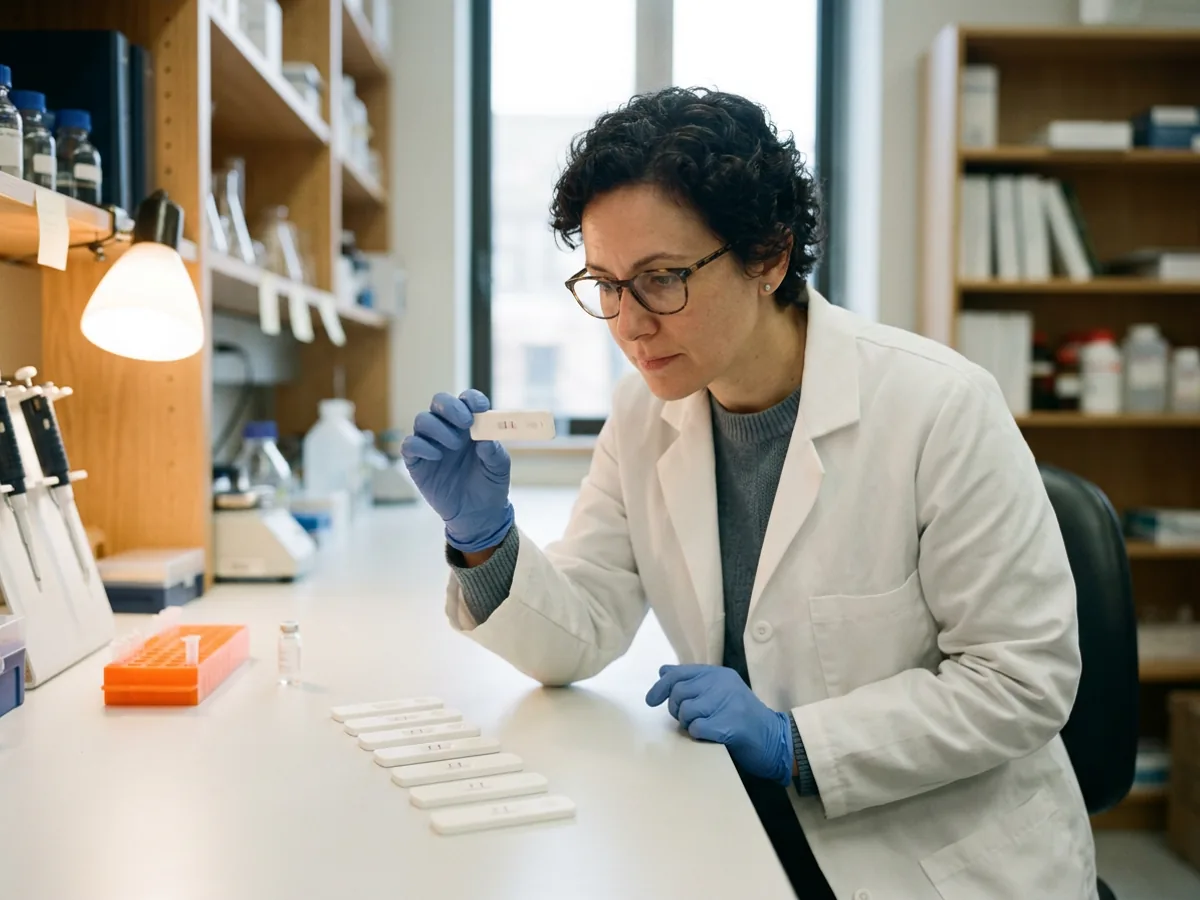
Two resumes both say “assay development.” Which one can get your test cleared?
Diagnostics recruiters find the scientists, engineers, regulatory and quality people who develop, clear, manufacture and support in vitro diagnostic tests. KORE1 staffs those seats on a contract basis or as direct hires, with contract-to-hire as a middle option, for IVD makers and labs that build their own tests.
Last updated: October 14, 2026
Usually only one. Both can design an immunoassay and tune it until the numbers behave. The one you want did it under design controls, with a protocol written before the data and a report a reviewer could follow, because that’s the version FDA actually reads.
That gap is most of diagnostics hiring. When I led KORE1’s Scientific Division, reference labs and diagnostics companies were part of the desk. They still are.
- This desk
- IVD makers and labs that build their own tests. Assay development, verification, clinical affairs, regulatory, quality, reagent and kit manufacturing, field application scientists and field service.
- Routed elsewhere
- Bench staff running patient samples go to our clinical lab staffing desk, analyzer hardware engineers to biomedical engineering, and lab software to life sciences IT.
Diagnostics has its own desk within the life sciences staffing group at KORE1. It sits right next to our medical device recruiters, since FDA regulates a diagnostic test kit as a medical device. Same quality system rules. Our 92% retention at twelve months applies to this desk as well.
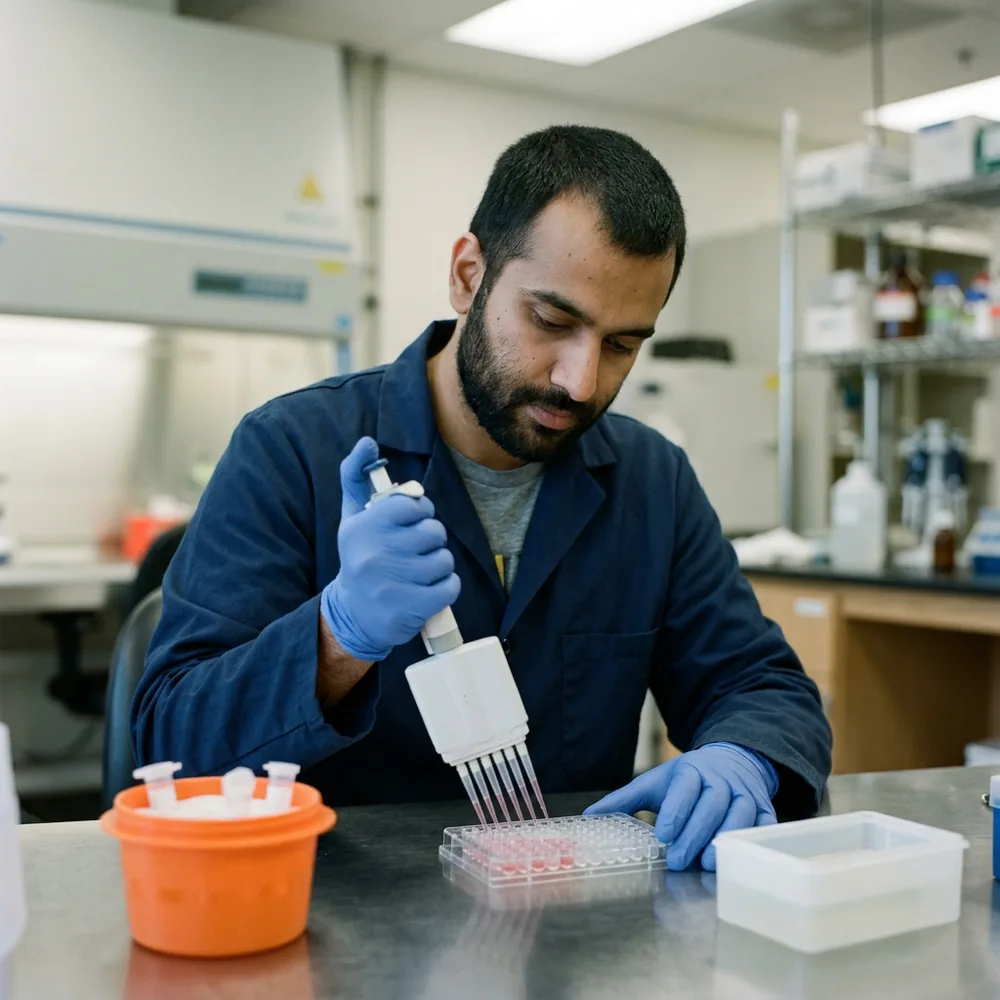
Two Kinds of Diagnostics Company, Two Different Searches
Federal rules define in vitro diagnostic products as “reagents, instruments, and systems intended for use in the diagnosis of disease or other conditions,” under 21 CFR 809.3. Simple enough. The catch is who makes them.
IVD makers
They sell a kit, a cartridge, a reagent or an analyzer to other people’s labs. What they sell is a medical device, so it needs FDA clearance before it ships, and FDA also decides whether it counts as waived, moderate or high complexity under CLIA. These companies hire for design controls, submissions and manufacturing.
Labs that build their own tests
Reference and specialty labs that design a test and run it in-house. They hire assay developers too, plus a lab director who can validate the test under CLIA, and they don’t need a 510(k) team for it. Different rulebook.
That second group almost changed. FDA finalized a rule on lab-developed tests on May 6, 2024, a federal court in Texas vacated it on March 31, 2025, and FDA didn’t pursue an appeal. It published a rule reverting the regulation on September 19, 2025.
So a lab that spent 2024 interviewing regulatory affairs people for premarket submissions can stand down. Its hiring plan goes back to scientists and a qualified director. The IVD side never moved.
Diagnostics Recruiting, Zone by Zone
A lateral flow strip moves a sample from one end to the other, and every zone on it has one job. A diagnostic test moves through a company the same way. Here’s who you hire at each stage, and the rule each one answers to.
Read it the way the sample flows, sample pad first
-
Sample pad
Feasibility and assay development
Assay development scientists, immunoassay and molecular chemists, R&D associates.
Rule Design controls start here. Under QMSR that means ISO 13485, clause 7.3.
-
Conjugate pad
Design verification
Verification and validation scientists, systems and instrument engineers, analyzer software engineers.
Rule Precision, detection limit and interference studies, run on a protocol written before the data.
-
Test line
Clinical validation and submission
Clinical affairs scientists, specimen study managers, regulatory affairs for 510(k), De Novo and CLIA waiver.
Rule FDA clears the claim and assigns the CLIA complexity.
-
Control line
The quality system
Design assurance, QA, complaint handling and CAPA, supplier quality.
Rule QMSR, in force since February 2, 2026.
-
Wick pad
Make, place and support
Reagent and kit manufacturing, QC release, field application scientists, field service engineers.
Rule 21 CFR 809.10 labeling, lot release, and every complaint a customer lab sends back.
On a real strip the control line is how you know the test ran. No control line, no valid result, whatever the test line says.
People skip that part. A small diagnostics company tends to hire from the sample pad forward, scientists first, then a consultant for the submission, and only after an audit does it find out nobody owned the quality system. FDA’s Quality Management System Regulation became effective on February 2, 2026 and pulls ISO 13485:2016 into Part 820 by reference, which raised the bar for that hire.
Hire the control line early. It’s cheaper.

Where Diagnostics Recruiters Find IVD Candidates
Rarely at another IVD maker. The industry is small. Census counted 267 establishments making in vitro diagnostic substances in 2023, employing 45,459 people between them, and California alone held 7,508 of those jobs, more than any other state by a wide margin. Annual payroll works out to about $115,400 per employee, and that average covers everyone from the loading dock to the lab.
Most searches look next door.
Field application scientists
Often medical laboratory scientists from hospital and reference labs. They’ve run the instrument class for years. The lab staff they’ll train can tell.
Regulatory affairs
Device regulatory people cross over well once they learn specimen studies and CLIA categorization. Pharma regulatory people take longer.
Quality
Anyone who’s worked inside an ISO 13485 system transfers faster now that QMSR runs on the same standard. Good timing.
Assay developers
Academic and biotech labs, with one screen that matters more than the rest.
That screen is design control experience, and you find it with questions like these.
- Walk me through your last detection limit study. Who wrote the protocol, and when?
- A customer lab reports a run of false positives on one reagent lot. What do you check first?
- Which of your tests were waived, moderate or high complexity, and who decided?
- What changed in your quality system when QMSR took effect?
With field candidates I also ask something a friend would ask over coffee. Would you rather be on a hospital lab floor at six in the morning teaching the night shift, or at your own bench? Both are honest answers. Only one of them is a field job.
256
FDA 510(k) and De Novo decisions on lab test panels in 2025
122
of those went through the microbiology panel
45,459
people at U.S. in vitro diagnostic makers, 2023
92%
of KORE1 placements still employed at twelve months
Decisions from openFDA 510(k) data for the chemistry, hematology, immunology, microbiology, pathology and toxicology panels, decision dates in 2025. Employment from Census County Business Patterns 2023, NAICS 325413. KORE1 retention data.

When a Diagnostics Team Should Hire on Contract
Diagnostics work comes in surges. Verification runs pile up right before a submission. Then they stop. A specimen study needs clinical research coordinators for a few months, a lot release backlog needs QC hands for a quarter, and a QMSR gap assessment turns up three procedures nobody wrote.
Contract fits all of those. So does Europe, at least for now. Under Regulation (EU) 2024/1860, older IVDs can stay on the EU market, as the dates stand today, until December 31, 2027 for class D, 2028 for class C and 2029 for class B and sterile class A, provided the maker has met the notified body deadlines along the way. That’s a lot of technical files to rewrite in a short window, and regulatory writers on contract can carry most of it.
Permanent seats hold knowledge. The scientist who developed the assay knows why the buffer is what it is, and that’s hard to replace. The same goes for heads of regulatory and quality, and for field application scientists, whose customer labs expect to see the same face for years.
Somewhere in between, contract-to-hire works well for QC analysts, lot release reviewers and manufacturing leads, the seats that need to prove out on your procedures and your batch records before anyone signs a permanent offer.
IVD Hiring by What Just Happened
Most diagnostics searches start with an event. Each card shows where I’d begin.
First submission · Contract
A 510(k) going in
Regulatory and clinical affairs contractors who have written one before, for the months the file is open.
Audit finding · Contract-to-hire
A quality system to rebuild
Design assurance and CAPA leads who prove out on your procedures before they go permanent.
EU deadline · Contract
IVDR files coming due
EU regulatory writers for legacy tests facing the 2027 to 2029 transition dates.
Launch · Direct hire
An installed base to support
Field application scientists and service engineers who will keep the same customer labs for years.
Pick by the seat. Submission and audit surges usually go through KORE1 contract staffing. QC and manufacturing hires you want to watch for a few months first go contract-to-hire, and the assay, regulatory and quality leads who carry your history are a direct hire search. QC benches at the same company can also run through our quality control staffing desk.
Building a drug alongside the test, as with a companion diagnostic? The drug side goes to our biotech recruiters. Small company with nobody in talent acquisition? My guide on how small science companies hire without a TA team lists what an agency should do for you.
Common Questions
What do diagnostics recruiters actually do?
They find and screen the people who develop, clear, make and support diagnostic tests, mostly for IVD makers and labs that design their own tests. A good one screens for design control and regulatory experience. Lab skill comes standard.
Is hiring for an IVD company the same as hiring for a device company?
Mostly, since FDA regulates an IVD as a medical device, but IVD teams also run specimen studies and live with CLIA complexity categories that device teams never touch. The quality system and submission work look alike. Hire for both.
Do lab-developed tests need FDA clearance now?
No, not since a federal court vacated FDA’s 2024 rule on lab-developed tests in March 2025. FDA reverted the regulation that September. Labs that design and run their own tests stay under CLIA, which is why they hire scientists and a qualified director rather than a submissions team.
Who decides whether a test is waived, moderate or high complexity?
FDA does, for commercially marketed tests. A maker can also ask FDA to move a moderate complexity test to waived through a CLIA waiver by application, a separate submission that needs its own studies and someone who has run one.
Should our first quality hire come before the first submission?
Yes, because design controls have to exist before verification data does, or the data won’t count. One experienced quality lead hired early costs less than rebuilding a design history file after an audit. Much less.
What does IVDR mean for a U.S. diagnostics team?
If you sell in Europe, it means rebuilding the technical files for older tests before EU deadlines that run from the end of 2027 for class D to the end of 2029 for class B. Contract regulatory writers can carry most of that work. Plan for it.
Tell Me Which Zone Is Short-Staffed
Assay development, verification, regulatory, quality or the field. Send me the open seat and where your test is in its life. I’ll tell you plainly who’s available and what they’d want before making the jump.
Let’s Connect →Expert in finding you the right talent, right away.
Prefer LinkedIn? Message Dave Manchester
